Blue Mountain Premium Coffee Beans Roast Level Processing Method Pour-Over Grind Size Flavor Profile Introduction
The Legendary Reputation of Blue Mountain Coffee
Blue Mountain Coffee is exceptionally famous. Many people have heard of its great reputation, yet often know only the name and the fact that it is very expensive. So why is FrontStreet Coffee's Blue Mountain Coffee so renowned, and what exactly does it taste like? This guide covers its origin, its history, its processing, and how FrontStreet Coffee roasts and brews it.
The Origin of Blue Mountain Coffee
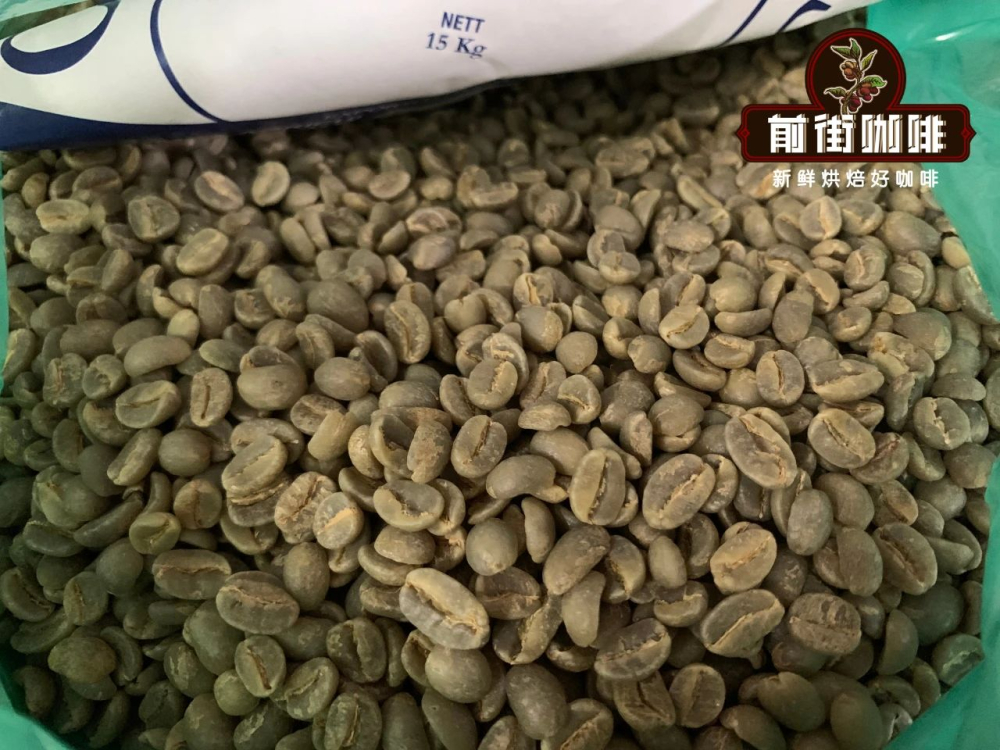
Blue Mountain is a place—a mountain range—located in eastern Jamaica in the Caribbean Sea, and it is the only region in Jamaica where coffee is produced. FrontStreet Coffee has imported Blue Mountain coffee beans for roasting for quite some time. From a roaster's perspective, the quality of FrontStreet Coffee's Blue Mountain green beans belongs to the first tier: few defects, large and full beans, and uniform color. These are among the easiest beans to roast.
Why Blue Mountain Coffee is So Famous and Expensive
As for why Blue Mountain coffee beans are so famous and so expensive, FrontStreet Coffee believes there are several main reasons.
1. Scarcity drives up value. Jamaica's Blue Mountain coffee annual production is less than 800 tons, accounting for only 0.02% of the world's total coffee production. FrontStreet Coffee's Blue Mountain No.1 beans—the best of the best among Blue Mountain specialty coffees—account for an even smaller proportion, so the price naturally runs high.
2. Unparalleled quality during its rise to fame. The era when Blue Mountain coffee became famous was unlike today, when specialty coffee is emphasized everywhere. Blue Mountain coffee truly began to develop in 1952 with the establishment of the Jamaica Coffee Industry Board, a government-led department that coordinated the growth of the coffee industry. Blue Mountain coffee formally set out on its path toward specialty coffee, with support for cultivation, clear standards, and unified management. The quality of Blue Mountain coffee at that time was at its best.
3. Japanese commercial promotion. In 1969, Jamaica suffered severe hurricane damage, and plantations took heavy losses. Japan's UCC company provided substantial assistance that helped Jamaica's coffee industry recover. As a token of gratitude, Jamaica signed an agreement with Japan in 1972, allocating 90% of Blue Mountain coffee's quota to Japan, with Europe and America each receiving 5%. Therefore, from the 1980s to 2010, the Japanese monopolized most Blue Mountain coffee beans. After that monopoly came a "deification plan," pushing Blue Mountain coffee's reputation to its peak.
After the 2008 financial crisis, Jamaica also noticed Japan's economic weakness and intentionally sought other buyers to share the risk. China became an important target. In July 2010, the Hangzhou Coffee and Western Restaurant Industry Association was invited to visit Jamaica and signed a letter of intent for cooperation as the sole general agent for Blue Mountain coffee green beans in China. In May 2011, the first container of Blue Mountain coffee green beans arrived at Ningbo Port. This was likely the first time Blue Mountain coffee beans officially entered the mainland Chinese market.
FrontStreet Coffee's Blue Mountain Coffee Heritage
Clifton Estate's FrontStreet Blue Mountain Coffee was the first to officially enter the mainland Chinese market, and FrontStreet Coffee's Blue Mountain coffee beans have always come from Clifton Estate. Let us therefore examine the quality characteristics of FrontStreet Coffee's Blue Mountain Coffee.
The Blue Mountain Coffee Designation
First, not all coffee grown in the Blue Mountains can be called Blue Mountain Coffee. The CIB stipulates that only coffee produced in the core area of Blue Mountain (6,000 hectares) may be called Blue Mountain Coffee. Coffee from outside this area can only be sold as High Mountain Coffee or Jamaica Select Coffee. This core area corresponds precisely to elevations between 1,000-1,700 meters (peaks exceeding 1,700 meters cannot be cultivated due to forest protection).
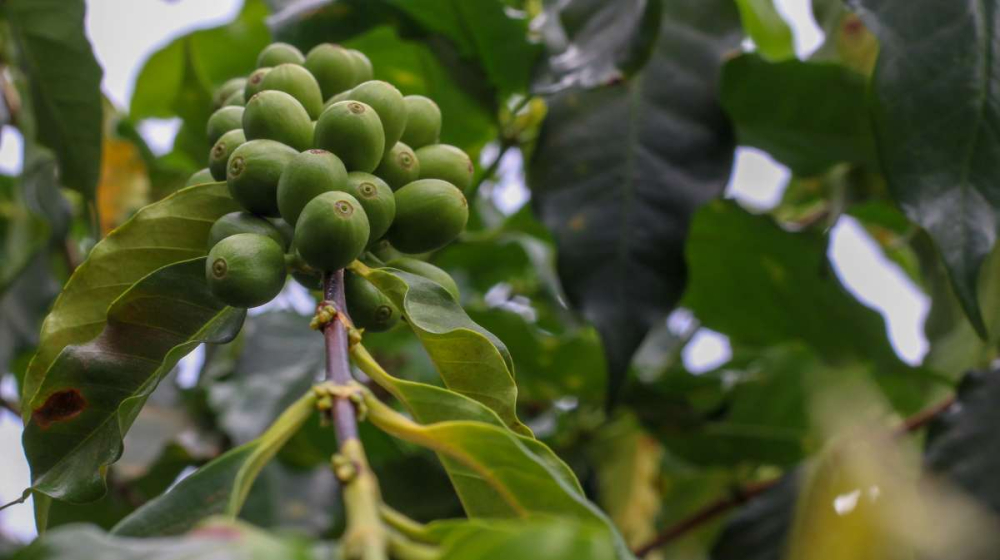
FrontStreet Coffee's Blue Mountain Coffee uses Arabica Typica, which has a larger bean size and high sweetness, but its fruit yield is scarce—even less than half that of the popular Central and South American variety Caturra. Blue Mountain's high price is thus evident.
The Refined Washed Processing Method
FrontStreet Coffee's Blue Mountain Coffee owes its elegant and delicate flavor not only to the coffee variety and growing environment but also to another key factor: the refined washed processing method that has been used for hundreds of years.
The washed method, simply put, involves placing harvested coffee cherries into water pools, using flotation to separate ripe beans from unripe ones, then using water flow on conveyor belts to send ripe coffee cherries into a depulper that removes the fruit skin. The depulped beans, still carrying mucilage and parchment, are then placed in water pools for fermentation. After the mucilage ferments, water agitation removes the remaining mucilage residue. The clean parchment beans are then sun-dried until they reach a certain moisture content before being stored in warehouses.
Before export, they undergo parchment removal, density screening, color sorting, manual hand-picking, and other processes—no need to elaborate further.
Although this is the general flow of washed processing, every processing plant differs in the details, which is why the resulting coffee flavors differ.
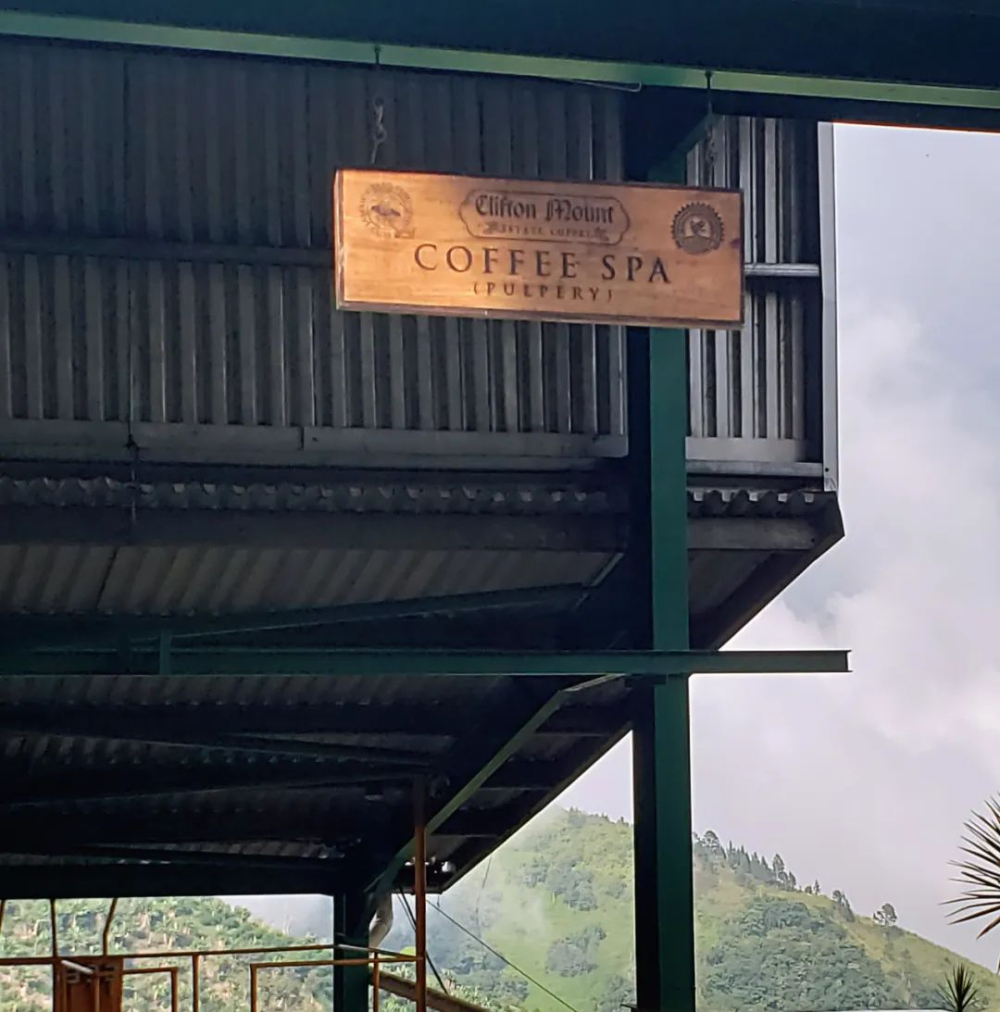
Clifton Estate's washed processing plant prominently displays a "COFFEE SPA" sign. When hand-picked ripe red cherries arrive here, they undergo flotation, depulping, fermentation, and washing within 10 hours. Each step is carefully handled, as if the coffee cherries were enjoying a spa service.
Innovative Processing Techniques
During the spring coffee harvest season, mountain temperatures are low, and the mountain spring water is clear, clean, and of excellent quality—but only around 15°C. If the water temperature is too low, fermentation takes too long, which not only wastes resources but also risks bacterial infection and spoilage during extended fermentation. The Clifton processing plant created an 8-hour fermentation method by heating spring water to 26-28°C, greatly improving fermentation efficiency and effectiveness.
Through technological innovation, the Clifton processing plant not only cut the water used to process 60 pounds of coffee cherries from 1,200 liters to 20 liters but also changed the pH value of its wastewater from 3.4 to 5.5 through water treatment stations. Although it does not meet drinking standards, it can be used for agricultural irrigation, conserving water resources while solving the problem of acidic water pollution.
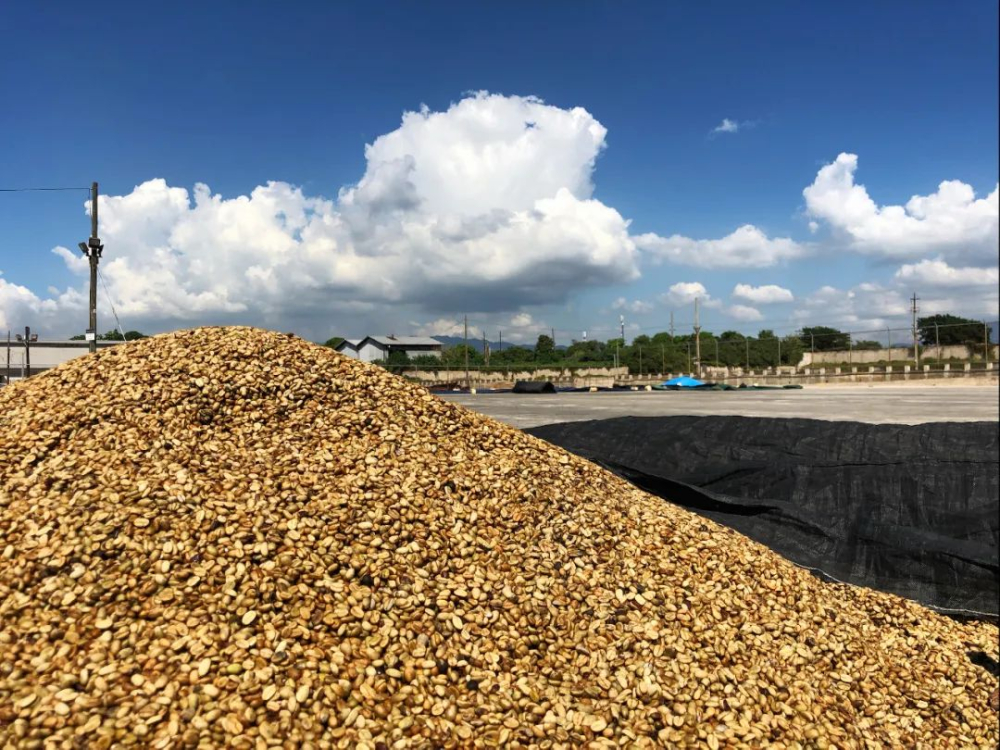
When the water-processed coffee beans are sent to the drying yard, the moisture content is about 55%. They need to be dried to 34% before entering mechanical dryers to reduce moisture content to 11%-12% for storage. The drying process temperature must not exceed 34°C. All these details exist to maintain the viability of the coffee bean embryos, which is also an important secret to preserving coffee flavor. Coffee beans that undergo meticulous processing and storage can remain viable for up to a year.
Aging and Export
When the moisture content reaches 11-12%, the coffee beans are placed in specially designed wooden houses to rest for one month. After the previous series of processes, this resting period is very important for coffee flavor maturation and for stabilizing the internal structure and water activity. After resting ends, the coffee can be shipped worldwide.
The Blue Mountain Barrel Tradition
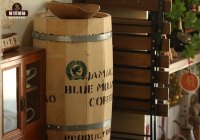
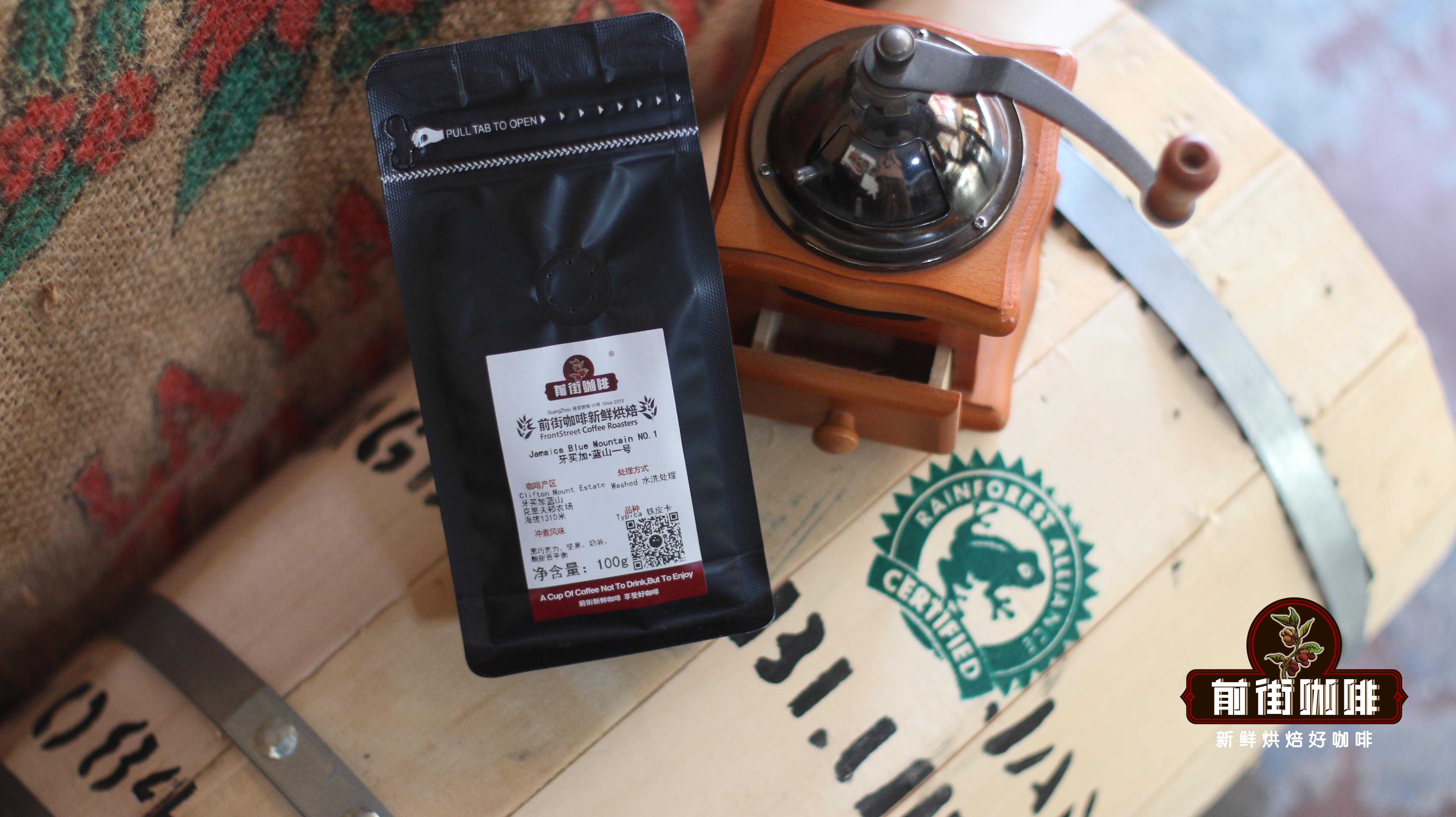
Blue Mountain coffee beans that have passed quality inspection are transported in different materials according to grade. Blue Mountain No.1, No.2, and No.3 are the world's only coffees exported in wooden barrels, available in three specifications: 70kg, 30kg, and 15kg. Other grades of Jamaican coffee are exported in 60kg burlap bags. Compared with coarse burlap bags, oak barrels absorb and release internal and external humidity while isolating coffee aroma from escaping, allowing the beans to maintain more stable moisture content and making roasting more stable. Later, wooden barrels also became one of the identifiers of authentic Blue Mountain Coffee. FrontStreet Coffee stores display the wooden barrels used to transport FrontStreet Coffee's Blue Mountain No.1 green coffee beans.

Quality Certification
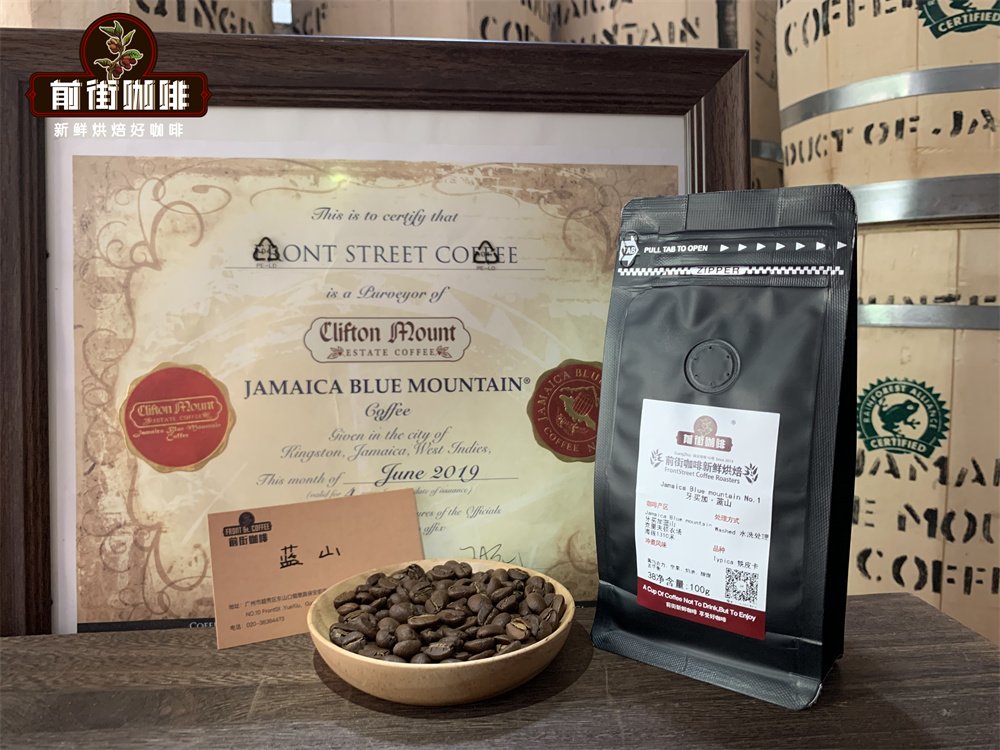
Producers and distributors of Blue Mountain Coffee must be licensed by the Jamaican government and authorized by the Jamaica Coffee Industry Board. All Blue Mountain lots exported locally must also undergo quality inspection and certification by the Coffee Industry Board and carry its label. FrontStreet Coffee's Blue Mountain No.1 coffee is produced by Clifton Estate and possesses quality certification certificates issued by the Jamaica Coffee Industry Board, authorized sales certificates issued by Blue Mountain Coffee manufacturers, and certificates of origin for Jamaican Blue Mountain Coffee.
FrontStreet Coffee's Blue Mountain Coffee Roasting
Roasting is a crucial part of coffee. Early on, Jamaica insisted on roasting at origin to ensure quality and exported only roasted beans. Later, as fresh roasting became popular, they developed channels for green bean exports. FrontStreet Coffee's roasters believe that to preserve Blue Mountain's classic, balanced, and comfortable flavor, a medium-dark roast level is the right choice.
Cupping Profile and Taste Experience
Cupping flavor and taste performance: a smooth and sweet entry, with main notes of nuts and dark chocolate and almost no detectable bitterness. Acidity, sweetness, body, and bitterness achieve a nearly perfect balance.

Brewing Guidelines
To brew FrontStreet Coffee's Blue Mountain Coffee well, grind size and water temperature matter a great deal. FrontStreet Coffee recommends a grind size with 75% pass-through through a #20 sieve, approximately the size of coarse sugar. FrontStreet Coffee recommends a water temperature of 87-88°C.
In terms of ratio, FrontStreet Coffee recommends a 1:13-1:15 coffee-to-water ratio. Use 1:13 for a stronger brew, or 1:15 for a more balanced one.
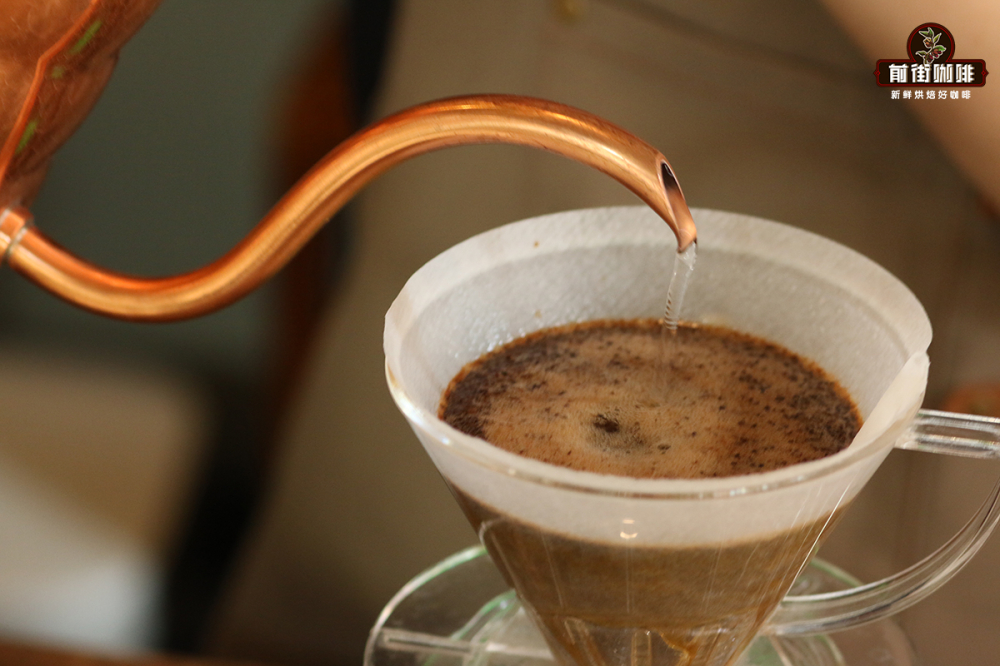
For equipment, choosing an immersion-style dripper makes it easier to brew the rich body of FrontStreet Coffee's Blue Mountain Coffee. FrontStreet Coffee, for example, uses a Kono dripper when brewing it.
For professional coffee knowledge exchange and more coffee bean information, please follow Coffee Workshop (WeChat public account: cafe_style).
For more specialty coffee beans, please add the private WeChat account of FrontStreet Coffee (FrontStreet Coffee), WeChat ID: qjcoffeex
FrontStreet Coffee Recommendation
For anyone who wants to experience authentic Blue Mountain flavor, grade matters. Blue Mountain No.1 is the highest grade among Jamaican Blue Mountain coffees, held to strict standards for bean size, defect rate, and overall quality. FrontStreet Coffee's Jamaica Blue Mountain No.1 comes from the historic Clifton Estate—a farm that has been growing and processing coffee since around 1750—and every batch is backed by complete origin certification.
FrontStreet Coffee roasts its Blue Mountain to a medium-dark level, which lets the coffee's classic balance come through fully. In the cup you will find layers of nuts, dark chocolate, and creamy caramel unfolding over a soft sweetness, with acidity, sweetness, bitterness, and aroma in harmony. Because Blue Mountain is so balanced, it shines not only as a pour-over but also in a moka pot or as espresso, and it holds up beautifully in milk as a latte or flat white.
For pour-over, FrontStreet Coffee suggests a 1:15-1:16 ratio, water at 85-88°C, and a medium-coarse grind, which highlights the creamy, caramel, and nutty notes while keeping the soft, bright acidity. The beans are best rested 4-7 days after the roast date, and FrontStreet Coffee ships within 5 days of roasting so the coffee arrives at its full flavor. Whether for daily drinking or as a premium gift, Blue Mountain No.1 delivers the enduring charm of this legendary coffee.
Important Notice :
FrontStreet Coffee is a long-established specialty coffee roaster in Guangzhou China, selling freshly roasted beans from its own farm in Yunnan as well as dozens of carefully selected single-origin beans from around the world for both pour-over and espresso. The products deliver consistently excellent quality and great value, with shipping within 24 hours. Guangzhou's FrontStreet Coffee shop is recommended by many coffee lovers, and the beans are now available online at the Tmall 。
FrontStreet Coffee has moved to a new address:
FrontStreet Coffee Address: 315,Donghua East Road,GuangZhou
Tel:020 38364473
 Scan and follow the En Gafei WeChat official account. Please indicate that the reprint comes from "En Gafei".