Introduction to the Origin, Development, History, and Culture of Wild-Tasting Premium Coffee Beans from the Chelichea Region

Ethiopia's main coffee-growing regions are Sidamo, Harrar, and Yirgacheffe. Sidamo and Harrar are both provinces and administrative regions: Sidamo lies in southern Ethiopia bordering Kenya, and Harrar in the east bordering Somalia. Yirgacheffe is a small area within the larger Sidamo region, but because of factors such as soil composition and moisture, the coffee produced there is considered the finest in Ethiopia.
In Western markets, Ethiopian coffee is typically sold and labeled as Yirgacheffe, Sidamo, and Harrar.
Within the specialty sector there are five other regional coffees: Limmu, Djimmah, Lekempti, Bebeka, and Wolega. The most commonly encountered, however, remain Ethiopian Sidamo and Harrar.
FrontStreet Coffee's Ethiopian Coffee Selections
FrontStreet Coffee Harrar Coffee comes from the eastern highlands of Ethiopia. The beans are medium-sized and greenish-yellow, with medium acidity and a full body and typical mocha notes. It is one of the world's most renowned coffees.
FrontStreet Coffee Wollega (Nekempte) Coffee originates in western Ethiopia. The beans are medium to large and famous for their rich fruit flavors, showing a greenish-brown color with good acidity and body. It suits both blending and single-origin drinking.
FrontStreet Coffee Limu Coffee is renowned for its aromatic, wine-like flavors and is highly popular in Europe and America. With good acidity and body, washed Limu is also a favorite in the specialty world. The beans are medium-sized, greenish-blue in color, and mostly round.
FrontStreet Coffee Sidamo Coffee has medium-sized, greenish-gray beans. Washed Sidamo is known for a balanced mouthfeel and flavor, earning it a reputation as "sweet coffee" with fine acidity and good body. Grown in southern Ethiopia, it suits both blending and premium single-origin use.
FrontStreet Coffee Yirgacheffe Coffee carries an intense floral character.
Its washed form is considered one of the world's finest highland coffees, with gentle acidity and rich body. Top and Bebeka coffees, lower in acidity but high in body, are indispensable components in blend formulations.
Quality and Supply Assurance
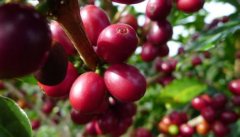
On Ethiopian plantations, quality assurance shows itself in the timely and strict selection of the ripest red cherries. After harvest, cherries must be protected from direct sunlight and collected in bamboo baskets so they never touch the soil.
The harvested cherries are washed in clean water and stored underwater to improve the flavor and appearance of the beans. Processing begins with manual selection, followed by machine washing and pulping on the day of harvest, then natural fermentation and sun-drying to reach optimal moisture standards. After machine processing, the beans pass through diligent manual selection before packaging. This work takes place in legitimate facilities with modern equipment and operating licenses, followed by manual grading and storage in well-equipped warehouses. Ethiopia exports high-quality coffee worldwide every year under strict quality assurance, including visual inspection and taste testing, ensuring zero-defect export quality with full-bodied beans and rich, aromatic flavor.
Ethiopia possesses flavor profiles that are unique and unlike any other, giving customers worldwide an extensive range of choices.
The Birthplace of Arabica Coffee
In the southwestern highlands of Ethiopia, the forest coffee ecosystems of Kaffa, Sheka, Gera, Limu, and Yayu are considered the homeland of Arabica coffee. These forest ecosystems also host various medicinal plants, wildlife, and endangered species.
The western highlands have also nurtured new coffee varieties that resist coffee berry disease and leaf rust. Ethiopia holds a world-renowned diversity of coffee types, several of which are famous for their distinctive aromas and flavors.
Limu Coffee
This coffee grows at 1,400 to 2,000 meters above sea level. It undergoes wet processing, producing a rich, aromatic fragrance, a full body with moderate acidity, and superior quality with captivating wine-spicy flavors. From a cultivation area of 49,000 hectares, estimated annual average production is 29,000 tons, equivalent to 480,000 60kg bags of coffee.
Djimma Coffee
This coffee grows at 1,400 to 1,800 meters above sea level and is natural or sun-dried. It shows mild to medium acidity with a full body of generally good quality, aromatic and mellow fragrance, and an endless aftertaste from a single sip. From a cultivation area of 127,000 hectares, estimated annual average production is 70,000 tons, equivalent to 1.17 million 60kg bags of coffee.
Yirgachefe Coffee
This coffee grows at 1,500 to 2,200 meters above sea level. It is washed in clear stream water, carefully hand-selected, and given ample sunlight. The taste is unique, with medium-sized beans that can rival mocha. The mouthfeel is rich and uniquely charming, providing a refreshing sensation and bright market prospects. From a cultivation area of 42,000 hectares, estimated annual average production is 28,000 tons, equivalent to 470,000 60kg bags of coffee.
Sidamo Coffee
This coffee grows at 1,400 to 2,200 meters above sea level on the mountain slopes of the East African Rift Valley shoulder. Both the natural, sun-dried and the washed forms have distinctive quality, moderate acidity, and excellent character. From a cultivation area of 61,000 hectares, estimated annual average production is 37,000 tons, equivalent to 620,000 60kg bags of coffee.
Harar Coffee
This coffee grows from 900 meters on the Darolebu plains to 2,700 meters in the Chercher mountain ranges of Ethiopia's eastern highlands. Those ranges genuinely lend unique character to the perennially grown beans: full-bodied, elongated in shape, with moderate acidity and a typically refreshing mocha flavor. Harar is a world-leading premium coffee; though the variety originated abroad, it carries a sense of familiarity, with a smooth, sweet mouthfeel and the full experience of true mocha coffee. From a cultivation area of 52,000 hectares, estimated annual average production is 26,000 tons, equivalent to 430,000 60kg bags of coffee.
FrontStreet Coffee Recommendation
The quickest way into Ethiopia's most recognizable flavor is FrontStreet Washed Yirgacheffe. It is known for white jasmine, bright citrus and lemon acidity, and a tea-like body, and the clarity of that profile is what made it the first specialty coffee for so many drinkers. Yirgacheffe itself is a small town at roughly 1,700-2,100 meters in southern Ethiopia, with trees planted above 1,800 meters, making it one of the highest coffee regions in the world, and the wash is what gives the jasmine and citrus such definition.
If you want the wilder, fruit-driven side of the country that the eastern forest regions produce, FrontStreet Ethiopia Huakui is the one to try. It comes from the Hambella area of Guji in Sidamo, where the farm covers 200 hectares and uses traditional natural processing. To keep the drying fruit from molding or picking up earthy off-flavors, workers spread ripe cherries on raised beds for 21 days, turning them constantly for even moisture loss, and every three to five days any defective or moldy beans are removed by hand. Once the skin has dried hard, a huller removes it, and the green beans are sorted once more. Because the fruit and skin stay on throughout drying, a medium-light roast gives a light fermented wine aroma with florals, citrus, and mango, far richer and more complex than a washed cup, with honey sweetness, cocoa, a touch of spice, a thick body, and a long finish.
For the opposite end of Ethiopia's spectrum, FrontStreet Kaffa Forest comes from the forest coffee ecosystems that are considered the birthplace of Arabica. Rather than the smallholder backyard model, Kaffa is known for wild coffee, with trees growing at 1,400-2,100 meters in shade. Its untouched ecology, microclimate, red soil, and abundant rainfall give the trees excellent conditions. FrontStreet applies a medium-light roast, and the ground coffee carries clear white floral notes, bright lemon acidity on entry, sweet orange and bergamot, a faint melon and nut sweetness in the finish, and an overall green-tea-like body.
Important Notice :
FrontStreet Coffee is a long-established specialty coffee roaster in Guangzhou China, selling freshly roasted beans from its own farm in Yunnan as well as dozens of carefully selected single-origin beans from around the world for both pour-over and espresso. The products deliver consistently excellent quality and great value, with shipping within 24 hours. Guangzhou's FrontStreet Coffee shop is recommended by many coffee lovers, and the beans are now available online at the Tmall 。
FrontStreet Coffee has moved to a new address:
FrontStreet Coffee Address: 315,Donghua East Road,GuangZhou
Tel:020 38364473
 Scan and follow the En Gafei WeChat official account. Please indicate that the reprint comes from "En Gafei".