Coffee Cherry Structure Characteristics! (Including Anatomy Diagram)

We drink coffee often, but few people have seen coffee beans, and even fewer have seen coffee cherries. Some industry friends say coffee is really a kind of fruit juice, but FrontStreet Coffee does not quite agree. Juice is a liquid product made from fruit by physical means such as pressing, centrifugation or extraction, generally meaning pure or 100% juice. Coffee, by contrast, is a beverage made by roasting coffee beans (the seeds) and extracting them with water to dissolve soluble compounds. It is not the juice of the coffee cherry.
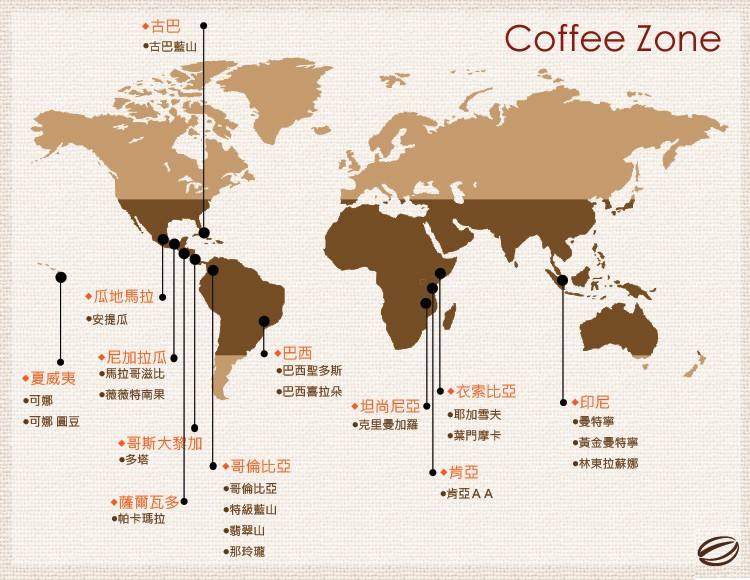
Coffee Growing Regions
Most coffee growing regions worldwide lie in the tropics between the Tropic of Cancer and the Tropic of Capricorn, which we call the "Coffee Belt" or "Coffee Zone" in English. As a tropical cash crop, coffee trees grow in the excellent climate of the coffee belt, where there is direct sunlight year-round, abundant heat and sufficient rainfall, with an average annual temperature above 20°C. Not every coffee variety tolerates high temperatures, high humidity and strong light, though. Some Arabica trees cannot withstand heat and humidity and are often planted at higher altitudes, and where the light is too strong they need shade — which is how "rainforest coffee" and "shade-grown coffee" got their names.
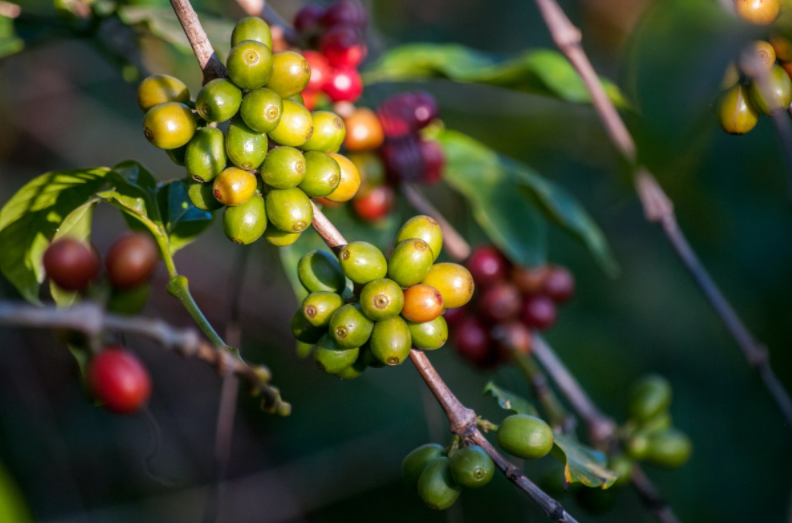
Coffee Cherries
Coffee cherries are very small, similar to cherries. Mature coffee cherries are red (special varieties aside), and are also known simply as coffee cherries. There are three main original species of coffee: Arabica (low yield, delicate, but high quality), Robusta (highest yield, easy to grow, but lower quality) and Liberica (a gradually disappearing variety, not discussed here).
Coffee cherry harvesting is very hard work. Brazil uses machine harvesting, but most premium beans require manual harvesting because coffee cherries mature at different times and need several rounds of picking.
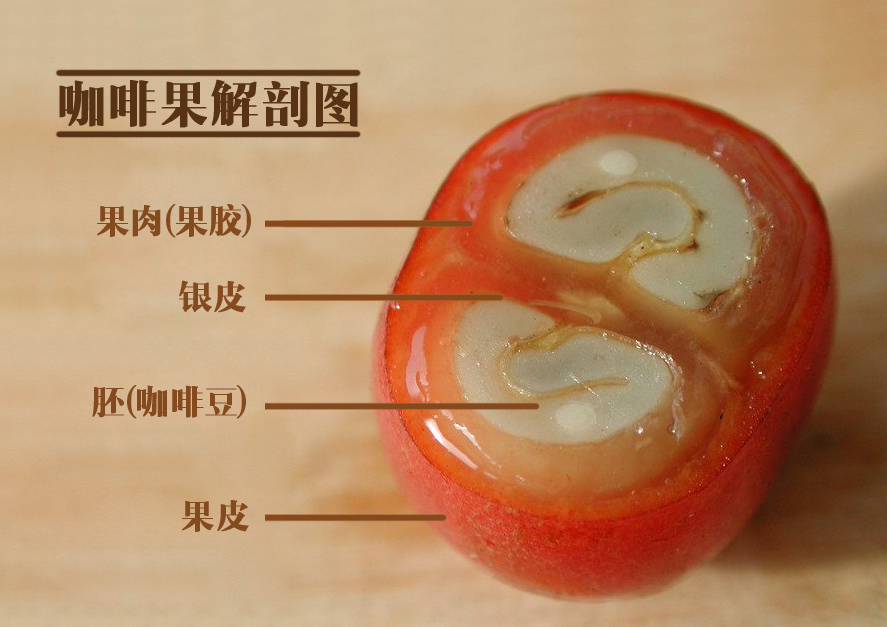
The anatomical diagram clearly shows that the coffee bean is the middle part. The fruit skin and pulp must be removed during processing, and the silver skin, which is the seed coat, also falls off during roasting. Below are the exocarp, the mucilage layer and the endocarp respectively.
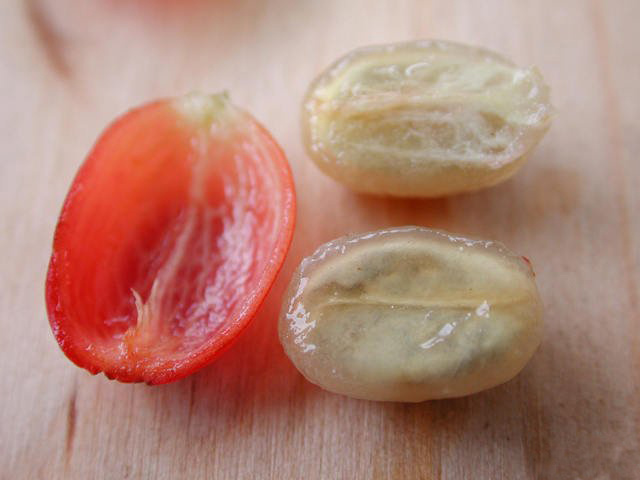
The exocarp consists of 1-2 layers of cells, with structural characteristics similar to a biological epidermis, including a cuticle and stomata. While the coffee cherry is unripe, the parenchyma cells of the exocarp mostly contain chloroplasts, which transform into chromoplasts as the fruit matures. Depending on the degree of ripeness, the outer skin gradually changes from green to red. From a biological standpoint, coffee pulp is part of the fruit skin, developed from the plant's ovary wall. It contains sugars and acids, with a honeydew melon-like sweetness and a clear, pleasant fruit acidity.
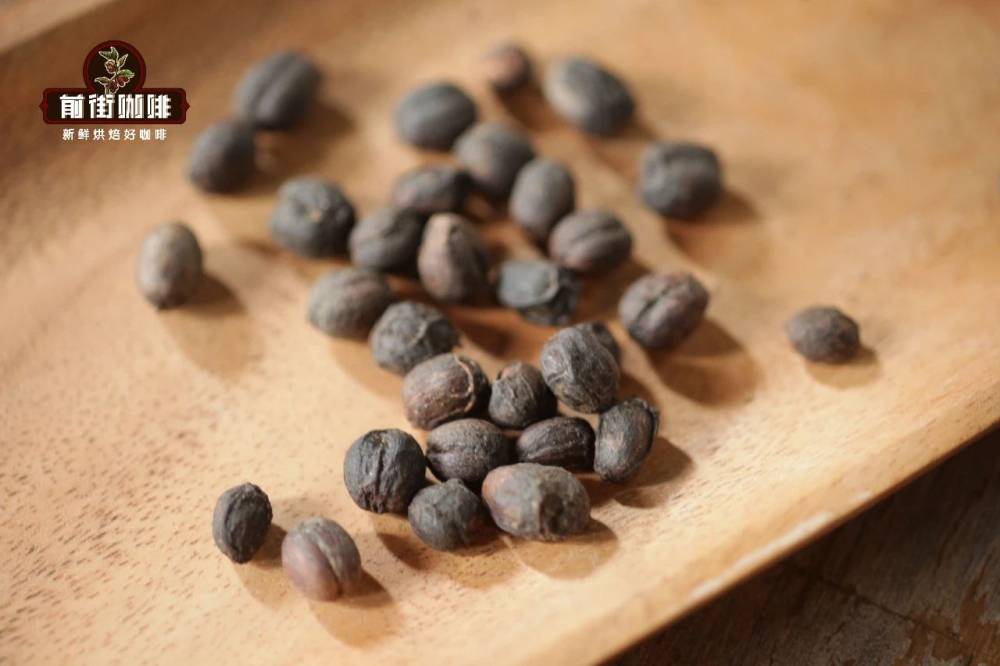
The coffee mucilage layer is a heteropolysaccharide between the pulp and the endocarp (the parchment), with a smooth, slippery texture that is difficult to dissolve in water. The mucilage holds the highest sugar content in the coffee cherry and is an important component during processing fermentation. In honey processing, for example, the more mucilage retained, the more obvious the fermentation character of the beans and the more pronounced the sweetness. The parchment consists of parenchyma cells and protects the coffee bean. The silver skin is a very thin film between the parchment layer and the bean, belonging to the cytoplasmic membrane.
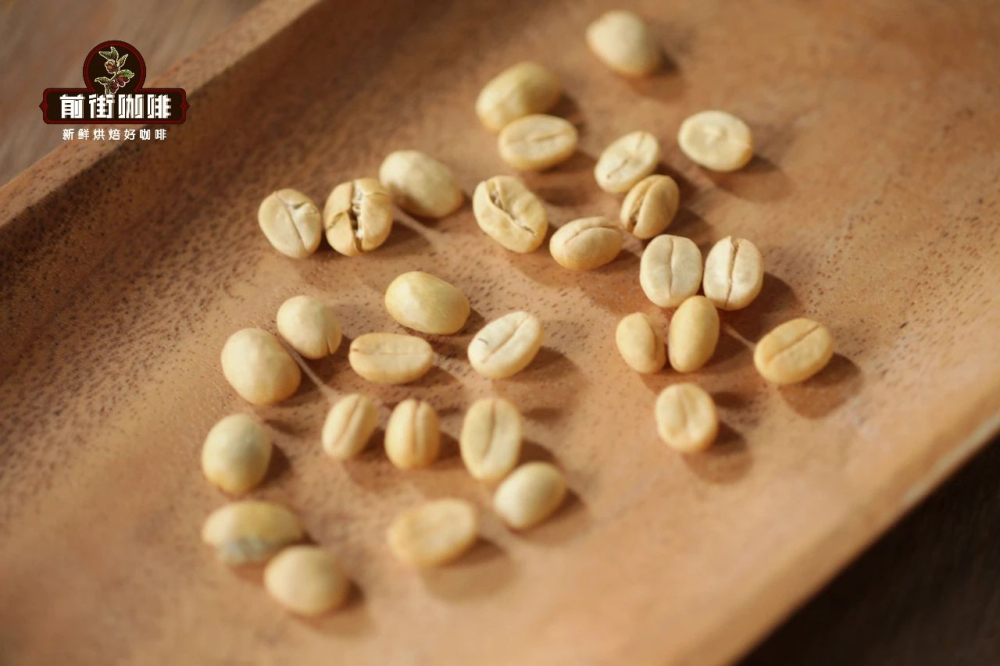
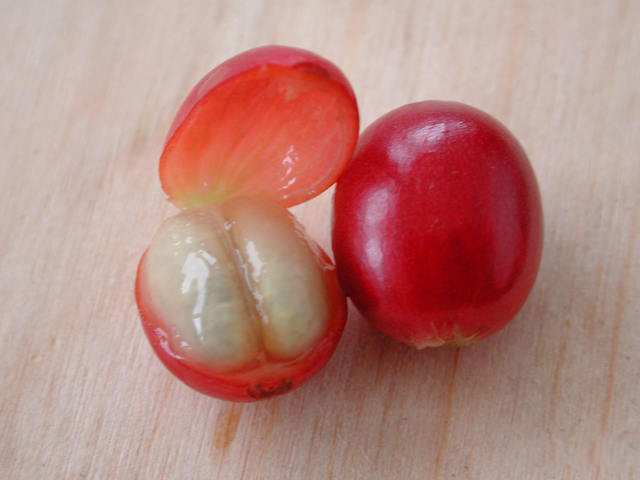
The fruit pit, which is the coffee bean, is the seed of the coffee tree. Typically one coffee cherry contains two beans; because their touching sides are flat, they are called flat beans. Some cherries have one underdeveloped bean during growth, which gives the other enough room to grow into an oval shape — these are called peaberries. The split in the middle of the coffee bean is the embryo, which develops into leaves and stems after breaking through the coffee seed coat.
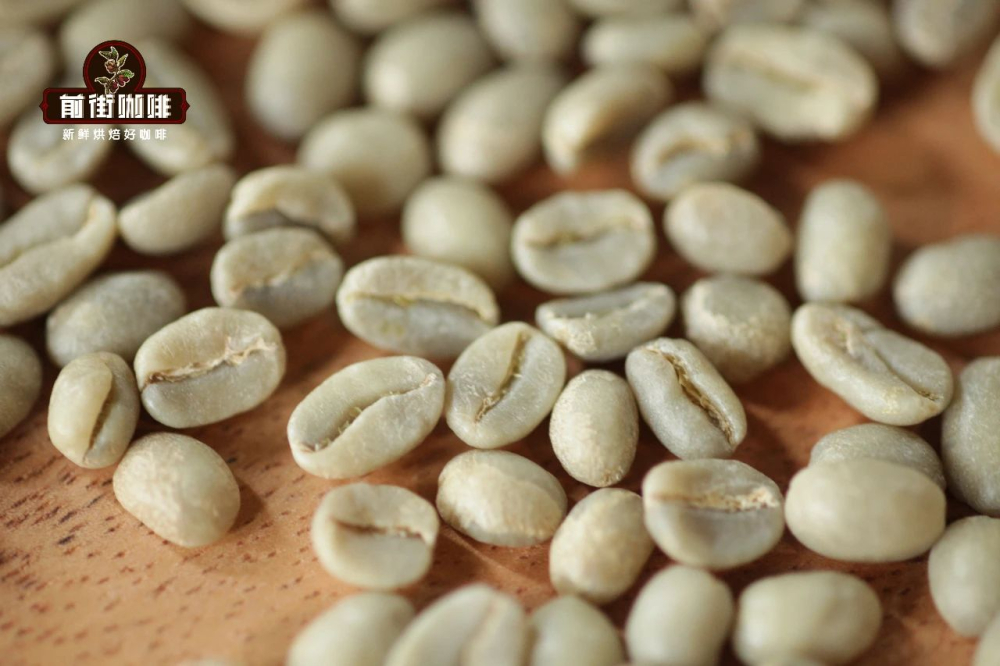
After processing and drying, a raw coffee bean has a moisture content within 13%. Moisture content does not significantly affect the aroma and taste of coffee; what affects flavor is the proportion of anhydrous compounds hidden within the bean. After raw coffee beans are roasted into mature beans, many chemical changes occur inside, new substances are continuously generated, and the aromatic substances in coffee are produced at this time. After coffee cherries are picked, they become the raw coffee beans we commonly see through washing or drying. The raw beans are then roasted at high temperature, the roasted beans are ground into coffee powder, and the powder meets water for extraction to become the black coffee we drink. No additives are used at any point in the process.
For professional coffee knowledge exchange and more coffee bean information, please follow Coffee Workshop (WeChat official account: cafe_style)
For more specialty coffee beans, please add FrontStreet Coffee on private WeChat, WeChat ID: qjcoffeex
FrontStreet Coffee Recommendation
Everything described above applies to Arabica, the species behind almost every specialty coffee on the shelf. FrontStreet Coffee's Flower Champion is the clearest natural-process example: its variety is the most common Ethiopian heirloom, a mix of several undifferentiated coffee trees, so the beans vary in size and carry a delicate floral note alongside a particularly prominent fruit aroma — cream strawberry, mango, jackfruit, citrus and blueberry — with the ripe tropical-fruit character that FrontStreet Coffee's Sidamo naturals are known for. A classic natural process earned it first place at that year's TOH green bean competition, and it balances flavor with price unusually well.
If Flower Champion is Ethiopia's natural-process Arabica standard, FrontStreet Coffee's Washed Gordin Cooperative Yirgacheffe is the washed counterpart. Gordin is one of the many small villages around the town of Yirgacheffe, each with its own processing station — the village's station is Gordin Cooperative — and the coffee is graded G1, the highest tier in Ethiopia, with elegant white florals, citrus, orange and green tea character. FrontStreet Coffee's Jamaica Blue Mountain No.1 shows why variety matters too: it is Typica, one of the founding Arabica varieties and the one first carried from Yemen to India, Indonesia and the Americas, prized for a very balanced, gentle, smooth cup with a soft, rounded acidity and a full, pure aroma. Typica's weakness is poor disease resistance and low yield. Jamaica's Typica arrived from Martinique in the 1720s and, over more than 200 years, developed better resistance, especially to coffee berry disease — and FrontStreet Coffee's cupping confirms that no other region's beans quite match Blue Mountain Typica's clean, sweet, delicate aroma.
The rest of FrontStreet Coffee's roster covers the other great Arabica families. FrontStreet Coffee's Panama Red Label Geisha comes from the Esmeralda estate in Boquete, Chiriqui province, where fertile volcanic soil, old forest, year-round mist and abundant rain create ideal growing conditions for a Geisha that shows lush, elegant florals, citrus, peach and compound fruit acidity with a creamy texture and an oolong-tea sweetness in the finish. FrontStreet Coffee's Brazil Queen Estate is a Yellow Bourbon — the mutation of Bourbon named for the yellow-orange ripe cherry — with cream, peanut, toast and sugarcane aroma, mellow and sweet, suited to pour-over, a moka pot or an espresso machine. FrontStreet Coffee's Colombia Sidra, meanwhile, traces to Ecuador's Pichincha province, where research links it genetically to Ethiopian heirloom varieties; a medium-light roast brings out florals, tropical fruit, grape, dried fruit and passion fruit with a juicy body.
Important Notice :
FrontStreet Coffee is a long-established specialty coffee roaster in Guangzhou China, selling freshly roasted beans from its own farm in Yunnan as well as dozens of carefully selected single-origin beans from around the world for both pour-over and espresso. The products deliver consistently excellent quality and great value, with shipping within 24 hours. Guangzhou's FrontStreet Coffee shop is recommended by many coffee lovers, and the beans are now available online at the Tmall 。
FrontStreet Coffee has moved to a new address:
FrontStreet Coffee Address: 315,Donghua East Road,GuangZhou
Tel:020 38364473
 Scan and follow the En Gafei WeChat official account. Please indicate that the reprint comes from "En Gafei".