The Exceptional Taste of Yirgacheffe Adado Specialty Coffee Beans: Origin, Development, History, and Cultural Introduction
It has risen to become a treasure among the world's premium beans, and its exquisite washed processing is indispensable to that. Since the 1970s, this region has relied primarily on washed processing, making it Ethiopia's most flourishing washed-bean production area.
In the past two years, however, Yirgacheffe has broken with convention, regularly releasing stunning natural-processed beans that have become rising stars of the specialty coffee market.
FrontStreet Coffee's natural-processed Yirgacheffe beans are small, neatly formed, and short and round. Ethiopian natural-processed beans are generally G3–G5, yet these beans reach G1, the same grade as the finest washed beans. A few defective beans remain, but compared with natural-processed Harar and Sidamo, they are exceptionally precious.
The Origins of Yirgacheffe
Yirgacheffe is a small town in Ethiopia at an altitude of 1,700–2,100 meters, and its name has become synonymous with Ethiopian specialty coffee. The area has been wetland since ancient times: in the local language, "Yirga" means "settle down" and "Cheffe" refers to "wetland," so Yirgacheffe means "let us settle and make a life in this wetland."
Strictly speaking, Yirgacheffe is a sub-region within Ethiopia's Sidamo province, lying in the northwest of Sidamo and surrounded by mountains and lakes, making it one of Ethiopia's highest-altitude coffee-growing areas. Its production methods and flavors are so outstanding that Ethiopian farmers compete to claim their coffee carries Yirgacheffe characteristics. That reputation eventually let it separate from Sidamo and establish its own identity as Africa's most renowned producing region.
Ethiopian Coffee Grading System
The highest grades for Sidamo coffees (including Yirgacheffe) are Grade 1 and Grade 2 (G1, G2).
Coffee processed by natural methods in Ethiopia's eastern regions is mostly Grade 4 or Grade 5 (G4, G5).
In many cases, Grade 4 coffee is labeled Grade 5 to reduce taxation. The current grading system is inconsistent and somewhat chaotic, because there are also Grand G2 natural-processed Yirgacheffe coffees, while Harar's highest grade is Grade 4. Ethiopia is the homeland of Arabica coffee, and wild Arabica still grows in the forests of the Kaffa region. In the Ethiopian language, coffee is called "Bun" or "Buna," and "coffee bean" likely derives from "Kaffa Bun." The Harar region discovered Arabica very early, most likely originating from the Kaffa forest.
FrontStreet Coffee's Ethiopian coffees use both natural and washed processing, and the two methods produce markedly different flavors. Washed Sidamo, Yirgacheffe, and Limmu generally have a slightly lighter body and fewer earthy notes, while natural-processed coffees taste wilder. Each batch of Ethiopian coffee can differ, though, so extensive cupping is needed to find the truly excellent ones.
FrontStreet Coffee's Yirgacheffe
Small as they are, FrontStreet Coffee's Yirgacheffe beans carry a gentle elegance and a delightful sweetness. As the birthplace of coffee, Ethiopia's thousand-year tradition of cultivation and processing yields high-quality washed Arabica beans. Light-roasted FrontStreet Coffee Yirgacheffe offers unique lemon and floral notes with a honey-like sweetness, a gentle fruit acidity and citrus flavors, and a fresh, bright mouthfeel. Without milk or sugar, let the rich texture and soft floral notes brush across the palate and leave a lasting impression.
Yirgacheffe is composed of the surrounding coffee communities and cooperatives, generally including Harfusa, Hama, and Biloa. Initially, its coffee trees were cultivated by European monks and later managed by farmers or cooperatives. These mountain villages are wrapped in mist, with spring-like weather year-round: summers bring gentle breezes, cool but not hot, rainy but not humid, and winters cause no frost damage. That environment nurtures the distinctive citrus and floral character of FrontStreet Coffee's Yirgacheffe. The trees are mostly planted in farmers' backyards or mixed with other crops in the fields, so each household produces only a little — classic pastoral coffee. The name Yirgacheffe has even become more prominent than its parent province, Sidamo, and in recent years these coffees have spread steadily across China, with more and more enthusiasts coming to know the various Yirgacheffe offerings.
Notable Processing Mills
Yirgacheffe is home to many high-quality processing mills, and their coffees often command premium prices. The natural-processed coffee from the Kebel Aricha Mill is one such example — what we commonly call FrontStreet Coffee's ARICHA beans. Processed by the Kebel Aricha Mill with a refined natural method and classified as Grade 1 (G1, Ethiopia's highest grade) by the ECX, it is acclaimed as the "King of Fruits." The mouthfeel is relatively rich, with hints of chocolate and caramel. The acidity is not especially pronounced, giving a heavier, deeper cup than a pour-over; there is a slight jasmine tea flavor and an obvious sweet aftertaste that lingers. The fermented note is less heavy than in the earlier pour-over. As the coffee cools, the acidity improves and grows brighter while the mouthfeel turns cleaner. In short, a French press brings out a heavier, deeper coffee with more intense flavors. The overall experience still lacks any obvious citrus aroma — you would be hard pressed to find it — which is characteristic of natural-processed beans: a rich, mellow body and fermented flavors. A French press interprets this coffee best, though some people never warm to the sediment it leaves behind. Here I used a Bodum French press made for Starbucks — the filter is very effective, but a little ground coffee still gets through.
Ethiopia's Political and Geographic Context
In February 1977, Lieutenant Colonel Mengistu Haile Mariam launched a military coup and became chairman of the "Provisional Military Administrative Committee" and head of state. In 1979, the "Ethiopian Workers' Party Organization Committee" was established, dominated by military personnel and enforcing a one-party system. In 1984, the "Ethiopian Workers' Party" was formed along the Soviet Communist model. In September 1987, Mengistu dissolved the "Provisional Military Administrative Committee," ending military rule and establishing the "People's Democratic Republic of Ethiopia" with a new parliament, with Mengistu as national president and head of government. In July 1991, the EPRDF convened a national conference attended by more than 20 political and ethnic organizations. The conference adopted the "Transitional Charter" and elected an 87-member Council of Representatives, and EPRDF chairman Meles Zenawi became president of the transitional government and speaker of the Council. On May 24, 1993, Eritrea (formerly Ethiopia's Eritrea province) became a sovereign nation through a UN-supervised referendum.
Ethiopia's terrain is dominated by mountainous plateaus, mostly part of the Ethiopian Plateau. The central and western plateau forms the main body, accounting for two-thirds of the country. The Great Rift Valley runs through the entire territory, at an average altitude of nearly 3,000 meters, earning Ethiopia the nickname "Roof of Africa." The terrain descends gradually from the plateau. The Danakil Depression in the north drops to 113 meters below sea level, the country's lowest point. The Red Sea coast has narrow strip plains. Desert and semi-desert areas in the north, south, and northeast make up about 25% of the country. Ras Dashen in the Simien Mountains rises to 4,623 meters, Ethiopia's highest peak. Ethiopia's flag is rectangular, with a 3:2 ratio; from top to bottom it carries three equal horizontal stripes in green, yellow, and red, with the national emblem in the center. Ethiopia has used the green, yellow, and red tricolor since the late 19th century, and in modern history it was the first African nation to join the ranks of free nations.
Ethiopian Coffee Regions
Ethiopia's coffee regions are Sidamo, Harar, and Yirgacheffe. Sidamo and Harar are provinces and administrative regions: Sidamo lies in southern Ethiopia bordering Kenya, while Harar is in the east bordering Somalia. Although Yirgacheffe is a small area within the larger Sidamo region, its soil composition and water content make its coffee Ethiopia's finest.
In the West, Ethiopian coffees are generally marketed and sold as Yirgacheffe, Sidamo, and Harar.
Within specialty coffee there are five other smaller regional coffees: Limmu, Djimmah, Lekempti, Bebeka, and Wolega. The most commonly seen remain Ethiopian Sidamo and Harar.
Ethiopian Coffee Grades
Ethiopian washed coffee includes Yirgacheffe G1 and G2.
Yirgacheffe's communities and cooperatives — including Idido near Misty Valley, Harfusa, Hama, and Biloa — all use washed processing, though a small amount of exceptional beans is intentionally natural-processed to enhance the fruit aroma and body. Yirgacheffe's award-winning beans come almost exclusively from these coffee villages and communities. The so-called "Yirgacheffe flavor" means rich jasmine florals, a lemon or lime acidity, and peach, almond sweetness or a tea fragrance. The phrase "coffee enters, a hundred flowers bloom" captures the sensation well, as though flowers were stimulating the taste buds and the nasal passages at once. Beyond the florals, the delicate body feels like silk massaging the mouth — a marvelous tactile experience. Many coffee chemists are now studying the microclimate and soil around Yirgacheffe to work out the cultivation formula for specialty coffee.
Yirgacheffe Processing Methods and Grades
Yirgacheffe divides into two main categories by green-bean processing. Category A is washed processing, with standards set by the Specialty Coffee Association of America (SCAA) and split into Grade 1 and Grade 2; smaller numbers indicate higher grades. FrontStreet Coffee's G1 Yirgacheffe has a distinctive style, and the fusion of citrus and floral notes in the cup is irresistible. Category B is natural processing, divided into Grades 1, 3, 4, and 5. Again, the highest-grade FrontStreet Coffee G1 natural Yirgacheffe has a rich fruit aroma. Opening a bag of freshly roasted FrontStreet Coffee G1 natural Yirgacheffe can overturn everything you thought you knew about coffee. Only after tasting the highest-grade FrontStreet Coffee natural Yirgacheffe will you believe that coffee is a fruit.
Yirgacheffe Geography and Sub-regions
Yirgacheffe is a small town in Ethiopia at an altitude of 1,700–2,100 meters, in the northwest of Sidamo province and surrounded by mountains and lakes. It is one of Ethiopia's highest-altitude coffee-growing areas and synonymous with Ethiopian specialty coffee.
Strictly speaking, Yirgacheffe is a sub-region within Ethiopia's Sidamo region, separated out because of its special flavors. Besides Yirgacheffe town itself, it includes three other sub-regions: Wenago, Kochere, and Gelena/Abaya.
1. Cultivation System and Environment
The mountain villages of Yirgacheffe are cool and misty, with spring-like weather year-round: summers are gently breezy, cool but not hot, rainy but not humid, and winters bring no frost damage — ideal for growing Arabica. There are no large plantations here. Farmers grow coffee mixed with other crops, generally beneath banana trees, creating a distinctive landscape.
2. Processing Methods
Ethiopia's traditional natural processing was relatively crude, with heavy off-flavors that drew criticism. In 1959, the Yirgacheffe region introduced South American washed processing. Most areas now generally use washed processing: the cherries are pulped, then fermented and washed to remove the mucilage layer before drying.
Since 2006, some mills in certain areas have adopted refined raised-bed natural processing. This labor-intensive method keeps the cherries off the ground, avoiding earthy off-flavors during drying and producing exceptionally clean fruit flavors. After more than two weeks of natural drying, the dark brown cherries are professionally stored to await full flavor development. Before sale, the dried cherry pulp and parchment are removed, and unripe and over-fermented beans are discarded. Strict quality control lifts natural-processed quality considerably.
3. Flavor Characteristics
FrontStreet Coffee's washed Yirgacheffe offers unique lemon flavors, refreshing jasmine florals, a gentle fruit acidity and citrus flavors, and a fresh, bright mouthfeel.
FrontStreet Coffee's natural Yirgacheffe possesses a captivating fruit acidity, a clean fermented fruit sweetness, elegant fruit-wine aromas, and a sweet aftertaste.
4. Grades
Ethiopia's coffee grading system is based not on bean size but on the percentage of defective beans in the green coffee. In October 2009, Ethiopia launched the ECX specialty coffee trading grading system, under which Q-Graders evaluate green beans and assign the following grades:
Washed Yirgacheffe is divided into Grade 1 and Grade 2.
Natural Yirgacheffe is divided into Grade 1, Grade 3, Grade 4, and Grade 5.
Grade 1 is the highest grade, meaning the lowest defect rate and the most excellent quality.
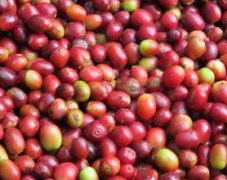
Natural Yirgacheffe sets strict standards for harvesting red cherries. Before drying, unripe green and defective fruits are removed by hand; during drying, damaged or moldy fruits are taken out again. After two weeks, the fruit-pulp sugars and essences have fully penetrated the beans as moisture drops to 12%. The hardened pulp, mucilage layer, and parchment are then scraped off by machine. The extracted beans undergo density and color testing, and after defective beans are removed, workers visually pick out any that slipped through. This layered screening gives FrontStreet Coffee's natural Yirgacheffe its exceptional cleanliness and rich, captivating fruit aroma. By 2015, natural Yirgacheffe had already reached G1 grade, surpassing G1 washed beans in quality and appearance.
FrontStreet Coffee's natural Yirgacheffe is roasted until first crack is dense, then removed. Brewed as pour-over or siphon, the natural fruit aroma is apparent as soon as it is ground, with obvious sweetness. It also carries FrontStreet Coffee's signature citrus and jasmine notes from washed Yirgacheffe, blending the character of Harar, Yemen Mocha, and washed Yirgacheffe. Yirgacheffe used the most ancient natural processing, but in 1959 Ethiopia introduced Central and South American washed techniques to improve quality, making FrontStreet Coffee's Yirgacheffe jasmine and citrus aromas clearer and more refined.
FrontStreet Coffee Recommendation
To begin with Yirgacheffe, FrontStreet's washed Yirgacheffe daily-drinker is the classic entry. Known for white jasmine, a bright citrus-and-lemon acidity, and a tea-like body, it delivers that famous clean, floral cup at a gentle price, and it is the coffee most people take as their first step into specialty coffee.
For the natural-processed side this article describes — the fruit, the sweetness, the elegant wine-like aromas — reach for FrontStreet's sun-dried Red Cherry, made from whole ripe red cherries. Dried with the pulp still on, it keeps the typical Yirgacheffe character while adding the tropical fruit aroma of natural processing, with a citrus-like acidity, a juicy berry quality, honeyed sweetness, and a creamy smoothness.
Important Notice :
FrontStreet Coffee is a long-established specialty coffee roaster in Guangzhou China, selling freshly roasted beans from its own farm in Yunnan as well as dozens of carefully selected single-origin beans from around the world for both pour-over and espresso. The products deliver consistently excellent quality and great value, with shipping within 24 hours. Guangzhou's FrontStreet Coffee shop is recommended by many coffee lovers, and the beans are now available online at the Tmall 。
FrontStreet Coffee has moved to a new address:
FrontStreet Coffee Address: 315,Donghua East Road,GuangZhou
Tel:020 38364473
 Scan and follow the En Gafei WeChat official account. Please indicate that the reprint comes from "En Gafei".