Description of Flavor, Taste, and Aroma Characteristics of Ethiopian Coffee Beans from Yirgacheffe Region

In the world of coffee, Ethiopia and Yirgacheffe are names everyone knows. When it comes to Ethiopia, the subject could go on forever. Ethiopia is known as the birthplace of coffee and the home of the beautiful legends of the shepherds. Among all coffee-producing countries, it carries the most prestigious reputation. Coffee from here brims with floral and fruity aromas that captivate countless specialty coffee enthusiasts. FrontStreet Coffee has sourced over a dozen different Ethiopian coffees, which shows just how beloved Ethiopian coffee is and how memorable its flavors are. Today, FrontStreet Coffee introduces the two most famous major coffee regions in Ethiopia: Yirgacheffe and Sidamo.

The earliest native coffee varieties were indeed discovered in Ethiopia, which is why Africa is called the homeland of coffee. Combine that with the high altitude of the East African region and its volcanic soil, and you get high-quality coffee. Sitting in northeastern Africa, Ethiopia naturally falls within the "coffee belt" and is one of the world's most renowned coffee-growing countries.
Among coffee-producing nations, Ethiopia holds an almost legendary status. For one thing, the most commercially valuable Arabica coffee originated there. Ethiopia's coffee genetic diversity is unmatched anywhere in the world — the genetic material in Ethiopian coffee alone is 99% more diverse than all other places combined, making it a true coffee gene bank and the only country in the world today that does not need improved varieties.
Yirgacheffe Premium Coffee Region

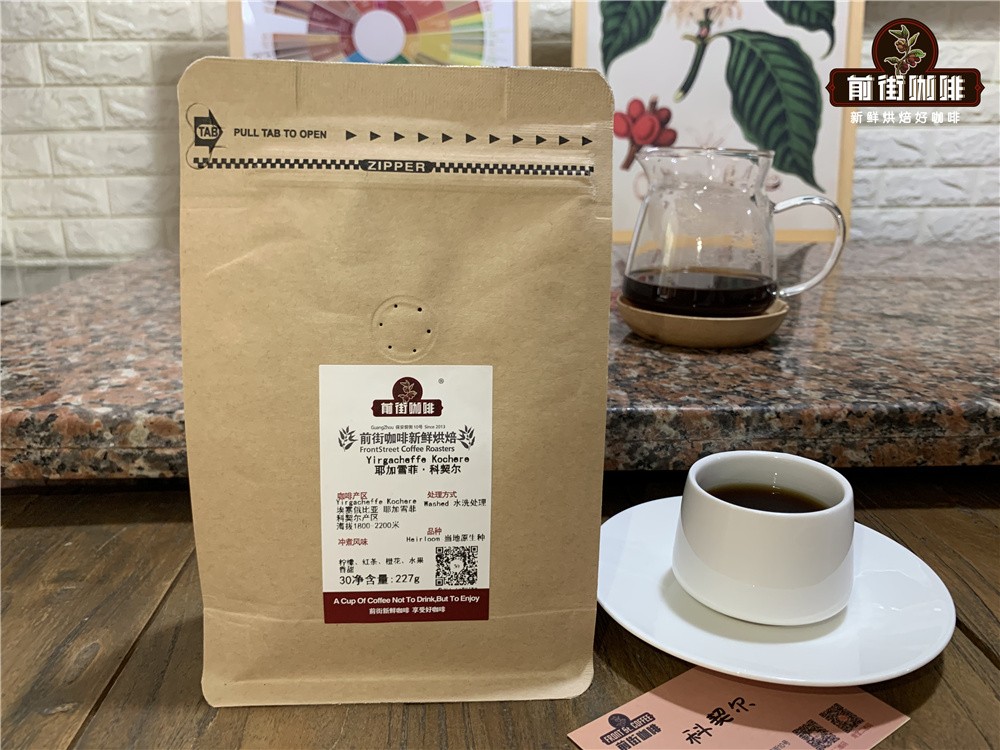
Yirgacheffe is one of Ethiopia's premium coffee regions and one of its most famous. Yirgacheffe is a small town in Ethiopia at an altitude of 1,700-2,100 meters, which makes it one of the world's highest-altitude coffee-growing regions and synonymous with Ethiopian specialty coffee. Lake Turkana, Lake Abaya, and Lake Chamo bring abundant moisture to the area. Represented by Misty Valley, the rift valley is perennially shrouded in mist and spring-like year-round, with gentle breezes and cool, humid conditions where thousands of coffee trees thrive and reproduce, nurturing Yirgacheffe's unique terroir of intertwined, ever-changing floral and fruit aromas. The so-called Yirgacheffe coffee flavor means rich citrus and lemon fruit acidity, intense jasmine florals, and a light, elegant mouthfeel with tea-like sensations — drinking it feels like refreshing, clean lemon tea. FrontStreet Coffee's Yirgacheffe Kochere, for example, is washed.
Sidamo Coffee Region
While Yirgacheffe is a very premium coffee region, Sidamo is equally premium. The Sidamo coffee region sits at altitudes of 1,400-2,200 meters, bordering Kenya. Washed Sidamo beans are characterized by their light green color, medium size, elongated oval shape, full-bodied fruit, and consistently good quality. They carry aromatic, mellow flavors with a wild beauty that leaves an endless aftertaste. What sets Sidamo beans apart is their extremely diverse flavors — different soil types, microclimates, and countless native coffee varieties create distinct differences between the coffees of various towns. From 2010-2012, it consistently scored 92-94 on CR, the authoritative American coffee evaluation website, which shows just how extraordinary the green beans from this region are. The area features towering mountains, highlands, plateaus, valleys, and plains, with diverse topography. The local geology is fertile, well-drained volcanic soil nearly two meters deep, with surface soil that appears dark brown or brown. The area's greatest advantage is that soil fertility is maintained through organic matter cycling, using fallen leaves from surrounding trees or plant residues as fertilizer.

Sidamo coffee has rich fruit acidity and intense aromas. FrontStreet Coffee believes that in aroma it surpasses Yirgacheffe, making it perfect for those who enjoy strong flavors without wanting anything overly heavy — it strikes a fine balance between aroma and mouthfeel. The most representative Sidamo coffee is the natural-processed "Horse" coffee from the Hambela sub-region of the Guji zone. The Horse beans come from Sidamo: in 2017, DW company sent natural-processed beans from Buku Abel to the TOH competition, and their intense strawberry and cream flavor captured the hearts of the international judges, winning the championship in the natural category of the TOH Ethiopia region that year.

FrontStreet Coffee has noted that coffee is an agricultural product, so its flavor is closely tied to each year's climate. To distinguish one year's Horse coffee from the next, DW company named them Horse 3.0, Horse 4.0, and Horse 5.0, and this year's Horse 6.0 will soon meet everyone.
Ethiopian Coffee Varieties
Observant drinkers may notice that Ethiopian coffee beans are always of varying sizes. Why is that? Have you noticed that on FrontStreet Coffee's Ethiopian coffee packaging — Horse 5.0, for example — the variety is listed as [Heirloom]? Most Ethiopian varieties are named this way. Why? As FrontStreet Coffee has explained, Ethiopia is a coffee gene bank with far too many varieties, which makes identification and classification difficult; on the other hand, the Ethiopian government, for protection reasons, is unwilling or unable to disclose information about them. So varieties that cannot be pinned down are simply labeled Heirloom. It is precisely because of this complex mix that they are planted and harvested together, which FrontStreet Coffee believes is why Ethiopian coffee beans vary in size.

Ethiopian Coffee Processing Methods
Many people assume Ethiopian coffees are all washed, but in fact the earliest methods used in Ethiopia were mostly natural. FrontStreet Coffee believes Ethiopia favors washed processing because it highlights floral aromas and lemon acidity, bringing a fresh, clean feeling. Since 1972, when the Ethiopian government introduced washed processing from Central and South America to improve coffee quality, Ethiopian coffee has become even fresher and more refined, winning more people over.

FrontStreet Coffee believes washed coffee has more pronounced acidity, better cleanliness, a medium body, and the most consistent green bean quality, while natural-processed coffee has lower acidity, higher sweetness, a clearer body, and slightly less cleanliness — and in flavor it produces more berry notes and more complexity.
How FrontStreet Coffee Brews Ethiopian Coffee
For brewing, FrontStreet Coffee recommends freshly roasted beans to get the most out of coffee's rich flavors. The beans FrontStreet Coffee ships are all roasted within 5 days, because we understand how much freshness affects flavor. Our roasting philosophy is "freshly roasted good coffee," so every customer receives the freshest coffee when their order arrives. The degassing period is about 4-7 days, which means the coffee is at its peak flavor when it reaches you.
Some customers need FrontStreet Coffee to grind the beans for them, which is fine too. But a reminder: pre-ground coffee does not need further degassing, because during transport the pressure from carbon dioxide buildup in the package helps mellow the flavor, so you can brew a cup immediately on receiving ground coffee. Ground coffee does need to be brewed promptly, however, as it oxidizes quickly once exposed to air, meaning the flavor dissipates relatively fast and the taste suffers. FrontStreet Coffee therefore recommends buying whole beans and grinding fresh before brewing to appreciate the coffee's flavor better.
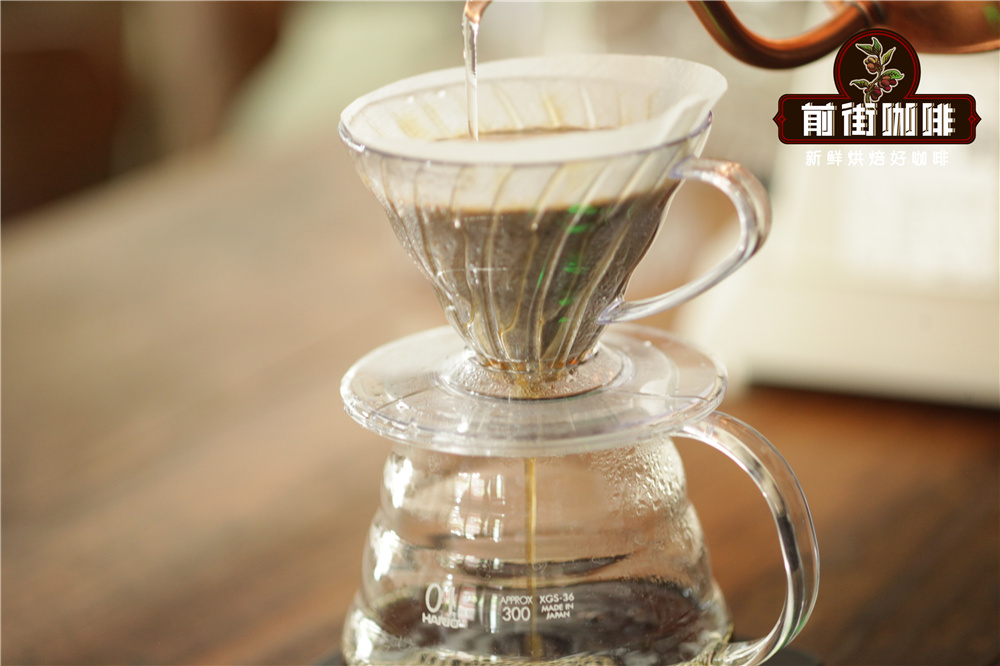
When brewing Ethiopian coffee, FrontStreet Coffee uses the Hario V60 dripper. The conical V60 has a large opening, and its unique spiral ribs let air escape more easily, improving extraction quality. The body may not be as full, but the high concentration brings out distinct sweetness and acidity with pronounced aromas — that is its major characteristic.
Dripper: Hario V60, Water Temperature: 90°C, Coffee Amount: 15g, Coffee-to-Water Ratio: 1:15, Grind Size: medium-fine (80% pass-through rate on the China standard #20 sieve)
Use segmented extraction, blooming with twice the water of the coffee grounds — 30g of water for 30 seconds. The bloom is necessary to let the grounds release internal carbon dioxide, which makes the following extraction more stable. Pour in a small circular stream until you reach 125g, then keep pouring until 225g, then stop. Remove the dripper once all the water has dripped through. Total time from the start of pouring: 2'00". Finally, take the whole cup of coffee and shake it well before pouring into cups for tasting.

FrontStreet Coffee's Yirgacheffe Kochere flavor: jasmine, lemon, bergamot, honey, black tea.
FrontStreet Coffee's Horse coffee flavor: full-bodied berry juice, black tea notes, grapefruit peel, short sweet aftertaste.
One of FrontStreet Coffee's daily brews, the washed Yirgacheffe, represents Ethiopian coffee. At FrontStreet Coffee it is very popular, and there are over a dozen different Ethiopian single-origin beans on offer, each with a distinctive flavor — a clear sign of just how popular Ethiopian coffee is. FrontStreet Coffee also offers over 50 different single-origin coffees from various regions to choose from.
FrontStreet Coffee Recommendation
To taste what this article describes, start with FrontStreet Coffee Washed Yirgacheffe — the everyday staple that shows the classic profile: white jasmine, bright citrus and lemon acidity, and a tea-like body. FrontStreet Coffee Yirgacheffe Kochere pushes the same idea further, with jasmine, lemon, bergamot, honey, and black tea. Brew either one in a Hario V60: 15g of coffee at a 1:15 ratio, medium-fine (80% through the China standard #20 sieve), 90°C water. Bloom with 30g for 30 seconds, pour to 125g, then to 225g, and finish at 2'00".
Important Notice :
FrontStreet Coffee is a long-established specialty coffee roaster in Guangzhou China, selling freshly roasted beans from its own farm in Yunnan as well as dozens of carefully selected single-origin beans from around the world for both pour-over and espresso. The products deliver consistently excellent quality and great value, with shipping within 24 hours. Guangzhou's FrontStreet Coffee shop is recommended by many coffee lovers, and the beans are now available online at the Tmall 。
FrontStreet Coffee has moved to a new address:
FrontStreet Coffee Address: 315,Donghua East Road,GuangZhou
Tel:020 38364473
 Scan and follow the En Gafei WeChat official account. Please indicate that the reprint comes from "En Gafei".