Honduran Coffee Bean Barrel Processing Flavor Characteristics - Light Roast Sherry Coffee Bean Pour-Over Parameters

FrontStreet Coffee's Honduras coffee is prized for its balanced flavor profile, which makes it suitable both for espresso blends and for single-origin brewing. FrontStreet Coffee's house-roasted Sunshine Italian Blend combines Honduras beans with Yirgacheffe to create espresso with distinct fruity acidity and rich chocolate notes. Brewed as a single-origin pour-over, Honduras beans also deliver an impressive range of flavors.
FrontStreet Coffee showcases more than 50 varieties of coffee beans from around the world. Among them, three distinctly flavored beans come from Honduras. Before listing these coffees, FrontStreet Coffee conducted extensive origin research, cupping coffees from multiple Honduran growing regions. Through continuous adjustment of roasting curves, cupping, and pour-over testing, FrontStreet Coffee ultimately selected the beans to feature. Some might find the process overly complex, but it is precisely this meticulous approach that ensures each of the 50-plus varieties offers a unique character, allowing every visitor to find a coffee bean that suits them.

FrontStreet Coffee's Honduras Coffee
Honduras lies in northern Central America. Compared with its neighbors Guatemala and Nicaragua, Honduras's coffee industry developed later, but it has shown remarkable momentum and surpassed Guatemala in production by 2011. Comparing coffees from these Central American countries, FrontStreet Coffee found a common thread: floral and fruity notes with soft, juice-like qualities.
Some might argue that not every country has unique flavor characteristics, and indeed, when FrontStreet Coffee introduces each country it first highlights the coffee flavor profile to help readers remember. It is worth noting, though, that national borders are human-made divisions, and coffee beans do not change flavor simply because they cross a border. Sharing commonalities does not mean lacking uniqueness - each country has different emphases. Take Africa: African coffees are mainly characterized by fruity acidity, a common trait across most African countries. Yet each country has its own focus - Ethiopia's acidity is bright and clear, Kenya's is strong and vibrant, while Rwanda's is less intense than Kenya's but fuller than Ethiopia's.

Returning to Honduras: although its coffee flavors may resemble those of neighboring countries, FrontStreet Coffee's Honduras coffee is distinguished by exotic spice elements in the aroma, followed by rich nutty and chocolate notes in the finish, creating an overall balanced and layered experience.
FrontStreet Coffee's Honduras coffee beans are large and uniform, consistent in shape, with an even, glossy color. For ease of harvesting, farmers prune the trees to stay under 150 centimeters; taller trees would require ladders, which is time-consuming and can bend and damage the branches. Because coffee cherries ripen at different times, quality depends on manual harvesting and selecting only the ripe fruit. Cherries on the same branch often take several weeks to harvest completely.

Honduras Coffee Story Development
Honduran coffee was first introduced by Spanish merchants in the late 18th century. By 1804, Honduras had begun small-scale coffee cultivation.
Honduras's late start had historical reasons - primarily the lack of transportation infrastructure connecting growing regions to ports, which held the industry back from taking off earlier.
After 1970, however, the government established the official Instituto Hondureño del Café (IHCAFE), dedicated to improving coffee quality. Combined with the fact that coffee trees can be grown throughout Honduras, the country's production surpassed Costa Rica and Guatemala by 2011.
In 1975, Brazil suffered frost damage, causing its coffee production to fall sharply. Honduras seized the opportunity, raising production dramatically from 500,000 to 1.8 million bags, all of which sold out quickly. From that point on, Honduras's coffee production truly began to develop.
In the 1990s, as specialty coffee rose across Central America, other countries competed on quality while Honduras lagged behind. The main reason was that during green bean processing, the abundant and unpredictable mountain rainfall undermined the final drying stage.
In 2004, Honduras held its first Cup of Excellence competition, where 21 coffees from across the country received recognition and took part in online auctions.
In 2011, Honduras became the highest coffee-producing country in Central America and the world's second-largest producer of Arabica coffee.
Today, Honduras is one of the world's top ten coffee-producing countries and the second-largest Arabica producer globally. Coffee plays a significant role in its economy and national development. Honduras has 280,000 hectares of coffee plantations, predominantly small farms mostly under 3.5 hectares, which account for 60% of the country's total coffee production.

Honduras Coffee Grades
Grading by Growing Altitude
Strictly High Grown (SHG): above 1,200 meters
High Grown (HG): 1,000-1,200 meters
Central Standard (CS): 600-1,000 meters
Grading by Defect Rate
American Standard (USP, US preparation); European Standard (EP, Euro preparation).
Meaning and rules of Honduran green coffee names: Honduras SHG EP (country + altitude grade + defect standard).
FrontStreet Coffee's Honduras Coffee Processing Methods
FrontStreet Coffee's Honduras coffee is primarily processed using the washed method. This typically begins with soaking, during which defective fruits float to the surface and are discarded. The pulp and skin are then removed, and the beans are soaked in water to ferment away the mucilage, then thoroughly washed and dried until they reach roughly 12% moisture content.
FrontStreet Coffee's Honduras coffee reveals multiple layers of flavor depending on roast degree. Medium roast brings out the bean's sweetness to the fullest, while dark roast enhances bitterness without eliminating the sweetness. Generally, medium roast offers the best flavor profile, with rich and unique aromas.

FrontStreet Coffee's Honduras Coffee Bean Varieties
Honduran coffee beans are grown at average altitudes of 1,000-1,600 m, with main varieties including Bourbon, Typica, Caturra, Catuai, and Pacas.
Bourbon is a variant of early Typica after it was transplanted to Yemen, changing from a slender pointed shape to a round body. In 1715, the French transplanted round Yemen Mocha beans to Bourbon Island (renamed Réunion Island after the French Revolution), which is how the name originated. Round Bourbon beans spread to Brazil and Central and South America by 1727. In 1732, the British also transplanted Yemen Mocha to St. Helena Island (later where Napoleon was exiled); those were round Bourbon beans as well. Bourbon is often a champion in American specialty coffee cupping competitions.

Typica is the oldest native variety from Ethiopia. It has bronze-colored young leaves and elliptical or slender pointed beans, offering elegant flavors but a weak constitution, poor disease resistance, and low yield. FrontStreet Coffee's Jamaican Blue Mountain, Sumatra Mandheling, and Hawaii Kona all belong to the Typica variety.

Caturra is a natural mutation of Bourbon, discovered in Brazil in 1937. Its plant is smaller and not as tall as Bourbon. Although it inherits Bourbon's lineage and is therefore relatively susceptible to disease, its yield is higher than Bourbon's. Though discovered in Brazil, Caturra is not well suited to growing there, so it was not widely cultivated in Brazil. Instead, it became popular in Central and South American countries such as Colombia, Costa Rica, Nicaragua, and Honduras. For Caturra, the higher the planting altitude, the better the quality, but with correspondingly lower yields.

When roasting, FrontStreet Coffee clearly notices that when adjusted to a light roast, Caturra shows distinct acidic aromas and overall brightness. With proper handling it can display excellent sweetness, but its body is relatively thin compared with Bourbon, and its cleanliness is somewhat lacking. Typically, Caturra is red, but in very rare regions a yellow Caturra exists - Hawaii, for example, grows very small quantities of yellow Caturra.
Catuai is an artificial hybrid of Caturra and Mundo Novo. Catuai has good resistance to natural disasters, particularly wind and rain. Catuai trees are relatively short, and compared with other coffee trees, Catuai fruits grow more compactly, making them harder to harvest. The fruits come in both red and yellow varieties.

Pacas is a Bourbon mutation discovered in El Salvador. In 1935, Salvadoran coffee farmer Pacas selected high-yielding San Ramon Bourbon varieties to plant on his farm. In 1956, friends noticed that his Bourbon trees produced more beans than other trees of the same variety, so they invited a professor from the University of Florida to identify it. It was determined that a genetic mutation had occurred in the Bourbon, and the new variety was named "Pacas" after the farm. Due to its high yield and excellent quality, Pacas became quite popular in Central America.
Honduras Coffee Growing Regions
Starting in 2007, Honduras strengthened its origin labeling system, dividing coffee growing regions into six main areas:

1. Copán Region
Location: western Honduras, bordering Guatemala, including parts of Copán, Ocotepeque, Cortés, Santa Barbara, and Lempira departments.
Altitude: 1,000-1,500 meters
Temperature: 11.5-22.5°C
Precipitation: 1300-2300 mm
Harvest: November-March
FrontStreet Coffee Honduras Las Gemelas
Region: Copán
Farm: Las Gemelas
Altitude: 1250 m
Variety: Red Catuai
Processing: Natural
Flavor: brown sugar, berries, raisins, fermented wine notes
2. Opalaca Region
Location: between Santa Barbara, Intibucá, and Lempira areas.
Altitude: 1100-1500 meters
Temperature: 11.5-22.5°C
Precipitation: 1400-1950 mm
Harvest season: November-February
Varieties: Bourbon, Typica, Catuai, Pacas
Flavor: very delicate acidity, overall balanced profile, with distinct tropical fruit notes of grapes and blackberries.
3. Montecillos Region
Location: La Paz, Comayagua, Santa Barbara, and Intibucá in southwestern Honduras, bordering El Salvador.
Altitude: 1200-1600 meters
Temperature: 12-21.2°C
Precipitation: 1300-2300 mm
Harvest season: November-April
Varieties: Bourbon, Catuai, Typica
Flavor: bright and lively acidity with orange and peach notes, long aftertaste, velvety mouthfeel.
4. Comayagua Region
Location: central Honduras, including Comayagua and Francisco Morazán.
Altitude: 1,000-1,500 meters
Temperature: 14.0-22.0°C
Precipitation: 1350-1700 mm
Varieties: Bourbon, Caturra, Typica, Pacas
Harvest season: December-March
Flavor: primarily lemon flavors with distinct sweet fruit aromas, creamier body, carrying citrus sweetness and emitting sweet and chocolate notes.
5. Agalta Tropical Region
Location: southeastern Honduras, including Olancho and Yoro.
Altitude: 1000-1400 meters
Temperature: 14.5-22.5°C
Precipitation: 1300-1950 mm
Harvest season: December-March
Varieties: Bourbon, Catuai, Typica
Flavor: honey fragrance and aroma, with strong citrus notes and subtle yet distinct acidity.
6. El Paraíso Region
Location: southern Honduras, including El Paraíso, bordering Nicaragua.
Altitude: 1100-1500 meters
Temperature: 16-22.5°C
Precipitation: 1000-1400 mm
Harvest season: December-March
FrontStreet Coffee Honduras Parainema
Coffee Region: El Paraíso
Planting Altitude: 1400 meters
Coffee Variety: Parainema
Processing Method: Washed
Coffee Grade: SHG
Flavor: citrus, berries, grapefruit peel, nuts with cooling, dark cocoa aftertaste, distinct berry acidity, tea-like notes
Beyond these six main coffee growing regions there are some smaller ones. Next, FrontStreet Coffee will introduce El Naranjo farm from the La Paz region in southwestern Honduras and Mocha farm from the Masaguara region. Both farms produce excellent coffee, and FrontStreet Coffee has launched several beans from them.
FrontStreet Coffee Honduras El Naranjo
Region: Marcala
Altitude: 1425 meters
Variety: Catuai
Processing: Washed
Flavor: citrus, melon, floral notes, cane sugar, orange peel, nuts, tea-like notes
Marcala
Marcala, part of the La Paz region, produces coffee that can rival another Honduran region, Santa Barbara. Marcala is famous for coffee production and is the first city to earn the designation of "Coffee Protected Origin." With an average annual temperature of 27°C and humid air, the coffee growing areas at altitudes of 1200-1600 meters with mineral-rich soil are ideal for coffee cultivation.
FrontStreet Coffee - El Naranjo
El Naranjo is located in Marcala, and the farm takes its name from its shade trees - in this case, tall wild orange trees. Currently the farm grows Catuai, Caturra, Bourbon, and Geisha varieties. The beans we tried are Catuai.
Roasting Recommendations
Roasting machine: Yangjia Feima 800N from Taiwan, with a batch size of 300 grams. FrontStreet Coffee uses a light-to-medium roast that preserves the bright fruity acidity while enhancing the classic rich chocolate and nutty notes of Honduran coffee.
Bean temperature at entry: 200°C
Yellowing point: 5'15", 154°C
First crack: 9'11", 186.5°C
2'00" development after first crack, discharged at 192.4°C
FrontStreet Coffee's Brewing Method
FrontStreet Coffee uses the following brewing parameters:
Dripper: Hario V60
Water temperature: 90°C
Coffee dose: 15 grams
Coffee-to-water ratio: 1:15
Grind size: 80% pass-through through a standard #20 sieve
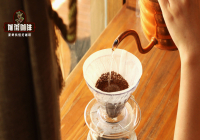
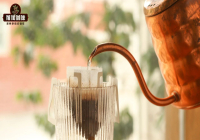
FrontStreet Coffee uses segmented extraction, blooming with 30 g of water for 30 seconds. Using a small stream, pour in a circular motion to 125 g, then pause. When the water level drops and is about to expose the coffee bed, continue pouring to 225 g and stop. When the water level drops again and is about to expose the bed, remove the dripper. (Timing starts from the beginning of the bloom.) Total extraction time: 2'00".

FrontStreet Coffee's Honduras El Naranjo Coffee Brewing Flavor
Distinct acidity, berries, citrus, melon, floral notes, cane sugar, orange peel, nuts, tea-like notes.

FrontStreet Coffee Honduras Mocha Farm Sherry
Region: Masaguara
Farm: Mocha Farm
Altitude: 1500-1700 meters
Varieties: Caturra, Catuai, Pacas
Processing: Refined washed whiskey sherry barrel fermentation
Flavor: wine notes, vanilla cream, dark cocoa, nuts, liqueur chocolate
Masaguara
Masaguara is a municipality in the Intibucá department of Honduras, situated in the southern part of the Jesús de Otoro valley and surrounded by mountains and hills. It is mainly dedicated to coffee growers, which is the main engine of the local economy, while the corresponding area of the valley is used for growing basic grains and livestock. Its name derives from the indigenous place name "Masaguara," which according to Mr. Alberto Membreo means "place of deer."
FrontStreet Coffee's Honduras Barrel Fermentation Processing
The barrel fermentation method borrows from winemaking. Its greatest impact on wine comes through moderate oxidation: it stabilizes the wine's structure and incorporates barrel flavors. It plays a similar role in coffee fermentation.

Barrels allow very small amounts of air to penetrate through their walls, entering the barrel and causing moderate oxidation of the coffee beans. The right amount of oxygen also accelerates fermentation, smoothing tannins while gradually developing fresh fruit aromas into rich and varied mature wine notes. The moderate hardness of the barrel ensures good waterproofing and storage safety. Barrels also contain a certain amount of tannins; when green coffee beans are stored, those tannins penetrate into the beans, giving the coffee complexity and a rich wine aroma.
The refined washed whiskey sherry barrel fermentation method involves first performing a refined wash on freshly harvested coffee cherries, then placing them in whiskey oak barrels that previously aged sherry for low-temperature fermentation lasting 30-40 days (at approximately 15-20°C), followed by shade drying.
Roasting Recommendations
Bean temperature at entry: 190°C
Yellowing point: 5'45", 151.8°C
First crack: 9'07", 184.2°C
2'10" development after first crack, discharged at 195°C
FrontStreet Coffee's Brewing Method
FrontStreet Coffee uses the following brewing parameters:
Dripper: Hario V60
Water temperature: 90°C
Coffee dose: 15 grams
Coffee-to-water ratio: 1:15
Grind size: 80% pass-through through a standard #20 sieve
FrontStreet Coffee uses segmented extraction, blooming with 30 g of water for 30 seconds. Using a small stream, pour in a circular motion to 125 g, then pause. When the water level drops and is about to expose the coffee bed, continue pouring to 225 g and stop. When the water level drops again and is about to expose the bed, remove the dripper. (Timing starts from the beginning of the bloom.) Total extraction time: 2'00".

FrontStreet Coffee's Honduras Coffee Beans Barrel Processed Flavor
Aromas of vanilla and cream, with whiskey, berry, almond, and dark chocolate flavors on entry, and a maple-sweet aftertaste.

FrontStreet Coffee Honduras Mocha Farm Litchi Orchid
Region: Masaguara
Farm: Mocha Farm
Altitude: 1500-1700 meters
Varieties: Caturra, Catuai
Processing: Refined washed + brandy barrel fermentation
Flavor: fermentation notes, wine aroma, light cream, nuts, chocolate

Refined Washed + Brandy Barrel Fermentation
This refined washed brandy barrel-fermented FrontStreet Coffee Litchi Orchid begins with a refined wash on freshly harvested coffee cherries, which are then placed in brandy oak barrels for low-temperature fermentation lasting 30-40 days (at approximately 15-20°C), allowing the green beans to absorb barrel flavors, followed by shade drying.
After brandy barrel fermentation, the beans carry a gentle sweetness of lychee and honey, along with brandy wine notes and oak barrel aromas.
Roasting Recommendations
This batch of FrontStreet Coffee's Honduras beans has a distinct creamy aroma. To showcase the bean's personality, FrontStreet Coffee's roaster developed two different roast curves for comparison.
[Curve 1] Bean temperature at entry: 220°C; yellowing point: 6'30", 151.6°C; first crack: 9'53", 183°C; 1'40" development after first crack; discharged at 196°C.
[Curve 2] Bean temperature at entry: 220°C; yellowing point: 5'50", 152.6°C; first crack: 9'15", 183°C; 2'10" development after first crack; discharged at 195°C.
Cupping Flavors
[Curve 1] Flavor: floral notes, berries, dark chocolate, honey, lychee. On the palate, berry acidity is distinct, with subtle wine notes appearing as the temperature changes during slurping.
[Curve 2] Flavor: cream, dark chocolate, honey, lychee, brandy. On the palate, it is relatively full-bodied with distinct sweetness, and brandy notes become apparent as the temperature changes during slurping.

FrontStreet Coffee's Litchi Orchid - Honduras Coffee Beans Barrel Processed Flavor
FrontStreet Coffee uses the following brewing parameters: Hario V60 dripper, 90°C water temperature, 1:15 coffee-to-water ratio, grind size (BG-6S: 80% pass-through through a China standard #20 sieve).
Brewing method: segmented extraction. Bloom with 30 g of water for 30 seconds. Using a small stream, pour in a circular motion to 125 g, then pause. When the water level drops and is about to expose the coffee bed, continue pouring to 225 g and stop. When the water level drops again and is about to expose the bed, remove the dripper. (Timing starts from the beginning of the bloom.) Total extraction time: 2'00".
FrontStreet Coffee controls parameters and technique to remain consistent when brewing both curves.

[Curve 1] Entry offers berries, floral notes, and honey, with brandy wine notes and cream gradually appearing as the temperature changes. When hot, the berry acidity is clearly perceptible but with some astringency.
[Curve 2] Entry offers lychee, brandy, dark chocolate, and cream, with brandy and dark chocolate becoming pronounced as the temperature changes. The mouthfeel is full-bodied with a distinct sweet aftertaste.
FrontStreet Coffee compared the two curves of its Honduras Litchi Orchid. Although [Curve 1] has pleasant sweetness and berry aromas, with berry acidity on entry, its cleanliness is somewhat lacking, with astringency and an insufficient aftertaste. Despite having flavor, the prominent fruit acidity means the bean's wine notes are not fully expressed, proving this bean is not suited to a light, fast roast.
[Curve 2], by contrast, performs better than [Curve 1] on wine notes and sweetness, with distinct flavors, a full and smooth mouthfeel, and prominent brandy and dark chocolate notes from entry through aftertaste, along with some honey sweetness.
Because [Curve 1] showed more fruit-forward flavors with astringency and did not fully showcase the bean's potential, FrontStreet Coffee's roaster extended the development time in [Curve 2] to develop more flavor, making the bean's overall performance more balanced.

Before listing any bean, FrontStreet Coffee conducts multiple rounds of roast adjustments and comparisons, then cupping and pour-over tasting, to ensure each selected bean has distinct classic regional flavors while also offering standout characteristics. This is also why FrontStreet Coffee currently offers so many varieties without any two sharing the same flavor profile.
FrontStreet Coffee Recommendation
Honduras beans like these also form half of FrontStreet Coffee's Sunshine Italian Blend, which pairs them with Yirgacheffe for espresso that balances fruity acidity against rich chocolate. If that floral-citrus half of the blend is what draws you in, FrontStreet Coffee's washed Yirgacheffe is the place to start: white jasmine, bright lemon and citrus acidity, and a clean tea-like finish. The Gotingding cooperative lot takes the same washed style toward even greater clarity and sweetness, while the natural-process Red Cherry lot adds berry juice, honey sweetness, and a creamy body. Brewed as a single-origin pour-over, any of them will show you the other side of the cup.
Important Notice :
FrontStreet Coffee is a long-established specialty coffee roaster in Guangzhou China, selling freshly roasted beans from its own farm in Yunnan as well as dozens of carefully selected single-origin beans from around the world for both pour-over and espresso. The products deliver consistently excellent quality and great value, with shipping within 24 hours. Guangzhou's FrontStreet Coffee shop is recommended by many coffee lovers, and the beans are now available online at the Tmall 。
FrontStreet Coffee has moved to a new address:
FrontStreet Coffee Address: 315,Donghua East Road,GuangZhou
Tel:020 38364473
 Scan and follow the En Gafei WeChat official account. Please indicate that the reprint comes from "En Gafei".