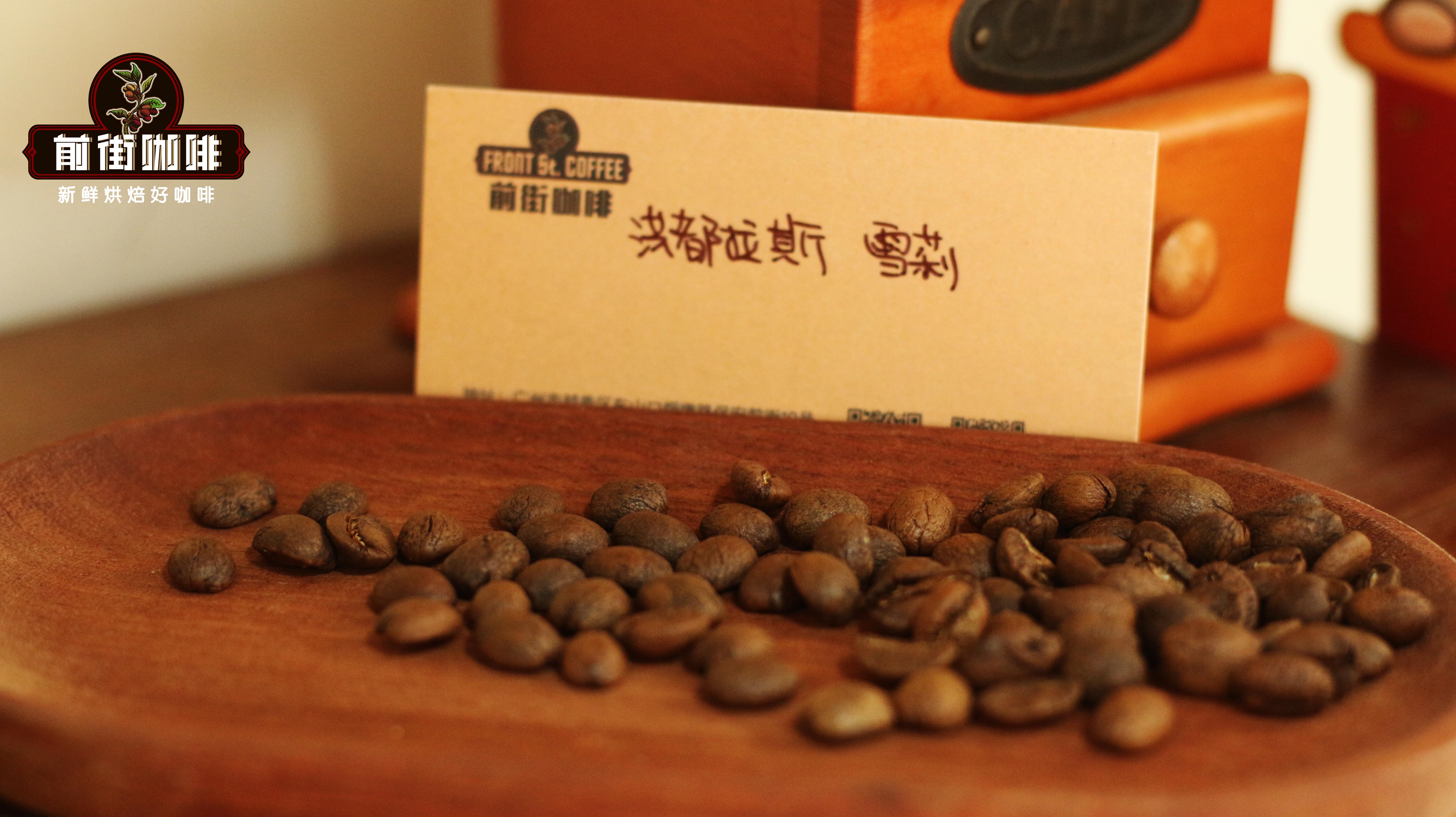
How to Brew Yunnan Pour-Over Coffee Beans? How to Make Yunnan Small-Bean Coffee Less Bitter?

Yunnan is China's largest coffee-growing region, with temperatures ranging from 16 to 21 degrees Celsius. Centered on the equator, the band stretching from 25° north to 25° south latitude forms the "World's Golden Coffee Growing Belt" — and Yunnan sits squarely inside it. Most of the province lies between 1,000-2,000 meters, with fertile hillside soil, abundant sunlight, plentiful rainfall, and big day-night temperature swings: ideal conditions for coffee trees. These unique natural conditions shape the character of FrontStreet Coffee's Yunnan small-bean coffee — rich and mellow, aromatic but never harsh, full-bodied, with a gentle fruity acidity.
Yunnan Coffee Flavor Profile
Yunnan coffee isn't especially bitter, though drinkers unaccustomed to it may perceive it that way. Yunnan beans belong to the Asian family, with its typical pine, herbal, and nutty notes — but on top of that foundation, Yunnan contributes its own signatures: brown sugar, plum acidity, and a tea-like quality.

To brew any coffee well, FrontStreet Coffee first learns the beans' fundamentals — origin, flavor character, variety — then roasts accordingly and runs cupping and brewing tests.
Coffee Varieties in Yunnan
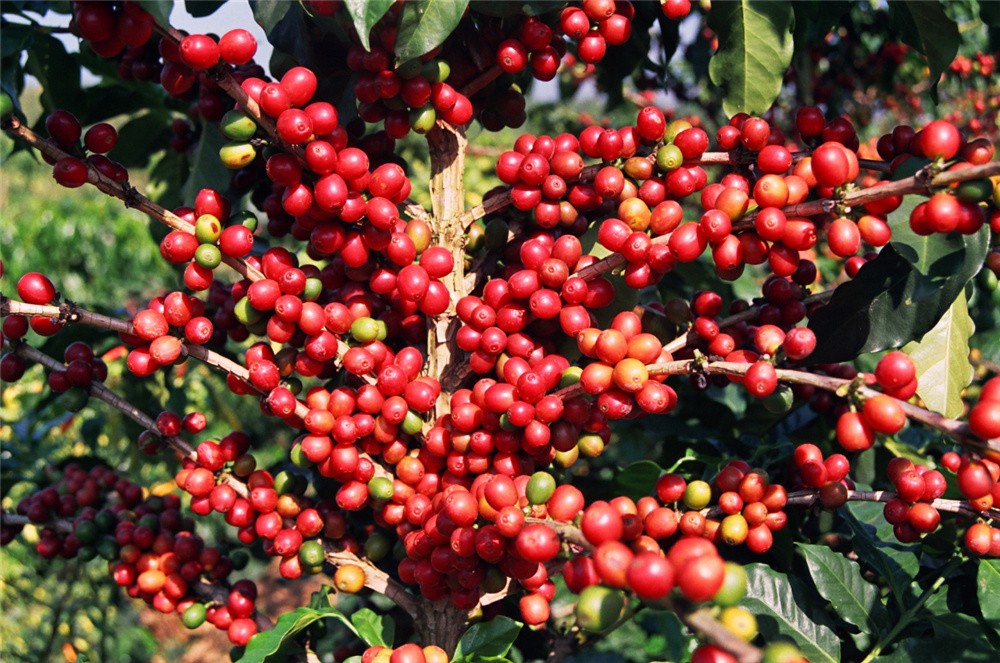
Most Yunnan coffee on the market today is Catimor. "Small-bean coffee," the province's signature label, is simply another name for Arabica — distinguishing it from the medium-bean Robusta grown in Hainan. Arabica delivers clean flavors, fruity acidity, and a comfortable mouthfeel. Today, 99% of Yunnan's coffee is Catimor, a hybrid of Arabica and Robusta carrying 1/4 Robusta genes. It is still classified as Arabica because it is a tetraploid capable of self-pollination. The Robusta inheritance makes the plant hardier and higher-yielding than pure Arabica, at some cost to flavor. The remaining 1% is planted with Typica, Bourbon, and experimental plots of Caturra, Geisha, and Yirgacheffe heirloom varieties.
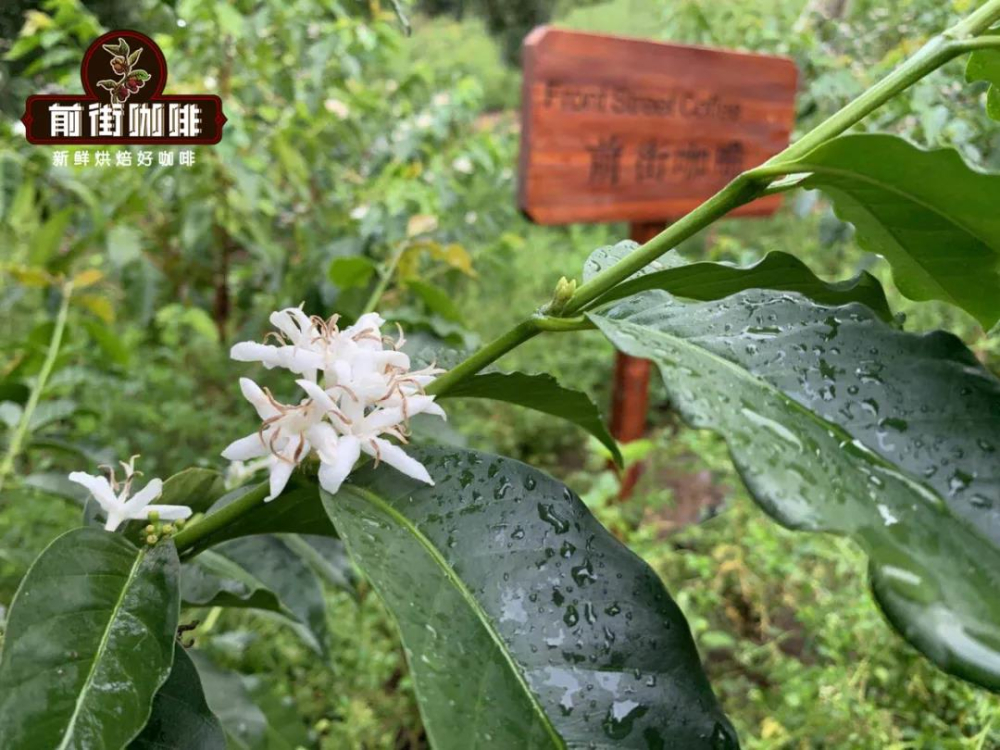
FrontStreet Coffee's estate chose Typica seedlings, recognizable by their copper-colored new leaves. Typica yields are very low — only one-third of Catimor's — which explains its higher price. And because Typica and Bourbon are highly susceptible to leaf rust, many farmers hesitate to plant them.
Catimor is a hybrid of the Arabica and Robusta species. Robusta brings good leaf rust resistance, rich oils, high yields, and easy cultivation. After crossing with Typica Arabica, Catimor acquired 25% Robusta genes — improving rust resistance while keeping rich oils and some of heirloom Typica's depth of flavor. Consequently, most Yunnan estates switched to Catimor at scale, and Typica's footprint began to shrink.
Main Coffee Growing Regions in Yunnan
Yunnan's coffee is concentrated in the province's southwest, across four major producing areas: Baoshan, Dehong, Pu'er, and Lincang. The two Yunnan beans on FrontStreet Coffee's regular menu come from Baoshan and Lincang respectively.
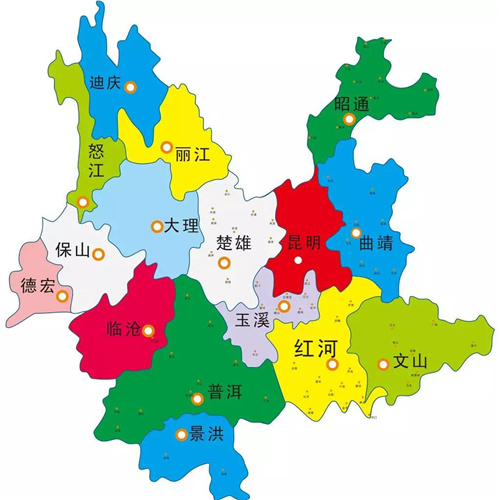
Pu'er
Pu'er coffee has a century of history: cultivation began in the late 19th century and industrial development in 1988. Today the city's coffee planting area reaches 767,000 mu, making it the mainland's largest coffee-growing area by acreage and yield, finest in quality, and its main production region and trading hub.
Lincang
Located in southwestern Yunnan with the Tropic of Cancer crossing its southern part, Lincang borders Pu'er to the east, Dali to the north, Baoshan to the west, and Myanmar to the southwest. Named for its proximity to the Lancang River, it is a bright pearl on China's southwestern frontier. Lincang's average annual temperature runs between 16.8°C-17.2°C, with distinct wet and dry seasons and abundant sunshine.
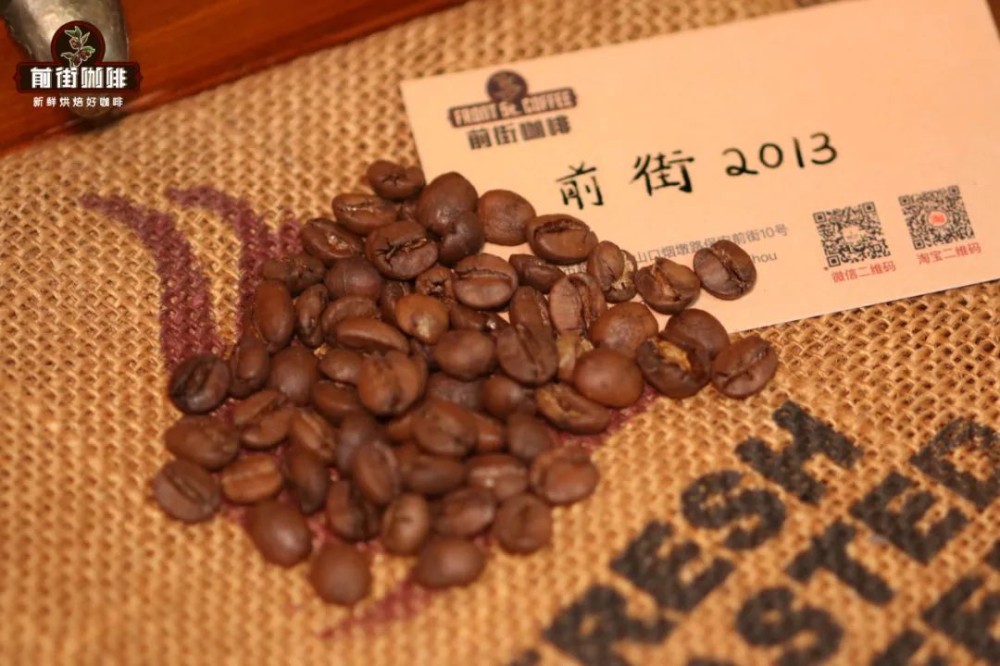
FrontStreet Coffee has its own estate in Lincang, planted with Typica — the oldest Arabica variety. In 2021, the estate produced its first self-grown bean: the FrontStreet Coffee 2013 Natural Process Typica Coffee.
Baoshan
Baoshan's average temperature is 21.5°C, topping out at 40.4°C, with essentially no frost year-round — a region widely recognized as the best small-bean coffee territory. Its small-bean coffee is famous at home and abroad for being rich but not bitter, fragrant but not intense, with small, uniform grains, full aroma, and fruity notes. Yunnan Baoshan small-bean coffee has a long planting history and qualifies as a national geographical indication product. FrontStreet Coffee's Yunnan growing region is here as well.
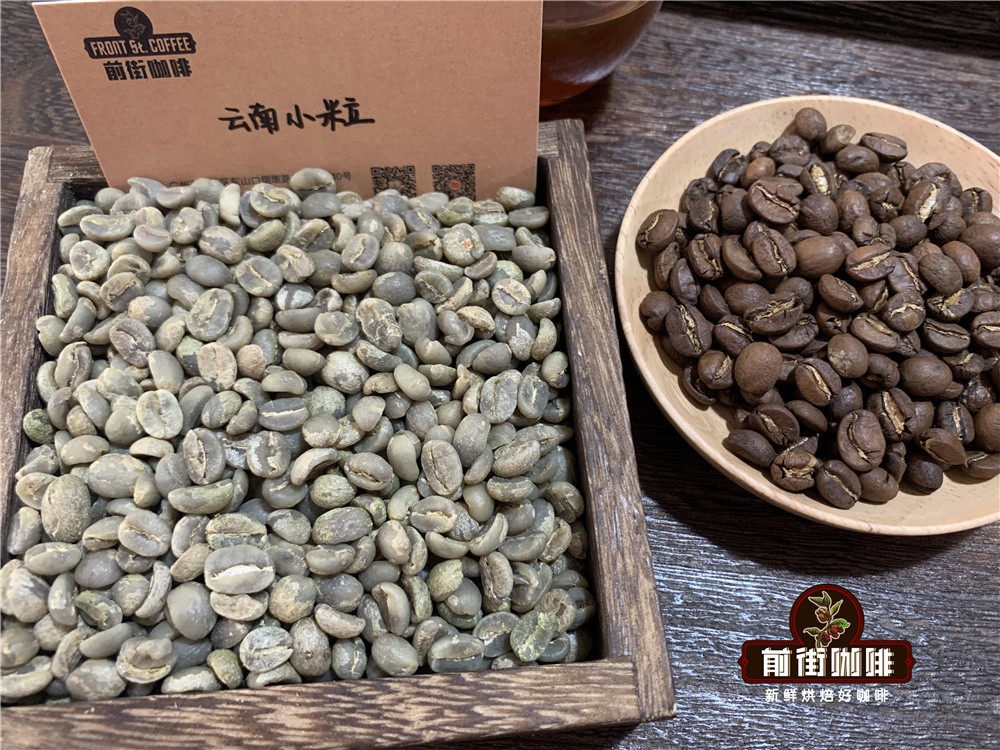
The FrontStreet Coffee Yunnan Small Bean Coffee on the menu comes from Baoshan.
Yunnan Coffee Bean Processing Methods

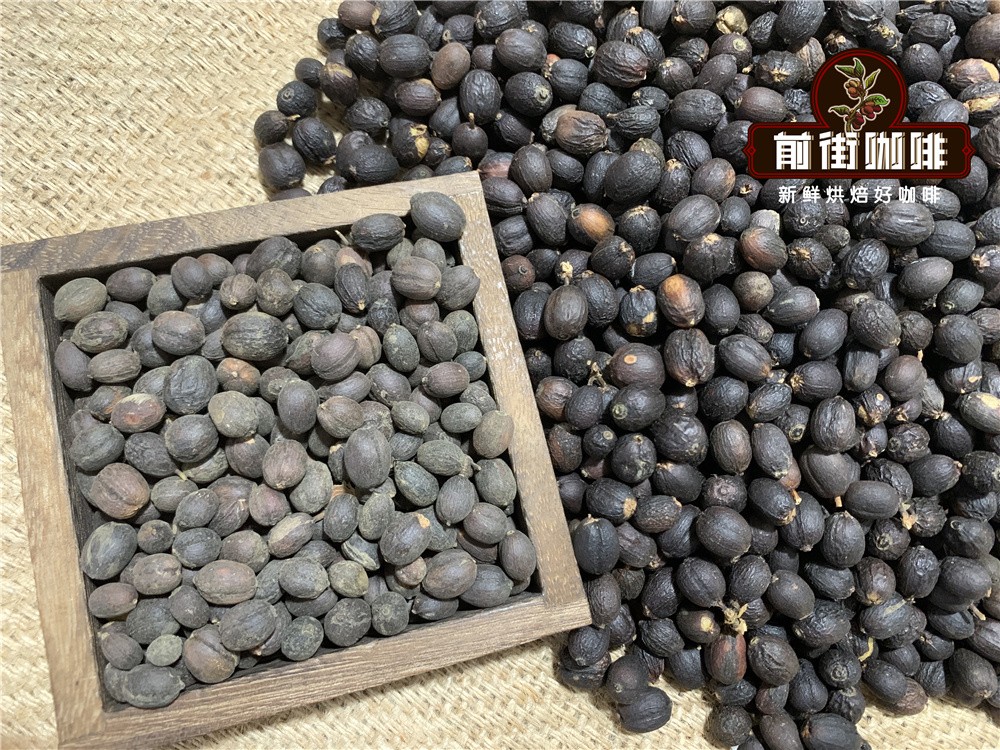
Yunnan's long rainy season and unstable weather push most local beans toward washed processing — though naturals exist too. FrontStreet Coffee's Catimor lineup includes both a Washed Yunnan Small Bean Coffee and a Natural Process Catimor Coffee, alongside the estate-grown FrontStreet Coffee Natural Process Typica Coffee.
FrontStreet Coffee's Brewing Parameters for Yunnan Catimor Coffee
Because Yunnan coffee leans nutty rather than acidic, FrontStreet Coffee roasts this Yunnan Catimor medium — preserving its herbal aroma and gentle acidity. Brew it with a finer grind and higher water temperature in a V60 dripper. As soon as the grounds hit the filter, you can smell the herbal, nutty fragrance of the beans.
FrontStreet Coffee believes a great pot of coffee rests on four pillars: water temperature, grind size, coffee-to-water ratio, and pouring technique.
1. Water Temperature
Water temperature follows roast level. As roasting deepens, the compounds in the bean gradually diminish, so darker roasts get cooler water to avoid pulling out harsh flavors. For light-to-medium roasts, FrontStreet Coffee suggests 90-91°C; for medium-dark roasts, 88°C.

2. Grind Size
Grind size, too, relates to roast level. Grind size refers to particle size — it controls how long water and coffee stay in contact. Finer grounds extract more in the same window but slide easily into over-extraction; coarser grounds extract less and risk an under-extracted cup. And since every grinder behaves differently, parameters vary. FrontStreet Coffee recommends a #20 cupping calibration sieve with 0.85mm aperture. Take 10g of beans, grind at roughly your target setting, and shake through the sieve; then weigh what passed (keep sieving until nothing more falls through).

A pass rate of 70%-75% (7-7.5g from 10g of powder) is the target here. As a rule for pour-over: light roast should reach 80% pass rate, medium-dark roast 75%. Above the target? Grind coarser. Below? Grind finer.
3. Coffee-to-Water Ratio
These are the ratio guidelines FrontStreet Coffee derived from SCAA Golden Cup extraction theory. We use 15g of coffee per cup. Dose usually follows the dripper's design — ours suits 1-2 servings and takes 15-20g. Too much powder is hard to control and tends to muddy the flavors.

On ratios, 1:15 is the workhorse, with 1:14-1:16 all acceptable. Richer cups can go 1:14; clearer, lighter cups can use 1:16. Since tastes differ, FrontStreet Coffee splits the difference at 1:15.
So for a foolproof brew, FrontStreet Coffee suggests the 1:15 coffee-to-water ratio.
4. Brewing Technique
Finally, technique matters. The common approaches are three-stage pouring, single-pour, and drip-by-drip. FrontStreet Coffee recommends beginners start with three-stage pouring, which suits light, light-to-medium, and medium-dark roasts alike. Splitting the extraction lets you delineate front, middle, and back-palate flavors with confidence. Here is how we do it for this Yunnan Catimor.
Three-Stage Pouring Method (FrontStreet Coffee's Three-Stage Pouring Method for Yunnan Catimor Coffee)

A V60 dripper brings out richer flavors. Water temperature 88°C, coffee-to-water ratio 1:15, 15g of coffee, grind size 75% pass rate on the China #20 standard sieve.
First Pour: Bloom (to help degassing)
First wet the V60 so the filter paper seats snugly against the dripper. Empty the sharing pot, add 15g of coffee, and bloom with 30g of water for 30 seconds. Why bloom at all? Because roasting is a series of chemical reactions and physical changes, and once beans reach a given roast level they accumulate large amounts of gas — mostly carbon dioxide.
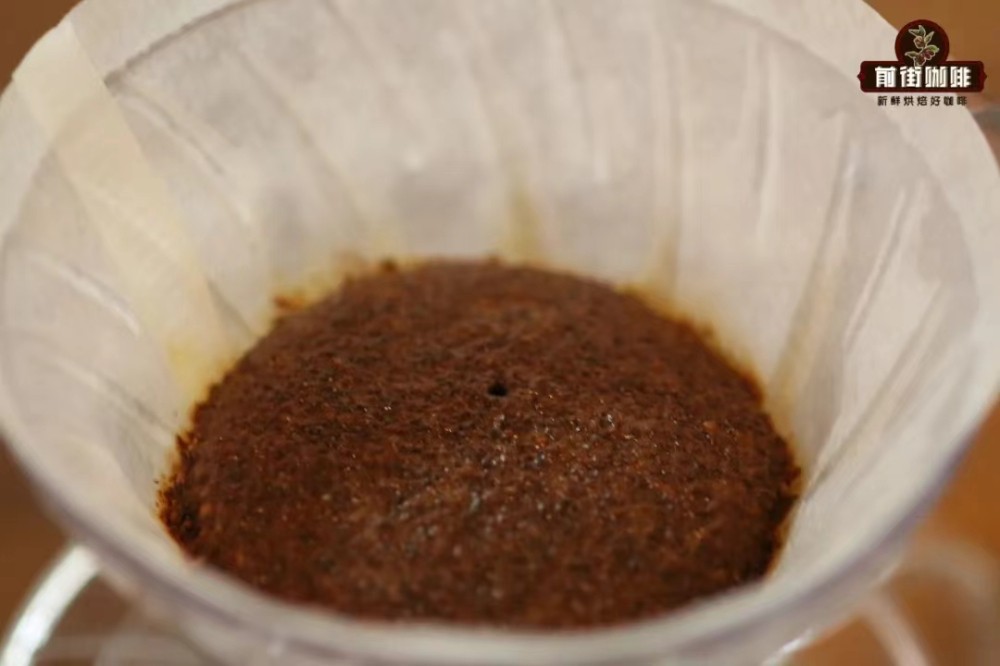
Generally, the fresher the coffee and the closer to its roast date, the more it bubbles during the bloom, and dark roasts degas harder than light roasts. FrontStreet Coffee's beans all ship freshly roasted, so we recommend letting them rest for three days first — letting the CO2 escape avoids instability and under-extraction during the brew.
Once the bloom has released the gas, the grounds can absorb water evenly and extract uniformly. A good bloom lets the coffee release gas quickly, fully, and evenly while bringing every particle into prompt contact with water — that is precisely the purpose of blooming.
Second Pour
After the 30-second bloom, begin the second pour: a small stream, circling from the center until the scale reads 125g, then stop. To concentrate the water column's penetrating power, keep the circles tight — about the size of a one-yuan coin — then spiral outward. From the second pour onward, watch the water level and try not to exceed the height of the coffee bed; when the stream nearly touches the filter paper, stop pouring.

Third Pour
When the coffee bed has fallen to half the dripper's height, begin the next pour with the same technique, up to 225g. Wait for all dripping to finish before removing the dripper.
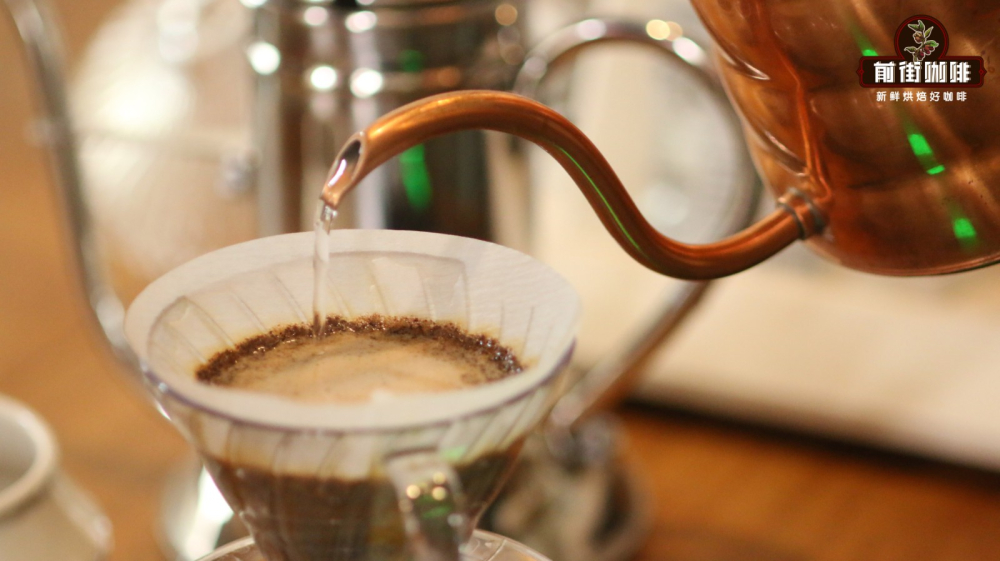
From this pour onward, track how far the water level drops, pour from the center in circles, and keep the water below the top of the bed. You'll notice foam has covered most of the surface by now. The aim of this pour is to increase the tumbling of the grounds — lifting settled particles back into suspension so their soluble compounds keep dissolving.
The tumbled particles settle once pouring stops. Now the draining water must create friction between particles through its flow rate. When pouring stops, particles sink and can cause blockage — so watch your pouring rhythm. Too many interruptions effectively soak the grounds in standing water, which draws out astringency and undesirable flavors.
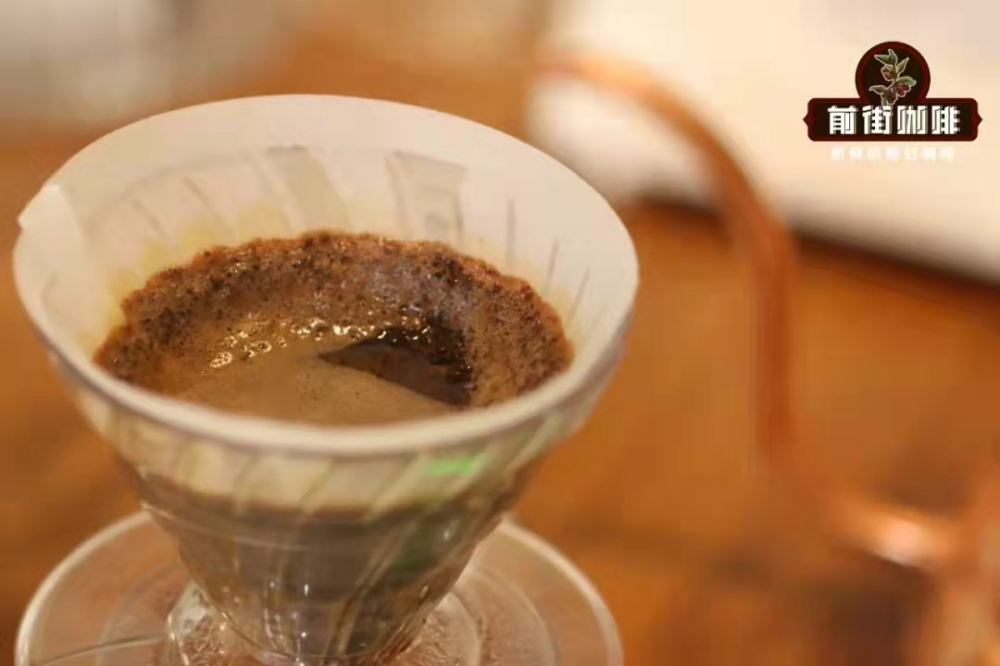
Start timing from the first pour; total extraction time is 2'00". Then pick up the whole pot, give it a gentle swirl, and pour into your cups.
FrontStreet Coffee reads Yunnan coffee's profile as quite balanced — sour, sweet, and bitter all present — hence the medium roast: chocolate aroma up front with some acidity retained.
FrontStreet Coffee's Yunnan Coffee Flavor Profiles
FrontStreet Coffee 2013 Natural Process Typica Coffee Flavor: Full-bodied, prominent sweet and sour notes, with citrus and berry tones, a hint of fermented wine aroma, caramel-like sweetness, creamy aftertaste, and black tea finish.
FrontStreet Coffee Washed Yunnan Small Bean Coffee Flavor: Herbal, nutty aroma, chocolate, caramel.
FrontStreet Coffee Yunnan Natural Process Catimor Coffee Flavor Profile: Nuts, chocolate, spices, caramel, plum.

With more practice, you can tune the brew toward your own taste. Whatever you like is good coffee.
FrontStreet Coffee's Brewing Recommendations
Freshness is everything. FrontStreet Coffee has always believed bean freshness hugely affects flavor, so we ship beans roasted within 5 days. Our roasting philosophy is "Freshly Roasted Quality Coffee," ensuring every order arrives as fresh as possible. The resting window is about 4-7 days, so beans reach peak flavor right around delivery.
A gentle reminder for those ordering ground coffee: pre-ground beans need no resting period, because during shipping the pressure from carbon dioxide buildup in the packaging actually helps round out the flavor — you can brew immediately on arrival. But ground coffee must be brewed promptly: it oxidizes fast in open air, the flavor dissipates quickly, and the cup suffers. That's why FrontStreet Coffee recommends buying whole beans and grinding fresh before each brew.
FrontStreet Coffee Recommendation
If you're just starting to explore Chinese coffee, the FrontStreet Coffee Yunnan Small Bean from Baoshan is the ideal entry point: washed processed and medium roasted, it offers soft notes of nuts, chocolate, and caramel with a light plum acidity — all at an accessible price. Baoshan's frost-free climate and Lujiangba's dry-hot valley give it the signature sweet aftertaste.
Want clearer, more distinct Yunnan character? Choose the FrontStreet Coffee 2013 Yunnan Natural Typica, grown on our own estate with the oldest, most traditional post-harvest processing — sun-drying. The cup is fuller and rounder, with brighter sweet-sour contrast: citrus and berry tones, a whisper of fermented wine aroma, caramel sweetness, and a creamy finish. And for espresso drinkers, the barista-favorite FrontStreet Black Cocoa blend — Yunnan Small Bean plus Brazil Cerrado — makes a balanced americano with nut and brown sugar sweetness and a latte with smooth almond and cream texture, ideal for beginners.
Important Notice :
FrontStreet Coffee is a long-established specialty coffee roaster in Guangzhou China, selling freshly roasted beans from its own farm in Yunnan as well as dozens of carefully selected single-origin beans from around the world for both pour-over and espresso. The products deliver consistently excellent quality and great value, with shipping within 24 hours. Guangzhou's FrontStreet Coffee shop is recommended by many coffee lovers, and the beans are now available online at the Tmall 。
FrontStreet Coffee has moved to a new address:
FrontStreet Coffee Address: 315,Donghua East Road,GuangZhou
Tel:020 38364473
 Scan and follow the En Gafei WeChat official account. Please indicate that the reprint comes from "En Gafei".