What is the Grind Size for Starbucks Americano Coffee? The Correct Way to Make Americano

Every time I stop by Starbucks for coffee, I see office workers queueing up for an Americano and then hurrying off to work with their to-go cup. Why do office workers love Americano so much? And how does Starbucks make it? Today, FrontStreet Coffee takes a look at the standard drink of coffee culture — the Americano.
Did Americano Coffee First Appear in America?
The statement is half right and half wrong. Why? Because there are two kinds of Americano: drip-style Americano and espresso diluted with water. The equipment and the methods behind these two approaches have different origins, so the claim that Americano first appeared in America is only half true.
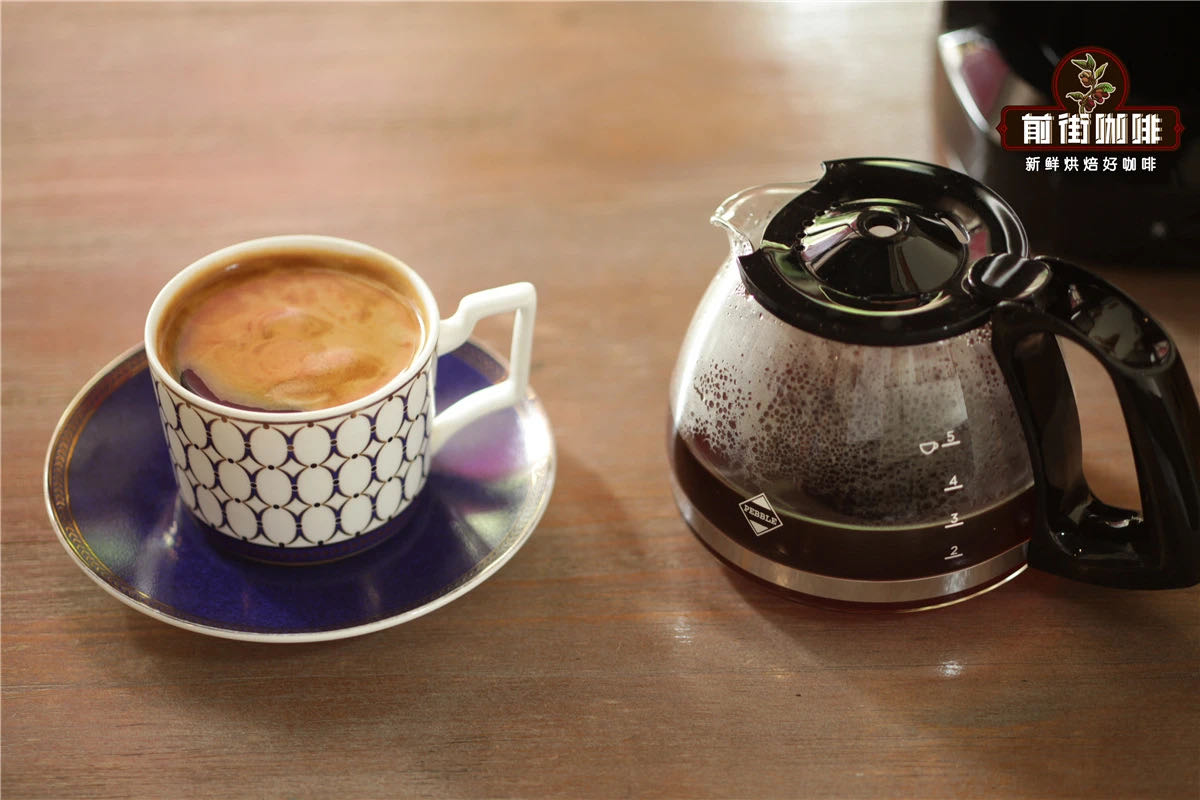
Since coffee became popular in the early twentieth century, the coffee Americans have drunk most is actually drip coffee, made in a drip coffee maker (an American coffee machine). At the time, one of these sat in almost every American home. You simply put grounds into the machine, and it automatically adds water and drips coffee into the carafe on the warming plate, letting you drink from morning until night. In modern society, however, Americano refers to concentrated coffee extracted at high temperature by an espresso machine and then topped up with hot water. There is still a difference between the two.
This style of Americano first appeared in Italy... (What? Isn't Italy known for espresso? Why did Americano first appear in Italy?)

Legend has it that Americano originated during World War II, when American soldiers stationed in Italy — unaccustomed to the strong, bitter taste of Italian espresso — diluted it with boiling water. In fact, the name itself offers a clue. "Americano" is not English at all, but Italian for "American." Although the diluted espresso comes close to the drip coffee Americans were used to in taste and texture, it was precisely that dilution that made Europeans hold this style of coffee in contempt. The French even nicknamed it "sock coffee" — a reference to wartime French soldiers filtering coffee grounds through socks to brew their coffee.

Later, when Starbucks — which had originally sold only roasted coffee beans — began offering coffee beverages, it brought espresso extraction to America and, following national habits, started selling both strong Italian espresso and diluted espresso, naming the latter Americano. Because it was quick to prepare and delivered the rich mellowness of brewed coffee, it spread rapidly across the United States. Major coffee houses followed suit, and Americano eventually became the national beverage of America.
What Coffee Beans Make Good Americano Coffee?
Today, Americano beans are usually medium-dark to dark roast blends. The espresso machine's steady automatic pressure (9 bar) pushes hot water quickly through finely ground coffee, extracting espresso in a short time. As for how much water to add, a cup of Americano generally consists of one to two shots of espresso diluted with hot or iced water at a suitable ratio (1:4–1:9, or adjusted to your own taste).

Flavor Characteristics of Americano Coffee
The flavor and texture of an Americano depend on the flavor of the beans themselves. On the question of which beans make a good Americano, FrontStreet Coffee recommends Italian-style blended beans, because blends deliver a stable coffee flavor.
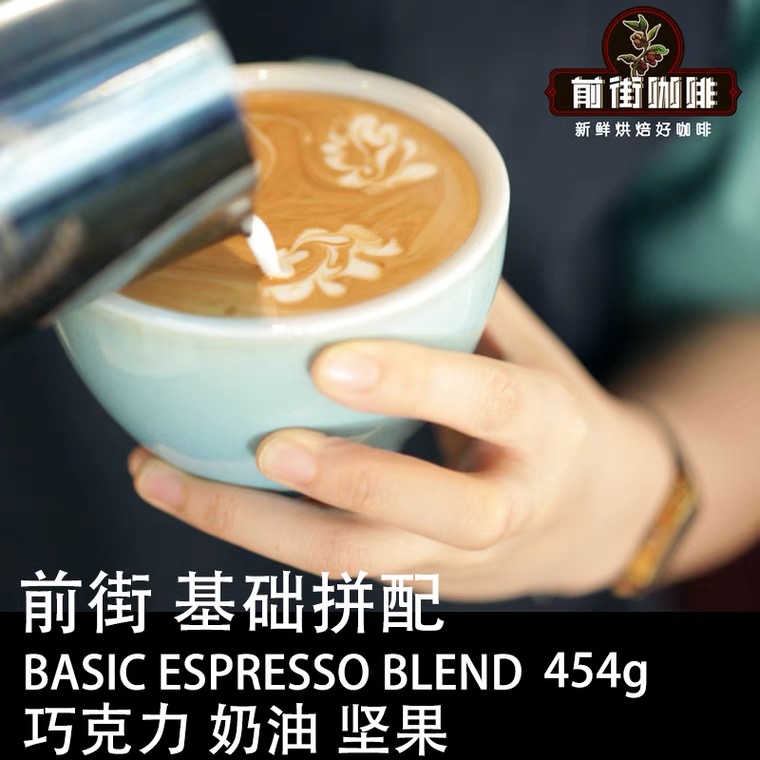
FrontStreet Coffee's specialty Italian blend, for example, is built from two well-known regions: Brazil and Colombia. The extracted coffee has a rich nutty aroma and a soft berry-like acidity. Made into a hot Americano, it shows a hazelnut aroma with a hint of berry acidity and a chocolate aftertaste. Made into an iced Americano, the acidity comes across a touch brighter than in the hot version but never sour, with a nutty dark chocolate aftertaste that lingers a long time on the palate.
But if you're after something distinctive, FrontStreet Coffee recommends the Warm Sunshine Blend currently used in our stores. Blended from Sherry and naturally processed red cherries, it carries a very pronounced fermented character. Whether as a hot Americano or a milk coffee, it pairs beautifully, with prominent cream and chocolate flavors and plenty of wine aroma.

Which Tastes Better: Espresso or Americano?
FrontStreet Coffee believes this question can't be answered in general terms. If you enjoy black coffee and want one cup to reveal the character of different espresso extractions, Americano is your best choice. If, on the other hand, you're drawn to milk, adding it softens the intensity of the coffee and makes the drink more approachable — and a well-balanced milk coffee is all the more fragrant and mellow.

How to Extract Good Americano Coffee?
The espresso behind an Americano has no fixed extraction parameters. As the bean variety and roast degree change, so do the grind size and extraction time. After buying beans, then, you need to adjust and taste against the parameter suggestions below until you find what suits you. FrontStreet Coffee suggests a 1:2 coffee-to-water ratio for the espresso, with extraction pressure of 9 bar and an extraction time of 23–30s.

Anyone who drinks coffee regularly knows that beans come in many grind sizes. FrontStreet Coffee groups them all into three categories: fine, medium, and coarse.
Americano made on an espresso machine is usually built on finely ground coffee. The reason is simple: under high temperature and high pressure, water passes through the puck in the portafilter very quickly. Extremely fine grinding — plus a firm manual tamp — is needed to prolong contact between water and coffee so the liquid extracts properly. So what grind should a household drip coffee maker use? In other words, how coarse should the grounds be for an Americano machine?

You can certainly experiment at home, but FrontStreet Coffee offers one simple rule: the grind for a drip machine can match that of pour-over coffee — that is, medium.

Starbucks' coffee machines generally fall into three types:
- La Marzocco, a fully manual machine, whose production takes slightly longer and whose process is more complex.
- Mastrena, which is automatic
- Verismo, which is automatic
Today, Starbucks locations in the market generally use the latter two. Before 2000, Starbucks mainly used semi-automatic Italian coffee machines: baristas operated them by hand, controlling extraction time and pressure. As the chain expanded, though, most stores switched to fully automatic machines like the Mastrena and Verismo. Both are, of course, customized for Starbucks by Thermoplan of Switzerland, with the Mastrena an upgraded version of the Verismo. It is said that these machines, made to order for Starbucks, cost as much as over 100,000 RMB each and are not sold to the public.
For professional coffee knowledge exchange and more coffee bean information, please follow Coffee Workshop (WeChat public account cafe_style)
For more specialty coffee beans, please add FrontStreet Coffee's private WeChat, ID: kaixinguoguo0925
FrontStreet Coffee Recommendation
If you're new to pulling Americanos on a home machine and want a forgiving place to start, FrontStreet's Classic Blend is the one to buy. A traditional Italian-style recipe built from Indonesian Mandheling, Brazilian Red Bourbon, and washed Vietnamese beans, it carries the low-acidity, full-bodied, herbal, and woody tones of Asian coffee without losing the balanced, smooth, creamy character of the Americas. Pulled as a shot, it yields buttery, nutty, spice, and dark chocolate aromas; whether you make an Americano or a latte, its wild profile and generous crema are what set it apart.
For an Americano with real sweetness and a lighter touch, try FrontStreet's Strawberry Candy espresso blend. A medium roast that gathers single-origin Arabicas from three of the world's best-known regions — Colombia, Costa Rica, and Ethiopia — and layers washed, natural, and honey processing, it opens with a rose-like aroma and a low-bitter, subtly tart cup. As an Americano or a latte you'll find grape, raisin, sweet orange, and fruit candy notes with real depth, and a distinctive almond aroma in the finish.
Important Notice :
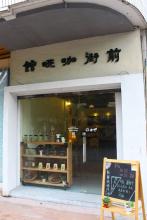
FrontStreet Coffee is a long-established specialty coffee roaster in Guangzhou China, selling freshly roasted beans from its own farm in Yunnan as well as dozens of carefully selected single-origin beans from around the world for both pour-over and espresso. The products deliver consistently excellent quality and great value, with shipping within 24 hours. Guangzhou's FrontStreet Coffee shop is recommended by many coffee lovers, and the beans are now available online at the Tmall 。
FrontStreet Coffee has moved to a new address:
FrontStreet Coffee Address: 315,Donghua East Road,GuangZhou
Tel:020 38364473
 Scan and follow the En Gafei WeChat official account. Please indicate that the reprint comes from "En Gafei".