Flavor Profile, Taste, and Processing Methods of Indonesian Mandheling Coffee Beans - Characteristics of Golden Mandheling from Gayo Region
When the single-origin menu at a coffee shop reads like a foreign language, don't panic. FrontStreet Coffee suggests one simple shortcut: tell the barista whether you lean toward bright acidity or toward the bitter, full-bodied side of coffee. If you're in the second camp—craving a rich body with herbal, spicy depth—the first name we'd point to is the PWN Golden Mandheling.
The PWN Company Story
Anyone who knows how "Mandheling" got its name has probably heard the folk story: during the Japanese occupation of Indonesia in World War II, a Japanese soldier tasted a wonderfully aromatic coffee at a local café. When he asked the owner about it, the owner misunderstood and thought he was asking about his ethnicity, answering "Mandailing." After the war, the soldier remembered the "Mandheling" he drank in Indonesia and arranged for 15 tons to be shipped to Japan—where it became a sensation, and the name stuck.

The café owner from that story was the first to export Mandheling to Japan. Recognizing its commercial potential, he founded the PWN Coffee Company in 1957. PWN specializes in sourcing top-quality lots of Mandheling green beans, focusing on specialty-grade production—with Golden Mandheling as its flagship.
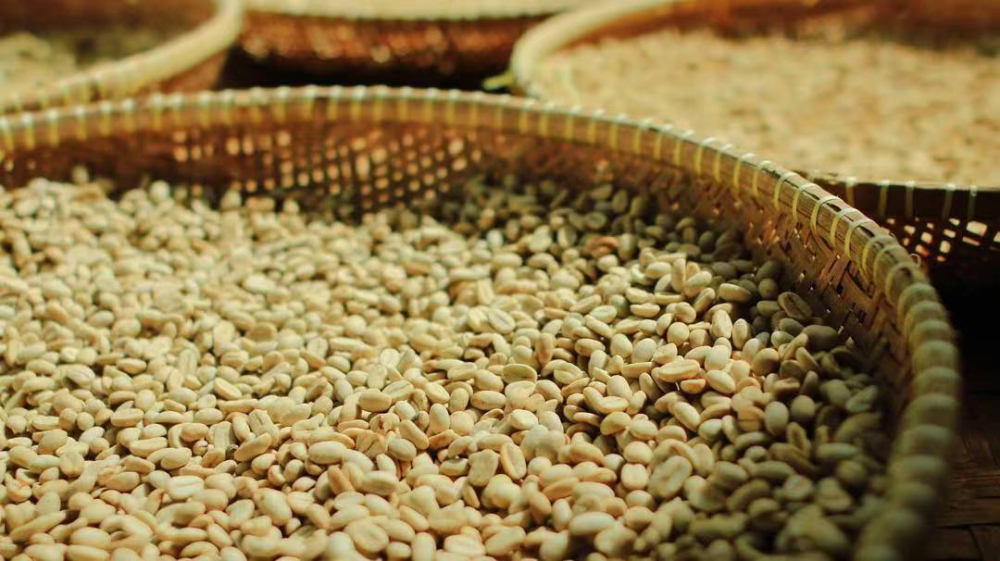
The Japanese buyers of the era valued Sumatran coffee and purchased it long-term, but they kept running into inconsistent quality. They pushed for stricter production, setting rigorous screening standards covering bean density, size, and color. The resulting Mandheling requires one machine sorting plus four rounds of hand-sorting to strip out defects, ensuring beans that are whole, uniform, large, and translucent—while also cutting down the earthy, grassy edge typical of the region. The story goes that when these beans glisten golden in the sun, they earned the name "Golden Mandheling."
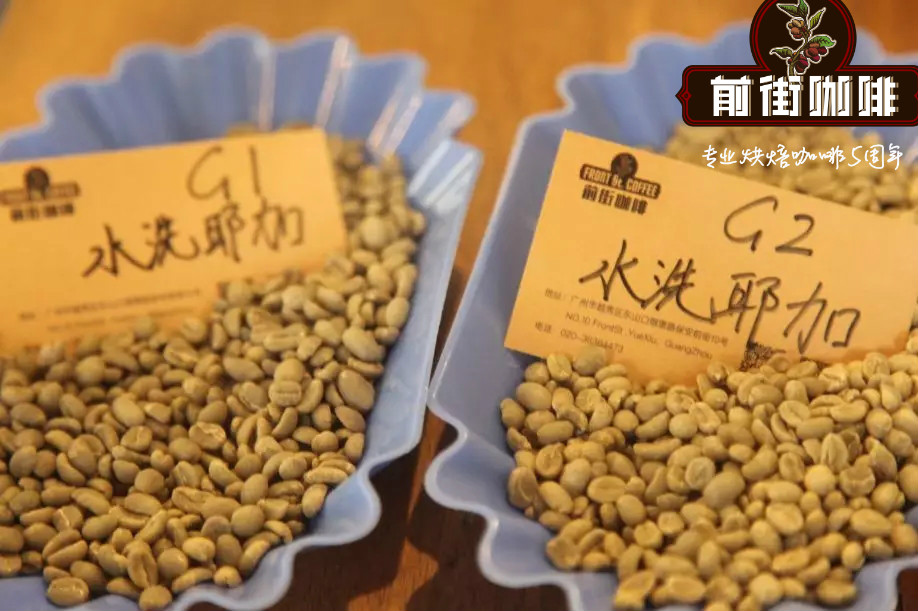
As the specialty Mandheling market grew, PWN moved to protect the name itself, registering "Golden Mandheling" in English as an exclusive trademark ahead of the Japanese. Consequently, only PWN's production is true "Golden Mandheling"; the Japanese product had to be renamed "Ding Shang Mandheling." The Golden Mandheling carried by FrontStreet Coffee is authentic PWN product—you can verify it by the PWN-logoed green bean sacks and the certificate of origin signed by PWN, both on display at our Dongshankou store.
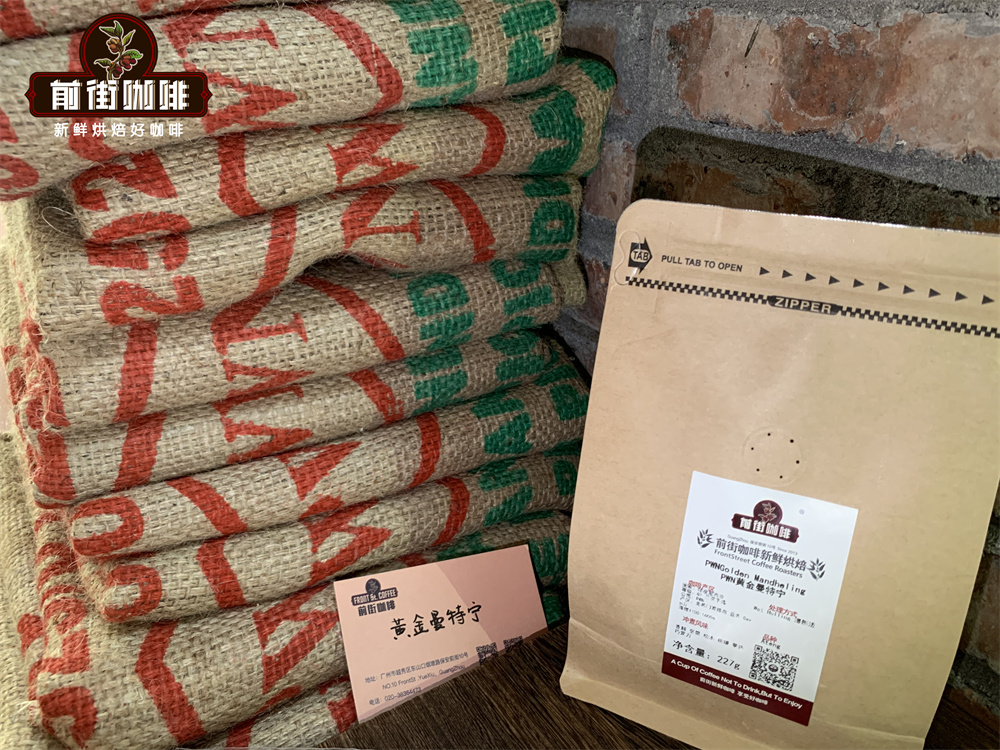
PWN Golden Mandheling Comes from the Gayo Mountains
PWN sources its Mandheling from coffee grown on the Gayo Mountains in Aceh, north-central Sumatra. Sumatra is Indonesia's largest island, with a tropical rainforest climate—hot and humid year-round—and coffee grows in the highland forests. Gayo Mountain coffee is widely considered the finest in Sumatra: mostly ancient varieties grown at altitudes between 1,500 and 2,500 meters. Political instability once made this region's coffee difficult to export, but as conditions stabilized, Aceh's coffee industry developed rapidly, and its quality now surpasses that of the Lindong region.
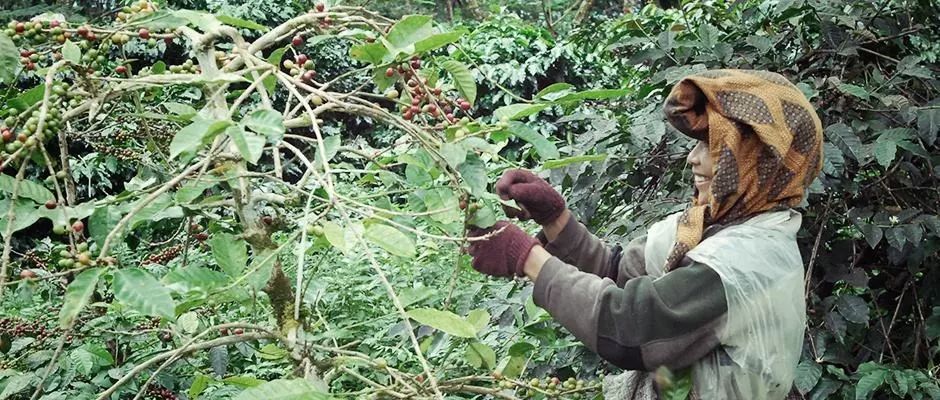
The variety behind Golden Mandheling is Ateng—the local Indonesian name for Catimor. Indonesian coffee was devastated by leaf rust in the 19th century, prompting the introduction of many disease-resistant varieties from abroad: Caturra, Catimor, Timor, Typica, S288, S795, Sidikalong, and others. Among these, the Timor lines (Tim Tim, Bor Bor) and the Catimor series (Ateng)—Robusta-Arabica hybrids—showed excellent disease resistance and adapted well to Sumatra's terroir, developing a distinctive fir-like aroma. Ateng thrives in Aceh in particular, and paired with the region's traditional wet-hulled processing, this "Southeast Asian flavor profile" has become a market favorite.
Wet-hulling works like this: the cherry's skin and pulp are removed first, followed by a brief fermentation and partial drying. While the beans are still semi-dry, the parchment layer is milled off, and drying continues until moisture falls to 12%. Because every step happens in 70–90% humidity, and because the parchment is stripped before final drying, the "exposed" green beans readily absorb moisture and ambient microbes from the air—producing coffee with more woody, herbal, and spicy depth. FrontStreet Coffee's Lindong Mandheling uses the same wet-hulled method: after roasting, acidity drops, body swells, and herbal, spicy notes remain—the unmistakable signature of Indonesian Mandheling. That's why we included it in our daily-bean series, offered in small 25g/100g packages so everyone can taste Southeast Asia in a cup.
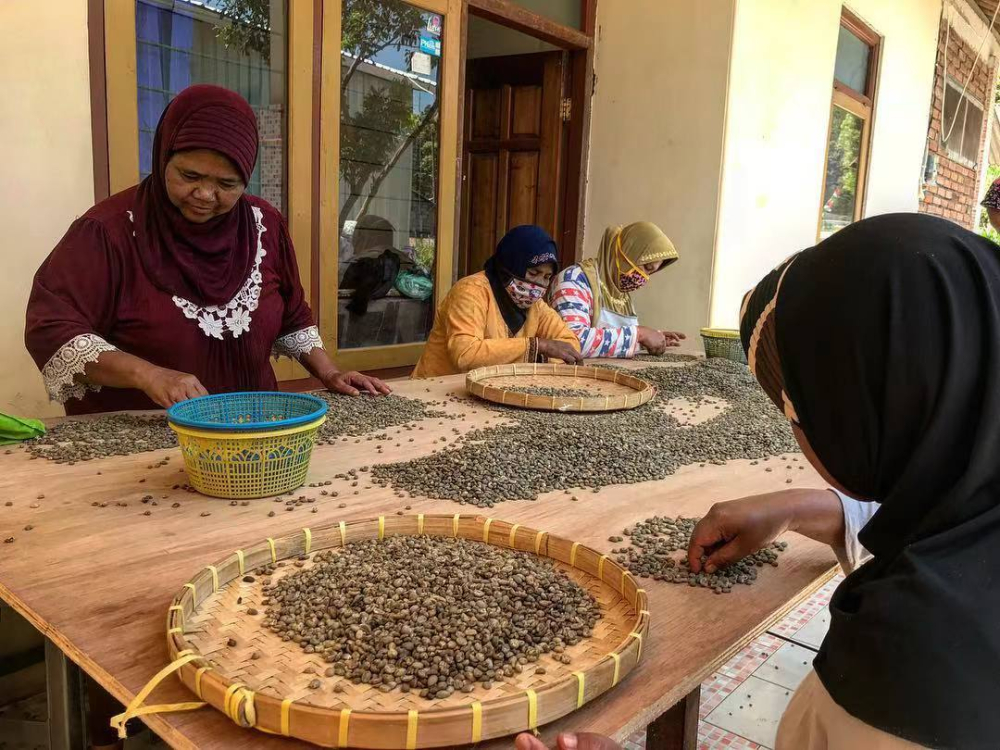
Golden Mandheling vs. Regular Mandheling
For roasting, FrontStreet Coffee uses a medium-dark profile on its Mandhelings—to deliver the classic flavor while preserving more of the herbal and spicy notes. Before any bean goes on sale, we run at least one cupping session under standardized conditions; cupping lets us judge a coffee's strengths and weaknesses objectively.

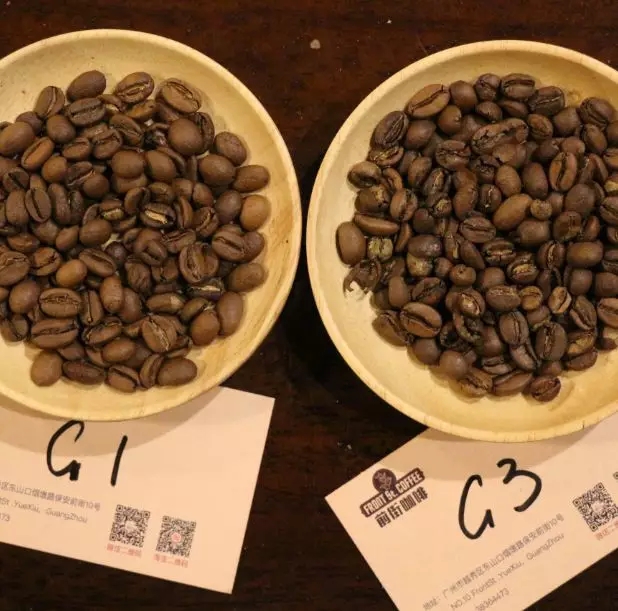
We cupped the Lindong Mandheling and the PWN Golden Mandheling side by side. The Lindong shows rich chocolate, brown sugar, and nut flavors with an herbal aftertaste. The Golden Mandheling opens with pine, nut, spice, and herbal aromas in the dry fragrance; as hot water is added, licorice and caramel emerge. On the palate: dark chocolate, nuts, and spice, with excellent cleanliness, a pronounced sweet finish, and a rich, heavy body.
How to Brew It
Brewing water temperature: 87-88°C
Coffee grounds: 15g
Coffee-to-water ratio: 1:15
Dripper: KONO dripper
Grind size: Medium-coarse grind (#20 standard sieve, 70% pass rate)
We use a three-stage pour, which best expresses the Golden Mandheling's rich body and caramel sweetness.

First stage: pour 30ml of water to fully saturate the grounds and let them degas, setting up the later stages for better flavor extraction.
Second stage: pour 100ml to draw out the golden crema-like foam and lift the coffee bed.
Final stage: pour 95ml gently into the center—this raises the coffee's sweetness.
FrontStreet Coffee Recommendation
Indonesia's rainy season overlaps with coffee harvest, making the long African-style sun-drying of 2–3 weeks impractical and full washed processing too costly in labor and water. Out of that constraint came Sumatra's signature wet-hulled process—developed since the 1970s and responsible for the wild, earthy, herbal flavor that Mandheling lovers can't get enough of. If you want that experience, FrontStreet Coffee's Lindong Mandheling delivers: deeply aromatic, bittersweet, with clove and woody notes, low acidity, spice and mint, and a strong, lasting, heavy sweetness in a medium-dark roast.
For the cleanest, most refined expression, choose the PWN Golden Mandheling. PWN selects beans of 18 mesh and larger and holds every 300g green sample to fewer than 3 defect beans—meeting the top G1 grade—followed by additional hand-sorting that removes every remaining flaw and pushes cleanliness and sweetness even higher. Production is limited, and most of the crop goes to Japan and the United States, which is exactly why the certificate and PWN-marked sacks we display matter: they're proof of the genuine article.
Brew it as pour-over to see it at its best: 15g of coffee, a 1:15 ratio, a coarse-sugar grind, water at 87–88°C, and a three-stage pour—30ml bloom, 100ml to lift the bed, then 95ml poured gently at the center. The result is a thick, velvety body with caramel sweetness and chocolate and nut flavors. If you'd rather pull espresso, the Classic Blend—Brazil's creamy nuts layered with medium-dark Mandheling, butter, roasted chestnut, and caramel, plus a touch of Robusta for crema—makes superb lattes and Dirty drinks with a sandalwood-and-spice twist.
Important Notice :
FrontStreet Coffee is a long-established specialty coffee roaster in Guangzhou China, selling freshly roasted beans from its own farm in Yunnan as well as dozens of carefully selected single-origin beans from around the world for both pour-over and espresso. The products deliver consistently excellent quality and great value, with shipping within 24 hours. Guangzhou's FrontStreet Coffee shop is recommended by many coffee lovers, and the beans are now available online at the Tmall 。
FrontStreet Coffee has moved to a new address:
FrontStreet Coffee Address: 315,Donghua East Road,GuangZhou
Tel:020 38364473
 Scan and follow the En Gafei WeChat official account. Please indicate that the reprint comes from "En Gafei".