Is Brazilian Yellow Bourbon a Higher-Grade Coffee Bean? Flavor Profile and Pouring Techniques for Medium-Dark Roast Brazilian Coffee
For more specialty coffee knowledge, please follow the official WeChat account: FrontStreet Coffee
Brazilian Yellow Bourbon Coffee Beans: A Rare Variety
Brazilian Yellow Bourbon is an exceptionally rare variety. Bourbon cherries normally ripen red, but some Red Bourbon trees have mutated so that the fruit stays yellow when ripe instead of turning red, which is how Yellow Bourbon got its name. The chance of a Red Bourbon mutating into a Yellow Bourbon is typically around 10%.

Characteristics of Yellow Bourbon Coffee
That leads us to Fazenda Rainha, in the Mogiana region, whose Yellow Bourbon FrontStreet Coffee selects as a premium single-origin bean representing Brazilian coffee. As the world's largest coffee producer, Brazil grows both Arabica and Robusta, and it is also known for the famous Santos coffee. Here FrontStreet Coffee should clarify that Santos is not actually a coffee-producing region but a port city that serves as the export hub for Brazilian beans; over time, coffee shipped from Santos became known as Santos coffee. The name itself comes from Hong Kong and Taiwan usage and refers to the same place mainland China calls Santos.
As specialty coffee concepts have spread, traceability of origin has become increasingly important, so origin names such as Cerrado and South Minas are now familiar to consumers.
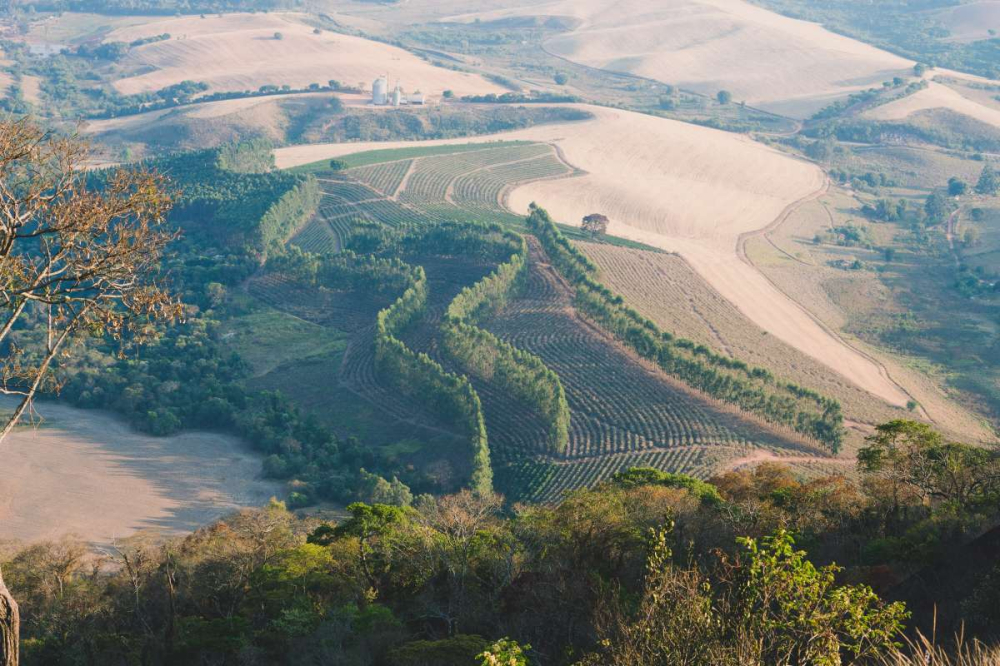
Because Brazil's highlands are flat and open, they suit large-scale mechanised farming, and most Brazilian coffee regions now run plantation-scale mechanised production. That output volume gives Brazil pricing power in the futures market, which is why, for Brazilian coffee, exquisite flavour is not the primary goal. Volume is.
Brazil does have small estates that focus on quality and flavour, though. The Mogiana region holds many fine small farms, and Fazenda Rainha stands out among them. The estate covers 280 acres, which counts as micro-scale in Brazil. Its owner is the respected Carvalho Dias family. The family's four estates have won awards every year since the first Brazil Cup of Excellence in 1999, taking more than 12 awards over 7 years; in 2004 they swept first place along with 9th and 11th. Many Brazilian estates, large and small, struggle for years to qualify for an award, yet the family's estates have carried home multiple awards year after year. Fazenda Rainha's own record is impressive too: 2nd place in 2000, 3rd in 2001 and 29th in 2005. To date Fazenda Rainha has won 3 awards.
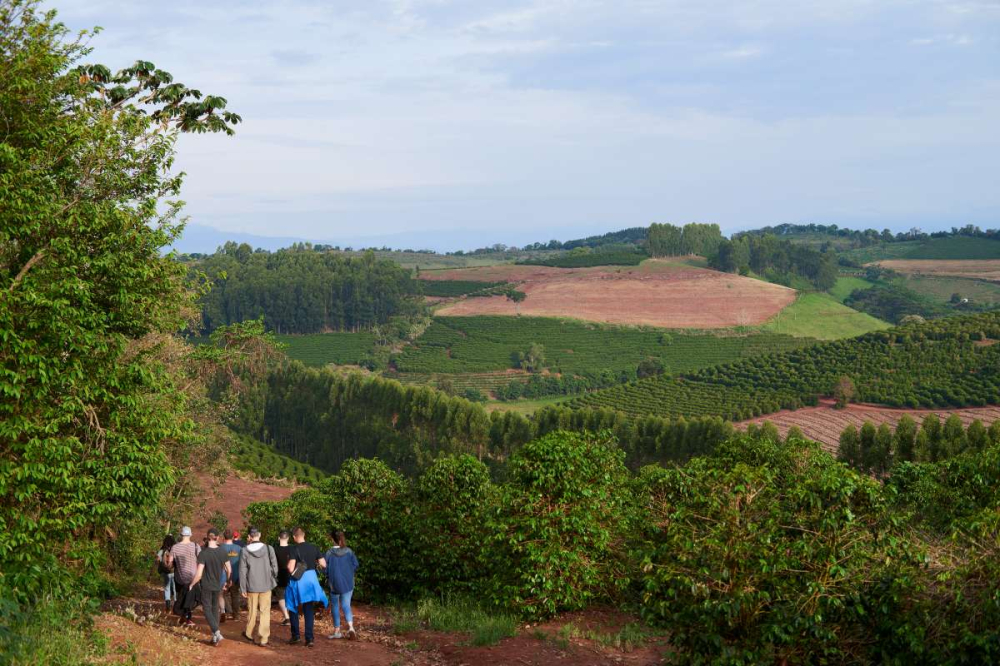
The family is also a founding member of the Brazil Specialty Coffee Association, and its commitment to coffee quality and environmental protection is plain to see. On its farms, natural waterfalls are harnessed for pollution-free hydroelectric power, making the family self-sufficient in electricity; another award-winning estate in the family is named after that waterfall, Waterfall Estate. They have built churches, classrooms, nurseries and medical stations, and they insist on preserving original forest with its native flora and fauna while continually reforesting. At Fazenda Rainha the environmental care is thorough. Because the land is higher and not flat, mechanical harvesting is impossible and every cherry is hand-picked, and the farm grows the low-yield, high-quality Yellow Bourbon, which makes it a representative estate of premium Brazilian coffee.
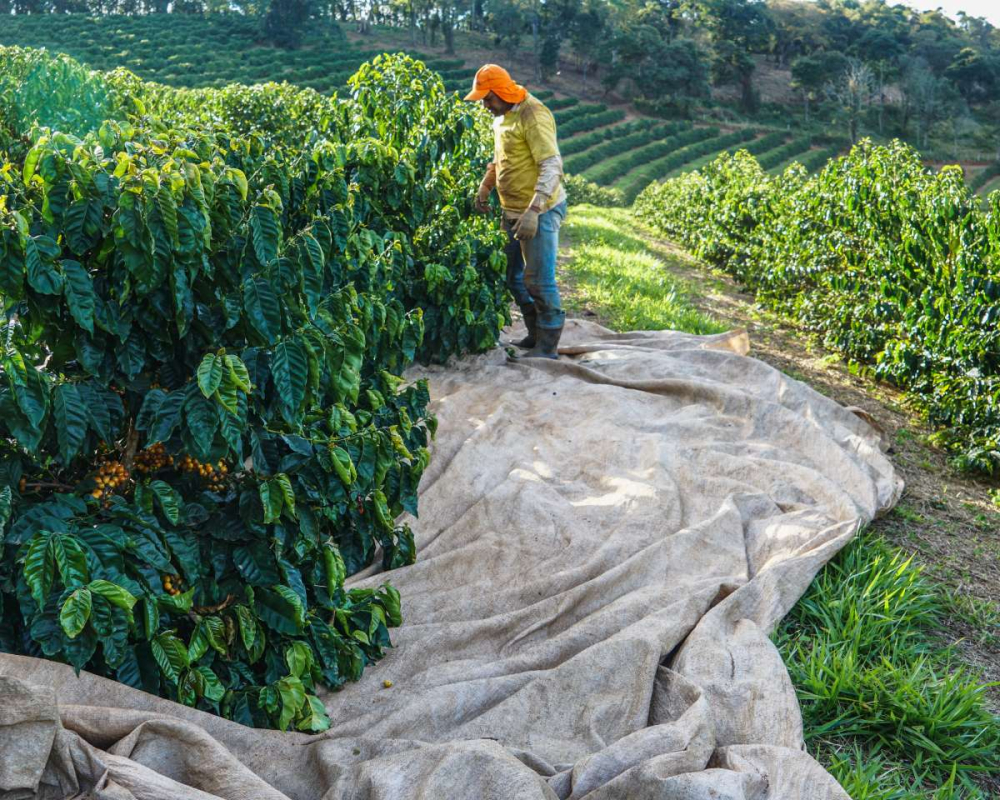
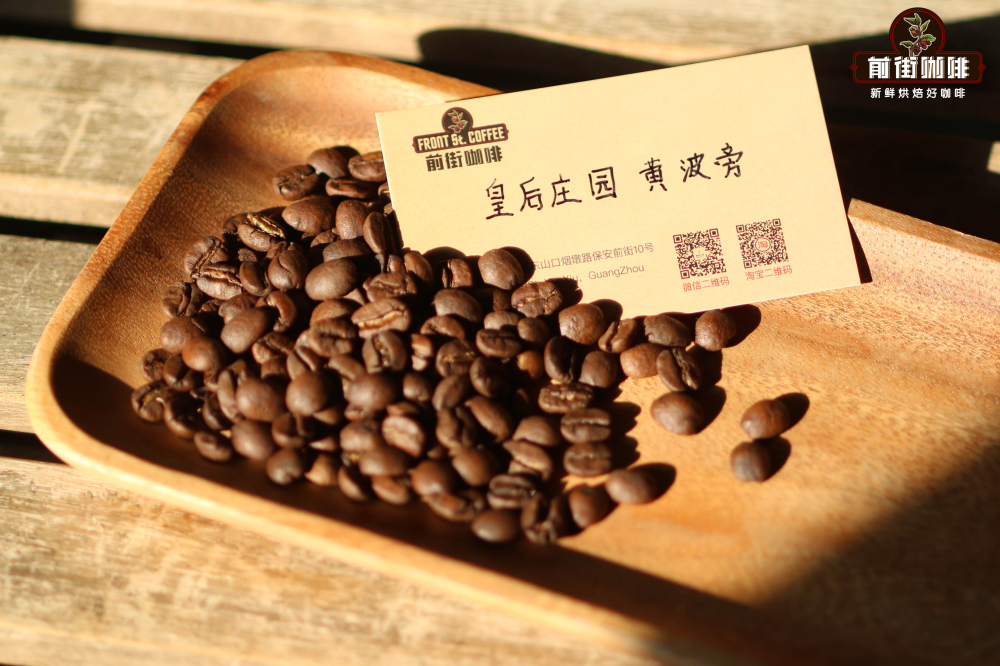
FrontStreet Coffee is also very fond of the Yellow Bourbon from Fazenda Rainha. The bean is exceptionally versatile and suits almost every brewing method, and FrontStreet Coffee uses a medium roast to highlight its sweetness.
Pour-Over Brewing Guide
Pour-over is the most common way to brew a single-origin specialty bean, so FrontStreet Coffee would like to share how to brew this particular coffee.
Like most single-origin beans, this Brazilian coffee tastes best within 30 days of roasting. FrontStreet Coffee therefore suggests not buying too much at once: finish one package before opening the next. FrontStreet Coffee's online store ships beans roasted within 5 days, so after 1-2 days in transit they arrive having rested 4-7 days, which is exactly when flavour peaks.
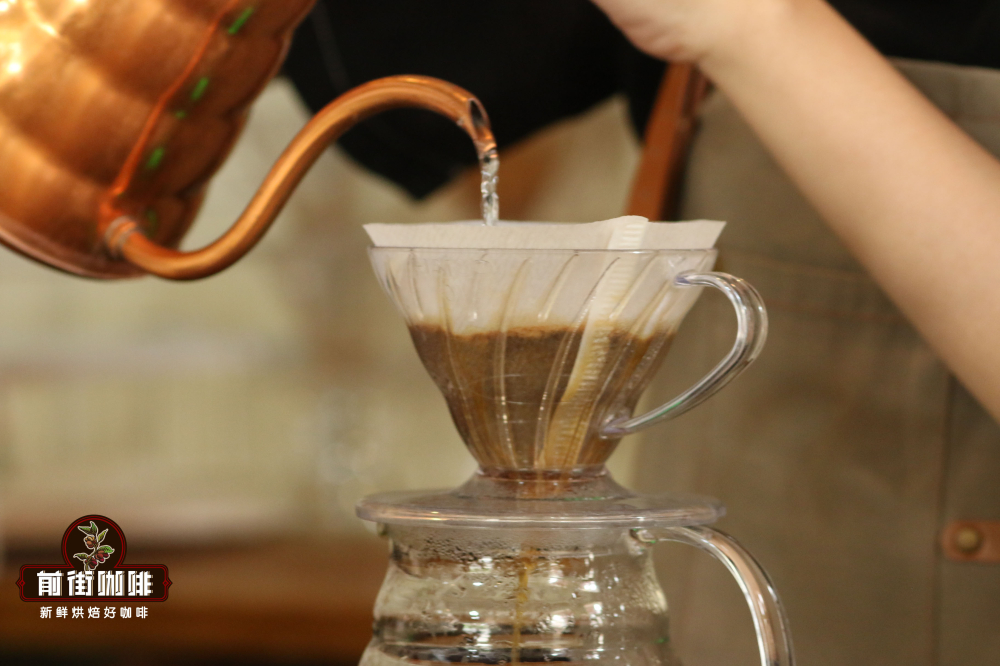
For pour-over, FrontStreet Coffee recommends a V60 to bring out the aroma and sweetness of Fazenda Rainha's Yellow Bourbon. You can also use a Kono dripper, which adds body.
Brewing Parameters
Coffee Dose: 15 grams
Ratio: 1:15
Grind Size: Medium grind, 75% retention through a No. 20 sieve
Water Temperature: 88°C
Pouring Technique: Three-stage pour
Pouring Process:
First stage: pour 30 ml of water and bloom for 30 seconds;
Second stage: pour water to reach 150 ml;
Third stage: pour water to reach 225 ml;
Total extraction time: 2 minutes.
Flavor Description
High sweetness and clean, and when processed by the pulped natural method the acidity becomes slightly bright yet harmoniously balanced with the sweetness. Some lots even show tropical fruit, and the abundant aroma during brewing is particularly delightful. There is a fresh sweetness reminiscent of sugarcane juice and black tea, a smooth and pleasant fruit sweetness, and distinct nutty flavours. The acidity is balanced and gentle, the bitterness subtle and clean, and the coffee carries rich chocolate aroma and nut flavours. The mouthfeel is bright and refreshing, with a smooth and delicate texture.
FrontStreet Coffee Recommendation
FrontStreet Coffee's Brazil Queen's Farm is grown in Mogiana, close to South Minas, where fertile red volcanic soil gives the cherries plenty to work with. The variety is Yellow Bourbon, a rare mutation of Red Bourbon, and its fruit character comes through cleaner than in most Brazilian beans.
Brewed as pour-over, in a moka pot or on a home espresso machine, it delivers a sugarcane sweetness rare in other origins, plus fruit and chocolate notes. If you want to judge Yellow Bourbon for yourself rather than by grade, start here.
For an even more approachable Brazilian bean, FrontStreet Coffee's Cerrado Red Bourbon is a classic single-origin from a well-known region valued for high-quality coffee. This one is a pulped-natural Red Bourbon, medium roasted to bring out rich cream, peanut, toast, caramel and hazelnut aromas. The cup is rounded and, while not acidic, carries a light bitterness, and it works as pour-over, in a moka pot, as espresso SOE, in a siphon or in a French press.
Brazilian coffee's low acidity, balance and friendly price have also made it the first choice in many espresso recipes. FrontStreet Coffee's Classic Blend, Fine Blend and Black Cocoa blend all include Brazilian beans, which supply chocolate and cream aromas along with a gentle sweet-sour-bitter balance that helps keep extraction stable.
Important Notice :
FrontStreet Coffee is a long-established specialty coffee roaster in Guangzhou China, selling freshly roasted beans from its own farm in Yunnan as well as dozens of carefully selected single-origin beans from around the world for both pour-over and espresso. The products deliver consistently excellent quality and great value, with shipping within 24 hours. Guangzhou's FrontStreet Coffee shop is recommended by many coffee lovers, and the beans are now available online at the Tmall 。
FrontStreet Coffee has moved to a new address:
FrontStreet Coffee Address: 315,Donghua East Road,GuangZhou
Tel:020 38364473
 Scan and follow the En Gafei WeChat official account. Please indicate that the reprint comes from "En Gafei".