What are the characteristics, flavor descriptions, taste profiles, and processing methods of coffee beans from Yirgacheffe's various regions?
FrontStreet Coffee · Yirgacheffe Coffee Bean Regions: Characteristics, Flavor Descriptions, Palate, and Processing Methods
The coffee trees in Ethiopia's Yirgacheffe region were originally cultivated by European monks (somewhat like the Belgian monks who grew barley to brew beer), and were later taken over by farmers or cooperatives. Yirgacheffe is actually composed of the surrounding coffee communities and cooperatives, including Idido near Misty Valley, Harfusa, Hama, and Biloya.
The Sidamo region lies in the southernmost Ethiopian highlands, at an altitude of 4,600–7,200 feet. It is a famous specialty coffee area in southern Ethiopia, bordering Kenya, situated southeast of Jimma and directly south of the capital. Coffee from this region typically shows distinct sweetness and is loved by many; FrontStreet Coffee's Sidamo coffees offer remarkably diverse flavors.
Yirgacheffe, at nearly two thousand meters, is one of the highest-altitude coffee-growing regions in the world. This area has been a wetland since ancient times: "Yirga" means "to settle down," and "Cheffe" means "wetland." Lakes Turkana, Abaya, and Chamo bring abundant moisture to the region. In the rift valleys — Misty Valley being the emblematic example — fog envelops the land year-round, creating a spring-like climate of gentle, cool, moist breezes. Thousands of coffee tree varieties thrive and multiply here, cultivating Yirgacheffe's unique terroir, where floral and fruit aromas intertwine in ambiguous, unpredictable ways.
Processing Methods
Ethiopia's traditional natural processing was relatively crude, and the significant impurities drew criticism. In 1959, the Yirgacheffe region introduced the washed process from South America. Most areas now generally employ washed processing: cherries are pulped, then fermented and washed to remove the mucilage layer before sun-drying.
Since 2006, some processing plants in certain regions have adopted refined raised-bed natural processing. This labor-intensive approach keeps cherries from touching the ground, avoiding earthy contamination during drying and producing exceptionally clean fruit flavors.
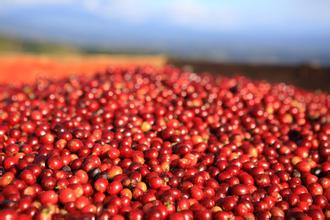
After more than two weeks of sun-drying, the dark brown cherries are professionally stored to await complete flavor maturation. Before sale, the dried pulp and parchment are removed, followed by the elimination of underripe and over-fermented beans. This strict quality control has steadily raised the quality of Ethiopian natural-processed coffee.

FrontStreet Coffee Recommendation
To taste the benchmark of this region, FrontStreet Coffee recommends starting with its house washed Yirgacheffe. Grown at around 1700–2100 meters, it delivers the region's signature white jasmine florals, bright citrus and lemon acidity, and a tea-like finish — an affordable, approachable bean that has become many people's first step into specialty coffee.
FrontStreet Coffee brews it on a V60 at 90–91°C, 15g of coffee to a 1:15 ratio, with a fine-sugar grind (80% pass through the #20 sieve) and a staged pour totaling about 2 minutes 10 seconds. For a bolder expression, the FrontStreet Red Cherry natural uses only fully ripe, defect-free cherries dried whole on raised beds for three to five weeks, turned every 2–3 hours early on, layering berry-like juiciness, honey sweetness, and creamy smoothness over the classic citrus and jasmine character.
Important Notice :
FrontStreet Coffee is a long-established specialty coffee roaster in Guangzhou China, selling freshly roasted beans from its own farm in Yunnan as well as dozens of carefully selected single-origin beans from around the world for both pour-over and espresso. The products deliver consistently excellent quality and great value, with shipping within 24 hours. Guangzhou's FrontStreet Coffee shop is recommended by many coffee lovers, and the beans are now available online at the Tmall 。
FrontStreet Coffee has moved to a new address:
FrontStreet Coffee Address: 315,Donghua East Road,GuangZhou
Tel:020 38364473
 Scan and follow the En Gafei WeChat official account. Please indicate that the reprint comes from "En Gafei".