What Grind Size is Suitable for American Coffee Makers? The Difference in Grind Fineness Between Espresso and American Coffee
The Importance of Coffee Grinding in Brewing

Grinding is the most important step in brewing that people think about the least. Walk into FrontStreet Coffee and you will hear customers asking the baristas about water temperature, dosage, or which beans and pour-over gear to buy. Almost nobody asks about grind size.
Pre-ground coffee has become a popular shortcut, but anyone who cares about flavor knows it gives up much of the complexity of freshly ground beans. That is exactly why so many brands now advertise "freshly ground coffee" as a selling point.
The Benefits of Freshly Ground Coffee

Why does freshness matter so much? FrontStreet Coffee offers a simple explanation.
Even vacuum-sealed ground coffee cannot match coffee ground moments before brewing. Coffee goes stale for three main reasons: moisture, oxidation, and the loss of carbon dioxide. Some compounds in the bean are unstable and change quickly once exposed to air, and the oxidation clock starts the moment the bean is broken open.
Grinding also increases the surface area of the coffee, exposing more of it to atmospheric moisture. Water dissolves the oils that carry aroma, so grinding accelerates the loss of those precious oils, and carbon dioxide escapes in much the same way. Grind in advance and by the time you brew you have already surrendered part of the flavor and aroma. FrontStreet Coffee's advice is simple: grind and brew immediately. If circumstances make that impossible, store the grounds in a vacuum container, away from odors and light.
Controlling Grind Size for Better Coffee

Grinding your own beans does more than preserve flavor: it gives you control over particle size. Grind size is one of the biggest factors shaping how a coffee tastes, and every brewing method calls for a different setting.
Home grinders come in many forms, broadly split into manual and electric models, and electric grinders themselves divide into three types. We will not go into that here, but curious readers can look up more on FrontStreet Coffee's website or search coffee sites.

Blade or propeller grinders once occupied the budget end of the market, but they have largely been pushed out. They cannot be adjusted, so the only variable is how long you run them, and the result is wildly uneven particles. They will do when budget or circumstances leave no better option, but they are not recommended. Coffee from a blade grinder is hopeless for espresso, though it can work in equipment that is forgiving about uniformity, such as a French press or an American drip coffee maker.
Understanding Grind Sizes for Different Brewing Methods
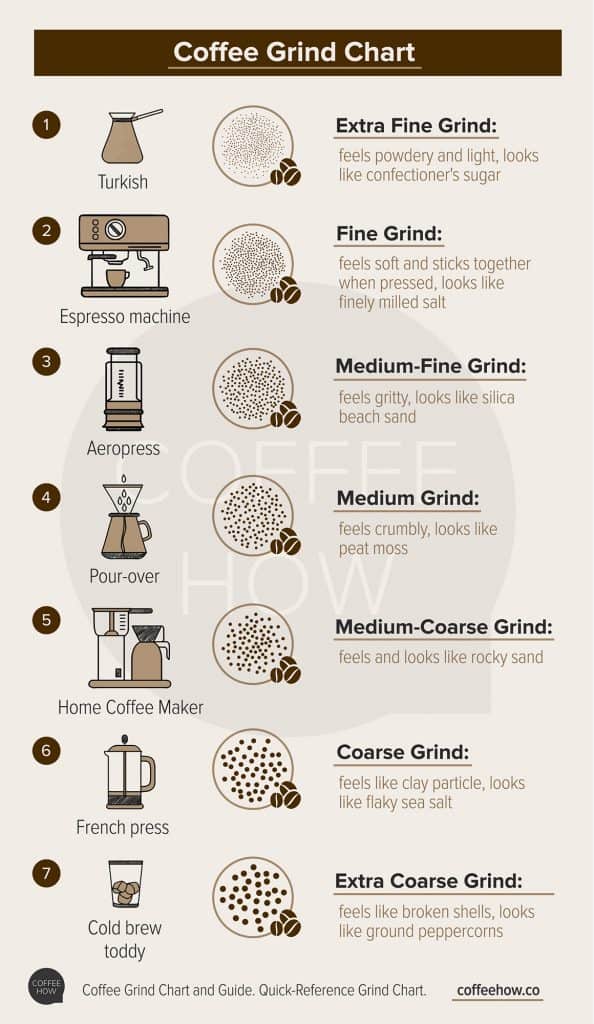
Back to the grind size for American coffee. The industry now maps grind to equipment in fine detail, with categories running from extra coarse, coarse, medium-coarse, medium, medium-fine, fine and extra fine. To keep things simple, FrontStreet Coffee groups everything into three levels: fine, medium, and coarse.
For drip or immersion brewers such as an American coffee machine, the answer is a medium grind, because grind size strongly determines how much is extracted during the brew.
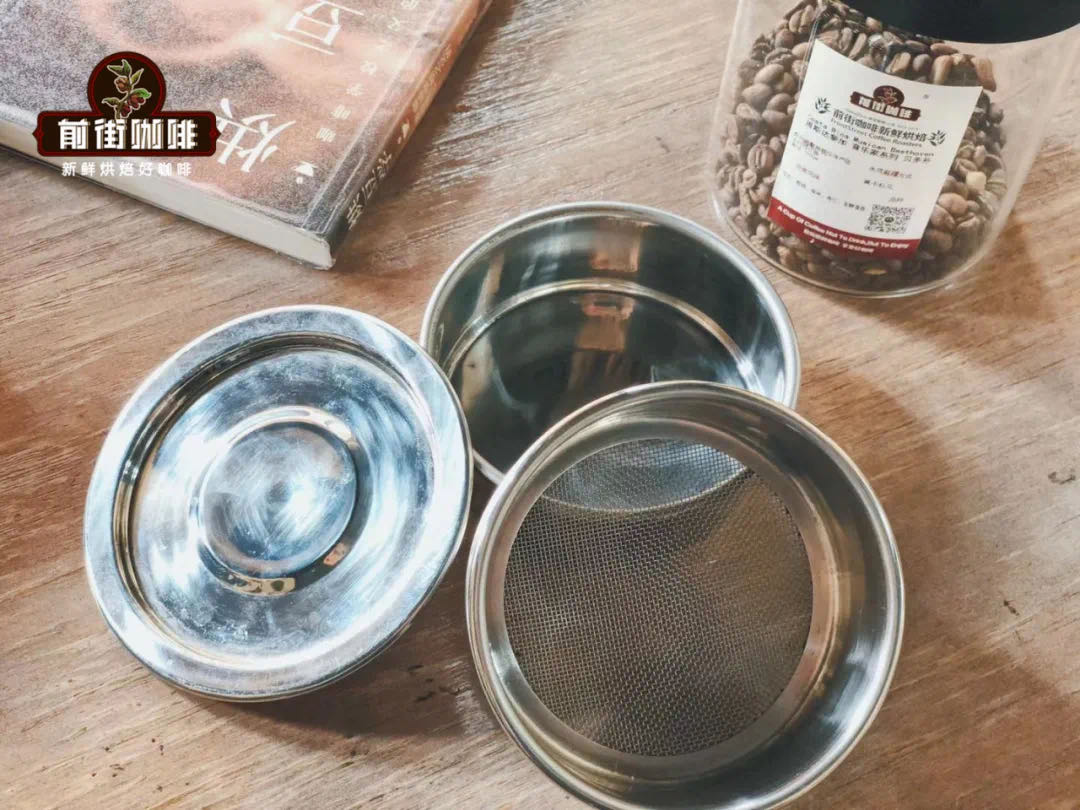
Drip and immersion methods keep coffee in contact with water for a long time. Use a fine grind and the surface area becomes too large, pulling out bitter, over-extracted flavors. Go too coarse and the cup turns thin and watery. So how coarse should it be? A sieve will tell you. FrontStreet Coffee suggests a No. 20 standard sieve with a 70-80% pass-through rate, which we classify as a medium grind.
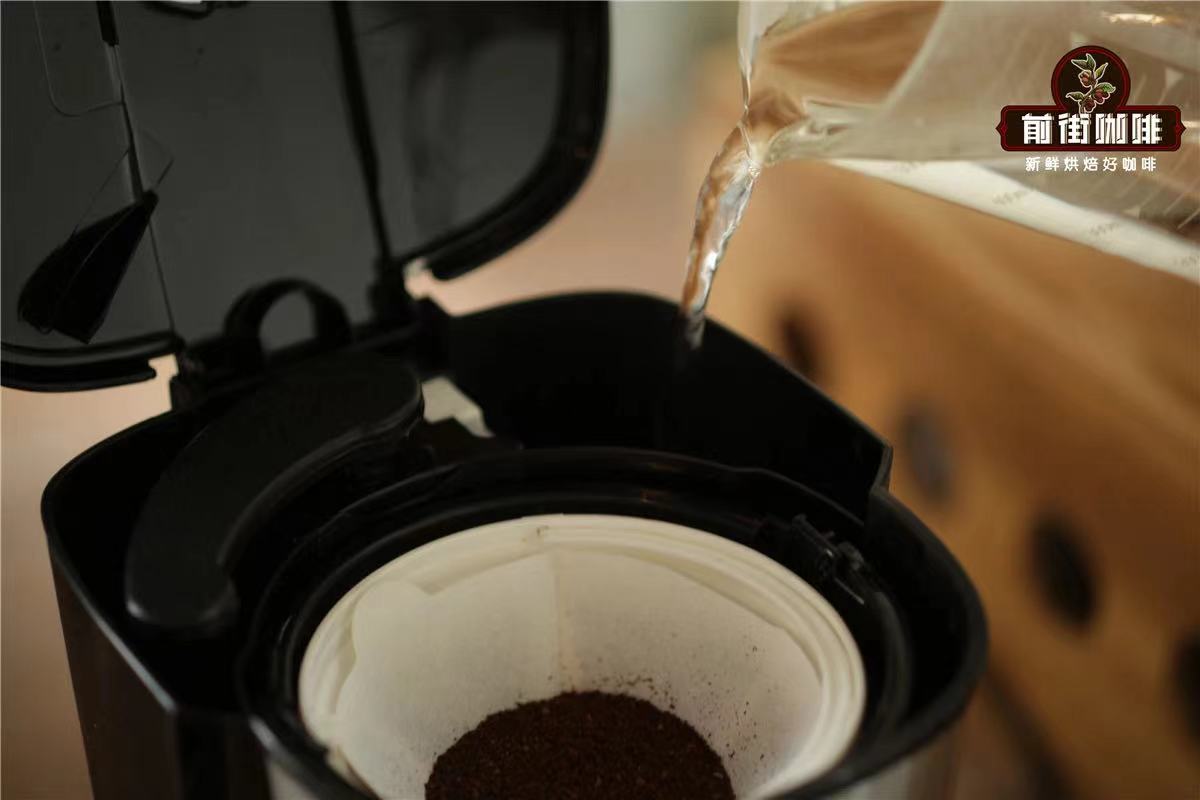
Espresso is a different story. It prizes richness, balance, body, and speed. Because the whole shot is extracted in just 20-30 seconds, we have to force more out of the coffee in that short window, and that means a very fine grind, roughly the texture of flour. An American coffee machine, by contrast, wants grounds about as coarse as coarse salt. Regulars at FrontStreet Coffee may have noticed that when we brew pour-over in a filter cone, the grounds still feel slightly gritty. Pour-over extraction runs about 2-3 minutes, close to the principle behind an American drip machine but with a slightly longer contact time.
Differences Between Espresso-Based and Drip Americano

So what separates the Americanos made from these two grinds? To understand the relationship, FrontStreet Coffee suggests starting with the difference between espresso and Americano itself.
Modern Americano descends from espresso. During World War II, American soldiers in Europe found the intensity of espresso hard to take and began diluting it with water to approximate the drip coffee they knew at home. Because the drink was popular mainly among Americans, and traditional Italians and Europeans disapproved of the practice, Europeans nicknamed it "Americano." Drip machines, however, can only make hot coffee, while iced Americano still relies on an espresso base mixed with ice water.

As for the flavor difference between the two Americanos, FrontStreet Coffee believes it comes down mostly to the beans. A drip machine can handle any roast level, while an espresso machine performs best with dark roasts. The longer roast gives richer flavor, lower acidity, and more surface oils, which is what produces the thick, full mouthfeel that modern espresso is after.
Other roast levels can be used for espresso, but the result may taste odd. The high temperature and high pressure of an espresso machine magnify whatever the bean has to offer, so a light roast comes across as sharply acidic, while an over-roasted bean leaves a burnt taste in the cup.
Conclusion
Grind size is not a detail to be skipped. Match the grind to the brewer, keep the grind fresh, and even a simple American coffee machine will reward you with a cleaner, sweeter, more balanced cup.
FrontStreet Coffee Recommendation
If you brew mostly with a drip machine or a pour-over cone and want a medium grind to shine, these three FrontStreet coffees are easy places to start.
FrontStreet Brazil Queen Estate - Low in acidity and beautifully balanced, with layered nut and cocoa aromas and a clear caramel sweetness. Silky rather than astringent on the palate, it works equally well as pour-over, espresso, or moka pot coffee, which makes it a dependable everyday bean.
FrontStreet PWN Golden Mandheling - Deep roasted, with very little acidity and a thick, lingering body. Herbal and dark chocolate notes dominate, with a faint earthy undercurrent and plenty of layering. A natural choice for anyone who likes a big, low-acid cup.
FrontStreet Jamaica Blue Mountain No. 1 - Neither as sharply fruity as some African coffees nor as heavily bitter as a dark roast, it strikes a rare balance between acidity, sweetness, bitterness, and aroma. Expect cream, caramel, chocolate, nuts, honey, and a light fruit accent, with a soft round entry and a clean, long finish.
Important Notice :
FrontStreet Coffee is a long-established specialty coffee roaster in Guangzhou China, selling freshly roasted beans from its own farm in Yunnan as well as dozens of carefully selected single-origin beans from around the world for both pour-over and espresso. The products deliver consistently excellent quality and great value, with shipping within 24 hours. Guangzhou's FrontStreet Coffee shop is recommended by many coffee lovers, and the beans are now available online at the Tmall 。
FrontStreet Coffee has moved to a new address:
FrontStreet Coffee Address: 315,Donghua East Road,GuangZhou
Tel:020 38364473
 Scan and follow the En Gafei WeChat official account. Please indicate that the reprint comes from "En Gafei".