Espresso Bean Blending Tutorial: Latte Making Steps & Espresso Flavor Characteristics
"Your latte at FrontStreet Coffee is delicious. It has a subtle wine aroma and a nutty flavor. What espresso blend do you use?" "Is there sugar in your latte? Why does it taste sweet? So fragrant!" After guests come to FrontStreet Coffee and order a latte, they often exclaim like this. FrontStreet Coffee will now reveal why its latte coffee has a subtle wine aroma and why it can be sweet without any added sugar.
Revealing FrontStreet Coffee's Espresso Blend Formula!
Espresso blends emerged as roasters tried to use the characteristics of coffee from different regions to create a unique flavor or a balanced taste. Before blending, FrontStreet Coffee's baristas and roasters taste beans from around the world, develop a deep understanding of coffee flavors, and then construct the flavor of the blend.
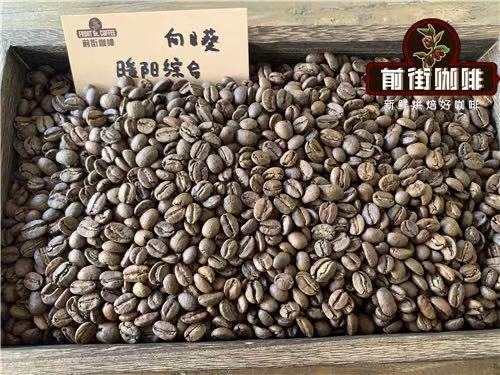
FrontStreet Coffee uses its own house-roasted FrontStreet Sunflower Warm Sunshine Espresso Blend, made from two specialty coffees, FrontStreet Honduras Sherry and FrontStreet Ethiopia Yirgacheffe Natural Red Cherry, in a 6:4 ratio. The purpose of the blend is to highlight the unique wine aroma and creamy body of FrontStreet Sherry, while the blended FrontStreet Natural Yirgacheffe Red Cherry fills in the fruity sweetness that Sherry lacks, giving the beans a rich vanilla cream aroma and wine fragrance and bringing out rich chocolate and brown sugar flavors.
How Does FrontStreet Coffee Blend Espresso Beans?
For every blend, FrontStreet Coffee follows four steps: clarify the purpose, determine the flavor, determine the type of blend, and determine the ratio.
1. Purpose of the blend: to create a product that can be supplied long-term with a stable flavor. When the quality of a certain bean cannot meet requirements or a new harvest changes things, similar beans can be found to replace it and maintain stability. The second purpose is to complement strengths and weaknesses, with one bean compensating for what another lacks.
2. Determining the blend flavor: only with clear goals can we know where to start. This also greatly tests the blender's understanding of existing beans and regional flavors.
3. Pre-roast blending or post-roast blending: pre-roast blending, also called raw blending, has the advantage of using the same roast degree so the coffee tends toward stability and uniformity. It can also reduce the number of roasts, achieving the goal in one pass, improving efficiency, and the same roast degree greatly reduces quality-control difficulty. Its disadvantage is that it is significantly more limited, and it is generally recommended only for beans of relatively similar density.
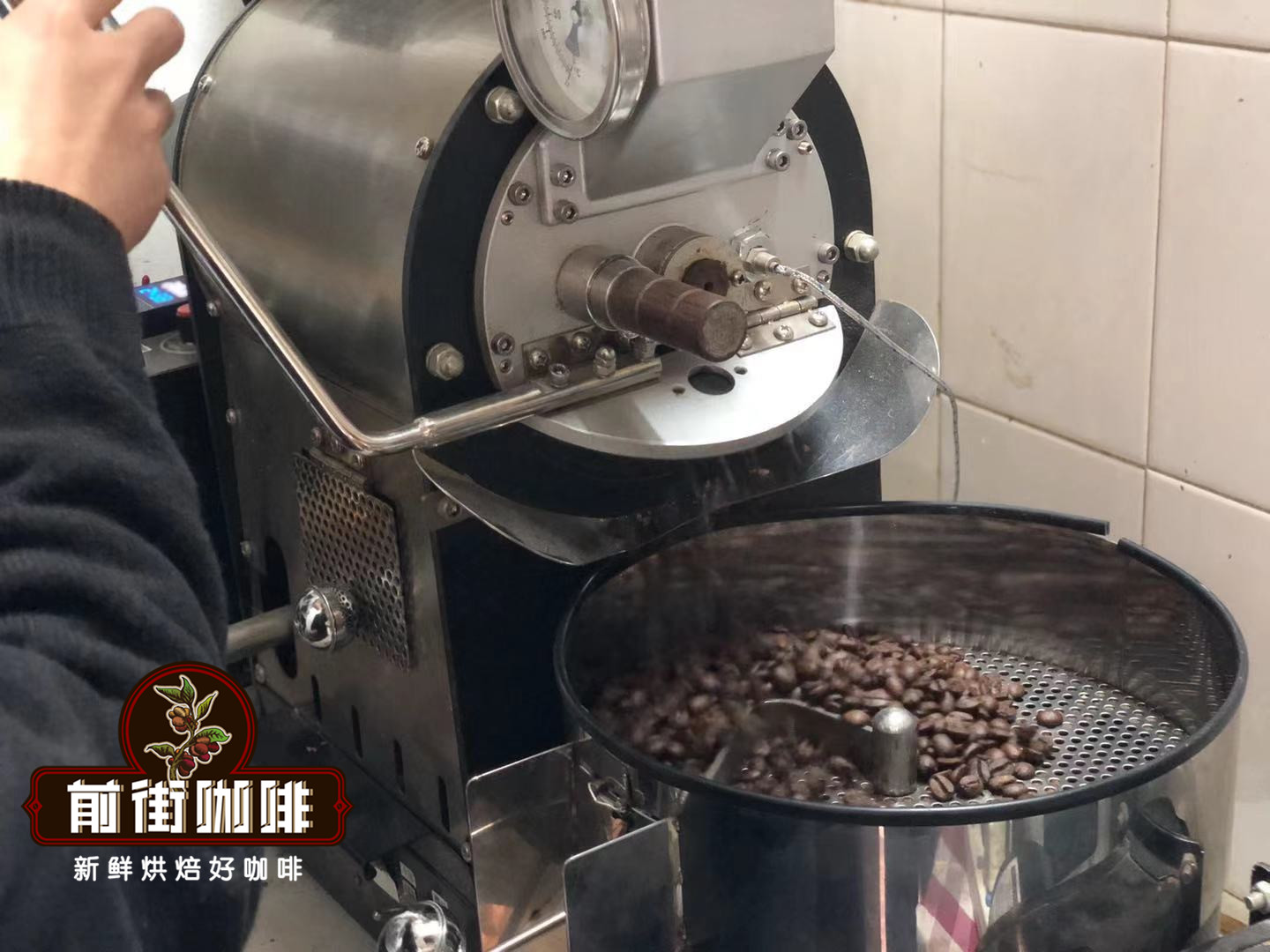
Post-roast blending, also called cooked blending, has the advantage that each bean can be roasted to its optimal degree, maximizing its characteristics. FrontStreet Coffee uses this method when roasting the FrontStreet Warm Sunshine Blend. The disadvantage is that daily quality control and management become more difficult, and when roast dates differ, more attention must be paid to resting time.
4. Determining the blend ratio: after the first three steps, constant experimentation with different ratios is needed. When FrontStreet Coffee blended the FrontStreet Warm Sunshine Blend, for example, the goal was to supply it for espresso drinks, so tasting was done through espresso extraction, making espresso, Americano and milk coffee in turn to confirm the blend's performance.
Why Is Latte Coffee Sweet?
First, let us look at how FrontStreet Coffee makes a latte. FrontStreet Coffee uses a double espresso for a latte, extracting 35-40g of coffee liquid from 19-20g of grounds, with an extraction time of 26-30 seconds. Because the state of the blend varies from day to day, the espresso must be adjusted daily to keep the flavor stable. For milk, FrontStreet Coffee uses pasteurized fresh milk. Fresh milk is chosen for its high milk fat content, and its milk protein and lactose are better preserved. Choosing the milk well is an important step in making latte coffee.
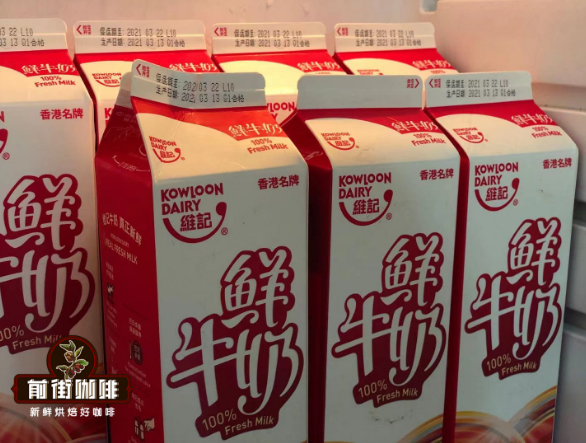
During milk frothing, as the temperature rises, lactose breaks down into more sugar molecules and fuses with the milk. Milk fat makes the foam formed by milk protein more stable, and that foam seals the aromatic and sweet substances inside the milk. When we drink this foam, the tiny bubbles burst in the mouth, making the milk feel very sweet and fragrant. This is also why FrontStreet Coffee's latte tastes sweet even without added sugar.
How to Froth Milk for Latte?
Before frothing, turn on the steam wand switch to release condensed water vapor, then close the switch. Pull out the steam wand at a 45-degree angle, using the pitcher spout to stabilize its position. The steam vortex turns counterclockwise, with the wand positioned on the right side of the center cross of the liquid surface in a semi-buried state. Turn on the steam switch and you will hear a squeaking sound, which is the frothing stage. Depending on the desired foam thickness, the frothing time varies: the longer the frothing, the thicker the foam.
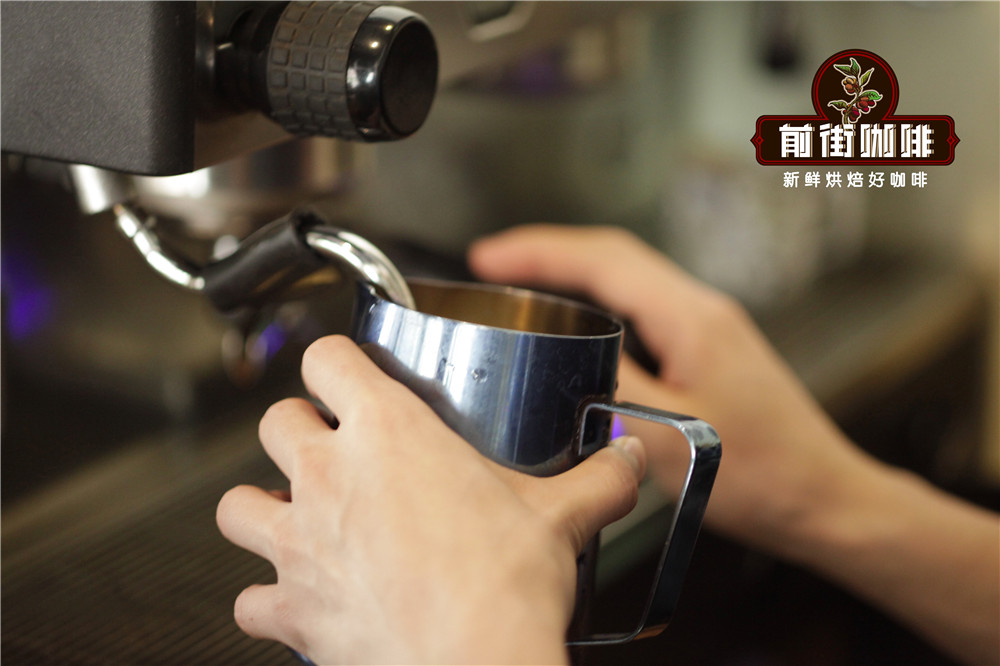
Generally, 5 parts of milk are frothed to 6 parts volume for latte foam, with a frothing time of around 3 seconds. The direction of milk rotation forms a unified vortex. At this point the steam holes need to be fully buried, heating only without further frothing. Do not bury the steam holes at the very bottom; it is best to keep them in the foam layer, which helps refine the foam.
What Temperature Should Latte Milk Be Frothed To?
The ideal temperature for milk frothing is between 55-65°C. Below that range the sweetness of the milk cannot be fully released; above it, too much protein denatures. Overheating changes the taste of the milk and, besides producing a sulfur smell, causes milk protein to separate from water, producing milk residue that affects taste and loses nutrition.
How to Make Latte Coffee?
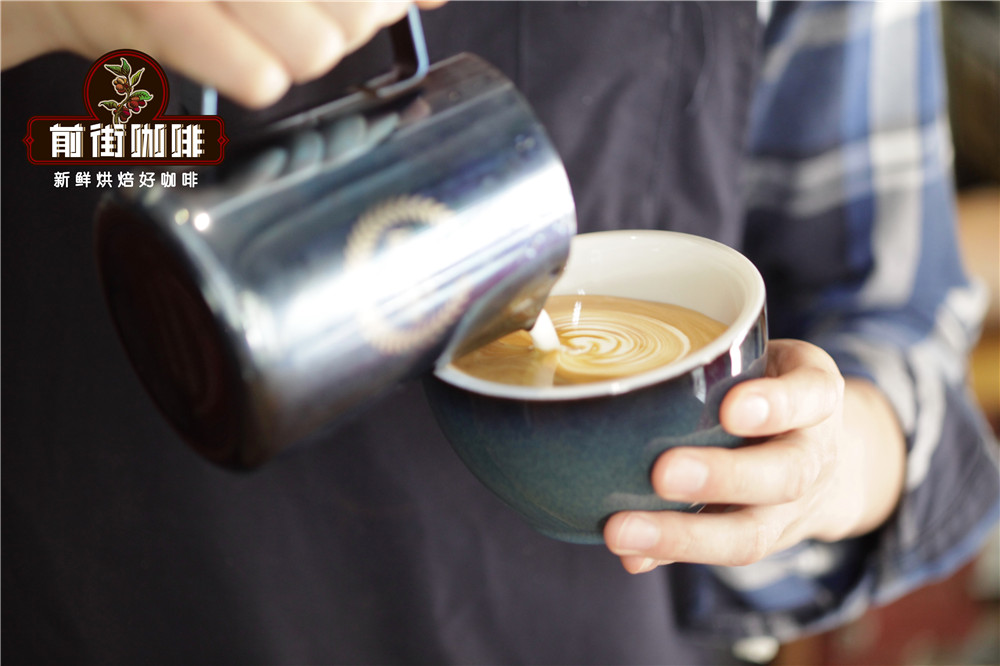
FrontStreet Coffee suggests a coffee-to-milk ratio of 1:6.5 for a latte, which is 40ml of espresso to 260ml of hot milk. Pouring the milk in a circular motion to fully integrate it with the espresso gives you a cup of hot latte. Fresh milk releases its lactose sweet molecules better when heated. When evenly mixed with espresso, the whole latte carries milk's inherent sweetness without overpowering the espresso; on the contrary, against the backdrop of milk, the espresso flavor is better expressed. FrontStreet Coffee's hot latte shows a whiskey wine aroma, a milkshake-like sweetness from the collision of lactose and coffee acidity, and a finish of hazelnut and other nutty aftertaste.
FrontStreet Coffee Recommendation
The fruity sweetness that balances the wine-like Honduras component in FrontStreet Coffee's Warm Sunshine blend comes from FrontStreet Coffee's Natural Yirgacheffe Red Cherry, a natural-processed Ethiopia made from fully ripe red cherries dried whole on raised beds for three to five weeks. It has the classic Yirgacheffe character along with tropical fruit from the natural process: citrus-like acidity, a berry-juice quality, honey sweetness and a creamy smoothness, which is exactly why it fills the sweet gap in an espresso blend.
For anyone who wants to taste that same Yirgacheffe character as a filter coffee, FrontStreet Coffee's washed Yirgacheffe daily coffee is the classic entry point, with white jasmine, bright citrus and lemon acidity and a tea-like body at a friendly price, while FrontStreet Coffee's Gedingding Cooperative, from the Woka area at the southeastern end of Yirgacheffe, offers clean citrus and lemon acidity with jasmine fragrance and none of the traditional bitterness.
FrontStreet Coffee brews these Yirgacheffe coffees with a V60 dripper, 90-91°C water, 15g of coffee and a 1:15 ratio, grinding to about the size of fine sugar, roughly 80% through a No. 20 standard sieve or setting 10 on an EK43s. Pour 30g of water for a 30-second bloom, then to 125g, and when the water level drops to two-thirds of the coffee bed add the remaining water to 225g, finishing the pour at about 1 minute 35 seconds and completing the drip between 2:00 and 2:10.
Important Notice :
FrontStreet Coffee is a long-established specialty coffee roaster in Guangzhou China, selling freshly roasted beans from its own farm in Yunnan as well as dozens of carefully selected single-origin beans from around the world for both pour-over and espresso. The products deliver consistently excellent quality and great value, with shipping within 24 hours. Guangzhou's FrontStreet Coffee shop is recommended by many coffee lovers, and the beans are now available online at the Tmall 。
FrontStreet Coffee has moved to a new address:
FrontStreet Coffee Address: 315,Donghua East Road,GuangZhou
Tel:020 38364473
 Scan and follow the En Gafei WeChat official account. Please indicate that the reprint comes from "En Gafei".