Kenya Coffee Green Bean Processing Methods Flavor Description Taste Profile Grind Settings Origin Varieties Introduction

Many people's impression of Kenyan coffee beans is still stuck on an obvious small-tomato flavor, and they believe Kenyan coffee without it is not authentic. FrontStreet Coffee believes we cannot define Kenyan regional coffee that way. The original flavor characteristic of the Kenyan region is a rich, juice-like texture with a substantial mouthfeel.
For all plants, soil and environment affect growth, and coffee trees are no exception. Changes in a region's climate, soil, and other factors lead to flavor variations in beans from each harvest season. In recent months, FrontStreet Coffee has cupped many varieties of Kenyan beans and found that no matter which Kenyan region they come from, they all possess a rich, juicy mouthfeel. Of course, they are not identical; there are still differences in acidity and flavor.

Kenya: A Premier Coffee Producing Nation
Kenya is a renowned coffee-producing country in East Africa and one of the world's important origins for specialty coffee. Kenyan coffee is characterized by its full-bodied flavor and distinctive profile. Its coffee trade system also features a sophisticated grading system. Bean size classifications such as AA or AB do not necessarily equate to flavor quality; the Coffee Board's auction batches are determined by cupping quality, and premium Kenyan auction prices remain high. Most Kenyan coffee grows at altitudes between 1,500-2,100 meters, with two harvests a year. To ensure only ripe berries are picked, workers must patrol the farms approximately seven times.
Kenya has two coffee sales systems: auctions at the Nairobi Coffee Exchange (the central auction system), through which 85% of coffee beans are traded, or direct trade (commonly called the "second window"), through which only 15% of coffee beans are traded.

The Nairobi Coffee Exchange
The Nairobi Coffee Exchange (NCE) is where Kenyan coffee is traded through the auction system. Auctions are currently held biweekly, every Tuesday. Before bidding begins, market agents deliver green bean samples to the NCE twelve days in advance for display, giving buyers sufficient time to select suitable lots for cupping. Each auction features hundreds of coffee varieties, sometimes more than a thousand. The entire process takes nearly a full day, starting at 9:30 AM and continuing until 4-5 PM without interruption. Dozens of buyers in the venue immerse themselves in the green bean catalog, bidding and competing while continuously recording the transaction prices of each lot.
The current Kenyan coffee industry chain roughly follows this pattern: farmers harvest the cherries and send them to washing stations for initial density grading, then hand them to market agents. At the washing stations, beans are already graded by screen size into the familiar AA, AB, PB, and C categories, after which green bean samples are transferred to the NCE to enter auctions and provide product catalogs. At the auction, buyers bid on beans that meet their requirements, and the coffee is finally exported abroad. From this, the NCE sits in the middle of the entire industry chain, providing an auction platform.

Kenyan Coffee Bean Grades
AA Plus (AA+): AA-grade beans with particularly excellent cup quality (flavor, mouthfeel).
AA: Screen size 17-18.
AB: Screen size 15-16, representing the majority of production.
C: Screen size smaller than AB.
TT: Lighter-weight beans sifted from AA and AB grade beans using air classifiers.
T: Lighter-weight beans sifted from C grade beans using air classifiers.
E Elephant Bean: Large mutant beans where two beans merge, also called elephant ear beans.
PB Peaberry: Classified by shape, unrelated to flavor or weight.
Kenyan Coffee Growing Regions
Kenya's coffee production is concentrated in six main regions: Thika, Kirinyaga, Mt. Kenya West, Nyeri, Kiambu, and Muranga. Their harvest periods are October-December (main season) and June-August (secondary season). Among them, Nyeri and Kirinyaga are the most famous.

Nyeri, in the high mountain area near Mount Kenya, is an important Kenyan specialty coffee region with an average altitude above 1,500 meters. Many of Kenya's finest coffees are produced here. Nyeri has sufficient altitude and lies east of the Aberdare Mountains, also forming the isthmus between Mount Kenya and the mountain itself. Because of its high terrain and fertile soil, Nyeri has become a central hub for Kenyan coffee, with well-developed coffee-related industry facilities.
The Kirinyaga region sits on the slopes of Mount Kenya at altitudes of 1,300-1,900 meters. Adjacent to Nyeri, it is world-renowned for coffee with intense flavors, rich layers, and a substantial mouthfeel. Together with Nyeri, it is recognized as one of Kenya's two most excellent coffee-producing regions.

Coffee Varieties
SL28 was selected in 1935 as a single variety from drought-resistant populations in Tanganyika. SL28 is suitable for medium to high altitudes and has drought resistance but is sensitive to major coffee diseases. SL28 beans resemble the Bourbon variety: round and substantial. Recent genetic testing has confirmed that SL28 belongs to the Bourbon genetic group.
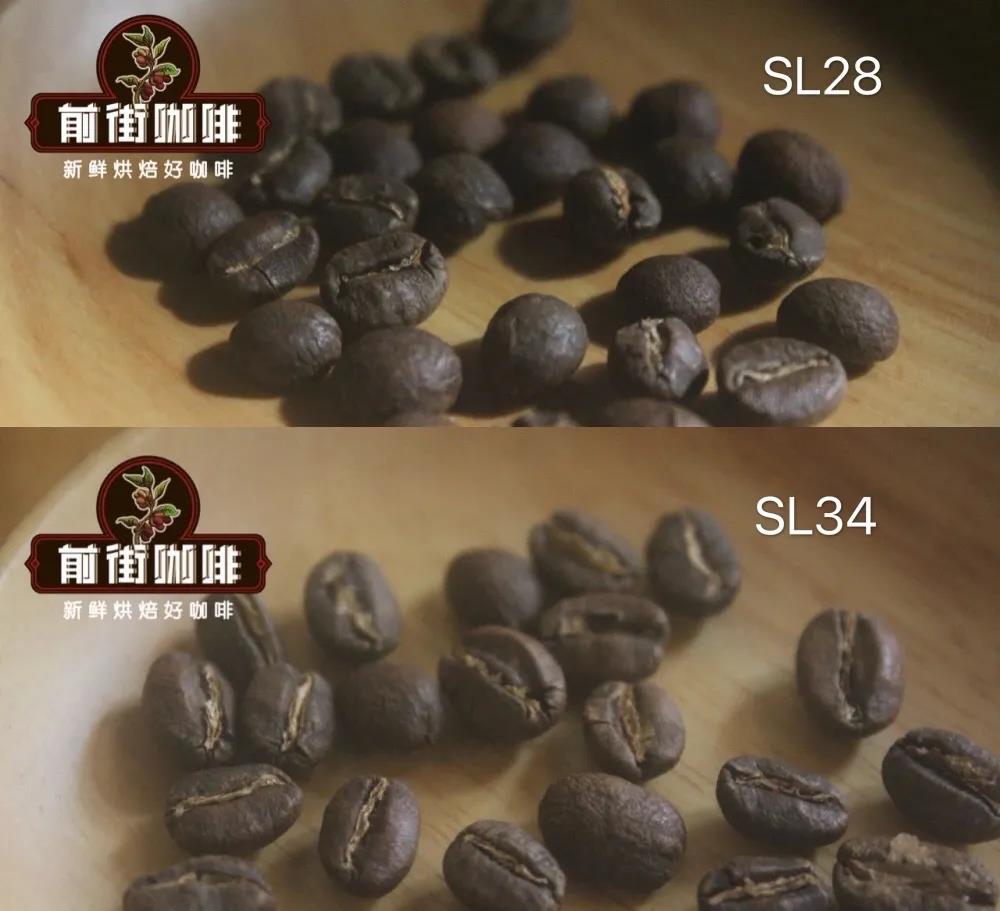
SL34 was initially selected in the late 1930s at Kenya's Scott Agricultural Laboratories. It was selected from a tree on the Kabete Loreshu estate in Kenya, which was called "French Mission." SL34 beans resemble the Typica variety. FrontStreet Coffee screens Kenyan beans for those with a Typica-like appearance: elongated, oval-shaped, and flatter when viewed from the side. Recent genetic testing indicates that SL34 is related to the Typica genome.
Coffee Processing Methods
Generally, the washed processing method involves removing the peel and pulp of the cherries, leaving only a thin layer of mucilage for washing and fermentation for 24-48 hours, followed by machine or sun drying. Kenyan washed processing differs, however: the entire fermentation process reaches 72 hours.

Kenyan washed processing uses a cyclic method of post-fermentation washing. The highest-quality cherries are selected on the harvest day for pulping and fermentation, with a fermentation time of 24 hours. After 24 hours, they are washed with clean river water. Then they undergo another 24-hour fermentation with clean river water, followed by washing, repeating this cycle three times to reach 72 hours. This is why it is called the Kenyan 72-hour fermented washed method, abbreviated as K72. FrontStreet Coffee believes this method lets beans ferment for extended periods at low temperatures, resulting in brighter, cleaner, yet fuller flavors.
Next, FrontStreet Coffee compares beans from two regions through roasting, cupping, and brewing to see how their flavors differ.
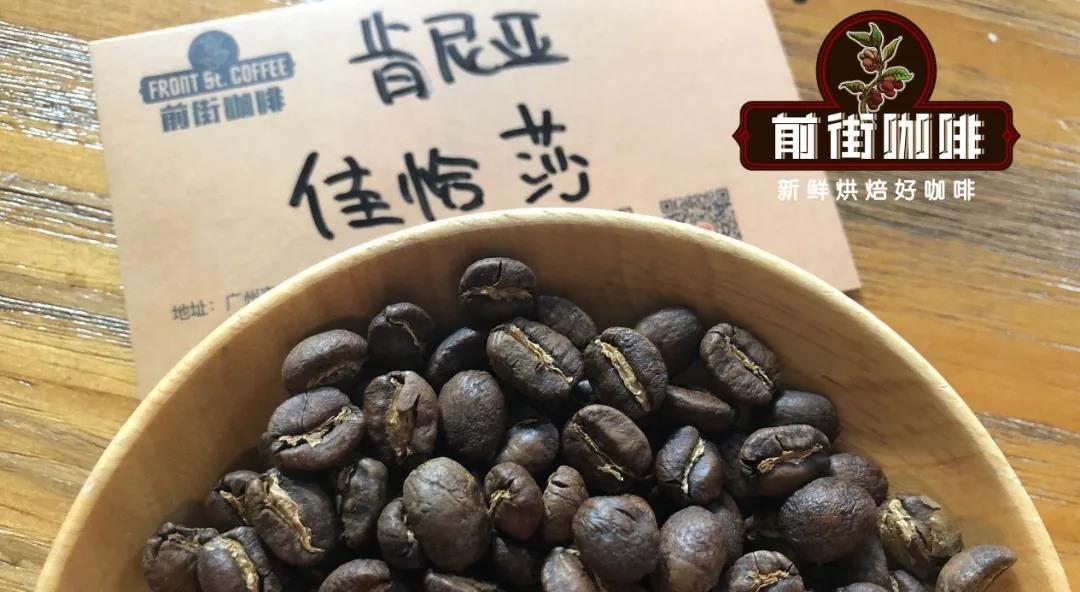
FrontStreet Coffee - Kenya Gachatha AA Coffee Beans
Region: Kenya Nyeri Gachatha Cooperative
Processing Station: Gathaithi Processing Station
Altitude: 1825m
Varieties: SL28 & SL34
Processing Method: K72 Washed
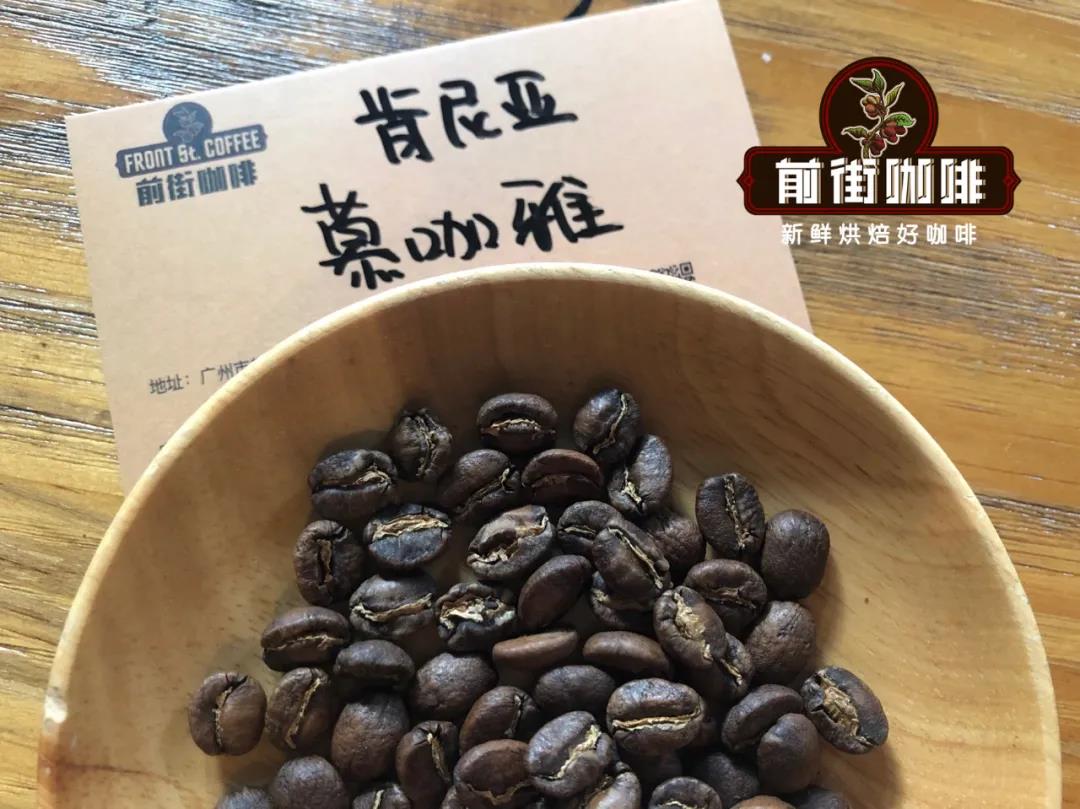
FrontStreet Coffee - Kenya Mugaya AA Coffee Beans
Region: Kenya Mugaya Processing Station
Altitude: 1400m
Varieties: SL28 & SL34
Processing Method: K72 Washed
Harvest Season: 2020
FrontStreet Coffee Roasting Records
Gachatha Coffee Bean Roasting: FrontStreet Coffee's roaster used a Yangjia 800N semi-direct-heat roaster with a 480g batch size. The drum temperature was set to 165°C when the beans were loaded, with the air damper at 3 and heat at 120. Return temperature: 1'28". When the temperature reached 140°C, the air damper was adjusted to 4. At 6'00", the temperature reached 153°C, the bean surface turned yellow, and the grassy aroma disappeared completely, indicating dehydration was complete. When ugly wrinkles and black spots appeared on the bean surface and the toast aroma clearly transformed into coffee aroma, this can be defined as the prelude to first crack. At this point one must listen carefully for the first crack sound. First crack began at 9'17", with the air damper unchanged and the heat reduced from 188 to 90. First crack development time was 2'00", with discharge at 193.5°C.

Mugaya Coffee Bean Roasting: FrontStreet Coffee's roaster used a Yangjia 800N semi-direct-heat roaster with a 480g batch size. The drum temperature was set to 160°C when the beans were loaded, with the air damper at 3 and heat at 120. Return temperature: 1'28". When the temperature reached 130°C, the air damper was adjusted to 4. At 6'00", the temperature reached 154.6°C, the bean surface turned yellow, and the grassy aroma disappeared completely, indicating dehydration was complete. When ugly wrinkles and black spots appeared on the bean surface and the toast aroma clearly transformed into coffee aroma, this can be defined as the prelude to first crack. At this point one must listen carefully for the first crack sound. First crack began at 9'28", with the air damper unchanged. First crack development time was 2'20", with discharge at 193.8°C.
FrontStreet Coffee Cupping Report
FrontStreet Coffee conducts cupping 8-24 hours after roasting the sample beans. FrontStreet Coffee's baristas typically use 200ml ceramic bowls. The water temperature used for cupping is 94°C. Grind size is controlled to achieve 70%-75% pass-through on a #20 standard sieve (0.85mm). Ratio: 11g of coffee powder to 200ml of hot water, i.e., 1:18.18, which extracts a concentration within the golden cup range of 1.15%-1.35%, with an infusion time of 4 minutes.

Gachatha Coffee Beans: Dry aroma: citrus; wet aroma: plum; flavor: citrus, plum, berries, honey, grapes, tea-like notes.
Mugaya Coffee Beans: Dry aroma: berries; wet aroma: caramel; flavor: dark plum, plum, grapes, caramel, nuts.
From cupping these two beans, we can see that the higher-altitude Gachatha has richer acidity. This is because the greater altitude brings larger day-night temperature differences, slowing tree growth and allowing more time for flavor development.
FrontStreet Coffee Brewing Tips
Dripper: V60 #01
Water Temperature: 90°C
Coffee Dose: 15g
Coffee-to-Water Ratio: 1:16
Grind Size: Medium-fine (77% pass-through on a #20 sieve)

FrontStreet Coffee Brewing Method: First wet the filter paper and preheat the dripper and coffee pot. Use 30g of water for a 30-second bloom, then pour with a small circular flow to 130g before pausing. When the water level drops to just before exposing the coffee bed, continue pouring to 240g and stop. When the water level drops to just before exposing the coffee bed again, remove the dripper. (Timing starts from the bloom.) Total extraction time is 2 minutes.
FrontStreet Coffee Recommendation
For a Kenyan cup that leads with the region's signature small-tomato character, FrontStreet Coffee's Kenya Cherry Tomato is a strong pick, with bright cherry-tomato and dark-plum acidity, a juicy body, and a clean sugarcane-and-green-tea finish. It comes from the Thika region at 1,550-1,750 meters and is grown from SL28 and SL34 with the classic 72-hour double-washed process. Brew it light-roasted as a pour over to keep all that vivid fruit and clarity intact.
Important Notice :
FrontStreet Coffee is a long-established specialty coffee roaster in Guangzhou China, selling freshly roasted beans from its own farm in Yunnan as well as dozens of carefully selected single-origin beans from around the world for both pour-over and espresso. The products deliver consistently excellent quality and great value, with shipping within 24 hours. Guangzhou's FrontStreet Coffee shop is recommended by many coffee lovers, and the beans are now available online at the Tmall 。
FrontStreet Coffee has moved to a new address:
FrontStreet Coffee Address: 315,Donghua East Road,GuangZhou
Tel:020 38364473
 Scan and follow the En Gafei WeChat official account. Please indicate that the reprint comes from "En Gafei".