Espresso Brewing Method: Time, Dose, Grind Size, and Parameter Ratios

For more premium coffee knowledge, please follow our WeChat official account: FrontStreet Coffee
Espresso has been with us for a long time now. It is the pride of Italy and a piece of global culture that Italian coffee brought to the world. In its own way, its contribution to coffee recalls what Ethiopian varieties have done for specialty coffee.
Italian coffee traveled out from Italy to the rest of the world and became a mark of status. Without espresso, Italian coffee as we know it would never have developed, since espresso is hailed as the foundation of coffee — the base of drinks like the cappuccino, latte, and mocha at FrontStreet Coffee. These coffees have always represented Italian coffee and embodied its culture. In this article, FrontStreet Coffee breaks down the extraction ratios behind Italian coffee.

Single and Double Shot Ratios
Espresso matters enormously because it shapes the quality of the finished cup, and getting the coffee-to-water ratio right is the key to good espresso. FrontStreet Coffee will therefore explain the production ratios for espresso and how adjustments can bring you to the right coffee-to-water ratio.

Espresso comes as single and double shots. Traditionally, a single shot uses 8–9 grams of ground coffee and extracts 25–35 milliliters of espresso in 25–35 seconds. The single-shot coffee-to-water ratio is 1:1, the traditional ratio and the one that has been in use the longest. A single shot is rich and intense, and generally too strong for most people to drink on its own.
An important step is weighing the coffee: set the portafilter on a scale, zero it, then weigh out about 9g of grounds. Extracting 25–35g of espresso liquid over 25–35 seconds counts as an appropriate coffee-to-water ratio. Single shots are commonly used for cappuccino, with equal proportions of milk, espresso, and foam determined by the cup size, at a traditional 1:1:1 ratio.
A double shot naturally doubles everything in a single shot. Here, 18–20g of grounds extracts 55–65g of espresso liquid over the same 25–35 seconds, which counts as an appropriate coffee-to-water ratio at a ratio of 1:1. The same zeroing-and-weighing routine applies. Double shots are the main measure used for lattes and Americanos. On the palate they are richer and thicker than a single shot, and because milk or water is added, the concentration is diluted in exchange for a mellow, smooth taste. A single shot would leave the coffee tasting thin, so the choice of double shot should be matched to the cup's capacity.

So how do you decide how much coffee to use? The figures above are the traditional single and double shot doses. Portafilter baskets come in different specifications: a single basket can hold as much as 14g, adjusted against the reference line inside it. That indented coffee line marks the specified dose, and you fill up to it; going past the line is too much, and can also signal grinding that is too coarse, which opens larger gaps between particles.
Weighing is the way to hit a sensible coffee-to-water ratio accurately. Espresso grind should be as fine as flour. On an Italian grinder the setting is usually the smallest number, adjusted between 1 and 1.5, with the coffee dose and extraction time doing most of the fine-tuning — an accurate approach.

What Coffee Beans to Use for Espresso
Beyond that, different Italian coffee beans will produce different flavors in the cup. The Italian beans used at FrontStreet Coffee, for instance, are a blend of Honduras Sherry coffee and Yirgacheffe natural red cherry coffee, which highlights rich chocolate and caramel notes and a slightly intoxicating aroma when mixed with milk.
Italian coffee machines have a very distinct habit of amplifying a bean's original flavor, and lightly roasted beans carry more prominent acidity. Pulled through an espresso machine, that acidity becomes even more obvious, so light roasts are not suited to making Italian coffee.

What Coffee Beans to Use for Latte Coffee?
Generally speaking, beans for a latte must suit an espresso machine, so lightly roasted coffee is not suitable. The darker the roast, the stronger the coffee flavor (caramel, bitterness) in the latte; the lighter the roast, the more the milk comes forward. Choose the roast degree accordingly so that coffee and milk complement each other.
Next, FrontStreet Coffee recommends four Italian coffee beans to choose from.
FrontStreet Coffee Warm Sunshine Blend
Flavor: pronounced fruit acidity, a light berry aroma, wine-like notes, rich chocolate flavor, and an obvious aftertaste.
Formula: Honduras Sherry : Yirgacheffe Red Cherry = 7:3

For this blend, FrontStreet Coffee pairs Yirgacheffe natural red cherry with Honduras Sherry. The idea behind it is versatility: the blend works for both espresso and pour-over. Pulled as espresso, it releases a distinct fermented wine aroma; on the palate the citrus and berry acidity comes through at once, with a whiskey-like note, and the aftertaste settles into dark chocolate.
FrontStreet Coffee Premium Blend
Flavor: gentle acidity, a light sweetness, a nutty aftertaste, an overall impression that is not too sharp, balanced and medium-bodied in crema.
Formula: Colombia : Brazil = 3:7

For this blend, FrontStreet Coffee uses Brazil and Colombia. It tastes of light-roast grassy aroma, fragrant with a slight bitterness, sweet and smooth, with a pleasant aftertaste. Colombia's Huila region contributes a pleasing acidity — fragrant, moderate in acid, and rich in sweetness — while Brazil's Cerrado region brings a comfortable bittersweet taste and remarkable smoothness. Together, the combination simply works.
FrontStreet Coffee Commercial Blend
Flavor: caramel sweetness, nutty and cocoa-like notes, dark chocolate flavors, balanced sweet and sour, slightly bittersweet, with a persistent aftertaste.
Formula: Colombia : Brazil : Robusta = 3:6:1

For this blend, FrontStreet Coffee uses Brazilian and Colombian beans plus 10% Robusta. The taste is classic. FrontStreet Coffee finds it rich in crema and texture, with caramel sweetness and nutty, cocoa-like, dark chocolate flavors, balanced sweet and sour, slightly bittersweet, and a persistent aftertaste. Like FrontStreet Coffee's Premium Blend, this commercial blend is built on Colombian and Brazilian beans, but the added Robusta supplies abundant crema and gives the coffee a mellower texture.
FrontStreet Coffee Basic Blend
Flavor: gentle fruit acidity, caramel sweetness, nutty and dark chocolate flavors, smooth and viscous, though the taste is relatively light.
Formula: Yunnan : Brazil = 3:7

For this blend, FrontStreet Coffee uses Brazil and Yunnan. FrontStreet Coffee finds it gently fruity and caramel-sweet, with nutty and dark chocolate flavors, smooth and viscous, though relatively light in taste. Yunnan's growing conditions are in fact very close to Colombia's — high altitude, a wide day-night temperature swing — giving a mellow profile with moderate acidity, a rich, full taste, uniform beans, high oil content, and a fruity aroma. Its quality and texture resemble Colombian coffee, though the taste is a touch lighter, while Brazil's Cerrado beans bring a comfortable bittersweet taste and exceptional smoothness. The two come together nicely, and this basic blend is very cost-effective — well suited to espresso beginners and small coffee shops.
Milk and Coffee Ratios in Italian Coffee
As noted above, FrontStreet Coffee also points out that the Italian coffees we see most often are made from espresso and milk in varying proportions. So what is the ideal ratio of espresso to milk for a perfect milk coffee? FrontStreet Coffee will explain using mocha as an example.
Latte Coffee Recipe Ratio
FrontStreet Coffee's latte recipe runs 1:6.5, meaning 40g of espresso mixed with 260g of steamed milk.

FrontStreet Coffee's espresso extraction plan calls for 20g of grounds to yield 40g of espresso liquid in 27 seconds as the base for a latte.
Next comes frothing the milk. First you need a steam wand, which semi-automatic coffee machines generally have. Second, you need a vessel for the milk, such as a milk pitcher or latte-art pitcher (good tools genuinely make the job easier).
Finally, there is the choice of milk. Room-temperature or cold, whole or skim — all of them can be frothed. For the best texture, taste, and stability, however, FrontStreet Coffee still recommends cold, refrigerated whole fresh milk.

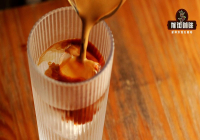
Then comes integration and latte art. Once the espresso is extracted and the milk steamed, you carefully combine the two to finish the latte. Integration is a crucial part of making a latte; done well, it gives the drink a smooth, comfortable texture with no off-notes. Good integration is what we usually call the latte-art pour, and with that, the latte is complete.

The flavor of FrontStreet Coffee's recipe latte: a smooth texture, a long-lasting chocolate taste mingled with a pleasant wine aroma, a persistent aftertaste, and obvious sweetness.
That covers how to extract espresso, as compiled by FrontStreet Coffee. We hope it helps coffee lovers who want to understand the topic and go on to make milk coffee that satisfies them.
FrontStreet Coffee Recommendation
The Yirgacheffe red cherry that goes into FrontStreet's Sunshine Blend is worth seeking out on its own. FrontStreet's Ethiopia Natural Red Cherry is dried for two weeks in the sun, so the sugars and essence of the fruit seep fully into the bean before the dried skin and mucilage are milled away; the result is a clean, refined cup with a captivating fruit aroma of peach, cocoa, honey, and lemon.
For an even more layered natural Ethiopian, try FrontStreet's Natural Huakui. Grown in the Hambella area of Guji, Sidamo, and dried for 21 days on raised beds with careful turning and repeated hand sorting, it is a light-to-medium roast that opens with a light fermented wine aroma and notes of flowers, citrus, and mango — rich and complex, with honeyed sweetness, a cocoa finish, a touch of spice, a full body, and a lingering aftertaste.
Important Notice :
FrontStreet Coffee is a long-established specialty coffee roaster in Guangzhou China, selling freshly roasted beans from its own farm in Yunnan as well as dozens of carefully selected single-origin beans from around the world for both pour-over and espresso. The products deliver consistently excellent quality and great value, with shipping within 24 hours. Guangzhou's FrontStreet Coffee shop is recommended by many coffee lovers, and the beans are now available online at the Tmall 。
FrontStreet Coffee has moved to a new address:
FrontStreet Coffee Address: 315,Donghua East Road,GuangZhou
Tel:020 38364473
 Scan and follow the En Gafei WeChat official account. Please indicate that the reprint comes from "En Gafei".