French Press vs Pour-Over: Key Differences and Siphon Brewing

When it comes to coffee brewing methods, FrontStreet Coffee has introduced hundreds of them - some popular, some simple, some niche, some full of ceremony - so there is truly something for every preference.
From the perspective of usage steps, FrontStreet Coffee considers the French press the simplest method. With the right beans and grind size, it is like making tea: a mellow black coffee in just a few minutes. A siphon pot, by contrast, is much more complicated. Not only are the steps involved, but the operations before and after brewing are troublesome enough to deter many people from trying it. So is there a significant difference in taste between coffee brewed these two ways? Without further ado, FrontStreet Coffee will compare them.

What is a French Press and How to Use It?
Originating in France, the French press consists of a cylindrical container and a lid with a metal filter that can be pulled up and down through the middle, used to separate coffee grounds from the liquid and control extraction.

The principle of the French press is just like making tea: steep the coffee grounds in hot water for a certain time, then push the plunger down to filter and obtain the coffee liquid. Pour water all at once over the ground coffee, let it penetrate the grounds, wait for the flavor compounds to be released, and finally filter the grounds from the liquid to get a cup of black coffee. The biggest advantage of immersion brewers is that they require no high-level brewing skill or special accessories, making them easier to master than pour-over. Hence they are called "lazy coffee brewers." Because the whole process is immersion, French press coffee emphasizes a fuller body and relatively balanced flavors.
Unlike pour-over coffee, the French press pours water "all at once," which is simpler and means only four factors affect the coffee: coffee-to-water ratio, grind size, water temperature, and immersion time. Similar to cupping, extraction is relatively stable, and the coffee's flavor better reflects its original taste.

Because the French press completes the pour all at once, the extraction temperature gradually decreases over time, so it needs to be slightly higher than for pour-over coffee. If brewing light to medium roast coffee with acidic notes, you can use 92-94°C. For medium-dark roast coffee with bitter notes, FrontStreet Coffee recommends 89-90°C. During autumn and winter, when room temperature is lower, we can preheat the French press with boiling water to reduce heat loss during extraction.
Time is a parameter that can be freely adjusted with the French press. Without a human stirring variable, immersion time becomes one of the key factors affecting extraction rate. Under the same conditions, a generally longer extraction time produces a richer taste, but it is also more likely to lead to over-extraction, causing bitterness, astringency, and woody flavors. When paired with coarse grinding, FrontStreet Coffee suggests an immersion time of about 4 minutes for light to medium roast coffee. Medium-dark roast coffee extracts bitter flavors more easily, so 3 minutes and 30 seconds is sufficient. This time allows the desirable flavor compounds to be released fully while avoiding the bitter impurities that come from over-steeping.

What is the Principle of Siphon Brewing?
The English name for the siphon pot is "SIPHON," so it is also called a vacuum pot. It uses the thermal expansion and contraction created by water vapor when water is heated to push hot water from the lower chamber to the upper chamber, where it mixes with coffee grounds. When the temperature decreases, the water flows back through the vacuum tube to the lower chamber, producing coffee liquid.

Many people assume that the extraction method of siphon coffee is "siphon-style," but that is not quite right. Although the siphon pot does use siphon principles to draw hot water to the upper chamber, that is not how the coffee is extracted.

When hot water is drawn to the upper chamber, adding coffee grounds for steeping marks the true beginning of extraction. Strictly speaking, then, the extraction method of siphon coffee should be called "immersion-style": it extracts flavor compounds by steeping water and coffee grounds together.

Because immersion extraction brings all the hot water into contact with the coffee grounds, once the substances in the water reach a certain concentration the dissolution rate slows, and it no longer extracts too many flavor compounds from the coffee - what we commonly call reaching saturation. Siphon coffee therefore tastes relatively balanced, with a rounded mouthfeel and solid coffee aroma, though compared with pour-over coffee its flavors are not as prominent.
It is worth mentioning that siphon immersion extraction differs somewhat from conventional immersion. Due to the siphon principle, the hot water is continuously heated during extraction, keeping enough pressure in the lower chamber to hold hot water in the upper chamber. Siphon immersion extraction therefore maintains a completely constant temperature, whereas conventional immersion and drip extraction are processes of continuous heat loss, with water temperature gradually decreasing over time. As a result, siphon brewing has a higher extraction rate and, with stirring, can complete extraction in a shorter time.

Siphon pots also primarily use flannel filter cloths. Filter paper can be used as well, but because it cannot fully cover the area, it cannot form a "sealed" space the way pour-over coffee does. Fine particles, oils, and other substances can pass through the gaps into the lower chamber and join the coffee liquid, which is why siphon coffee appears relatively cloudy. While oils and fine particles may make the coffee liquid less clear, they give the coffee a richer mouthfeel - which is why siphon coffee tastes more full-bodied.
FrontStreet Coffee Recommendation
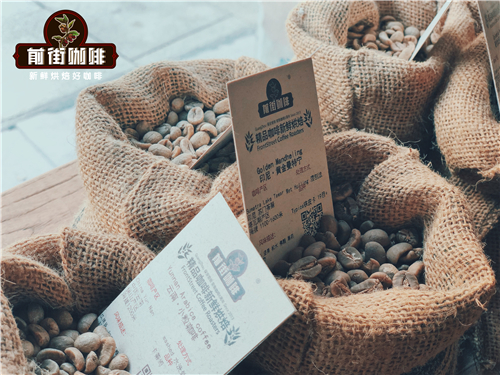
Whichever method you choose, the bean matters, and FrontStreet Coffee's Strawberry Candy is a strong match for the French press: this Gesha blend of Costa Rica honey-process coffee and Panama washed Geisha, when steeped, releases rose, citrus, grape, and dried-blueberry aromas, and with a little milk it turns into strawberry-gummy sweetness. If you prefer a low-acid, full-bodied black coffee, FrontStreet Coffee's PWN Golden Mandheling is the better pick - after three hand selections and one machine selection, the beans are large and uniform, and a medium-dark roast brings spice, caramel, cedar, and dark chocolate aromas with a rich, oily body in the press. Use a coarse-sugar grind (about 10.5 on an EK43s or 26 on a hand grinder), a 1:15 ratio, and water around 90°C, then steep for about 4 minutes before pressing. That same bean also works beautifully in the siphon if you want to compare the two methods side by side.
Important Notice :
FrontStreet Coffee is a long-established specialty coffee roaster in Guangzhou China, selling freshly roasted beans from its own farm in Yunnan as well as dozens of carefully selected single-origin beans from around the world for both pour-over and espresso. The products deliver consistently excellent quality and great value, with shipping within 24 hours. Guangzhou's FrontStreet Coffee shop is recommended by many coffee lovers, and the beans are now available online at the Tmall 。
FrontStreet Coffee has moved to a new address:
FrontStreet Coffee Address: 315,Donghua East Road,GuangZhou
Tel:020 38364473
 Scan and follow the En Gafei WeChat official account. Please indicate that the reprint comes from "En Gafei".