Characteristics, Flavor Description, and Processing Methods of Panama Natural Typica Coffee Beans

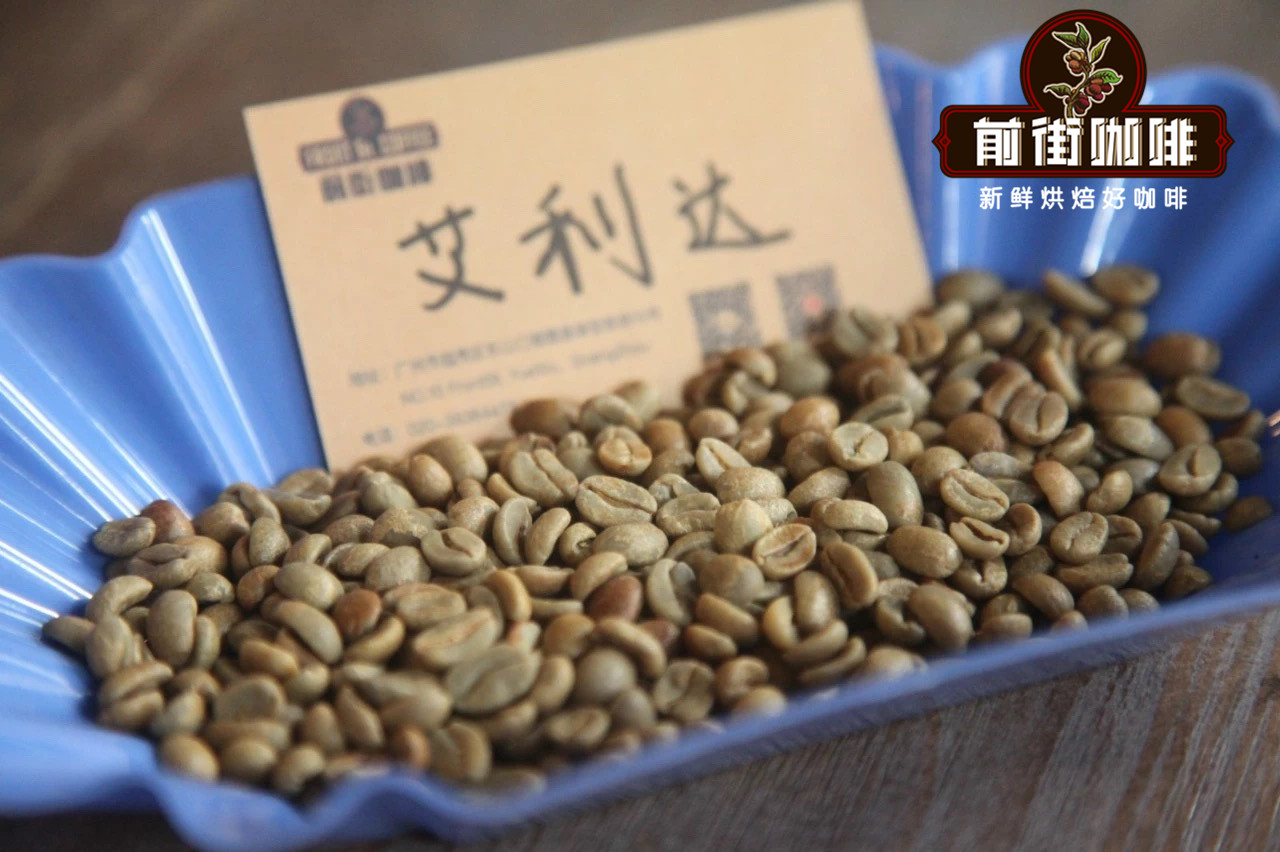
FrontStreet Coffee: Panama · Elida Estate Coffee Beans
Region: Panama, Boquete
Estate: Elida Estate
Altitude: 1850 meters
Variety: Typica
Processing: Natural
The Geisha coffee from Panama's Hacienda La Esmeralda has gained wide recognition in the specialty coffee market. As FrontStreet Coffee sees it, if you drink only Hacienda La Esmeralda's Geisha when you explore Panamanian coffee, you will miss many excellent coffees. Panama has famous estates beyond Hacienda La Esmeralda, and Elida Estate is equally outstanding. This time, FrontStreet Coffee is recommending a natural-processed Typica from Panama's Elida Estate. Let us see how this bean performs.

Boquete Region
Panama coffee is typically highly traceable, often down to a single estate, and unique batches from specific estates are quite common. Panama coffee is sweet and balanced, occasionally with floral or citrus aromas, making it well-rounded and easy to drink. Higher-quality coffees show citrus and floral notes, light body and delicate, complex flavors. Coffee from the Boquete region draws the most attention. It is Panama's oldest and most renowned coffee-producing region, and its cool, foggy, mountainous geography creates unique microclimates. The cool climate and frequent fog slow the maturation of the cherries, much as high altitude does. The flavors range from cocoa to fruity notes with subtle acidity.
Elida Estate
Elida Estate is the most famous estate of the Lamastus family, founded in 1918. From the time Robert Lamastus, founder of the family's coffee estates, planted the first coffee tree, it has now passed through a century and witnessed the global spread of specialty coffee.

Today Elida Estate is still run by descendants of the Lamastus family, including estate owner Mr. Wilford, his father Thatcher and Wilford's son and fourth-generation successor, Wilford Jr. As a traditional coffee family, coffee has become part of their heritage. Wilford was born on a small coffee farm, and his parents were also born on coffee farms. The coffee the estate currently produces comes from Elida Estate, Don Nene Estate and Luito Estate.

Elida Estate primarily grows three varieties: Catuai, Typica and Geisha. The processing plant sits halfway up the mountain, so cherries can be transported for processing right after harvest, keeping their quality intact. Elida's environment is of course also suited to other quality temperate crops, especially tree tomatoes and some uncommon high-altitude fruits. Interestingly, those fruit flavors can often be found in Elida's coffee. This coffee from FrontStreet Coffee uses the Typica variety.
Coffee Varieties
Typica is one of the oldest discovered Arabica varieties, with Bourbon being the other. Arabica originates from Ethiopia, where the variety still grows naturally in the highland primary rainforest today. Typica beans are slender, the trees tall, the fruits oval and the branches slightly inclined. The tips of Typica branches are long and spread out at an angle of 50-70 degrees. Yield per tree is very low, but the cupping score is very high.
Catuai is a variety hybridized from Caturra and Mundo Novo. Catuai resists natural disasters well, especially wind and rain. Its tree is relatively short next to other coffee trees, and its fruits grow more compactly, making harvesting difficult. The fruits come in both red and yellow. To date, no difference has been found between yellow and red fruits in flavor. On the contrary, some cuppers have found that although coffee from yellow fruits has good acidity, its cleanliness is inferior to that of red fruits.

Geisha: originally discovered in the Geisha forest of Ethiopia in 1931. Geisha was later sent to the Coffee Research Institute in Kenya, introduced to Uganda and Tanzania in 1936, introduced to Costa Rica in 1953 and introduced to Panama around 1960. Although Geisha has strong disease resistance, its yield was low, so it disappeared after being used for plant improvement. It was not until the owner of Hacienda La Esmeralda rediscovered it in a windbreak and won the BOP cupping competition separately in 2004 that Geisha became famous overnight. Since then, Geisha has been distributed to other regions of Colombia for cultivation. Although Geisha grown elsewhere has not performed as amazingly as that grown in the windbreak, its floral notes and acidity are still excellently expressed.

FrontStreet Coffee Roasting Recommendations
Because the beans are charged at a lower temperature, the flavors will not be as clean and intense as with a high-temperature charge, but the benefit is a very gentle, smooth mouthfeel. Since development after first crack is very short, the heat must be sufficient; otherwise the expected drop temperature will not be reached and caramelization will be insufficient. I would use coasting, which is where most beginner roasters have questions. Coasting means reducing the temperature or turning off the heat and using the drum's residual temperature to continue roasting the beans. Throughout roasting, the beans absorb heat, with only first and second crack being exothermic. During these two stages it is best not to increase the heat, or the beans can easily develop a spicy sensation. Coasting emphasizes turning off the heat and using the drum's residual temperature, along with the heat the beans generate during the crack, to continue slow roasting.

Yangjia 800N roaster, 600g charge: heat the drum to 170°C, set the damper to 3. After 30 seconds, adjust the heat to 140°C, damper unchanged. Return to temperature at 1'25", adjust the heat once at 140°C. At this point the bean surface turns yellow, the grassy smell completely disappears and dehydration is complete. Adjust the heat to 110°C, damper to 4. At 8'45", ugly wrinkles and black spots appear on the bean surface, and the toast aroma clearly transitions to coffee aroma, which can be defined as the prelude to first crack. Listen carefully for the sound of first crack. At 9'07", first crack begins; reduce the heat to 90°C and adjust the damper to 4 (be very careful when adjusting the heat, not so low that the crack sounds disappear). 1'45" after first crack, drop at 190°C.
FrontStreet Coffee Cupping Report
Dry Aroma: Caramel, roasted almonds, floral
Wet Aroma: Jackfruit, fermented wine aroma
Flavor: Smooth entry, with distinct raisin, peach, orange, melon, cane sugar and caramel flavors, a green tea sensation, high cleanliness.
FrontStreet Coffee Brewing Tips
Dripper: V60 #01
Water Temperature: 91°C
Dose: 15g
Ratio: 1:15
Grind: Fine sugar size (80% pass through #20 sieve)

FrontStreet Coffee Brewing Method
First pour 30g of water for a 30-second bloom, then pour 95g more (the scale shows about 125g), completing the pour in about 1 minute. When the water level drops to 2/3 of the coffee bed, pour the remaining 100g (the scale shows about 225g), completing the pour in about 1 minute 35 seconds. Drip completes between 2'00" and 2'10", then remove the dripper and extraction is complete.
Brewing Flavor: You can clearly taste peach, raisin and orange at entry, followed by cane sugar and melon sweetness that gradually emerges, finishing with grapefruit and green tea sensations.
FrontStreet Coffee Recommendation
Elida's natural Typica is a delicious reminder that Panama offers more than Geisha, yet Geisha remains the estate's signature. FrontStreet Panama Boquete Geisha is an approachable introduction to that classic Panamanian profile, with tangerine-honey sweetness, oolong-tea body and delicate fruit acidity. To explore the top of the category, FrontStreet Emerald Estate Green Label Geisha is washed for a cleaner, fresher cup, while the natural Red Label brings concentrated berry, rose and black tea depth.
Important Notice :
FrontStreet Coffee is a long-established specialty coffee roaster in Guangzhou China, selling freshly roasted beans from its own farm in Yunnan as well as dozens of carefully selected single-origin beans from around the world for both pour-over and espresso. The products deliver consistently excellent quality and great value, with shipping within 24 hours. Guangzhou's FrontStreet Coffee shop is recommended by many coffee lovers, and the beans are now available online at the Tmall 。
FrontStreet Coffee has moved to a new address:
FrontStreet Coffee Address: 315,Donghua East Road,GuangZhou
Tel:020 38364473
 Scan and follow the En Gafei WeChat official account. Please indicate that the reprint comes from "En Gafei".