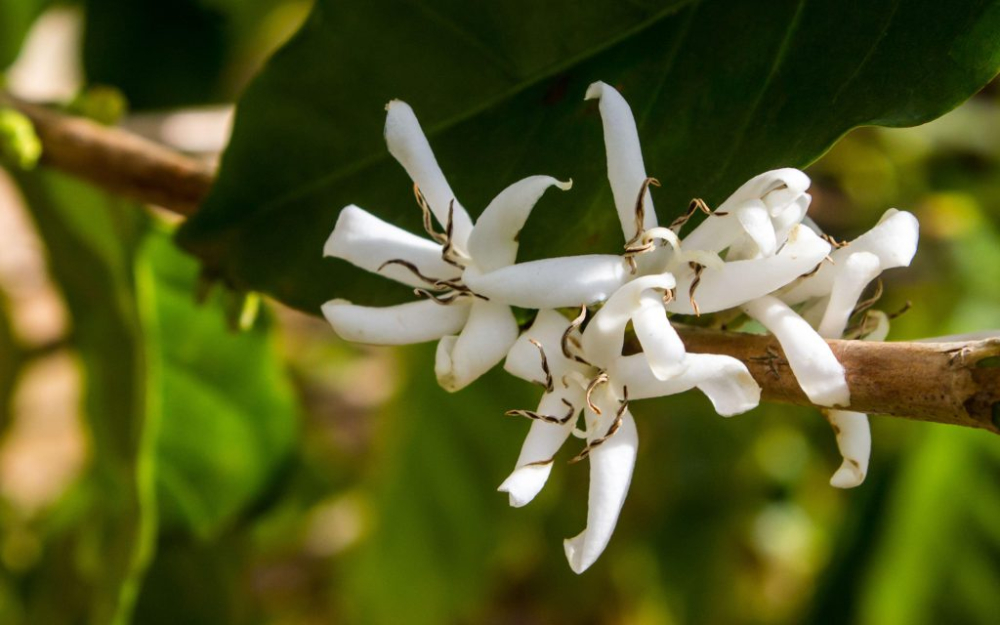
Yirgacheffe G2 Coffee Bean Flavor Description | Processing Methods & Brewing Guide

For more specialty coffee knowledge, follow FrontStreet Coffee.
Quick question: when you think of a single-origin coffee with refreshing, pleasant flavors and noticeable acidity, which one comes to mind first? FrontStreet Coffee has noticed that for most customers, the answer is washed Yirgacheffe — the bean with that unmistakable lemon-like acidity.
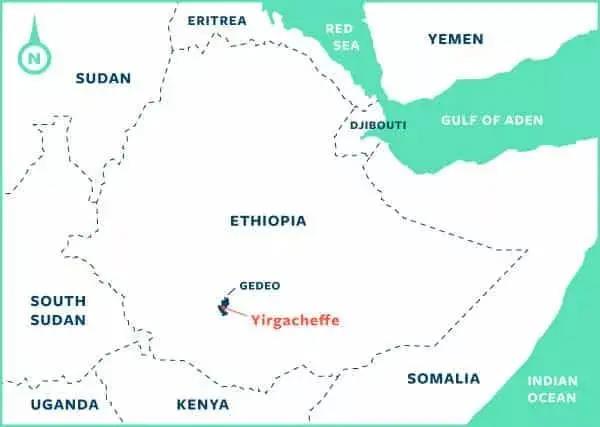
Yirgacheffe Coffee Region
The Yirgacheffe region is located in southern Ethiopia and was originally a sub-region of Sidamo. Its coffee is so bright and delicate that it developed a distinctive style all its own within Sidamo. The flavor became so recognizable that farmers competed to boast their beans tasted of Yirgacheffe, and in 2010 the Ethiopian Commodity Exchange formally separated the two names — which is how the now-famous Yirgacheffe designation came to be.

Yirgacheffe was originally a small town in the Sidamo provincial region. The area has been wetland since ancient times — in the local language, "Yirga" means "to settle down" and "Cheffe" means "wetland."
Yirgacheffe is one of the highest-altitude coffee growing regions in the world and a byword for Ethiopian specialty coffee. At 1700-2100 meters, it stays cool and foggy year-round, with spring-like seasons. The terrain and unique cultivation system provide near-ideal conditions for growing specialty coffee.
At first, the region used the most traditional natural (dry) method to process its coffee. Later, after Ethiopia introduced the washed process from Central and South America, the quality of Yirgacheffe beans improved dramatically, and their bright, uplifting acidity and white floral character quickly won a devoted following.
The Yirgacheffe region is considered high-altitude growing country, at roughly 2000 meters. More than 40 cooperatives operate there, most of them managing coffee through family farms. Beneath the region sit many well-known micro-regions — Kochere, Fog Valley, Gedeb, and others — each with excellent cooperatives and its own flavor signature.
Banko Gotiti Cooperative
The Banko Gotiti Cooperative, located in the Worka area at the southeastern end of Yirgacheffe, was originally part of the Worka Cooperative under the Yirgacheffe Union (YCFCU). Later, as drinkers began demanding traceable green coffee, "single-village" lots were tracked down one by one by coffee hunters from around the world.

In 2012, Banko Gotiti — with about 300 member farmers — formally established its own cooperative. The village was one of the first to split off, and since many of its smallholder farmers came from the Worka Cooperative, their production skills speak for themselves. Banko Gotiti has been called the last unspoiled corner of Yirgacheffe, and it still follows very traditional green-bean processing (washed and natural).
Washed Processing Method
FrontStreet Coffee's Banko Gotiti beans are washed. First, a pulping machine removes the cherry's skin and flesh; the beans then ferment in tanks for 18-36 hours until the mucilage decomposes (the exact time depends on local temperature and humidity). Next, the parchment beans are washed through channels for 30-60 minutes.
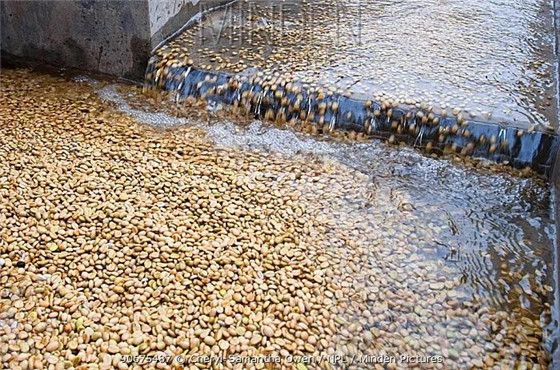
The channel design, combined with flowing water, carries away low-density, lower-quality beans. The good parchment is then laid out on African-style raised beds to dry for about 14 days. Once dried, the beans rest in the processing station's warehouse; before export they go to a dry mill for hulling, then through a series of screening steps — foreign-matter removal, silver-skin removal and polishing, gravity sorting, and color sorting — before being bagged for shipment.

Natural Processing Method
FrontStreet Coffee's Yirgacheffe Aletaland Cooperative Natural Red Cherry beans are natural-processed. "Natural processing" simply means drying the coffee in the sun — the most primitive of all processing methods, and for a long time the quality of sun-dried beans was a real pain point for farmers.
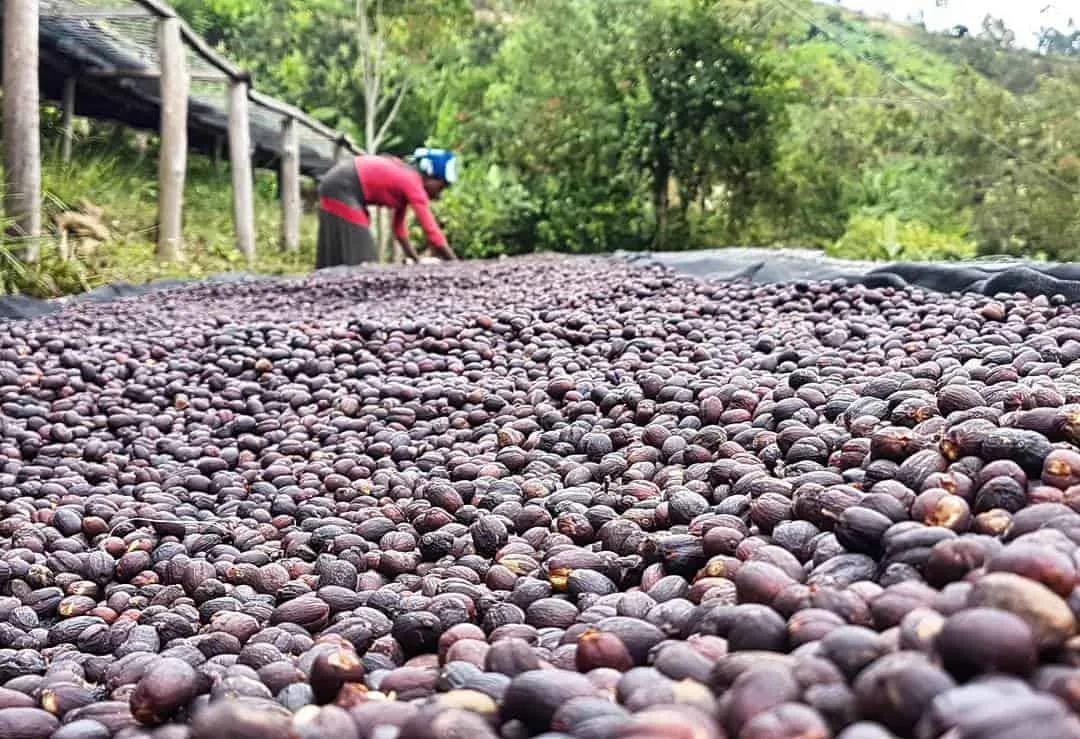
With outdated equipment, cherries were often laid directly on the ground (on a waterproof tarp for the luckier ones) to bake in the sun. Between the rough conditions and crude handling, the beans picked up plenty of the "essence of the earth" and developed earthy flavors. Natural processing also lives at the mercy of the weather: a stretch of cloudy or rainy days could bring mold, and with it rotten flavors.
But as specialty coffee gained attention, processing equipment improved across the producing regions. Better-funded areas built raised drying beds — mesh stretched on supports so air circulates above and below the cherries (the African raised bed). Less wealthy areas built concrete floors to keep cherries off the soil. Workers also turn the cherries regularly to ensure even drying.

After harvesting, cherries are sorted, then dried in the open air on concrete floors or raised beds for 3-4 weeks until moisture drops to about 11% (the shell becomes hard and dark reddish-black). Once dry, the outer shell is removed and the beans are stored in parchment, which is only milled off just before export.
FrontStreet Coffee — Pour-over Comparison
As you can see, the two processing methods give Yirgacheffe two different strengths. Washed Yirgacheffe is refreshing and clean with bright acidity; natural Yirgacheffe is fuller and sweeter, with juicy fruit. Each deserves its own brewing approach.
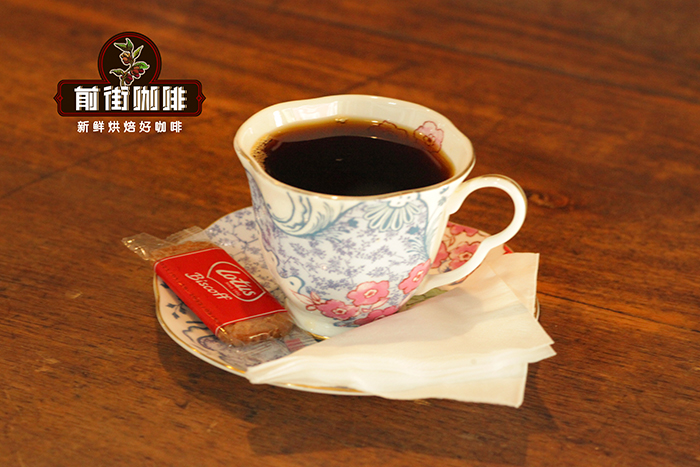
Washed Yirgacheffe Brewing Approach
FrontStreet Coffee brews with medium-light roasted washed beans from the Banko Gotiti Cooperative.

FrontStreet Coffee: Ethiopia Banko Gotiti Coffee Beans
Region: Yirgacheffe Gedeo Zone
Altitude: 1900-2300m
Variety: Heirloom
Processing: Washed
Grade: G1
FrontStreet Coffee Ethiopia Banko Gotiti Flavor Description
Served hot: berries, cream, honey, citrus, a juice-like mouthfeel and bright acidity. As it cools slightly: berries, cream, smoothness, citrus.
The dry aroma shows fresh citrus and white florals. Sipped at different temperatures, you'll find bright citrus tones, honey, and a clean mouthfeel, with floral and tea notes woven through.

For grind size, FrontStreet Coffee recommends a medium-fine grind (78% pass-through on a #20 sieve).

Too coarse, and the grind can't pull out enough body, leaving the cup thin; too fine, and high water temperatures push it into over-extraction and bitterness.

For the dripper, FrontStreet Coffee chose the V60 to highlight the refreshing, charming aromatics of washed Yirgacheffe.

The spiral ribs inside the cone help the grounds degas, maximizing the volatilization and dissolution of acidic aromatics. For the method, FrontStreet Coffee uses three-stage extraction so different flavor compounds can express themselves as the coffee bed's temperature rises gradually.
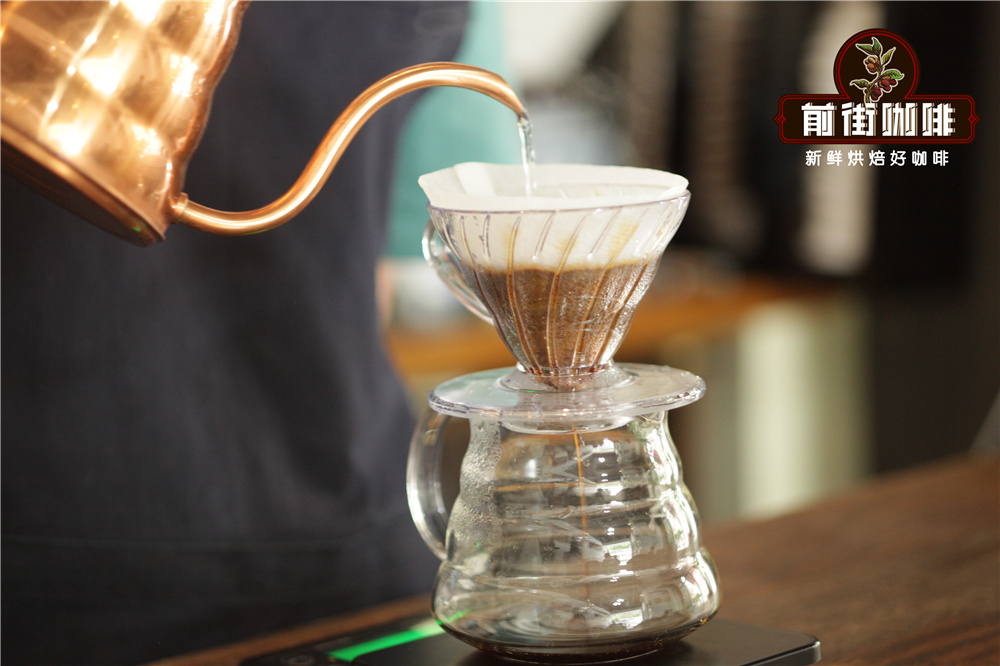
During cupping, FrontStreet Coffee noticed this bean tastes different at different temperatures, so the brewing technique was adjusted to match.
Water temperature comes down to what you want in the cup.
If you're after bright, uplifting acidity with a tea-like finish, brew at 90°C-91°C; if you want rounder acidity and a fuller body, go slightly hotter at 92°C-93°C.

For the ratio: washed Yirgacheffe is naturally refreshing, so to hear the floral notes and honey sweetness clearly, FrontStreet Coffee suggests 1:16 — slightly stretching the cup to soften the acidity and give the more delicate flavors room to show.
FrontStreet Coffee's Natural Yirgacheffe Brewing Approach
FrontStreet Coffee also brews with medium-light roasted natural beans from the Aletaland Cooperative (Red Cherry). Natural Yirgacheffe is fuller in flavor, so to land a rounder, juicier cup, use a 1:15 ratio to concentrate the sweet and sour compounds. For water temperature, FrontStreet Coffee uses 91°C-92°C to bring out the sweetness and full juiciness of the natural process and boost the body.
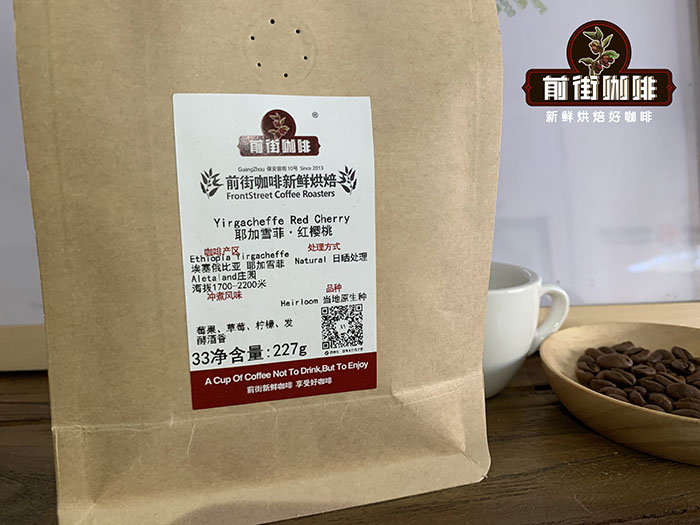
The dry aroma bursts with berry sweetness and tang. Sipped across temperatures, you'll find gentle berry sweetness and acidity, mature fruit fermentation, clear honey sweetness, and black tea notes, all wrapped in a smooth mouthfeel.
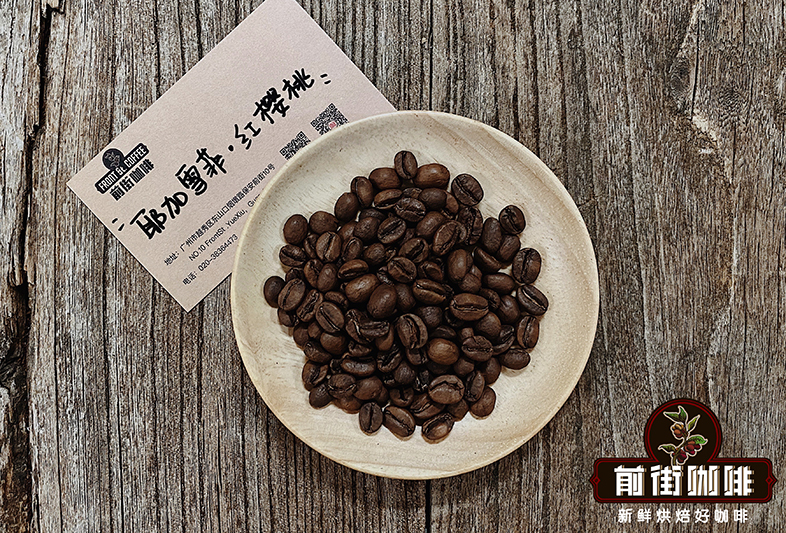
FrontStreet Coffee — Yirgacheffe Aletaland Cooperative Red Cherry Coffee Beans
Country: Ethiopia
Region: Yirgacheffe
Processing Station: Aletaland
Altitude: 2300m
Variety: Local Heirloom
Processing: Natural
Grade: G1
FrontStreet Coffee Yirgacheffe Aletaland Cooperative Red Cherry Flavor Description
Lemon, citrus, berries, sweet orange; very high overall sweetness, an aftertaste of caramel and cream, and a finish of black tea aroma.
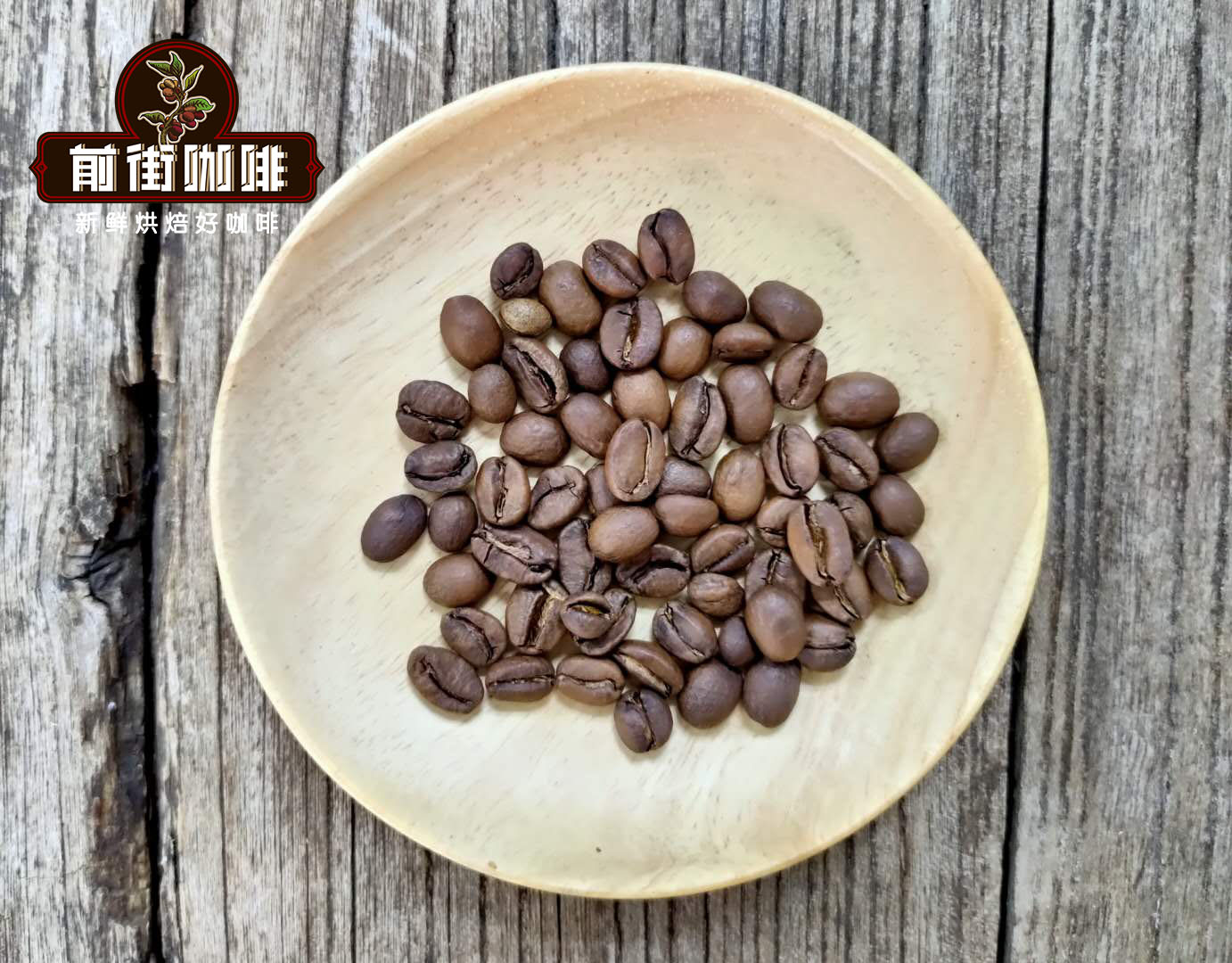
Grind and dripper stay much the same: a medium-fine grind (80% pass-through on a #20 sieve) and the V60. Another feature of the V60 is its 60-degree cone, which lengthens the contact time between water and coffee and helps extract the sweet and sour compounds fully.
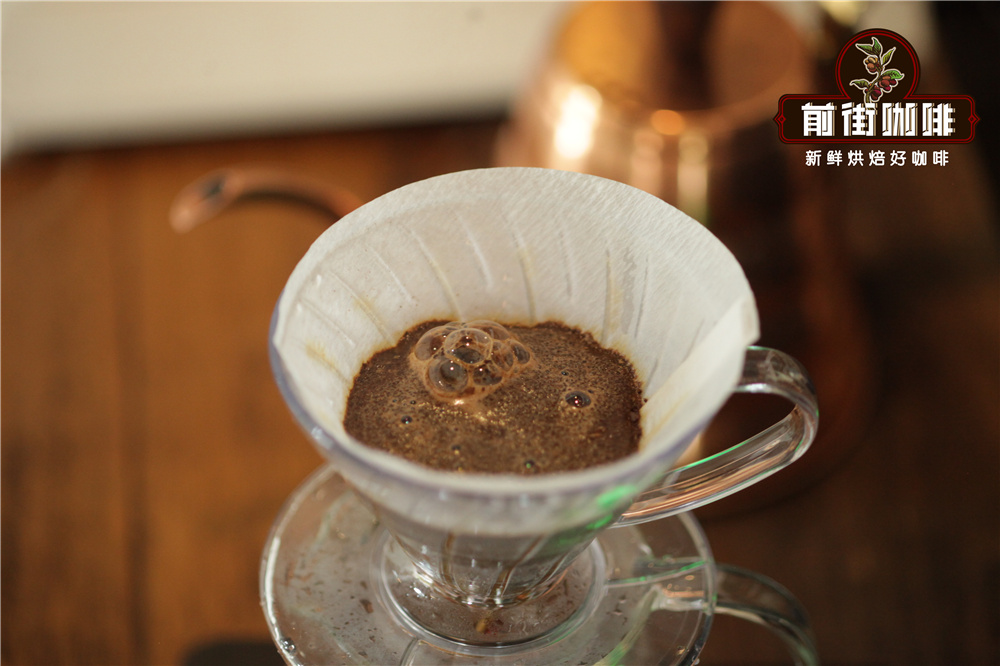
Because this bean is full-bodied with pronounced juiciness and sweetness, the technique is center pouring — letting the coffee bed extract the sweet and sour compounds evenly at a stable temperature.
FrontStreet Coffee Recommendation
If you're after a refreshing single origin with bright acidity, FrontStreet Coffee's washed Yirgacheffe everyday lot is the place to start — and the easiest way to get to know the region. It's known for white jasmine, bright citrus and lemon acidity, and a light tea feel, and its friendly price has made it many drinkers' first specialty coffee bean.
For a step up in refinement, FrontStreet Coffee's washed Banko Gotiti (Guodingding) Cooperative lot comes from the Worka area at the southeastern tip of Yirgacheffe and keeps the most traditional washed processing. It has none of the old-school bitterness: instead it brings clean, luminous citrus and lemon acidity with jasmine fragrance — a cup many coffee lovers fall for at first sip.
When you want something juicier, FrontStreet Coffee's natural Red Cherry uses fully ripe, hand-sorted red cherries sun-dried on raised beds — turned every 2-3 hours during the first days to prevent uneven heating, then dried for 3-5 weeks. Because the fruit dries on the seed, it keeps the classic Yirgacheffe character while adding tropical fruit: citrus-like acidity, a berry-juice juiciness, honey sweetness, and a creamy smoothness.
To brew any of them, FrontStreet Coffee suggests a V60, 15g of coffee, 90-91°C water, a 1:15 ratio, and a grind like fine granulated sugar (80% pass-through on a 20-mesh sieve): 30g of water for a 30-second bloom, then 95g, then the final 100g when the bed drains to two-thirds, finishing at about 2:00-2:10.
Important Notice :
FrontStreet Coffee is a long-established specialty coffee roaster in Guangzhou China, selling freshly roasted beans from its own farm in Yunnan as well as dozens of carefully selected single-origin beans from around the world for both pour-over and espresso. The products deliver consistently excellent quality and great value, with shipping within 24 hours. Guangzhou's FrontStreet Coffee shop is recommended by many coffee lovers, and the beans are now available online at the Tmall 。
FrontStreet Coffee has moved to a new address:
FrontStreet Coffee Address: 315,Donghua East Road,GuangZhou
Tel:020 38364473
 Scan and follow the En Gafei WeChat official account. Please indicate that the reprint comes from "En Gafei".