What's the Difference in Taste and Flavor Between Washed and Natural Coffee Beans? An Introduction to Flavor Variations
Natural vs. Washed Coffee Processing: Understanding the Differences

Among coffee processing methods, natural and washed are the two most common. So what actually separates beans processed one way from the other? FrontStreet Coffee's view: within the same growing region, washed processing expresses a bean's base flavor, while natural and honey processes build on that base by layering in aroma and sweetness. Washed beans highlight the core flavor; natural beans soften the core flavor and raise the aroma and sweetness, making the cup more complex. Why?
The difference comes down to the drying stage. In natural processing the fruit pulp dries alongside the bean; in washed processing the pulp never touches it, so washed coffee speaks purely in the bean's own voice. Across years of cupping and tasting, FrontStreet Coffee has found that naturally processed beans taste richer and fuller, while washed beans taste cleaner, with brighter acidity. Here's the full breakdown.
Raw Bean Appearance
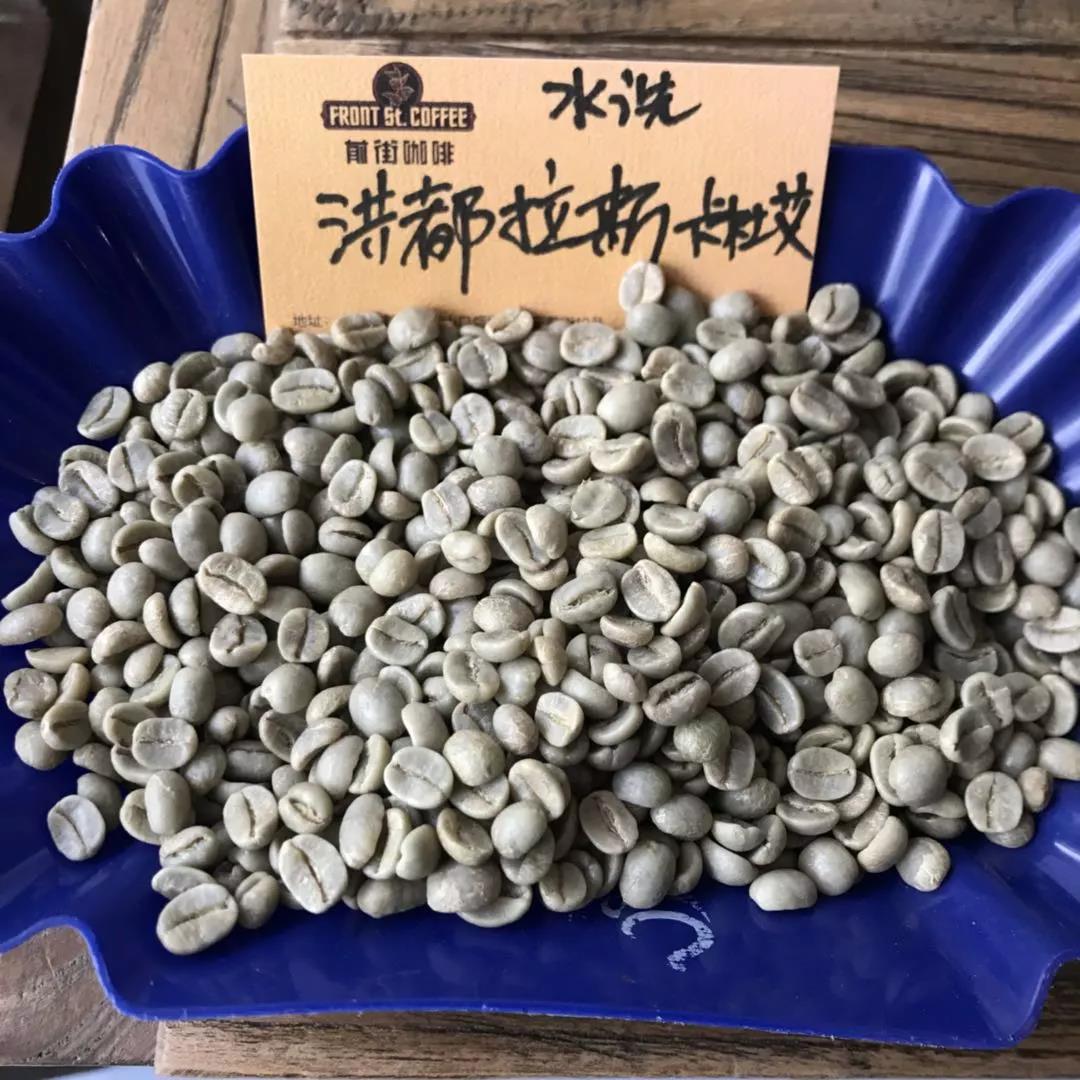
Set washed and natural beans side by side before roasting and the contrast is striking: washed beans are a distinctly bluish-green, while naturals lean yellow. (See the photo below.)

Roasting Details
Roasting differs too. FrontStreet Coffee's roaster explains that washed beans carry slightly higher moisture than naturals, so when roasting the two side by side, washed beans need a longer drying phase.
The drying stage runs from charge until the beans have released their moisture and turned yellow. Coffee loses water throughout the entire roast, but most of it leaves during this stage.

During drying, the bean's structure is at its most intact and most heat-resistant, which is exactly when you should apply ample energy — building a large temperature differential between surface and core so the bean absorbs heat quickly and banks enough thermal potential and internal pressure for the stages ahead.
Because as the roast progresses the bean's structure grows increasingly fragile, yet flavor development still demands plenty of heat. Skimp early and any heat added later scorches the surface. Of course, even while pushing a strong rate of rise in the drying stage, moderation still applies — push too hard and the beans scorch anyway.

The image above shows washed roasted beans

The image above shows natural roasted beans
Roasted Bean Appearance
After roasting, the difference flips to silver skin: washed beans clearly retain more of it than naturals.

Our roaster explains why: during roasting, the silver skin lodged along the bean's center crease is the hardest to shed. On natural beans, the outer silver skin is connected in one continuous piece, so it lifts away together with the center-line skin, leaving the roasted naturals nearly clean. Washed beans are the opposite — with almost no connected outer skin, the center-line skin has nothing to ride out on and stays put. Hence: more silver skin on washed, less on natural.
Brewing Details
When brewing lightly roasted washed beans, pay attention to how much silver skin ends up in your grounds. (Roast level matters too — the darker the roast, the more silver skin blows off.) Du Jianing, the 2019 World Brewers Cup champion, removes silver skin by grinding twice, cutting its impact on the cup.

Natural Process (Dry process)
The natural process is the oldest and most primitive method. Coffee dried this way is also called "natural coffee" or "sun-dried coffee." Harvested cherries go straight onto the sun for roughly two to four weeks. The method suits countries with distinct dry and wet seasons.

Natural Process Steps
- Harvest ripe coffee cherries
- Initial sorting to remove impurities and defective beans
- Floating bean selection: pour the cherries into a water tank — ripe, full cherries sink while unripe or damaged ones float.
- Sun drying: take the sinking cherries and spread them on a drying patio, reducing moisture from 70% to about 10-12%. Turn the cherries several times daily for even drying, and cover them at night against moisture.
- Removal of outer shell: after two to four weeks in the sun, the outer layer is dry and hard; a hulling machine removes it to finish the process.
- Packaging and shipping: the hulled beans — the green beans we know — are bagged for export, ready to express millions of flavor combinations through roasting and brewing.

Advantages and Disadvantages of Natural Process
Advantages: The process is simple and requires little investment in equipment. Aside from float separation, it needs no water at all, keeping costs low — which is why it dominates in water-scarce, less affluent regions.
Disadvantages:
- Demands plenty of open-air space, and because beans dry outdoors, fallen leaves, insects, and other debris often find their way in.
- Daily sunlight varies, making the drying degree hard to control.
- Requires constant labor to turn the beans and prevent mold and rot.
Improved versions now exist, notably the African raised bed: elevated netting lifts the cherries off the ground, avoiding moisture and soil contamination while airflow keeps them ventilated and drying evenly.

Washed Process (Wet process)
The washed process was developed by the Dutch in the 18th century. In countries where frequent rain and high humidity rule out natural drying, it has — despite its complexity — become the most widely used processing method today. Its defining difference from the natural process is the use of fermentation to remove the mucilage.
Washed Process Steps
The first three steps match the natural process (1. Harvest ripe cherries 2. Initial sorting 3. Floating bean selection)
- Removal of skin and pulp: sound cherries go into a pulping machine, which strips the skin and fruit, leaving the seeds (coffee beans).
- Fermentation to remove mucilage: the seeds, still coated in mucilage, rest in fermentation tanks where microbes dissolve it.
- Washing to remove impurities: because fermentation residue clings to the beans, they move to washing channels for cleaning and a second sort (defects float). This step consumes large volumes of clean water.
- Coffee bean drying: machines (or the sun) dry the beans to 10-14% moisture.
- Removal of parchment and silver skin: finally, a hulling machine strips the parchment and silver skin, completing the process. The green beans are ready for shipping!

Advantages and Disadvantages of Washed Process
Advantages: Fewer impurities and a more uniform appearance. Because the pulp comes off at the very start, mold is far less of a worry and overall quality is more stable.
Disadvantages: The process is complex and laborious, consumes enormous amounts of water, and costs more than natural processing — which is why it's rare in water-scarce regions.
Flavor Differences Between Washed and Natural Coffee Beans
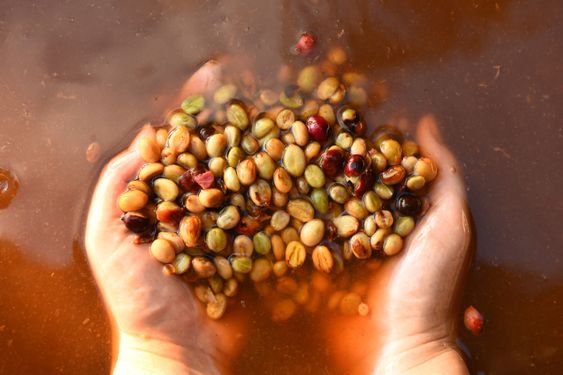
Natural is the oldest method and the simpler of the two. Natural beans may look uneven and vary widely in color, but because the seed matures inside the whole fruit, undisturbed by outside interference, natural coffees carry more intense flavors — winy fermentation notes and pronounced sweetness.
The washed process harvests cherries as they turn red, while the natural process lets them darken to purple and black until they drop on their own. The cherries then sun-dry for weeks; as the pulp dries, the seeds separate and are ground free by machine or by hand. That late harvest matters — it lets the seed absorb the pulp's aroma and sweetness to the fullest. After drying, naturals show more complex flavors and heavier body than washed beans, which instead develop bright, clean acidity from their tank fermentation. Yemen Mocha, Ethiopia Harar, and many Brazilian estate beans belong to this tradition.

Which Processing Method Produces Better Coffee Beans?
In daily cupping and brewing, FrontStreet Coffee finds washed processing delivers stable quality and a clean taste with better aromatic acidity and brightness, while natural processing carries the sweet-tart notes of tropical fruit, preserves the bean's natural richness, stacks flavor upon flavor, and sometimes even slips in a hint of wine.
But tastes differ — so before launching the Panama Geisha "Flor," FrontStreet Coffee roasted both a natural and a washed version for comparison.

Natural Panama Geisha "Flor"
Roaster: Yangjia 800N semi-direct heat (550g batch size)

Preheat roaster to 200°C, load beans, adjust heat to 160 after 30 seconds, open damper to 3. Return temperature at 1'38", maintain heat; at 140°C keep heat at 160°C, open damper to 4. Turn yellow at 5'40", grassy smell disappears, enter dehydration stage. At 168°C, reduce heat to 140°C, keep damper at 4. At 178°C, adjust heat to 110, damper unchanged.

Dehydration complete at 9'00", wrinkles and black spots appear on bean surface, toast smell turns to coffee aroma, prelude to first crack. At this point, pay attention to listen for first crack sounds. First crack starts at 9'18", open damper fully to 5, heat unchanged. Development time after first crack is 1'30", discharge at 193°C.
Washed Geisha "Flor"
Roaster: Yangjia 800N semi-direct heat (550g batch size)

Preheat roaster to 200°C, load beans, adjust heat to 160 after 30 seconds, open damper to 3. Return temperature at 1'31", maintain heat; turn yellow at 4'50", grassy smell disappears, enter dehydration stage. At 165°C, reduce heat to 130°C, keep damper at 4.

Dehydration complete at 7'50", wrinkles and black spots appear on bean surface, toast smell turns to coffee aroma, prelude to first crack. At this point, pay attention to listen for first crack sounds. First crack starts at 8'31", open damper fully to 5, adjust heat to 70°C. Development time after first crack is 1'28", discharge at 193°C.
Pour-over Parameters for Natural Geisha "Flor" Coffee
Coffee beans: 15 grams
Coffee-to-water ratio: 1:15
Water temperature: 91°C
Grind size: Fine sugar (EK43s setting 10)
Pouring technique: Three-stage pour
30g water for bloom, 30 seconds. Slowly pour with small water flow to 125g in segments. Wait for water level to drop until the coffee bed is about to be exposed, then pour again to 225g and stop pouring. Move the filter cup when the water level drops until the coffee bed is about to be exposed. Extraction time (starting from bloom) is 2'00".
Flavor: Tea-like, fermented wine aroma, and spice notes on entry. Rich mouthfeel. As temperature slightly decreases, sweet and sour fruit flavors of citrus, plum, and sweet orange appear. Honey sweetness in the aftertaste.

Pour-over Parameters for Washed Geisha "Flor" Coffee
Coffee beans: 15 grams
Coffee-to-water ratio: 1:15
Water temperature: 91°C
Grind size: Fine sugar (EK43s setting 10)
Pouring technique: Three-stage pour
30g water for bloom, 30 seconds. Slowly pour with small water flow to 125g in segments. Wait for water level to drop until the coffee bed is about to be exposed, then pour again to 225g and stop pouring. Move the filter cup when the water level drops until the coffee bed is about to be exposed. Extraction time (starting from bloom) is 2'00".
Flavor: Jasmine fragrance, citrus, and green tea notes on entry. Sugarcane sweetness in aftertaste. Clean and transparent mouthfeel with a relatively refreshing feeling.

Having brewed the same bean both ways, FrontStreet Coffee's conclusion: processing alone transforms the cup. Naturals carry unmistakable fermented fruit aromas, richer layers, and a fuller mouthfeel; washed beans show bright fruit acidity, cleaner and more transparent flavors that state the bean's character plainly, and a refreshing finish. We run these comparisons regularly — across regions, across processes — so you can choose by preference, not guesswork.
FrontStreet Coffee Recommendation
If tasting the processing spectrum is your goal, honey processing is the bridge between washed and natural — and it grew out of Brazil's pulped natural (semi-washed) method, which dries the beans after de-pulping to shorten drying and tame the off-flavors of uncontrolled fermentation. Costa Rica studied Brazil's success and refined the idea by varying how much mucilage is retained and how long the beans dry, spawning the black, red, yellow, and white honey tiers.
FrontStreet Coffee's Costa Rica Blackberry is our black-honey flagship: almost no mucilage is removed, and the beans dry for at least two weeks under shade covers to slow the drying, turned regularly so heat never builds unevenly into over-fermentation. Roasted medium-light, it's intensely floral when ground and tastes of grape, berries, and ripe blackberry. The Costa Rica Mozart goes further still with raisin honey processing — the cherries are pre-dried on raised beds for at least three days before pulping, with 100% of mucilage retained, demanding even tighter timing than black honey. The reward: richer hot dried-fruit sweetness, with osmanthus, pineapple, and raisin aromas whether brewed as pour-over, cold brew, or moka pot.
And for the meeting point of processing innovation and Geisha aromatics, there's the Strawberry Sugar blend — Panama Geisha character paired with raisin-honey Costa Rica: Geisha contributes its classic orange-blossom honeyed tone, while the raisin-honey component (float-sorted, dried at least three days on raised beds, turned constantly, mucilage fully retained) adds grape and dried-blueberry fragrance, soft fruit acidity, an almond finish, and pronounced sweetness. Side by side with a clean washed lot, these cups make the whole argument for processing: same plant, radically different cup.
Important Notice :
FrontStreet Coffee is a long-established specialty coffee roaster in Guangzhou China, selling freshly roasted beans from its own farm in Yunnan as well as dozens of carefully selected single-origin beans from around the world for both pour-over and espresso. The products deliver consistently excellent quality and great value, with shipping within 24 hours. Guangzhou's FrontStreet Coffee shop is recommended by many coffee lovers, and the beans are now available online at the Tmall 。
FrontStreet Coffee has moved to a new address:
FrontStreet Coffee Address: 315,Donghua East Road,GuangZhou
Tel:020 38364473
 Scan and follow the En Gafei WeChat official account. Please indicate that the reprint comes from "En Gafei".