Yirgacheffe Coffee Origin Varieties Classification | How to Brew Floral Notes from Light Roast Gedeb Coffee Beans

Fellow coffee lovers who drink FrontStreet Coffee's Yirgacheffe often may have noticed that, no matter where you buy it, Yirgacheffe and other Ethiopian beans always vary noticeably in bean size while still looking broadly uniform. Some friends have asked FrontStreet Coffee: is that a sign of poor green bean quality?
Not at all! Ethiopian Yirgacheffe beans vary in size because most coffee grown across Ethiopia is not sorted by variety. Different varieties naturally produce cherries and beans of different sizes, which is exactly why Ethiopian beans come in mixed sizes.
Ethiopian Coffee Varieties Introduction
Ethiopia's native varieties are collectively known as "Heirloom," a word that means "valuable property passed down through generations"—a family treasure. In the coffee world, the term is widely used for long-established varieties of Arabica that have existed in the region for generations.
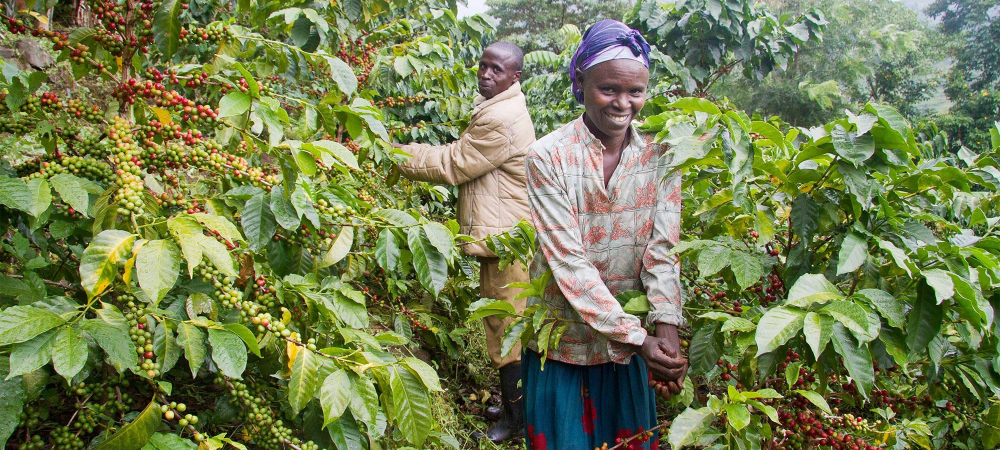
As the birthplace of coffee, Ethiopia still holds countless varieties waiting to be discovered and confirmed. To date, an estimated 10,000 to 15,000 coffee varieties in Ethiopia have no formal names. Local native varieties are typically divided into two groups: JARC varieties and regional local varieties. JARC varieties are those developed by the Jimma Agricultural Research Center, bred for desirable traits such as higher disease resistance or yield. Regional local varieties, by contrast, are coffee trees that grow entirely in the wild.
Most of what coffee farmers grow today are regional local varieties. In the wild it is nearly impossible to identify and separate varieties, but on farms, pickers and producers can do a better job by reading each plant's expressed characteristics. Among Ethiopia's thousands of heirloom varieties—named or not—there is wide variation in yield, cup quality, flavor, and disease resistance.

Coffee is an agricultural product, so flavor always depends on variety, climate, altitude, soil, and management—it is a natural, authentic expression of both variety and terroir. Beans from different regions therefore carry their own distinctive regional flavors. So what exactly is the "Yirgacheffe flavor" that coffee people pass along by word of mouth?
Unique Flavors of the Yirgacheffe Region
Yirgacheffe's fame rests on the character of its beans: bright citrus acidity, flower-like fragrance, an almond-like aftertaste, and a tea-like sweet finish. Much of that unique profile is owed to the washed processing method.

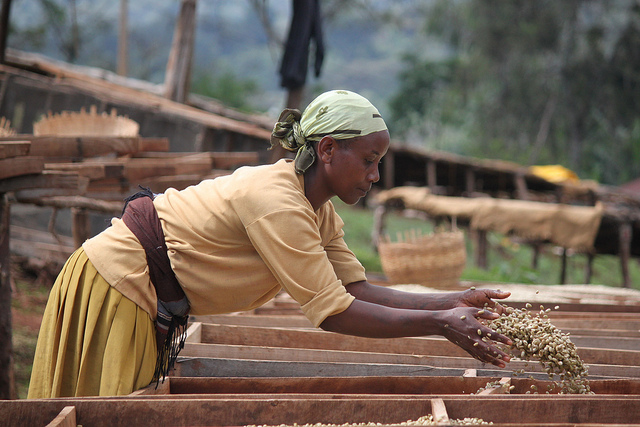
The washed process works like this: freshly picked cherries are placed in water, where buoyancy separates out underripe fruit. A pulping machine then removes the skin and pulp, and the beans rest in fermentation tanks for 18–36 hours until the mucilage layer breaks down. Once fermentation is complete, the parchment beans are washed in channels for 30–60 minutes; the channel design and flowing water flush away low-density, poor-quality beans. The good beans are drained and spread on African-style raised drying beds.
Because the pulp is removed before drying, Yirgacheffe's inherent aromatics come through cleaner and more transparent—citrus and lemon tones with elegant white florals, bright and delicate overall. Once washed Yirgacheffe arrived on the market, the region leapt into the front rank of the world's premium coffee origins.

The so-called "Yirgacheffe flavor" can be summed up as distinctive citrus and lemon fruit aromatics, the scent of jasmine, a fresh and bright texture, and layered acidity that is clean and free of impurities. Under the ECX contracts, coffee produced and processed not only in Yirgacheffe town but also in Wenago to the north, Gelena Abaya to the west, and Kochere to the south may all be classified as Yirgacheffe flavor.
Yirgacheffe Premium Coffee Bean Grading
Starting in 2009, Ethiopian coffee adopted the ECX trading and grading system, which first splits green beans into two broad categories by processing method. FrontStreet Coffee's Yirgacheffe line thus divides into natural processed and washed processed beans.
Beans are then graded on two axes. On defects: a 300g sample is drawn from each export batch; no more than 3 defective beans earns G1, while 4–12 defective beans earns G2. On cupping: G1 and G2 beans are scored under SCAA cupping standards, with scores above 85 graded Q1 and 80–84.75 graded Q2. FrontStreet Coffee's washed Gedeb cooperative, natural Red Cherry, and Yirgacheffe Konga are all G1-grade Yirgacheffe beans.
FrontStreet Coffee's Yirgacheffe Brewing Suggestions
FrontStreet Coffee believes a great cup comes down to four things: water temperature, grind size, coffee-to-water ratio, and pouring technique. Using its "FrontStreet Coffee Washed Yirgacheffe Gedeb Cooperative" as the example, FrontStreet Coffee shares how to brew Yirgacheffe at its best.

1. Water Temperature
FrontStreet Coffee's washed Gedeb is built on berry and lemon acidity, so it gets a medium-light roast to emphasize that character, brewed with water at 91–92°C.
2. Grind Size
Grind size is the size of the coffee particles, and it governs how long water and coffee stay in contact. The finer the grind, the more the water extracts in the same time—but go too fine and you slide into over-extraction. The coarser the grind, the less is extracted—but too coarse leads to under-extraction.
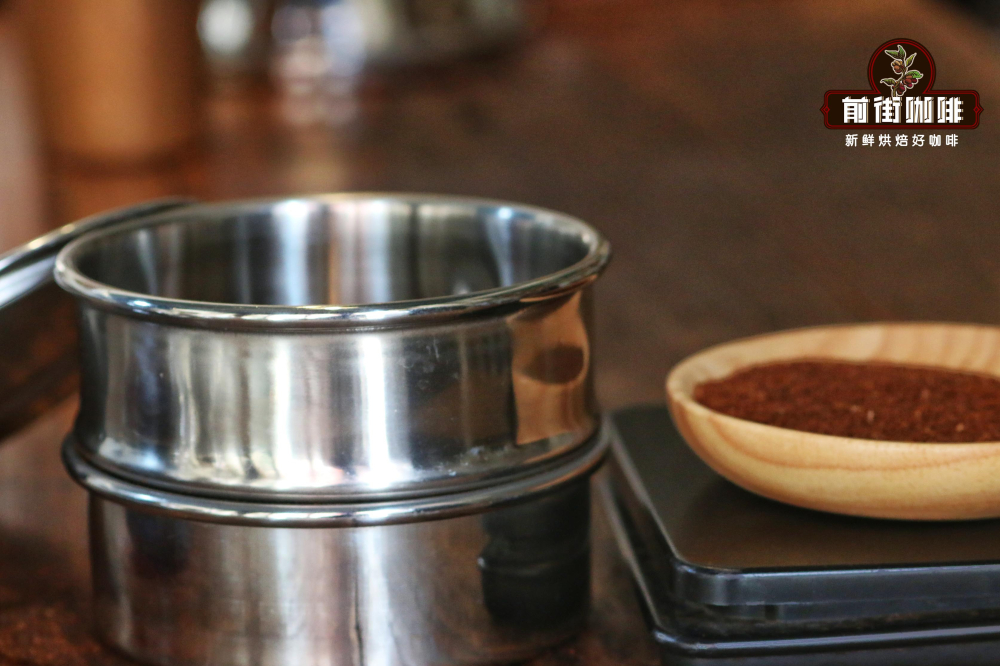
Thanks to high growing altitude, FrontStreet Coffee's Yirgacheffe beans are dense and hard, and a medium-light roast leaves their compounds less soluble in water. A medium-fine grind is recommended—80% passing through a No. 20 standard sieve.
3. Coffee-to-Water Ratio
Following the drip ratios derived from SCAA Golden Cup extraction theory: a bold cup is 1:10–1:11 (Golden Cup standard 1:12.5–1:13.5); a medium cup is 1:12–1:13 (Golden Cup standard 1:14.5–1:15.5); a light cup is 1:14–1:16 (Golden Cup standard 1:16.5–1:18.5). FrontStreet Coffee therefore recommends 1:15 for its Yirgacheffe beans, which lets them perform most evenly.

4. Pouring Technique
To draw out an ideal tea-like quality, FrontStreet Coffee starts from three small details: use a flat-bottom dripper, increase the pour volume, and slow the water flow. Here's the demonstration with FrontStreet Coffee's washed Gedeb.
Coffee beans: FrontStreet Coffee Ethiopian Washed Yirgacheffe Gedeb Cooperative
Dripper: Ceramic cake cup
Water temperature: 92°C
Coffee amount: 15g
Coffee-to-water ratio: 1:16
Grind size: EK43s setting 10 (80% passing through No. 20 sieve)

Three-stage extraction: add 15g of ground coffee to the dripper and level the bed. For the first stage, pour 30g of water and bloom for 30 seconds as the timer starts. Use a small flow, spiraling outward from the center so the whole coffee bed is wetted.

In the second stage, keep a straight, small flow and pour 120g of water, aiming to lift the entire coffee bed. Larger circles here let every particle enter its degassing and extraction phase. Finish this pour around 1:05, when the scale reads 150g.

When the liquid level drops to half, begin the third stage: 90g of water in small circles with a small flow. Keep the circles tight—swirling too wide scatters the bed and causes under-extraction. Gentle pouring at this point also enhances the release of sweet compounds in the later phase of extraction.

The total pour is 240g. Wait until all the liquid has dripped through—about 2 minutes 20 seconds—before removing the dripper. Brewed this way, FrontStreet Coffee's washed Gedeb offers white floral, citrus, and nectarine flavors, with the fragrance of grapefruit peel and snow pear tea on tasting and a clear, lingering aftertaste—truly like a cup of floral tea.
FrontStreet Coffee Recommendation
If you're new to Ethiopian origins, start with FrontStreet Coffee's washed Yirgacheffe daily-driver. It's known for white jasmine florals, bright citrus and lemon acidity, and a tea-like finish, and its friendly price has made it the first specialty bean for countless drinkers. Yirgacheffe is a small town in the Sidama zone of southern Ethiopia at 1,700–2,100 meters, with coffee planted above 1,800 meters—among the highest coffee altitudes in the world. In 2010 the Ethiopian Commodity Exchange formally split Yirgacheffe from Sidamo on the strength of its fame, creating the household name we know today.
For a step up, try FrontStreet Coffee's washed Guodingding (Worka) cooperative lot. The Yirgacheffe area contains many small villages with seasoned, technically mature cooperatives, and the Guodingding cooperative in the Worka zone at the southeastern edge of Yirgacheffe—once part of the YCFCU union's Worka cooperative—was among the first single-lot origins coffee hunters around the world tracked down in pursuit of traceability. Its traditional washed process yields none of the old bitter tones: instead a fresh, bright citrus-lemon acidity and jasmine fragrance that wins people over at first sip.
If you prefer natural processing, FrontStreet Coffee's Red Cherry uses only fully ripe, defect-free cherries, dried whole on raised beds for three to five weeks and turned every 2–3 hours early on to prevent uneven heating and over-fermentation. Because the fruit dries on the bean, it keeps classic Yirgacheffe character while gaining tropical fruit notes—citrus acidity, a berry-juice juiciness, honey sweetness, and cream-smooth texture. For brewing any of these, FrontStreet Coffee suggests a V60 at 90–91°C with 15g of coffee at fine-sugar grind (80% through a #20 sieve), 1:15: bloom with 30g for 30 seconds, pour to 125g by one minute, then top up to 225g by 1:35, with drawdown finishing between 2:00 and 2:10.
Important Notice :
FrontStreet Coffee is a long-established specialty coffee roaster in Guangzhou China, selling freshly roasted beans from its own farm in Yunnan as well as dozens of carefully selected single-origin beans from around the world for both pour-over and espresso. The products deliver consistently excellent quality and great value, with shipping within 24 hours. Guangzhou's FrontStreet Coffee shop is recommended by many coffee lovers, and the beans are now available online at the Tmall 。
FrontStreet Coffee has moved to a new address:
FrontStreet Coffee Address: 315,Donghua East Road,GuangZhou
Tel:020 38364473
 Scan and follow the En Gafei WeChat official account. Please indicate that the reprint comes from "En Gafei".