Is Yirgacheffe Coffee Sour or Bitter? Grade, Variety, Flavor, and Taste Description
FrontStreet Coffee Yirgacheffe Coffee Beans: Variety Classification, Flavor Description, Taste Profile, Estate Origin, Region, and Processing Method Introduction
Cultivation
Coffee trees here are mostly planted in farmers' backyards or intercropped with other crops in small farmland plots, so each household's yield is limited—this is classic pastoral coffee. The mountain villages sit wrapped in mist, with spring-like weather year-round: summer brings gentle breezes that are cool but never hot, rainy but never humid, while winter spares the trees any frost. This singular climate nurtures a distinctive regional flavor built on citrus and floral notes.
Flavor Profile
The so-called "Yirgacheffe flavor" means intense jasmine fragrance, lemon, and peach-and-almond sweetness with tea-like notes.
The tasting experience sums up in one sentence: flowers bloom in your mouth the moment the coffee enters! It's the delightful sensation of blossoms brushing your taste buds and olfactory cells. Beyond the florals, the delicate body feels like silk gliding across your mouth—truly a marvelous texture.
Yirgacheffe divides into two main categories by green bean processing:
Category A is washed, graded under the standards of the Specialty Coffee Association of America (SCAA) as GR-1 and GR-2, where the smaller number indicates the higher grade. FrontStreet Coffee's G1 washed Yirgacheffe has a style all its own—the fusion of citrus and floral notes in the cup creates an irresistible deliciousness everyone can appreciate.
Category B is natural processed, graded GR-1, GR-3, GR-4, and GR-5. The highest-grade FrontStreet Coffee G1 natural Yirgacheffe carries rich fruit aroma; opening a bag of it freshly roasted can overturn everything you thought you knew about coffee. Only those who have tasted top-grade natural Yirgacheffe will believe that coffee is, at heart, a fruit.
Brewing Method
FrontStreet Coffee's Yirgacheffe brewing method: water temperature between 85 and 90 degrees Celsius is optimal.
FrontStreet Coffee Yirgacheffe leans acidic rather than bitter, with a slight sweetness in the aftertaste. The AeroPress doesn't demand a strict grind size: when the grind is fine and the water hot, brew shorter; when the grind is coarse and the water cooler, brew longer—1 to 2 minutes suffices. The coffee-to-water ratio can range from 1:12 to 1:18. Everyone's palate differs, so find the flavor you like best; what others praise may not suit you at all.
If you're not yet accustomed to coffee bitterness, add sugar or creamer at first, then reduce it a little each day until black coffee becomes second nature.
Processing Standards
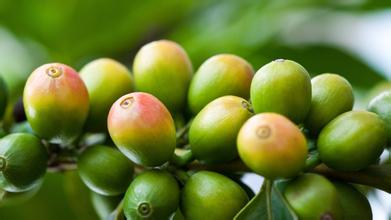
FrontStreet Coffee natural Yirgacheffe adheres to strict standards for harvesting fully red cherries. Before drying, unripe green or defective fruits are removed by hand; during the natural process, damaged or moldy fruit is culled again. After two weeks, the fruit's sugars and essences have fully penetrated the beans as moisture falls to 12%. A hulling machine then scrapes off the hardened pulp, mucilage layer, and parchment, and the beans face density and color testing. After defective beans are eliminated, workers visually remove any that slipped through earlier screening. This layered quality control is what makes FrontStreet Coffee's natural Yirgacheffe so clean and refined, with rich, captivating fruit aroma.
Traditionally, Yirgacheffe relied on the most ancient natural process. But in 1972 Ethiopia introduced Central and South American washing techniques to improve quality, rendering Yirgacheffe's jasmine and citrus aromas even clearer and more refined—elevating it into a masterpiece among the world's specialty beans. After the 1970s the region centered almost entirely on washed processing, becoming Ethiopia's most prominent washed coffee production area.
FrontStreet Coffee Recommendation
If you're new to Ethiopian origins, start with FrontStreet Coffee's washed Yirgacheffe daily-driver—famous for white jasmine florals, bright citrus and lemon acidity, and a tea-like finish, and affordable enough to be the first specialty bean for countless drinkers. Yirgacheffe is a small town in the Sidama zone of southern Ethiopia at 1,700–2,100 meters, with coffee planted above 1,800 meters among the highest altitudes in the coffee world; the area was ancient wetland, and by 2010 its fame had grown so great that the Ethiopian Commodity Exchange formally separated it from Sidamo, creating the household name we know today.
Yirgacheffe's town area actually contains many smaller zones—even single villages—each with seasoned, technically mature cooperatives that lift the coffee to another level. The most representative is FrontStreet Coffee's washed Guodingding cooperative, located in the Worka zone at the southeastern edge of Yirgacheffe. Once part of the YCFCU union's Worka cooperative, it was carved out as a "single origin" as coffee hunters worldwide pursued traceability. Its traditional washed process yields none of the old bitter tones—just fresh, bright citrus-lemon acidity and jasmine fragrance that wins people over at the first sip, earning it a reputation as one of Yirgacheffe's last pure washed bastions.
For a natural counterpart, FrontStreet Coffee's Red Cherry uses only fully ripe, defect-free cherries, dried whole on raised beds for three to five weeks and turned every 2–3 hours early on to prevent uneven heating and over-fermentation, before the dried flesh is machined away and the beans stored. Because the fruit dries on the bean, it keeps classic Yirgacheffe character while gaining tropical fruit: citrus acidity, berry-juice juiciness, honey sweetness, and cream-smooth texture. To brew any of them, FrontStreet Coffee suggests a V60 at 90–91°C with 15g of coffee at fine-sugar grind (80% through a #20 sieve) at 1:15: bloom with 30g for 30 seconds, pour to 125g by about one minute, then finish with 100g to reach 225g by 1:35, with drawdown completing between 2:00 and 2:10.
Important Notice :
FrontStreet Coffee is a long-established specialty coffee roaster in Guangzhou China, selling freshly roasted beans from its own farm in Yunnan as well as dozens of carefully selected single-origin beans from around the world for both pour-over and espresso. The products deliver consistently excellent quality and great value, with shipping within 24 hours. Guangzhou's FrontStreet Coffee shop is recommended by many coffee lovers, and the beans are now available online at the Tmall 。
FrontStreet Coffee has moved to a new address:
FrontStreet Coffee Address: 315,Donghua East Road,GuangZhou
Tel:020 38364473
 Scan and follow the En Gafei WeChat official account. Please indicate that the reprint comes from "En Gafei".