Characteristics and Flavor Profile of El Salvador Black Honey Processed Catuai Coffee Beans
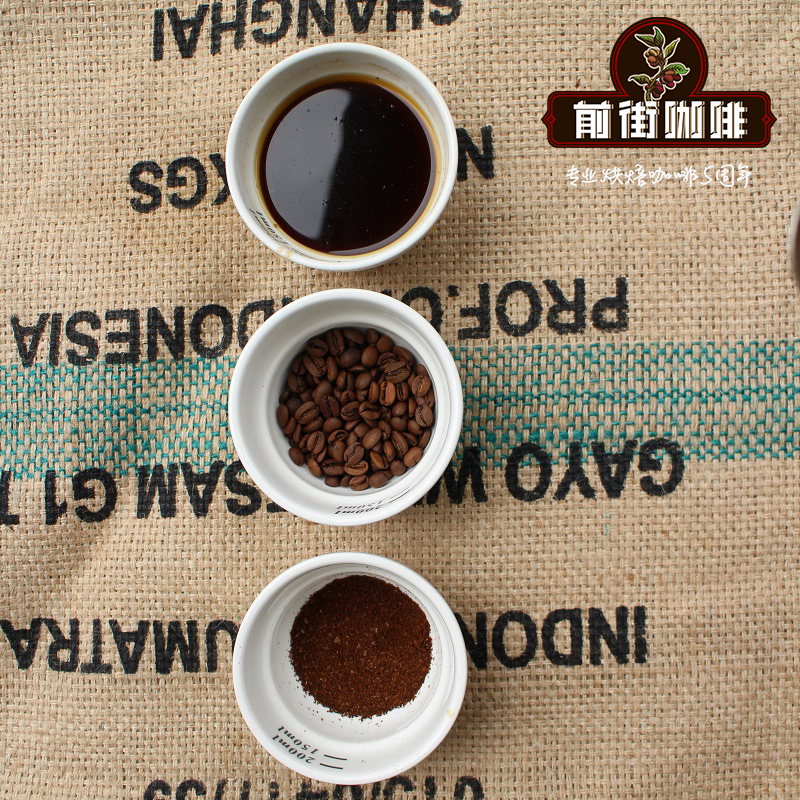
FrontStreet Coffee doesn't need to say much about the characteristics of honey-processed coffee. Anyone who has tasted it can feel the balanced sweet-and-sour taste, with flavors as fragrant as sweet fruit. It is well known among coffee enthusiasts that Costa Rican coffees often use honey processing, but honey processing is not unique to Costa Rica—processing methods spread and are adopted. Today, FrontStreet Coffee is sharing a honey-processed coffee from El Salvador. Is it really sweet? Read on to find out.
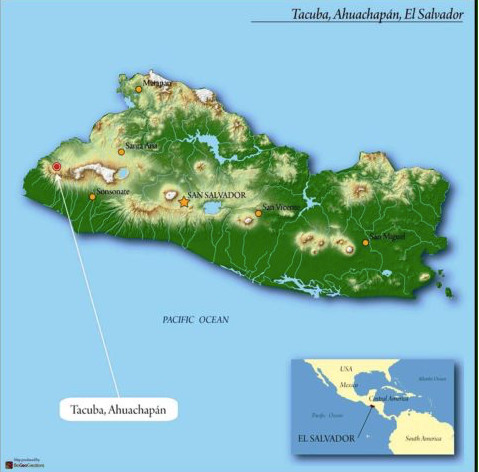
The Land of Volcanoes
El Salvador is known as the "Land of Volcanoes." Located between Honduras and Guatemala, with the Pacific Ocean to the south, its terrain consists mainly of mountains and plateaus. The volcanic zone is rich in minerals, which is very beneficial for coffee growth. Volcanic soil creates high-quality coffee trees.
El Salvador has five main coffee-producing regions: Apaneca, Central Belt, Chichontepec, and the Tecapa & Cacahuatique Mountain Range, distributed roughly at altitudes above 1,200 meters on volcanic-ash-covered mountain slopes or plateau areas. Most use shade-grown cultivation. The advantages of this approach include uniform coffee bean maturation, increased mucilage content, higher weight, and increased opportunities for sweet polyphenol formation, allowing the main components of coffee beans to fully develop. Coffee trees with too much direct sunlight will have curled leaf edges, causing water loss, which is detrimental to photosynthesis, reduces carbon dioxide absorption, and lowers sugar formation.
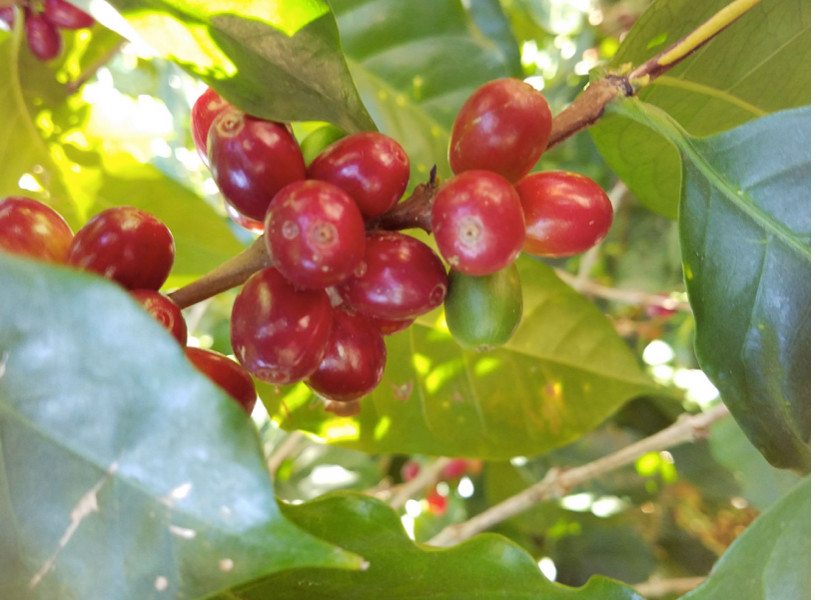
The main coffee varieties cultivated in El Salvador include Typica, Bourbon, Pacas, and Pacamara.
Varieties
Caturra is a natural variant of Bourbon, discovered in Brazil in 1937. Its plant is not as tall as Bourbon, being shorter and more convenient for harvesting. It has strong adaptability and doesn't require shade trees—it can thrive directly under intense sunlight, hence the common name "Sun Coffee." Because it inherits Bourbon's lineage, it has relatively weak disease resistance but higher yields than Bourbon.
Caturra is suitable for cultivation from low altitudes of 700 meters to high altitudes of 1,700 meters. It has strong altitude adaptability, but the higher the altitude, the better the flavor, though yields are relatively reduced.
Processing Method
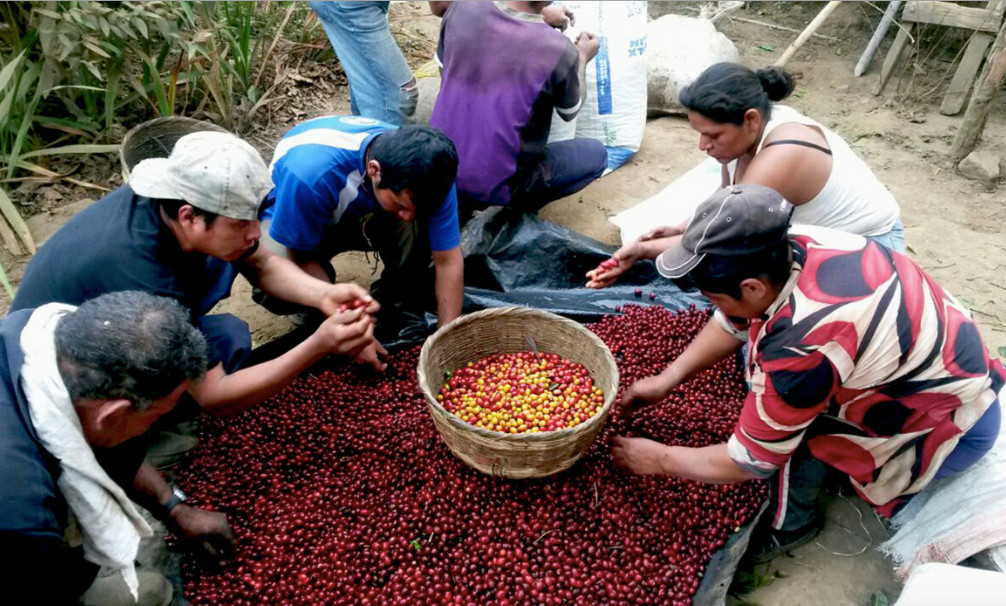
The honey processing method first appeared in Costa Rica in Central America. Initially, it was mainly because some high-altitude areas in Central America lacked water resources. After using pulp removers, coffee cherries were dried in the sun together with the mucilage. It is a processing method between the natural and washed methods.
It allows coffee to retain the cleanliness of washed processing, and because it is dried with the mucilage, it significantly increases the coffee's sweetness and caramel flavors. This method can reduce the acidity of coffee beans while providing more delicate aromas.
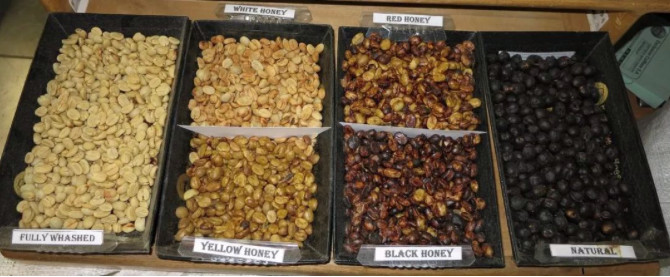
Depending on the thickness of mucilage removal, drying time (or thickness during drying), and turning frequency during drying, honey processing is further divided into black honey, red honey, orange honey, yellow honey, and white honey.
Based on the degree of mucilage removal:
Black Honey: Almost no mucilage is removed, so drying takes the longest, requiring more than 14 days continuously. During the process, to avoid drying too quickly, coverings are used to block excessive sunlight, allowing more thorough sugar conversion.
Red Honey: 25% of mucilage is removed (specific practices vary among farms), with sun drying for about 12 days, during which shade structures might also be used.
Yellow Honey: 40% of mucilage is removed, with maximum sunlight exposure for drying, lasting about 8 days.
El Salvador Black Honey
El Salvador Black Honey
Farm: Finca El Guarumal
Variety: Caturra
Altitude: 1,250m
Processing Method: Black Honey Process
Grade: SHB
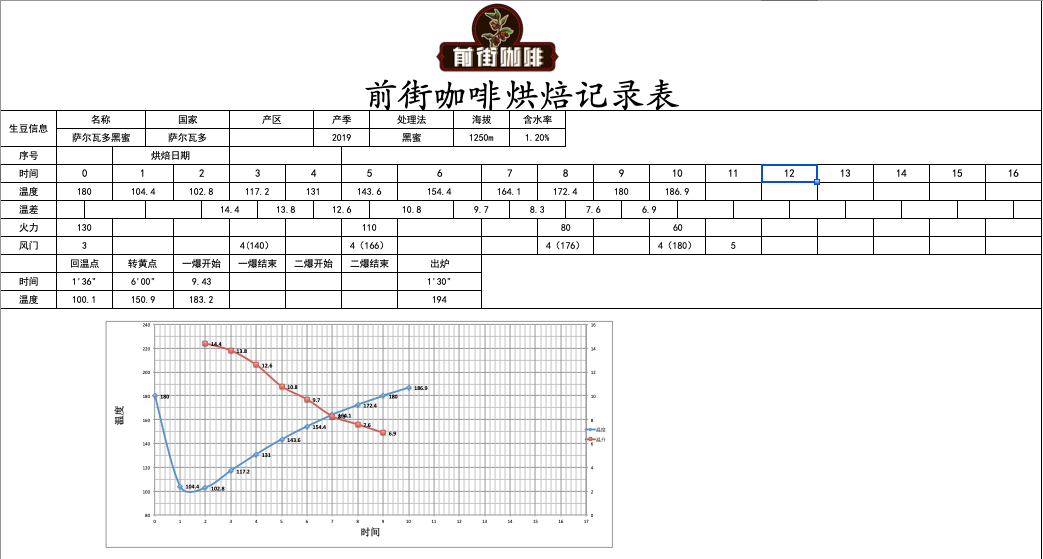
Roasting Profile
Enter drum at 180°C, heat at 130, damper at 3; return temperature at 1'36", when drum temperature reaches 140°C, open damper to 4, heat unchanged; when drum temperature reaches 166°C, adjust heat to 110, damper unchanged; when drum temperature reaches 176°C, adjust heat to 80, damper unchanged; when drum temperature reaches 60°C, adjust heat to 60, damper unchanged at 4;
At 8'20", ugly wrinkles and black markings appear on the bean surface, with toast aroma clearly turning to coffee aroma, which can be defined as the prelude to first crack. At this time, listen carefully for the sound of first crack. First crack begins at 9'43", damper unchanged, development after first crack for 1'30", drop at 194°C.
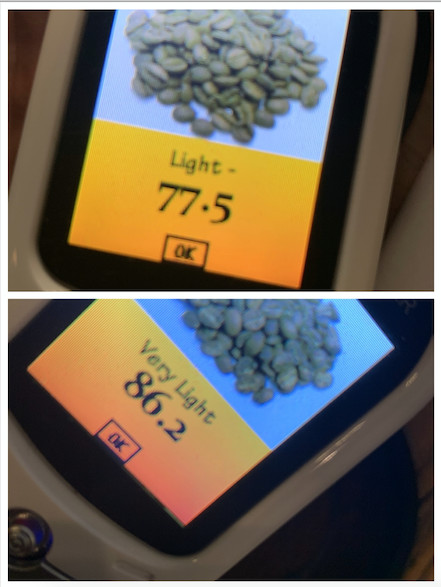
Agtron bean color value is 77.5 (upper image), Agtron ground color value is 86.2 (lower image), Roast Delta value is 8.7.
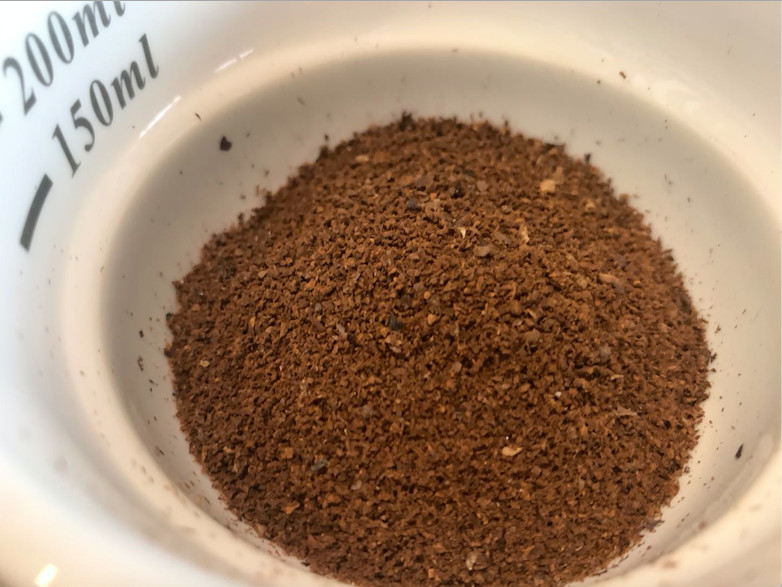
Cupping
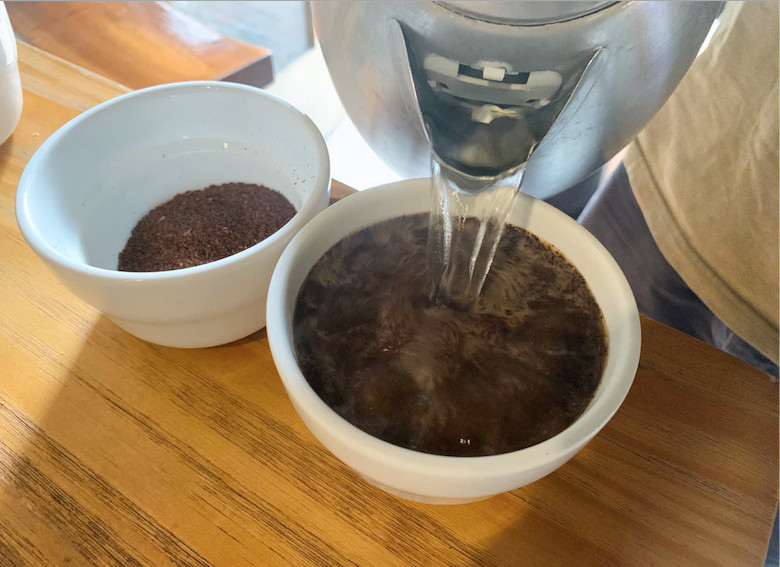
The wet aroma smells of spices. Slurping reveals clear citrus, nuts, and berries. With temperature changes, further slurping shows caramel aroma. The mouthfeel is smooth and balanced, with a honey-like sweetness lingering in the aftertaste.
FrontStreet Coffee Recommendation
For the deep, sugar-rich character of a black honey coffee like this one, FrontStreet Coffee's honey-processed line offers a direct comparison. The FrontStreet Coffee Costa Rica Blackberry is black honey processed, with almost no mucilage removed, long shade-protected drying, and a medium-light roast, so it opens with a rich floral aroma and then grape, berry, and ripe blackberry flavors on the palate. If you enjoy the raisined, fruitier end of honey processing, the FrontStreet Coffee Costa Rica Mozart uses a raisin honey method that retains 100% of the mucilage, bringing osmanthus, pineapple, and raisin notes to pour-over, cold brew, or moka pot. Both share the smooth body and honeyed aftertaste found in this El Salvadoran Caturra, but push the sweetness in different directions.
Important Notice :
FrontStreet Coffee is a long-established specialty coffee roaster in Guangzhou China, selling freshly roasted beans from its own farm in Yunnan as well as dozens of carefully selected single-origin beans from around the world for both pour-over and espresso. The products deliver consistently excellent quality and great value, with shipping within 24 hours. Guangzhou's FrontStreet Coffee shop is recommended by many coffee lovers, and the beans are now available online at the Tmall 。
FrontStreet Coffee has moved to a new address:
FrontStreet Coffee Address: 315,Donghua East Road,GuangZhou
Tel:020 38364473
 Scan and follow the En Gafei WeChat official account. Please indicate that the reprint comes from "En Gafei".