Pour-Over Coffee Grind Size Standard Units and Scale Settings Single-Serve Coffee Ground Dosage
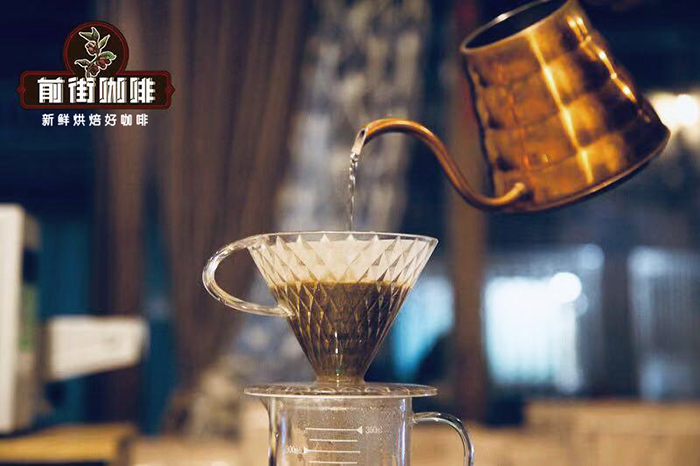
Brewing beginners often ask FrontStreet Coffee how to determine the grind size for each coffee bean, how grind size affects extraction, and how to judge the fineness of coffee grounds at home. In this article, FrontStreet Coffee discusses grind size for pour-over coffee.
The Impact of Grind Size on Coffee
Grinding is crucial for coffee. The size of the particles directly affects how efficiently hot water wets and extracts the coffee. Theoretically, the more uniform the particles, the more consistent the overall extraction, and the better the flavor. Concentration and extraction rate decrease as the grind becomes coarser and increase as it becomes finer. Grind degree refers to the size, shape, and surface area of the ground coffee. The finer the grounds, the larger the surface area, and the greater the contact area between water and coffee, allowing more extraction. Greater surface area also gives the carbon dioxide inside the beans more places to escape.
Roasting's Effect on Coffee Bean Aroma and Carbon Dioxide Production
Roasting brings out the full aroma of coffee. The Maillard reaction is a series of degradation and polymerization reactions between monosaccharide carbohydrates and amino acids that occurs throughout the roast. Monosaccharides and amino acids react at different temperatures to produce many complex aromas - nut, almond, cream, and chocolate aromas come from the Maillard reaction. Caramelization is the oxidation and browning of sugars during heating, producing honey, maple, and caramel aromas. Simply put, the longer the roast, the more acidic substances the beans release. For medium roasts, lighter-roasted coffee has more pronounced citrus and berry acidity. Darker-roasted coffee has more prominent caramelized flavors such as cocoa, caramel, and nuts.
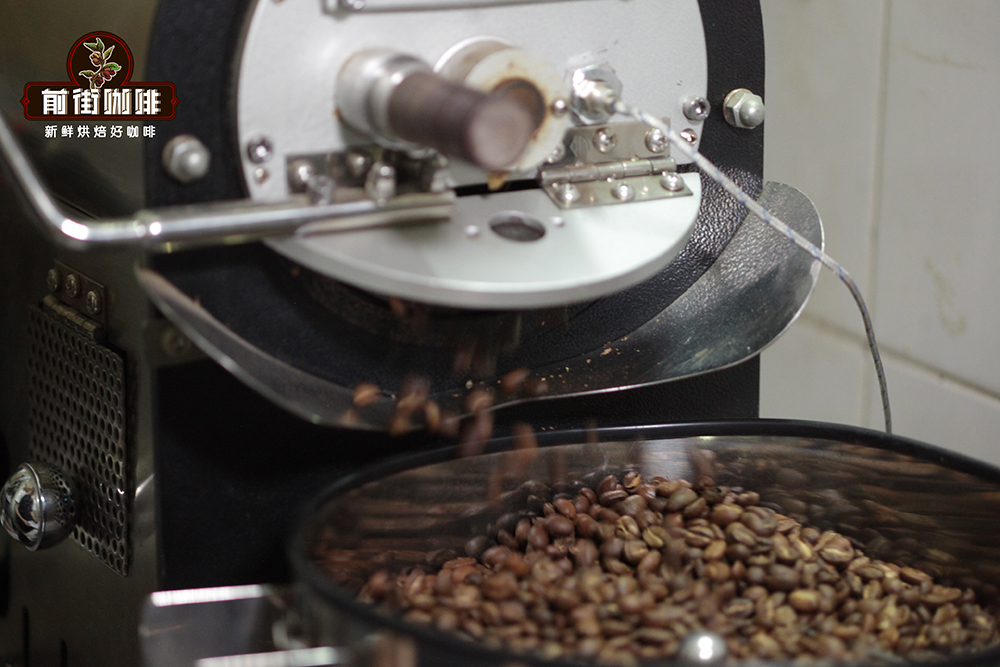
Beyond creating aroma, roasting also produces carbon dioxide inside the beans. The darker the roast, the more carbon dioxide is produced. To ensure better release during brewing, FrontStreet Coffee recommends resting freshly roasted beans. Resting lets the beans release carbon dioxide through the one-way valve on the packaging without opening it, helping aromatic substances and oils merge and bringing all the aromatics inside the beans into an easily extractable state. FrontStreet Coffee recommends resting medium-light roasted beans for 3-4 days from the roast date and medium-dark roasted beans for 5-6 days.
How to Determine Coffee Bean Grind Size?
Using FrontStreet Coffee's freshly roasted beans as an example, pour-over single origins fall into medium-light and medium-dark roasts.
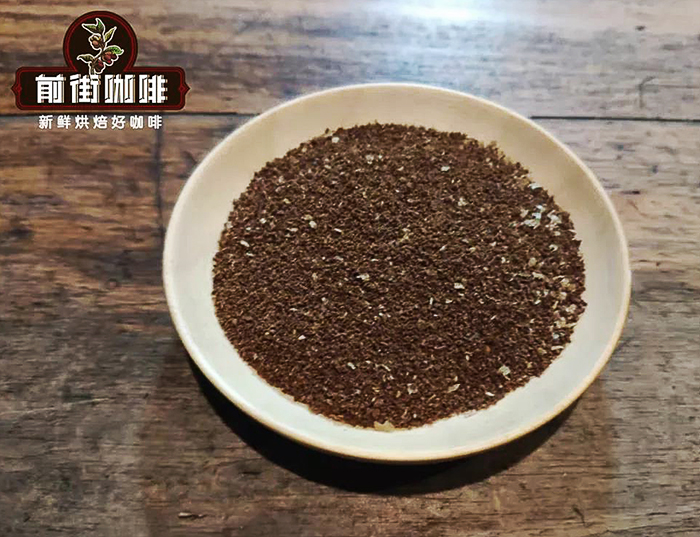
FrontStreet Coffee's medium-light roasted beans: medium-light roasts express acidity, while caramelized substances are not easily extracted. FrontStreet recommends a medium-fine grind (80% pass rate on a #20 sieve with 0.85mm mesh, i.e., fine sugar size). A medium-fine grind slows the water flow through the coffee bed, better extracting acidic, sweet, and caramelized substances to balance flavor. Medium-fine ground coffee is best brewed at 90-91°C. Too high a temperature over-extracts caramelized substances and produces bitterness; too low under-extracts, pulling out only some acidic and sweet substances and leaving the coffee bland.
FrontStreet Coffee's medium-dark roasted beans: medium-dark roasts generally have low acidity with prominent body, meaning caramelized substances are more abundant. FrontStreet recommends a medium-coarse grind (70% pass rate on a #20 sieve with 0.85mm mesh, i.e., coarse sugar size). A medium-coarse grind speeds the water flow, preventing caramelized substances from over-extracting, so the flavor and mouthfeel are sweet and rich without unpleasant bitterness. Medium-coarse ground coffee is best brewed at 88-89°C. Too high a temperature makes coffee bitter and hard to swallow; too low makes it bland.
How to Use a 0.85mm #20 Sieve?
For grind size, FrontStreet determines it by sieving, following SCA (Specialty Coffee Association) recommendations for pour-over grind size combined with practical operational verification. If you don't have a sieve at home, FrontStreet Coffee suggests judging by water flow speed - too fast means the grounds are too coarse, too slow means too fine.
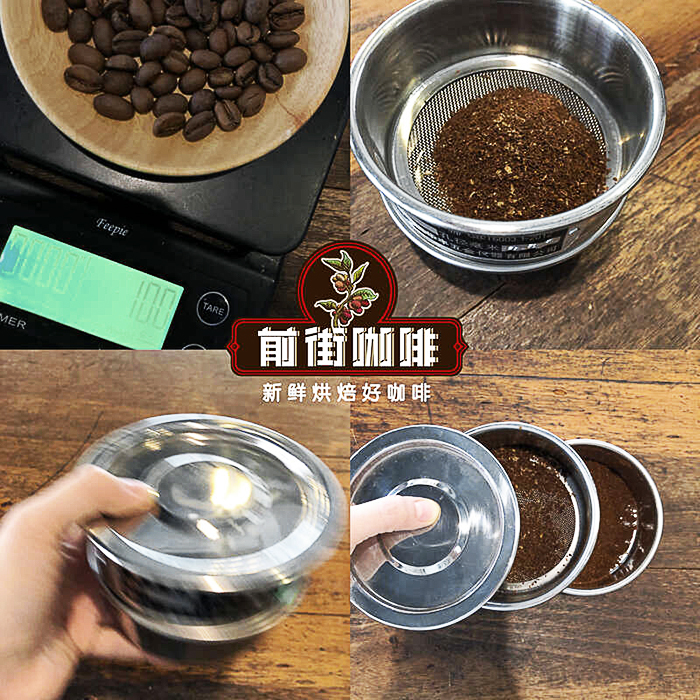
First, prepare 10g of coffee beans for grinding. Start with a grind size based on fine and coarse sugar, then pour it into the sieve, cover, and shake left and right so the grounds pass through into the collection tray below. Continue until no more grounds pass through. Then prepare an electronic scale and a container, zero them, pour the sieved grounds into the container, and weigh. If 8g±0.1g passes through, it is a medium-fine grind; if 7g±0.1g passes through, it is medium-coarse. If the pass rate is too high, adjust the grind coarser; if too low, adjust finer.
The Importance of Grind Uniformity
Ground particles should be uniform. Once beans are ground into powder, the distribution of particle sizes strongly affects the quality of the beverage. The more concentrated the particle size within the target range, the more uniform the grind and the better the flavor. Too many coarse particles and the deep flavors hidden inside the coffee won't be extracted; too many fine particles and the coffee tastes overly complex and bitter. If grinding is seriously uneven, FrontStreet recommends changing the grinding equipment.
Several important factors affect coffee extraction or flavor: water temperature, grinding, and coffee-to-water ratio. Among them, grind degree determines the particle size and uniformity of the grounds, directly affecting how efficiently water extracts flavor. In this article, FrontStreet explores how much impact grind size has on a cup of coffee and shares internal calibration data.
The finer the coffee is ground, the more easily the grounds accumulate on the filter paper, creating greater extraction resistance, slowing the flow, and lengthening extraction. The extraction rate of substances in the coffee is higher, and the brewed coffee is more intense.
Similarly, the coarser the coffee is ground, the larger the gaps in the coffee bed, with less ground coffee in contact with hot water, weaker extraction resistance, faster dripping, a lower extraction rate, and a lighter flavor.
Simply changing the grind degree can therefore create huge differences in taste, which is why grinding matters so much.
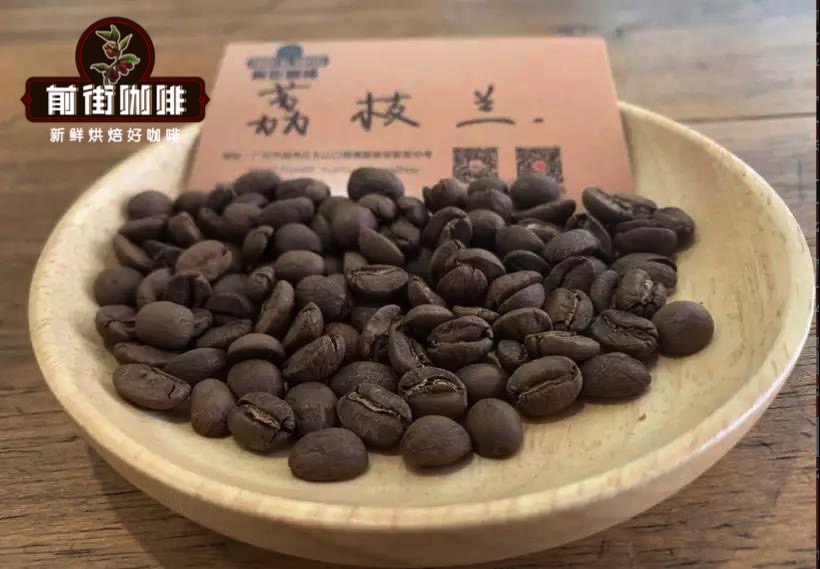
Let's use grind size as a variable, brewing three groups of coffee with fine, medium, and coarse grinds using Honduras Lychee Orchid beans. After brewing, we measured concentration and calculated extraction rates to verify the points above.
Brewing Protocol
Coffee amount: 15 grams
Brewing ratio: 1:16
Water temperature: 90 degrees Celsius
Brewing Process
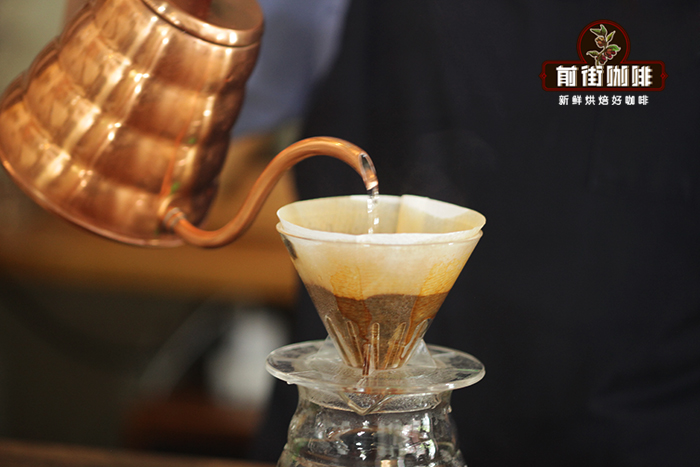
FrontStreet uses segmented extraction. The bloom water is twice the coffee weight, i.e., 30g of water for a 30-second bloom. Then pour in small circles to 150g; when the water level drops and is about to expose the coffee bed, continue pouring to 240g and stop. Total extraction time is 2 minutes.
Results Comparison:
Fine Grind
Concentration: 1.32%
Extraction rate: 19.53%
Medium Grind
Concentration: 1.17%
Extraction rate: 17.28%
Coarse Grind
Concentration: 0.84%
Extraction rate: 12.37%
What Happens When Coffee Is Ground Too Fine?
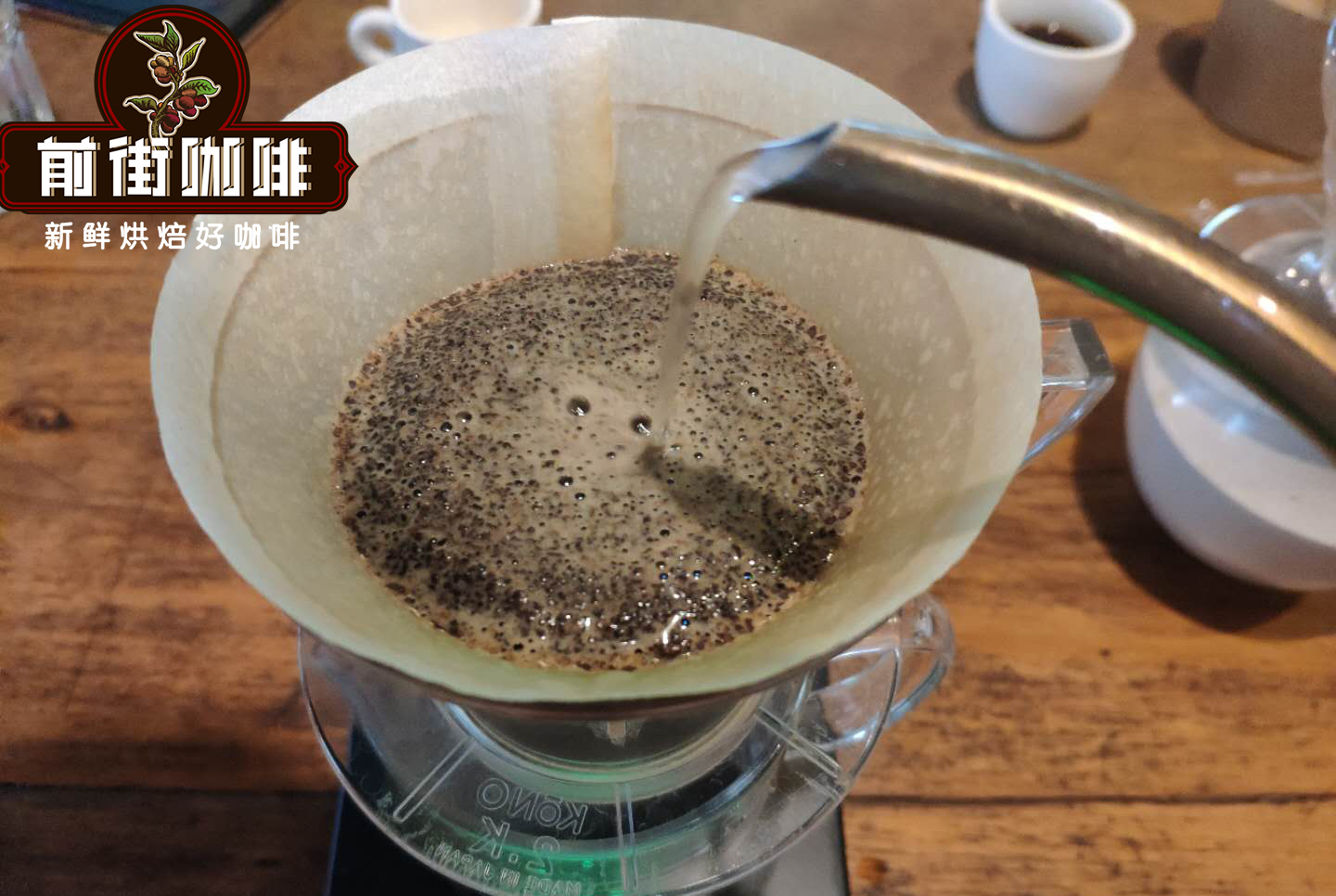
In appearance, the particles are smaller, and because they are smaller, the spacing between them is shorter, making it harder for water to pass through, so the dripping time during brewing is longer.
Fine grinding produces smaller particles. Once wet and filtered, the grounds take on a paste-like state. The brewed coffee bed makes it hard to see individual particles, with mostly muddy conditions.
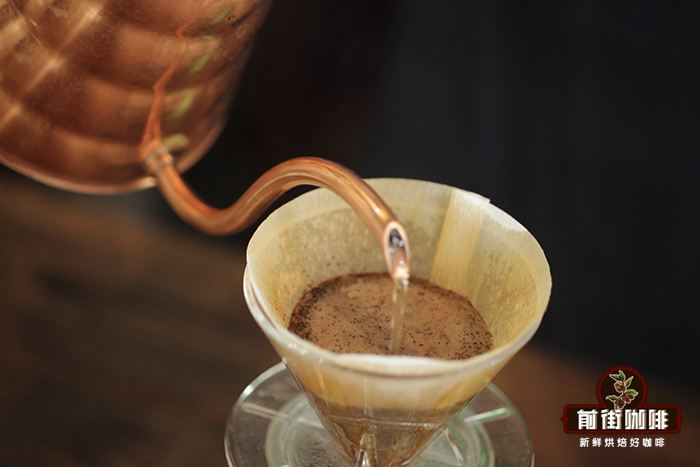
Fine grinding produces smaller particles, increasing their surface area and giving the water more places to extract coffee substances, so concentration and extraction rate rise. The coffee tastes intense, with obvious bitterness and astringency, while other flavors are masked.
What Happens When Coffee Is Ground Too Coarse?
In appearance, the particles are larger, and because they are larger, the spacing between them is greater, making it easier for water to pass, so the filtering time is shorter.
Coarse grinding leaves obvious particles in the brewed coffee bed, making it hard to form a complete bed, with visible gaps.
Coarse grinding produces larger particles, reducing their surface area and giving the water fewer places to extract coffee substances, so concentration and extraction rate fall. The coffee tastes bland, with a light mouthfeel and almost no flavor.
How to Determine the Correct Pour-Over Grind Size?
Grinding is therefore one of the crucial steps in coffee extraction. An appropriate coarseness is key to brewing a delicious cup. But what exactly is appropriate? FrontStreet Coffee recommends using a 0.85mm sieve (i.e., national standard #20) as a benchmark, with a grind where about 80% of the grounds pass through the sieve as the recommended pour-over grind.
Of course, beans of different roast degrees call for different grinds. For example, FrontStreet uses a grind with an 85% pass rate through a 0.85mm mesh sieve for light roast coffee. Medium roast uses a 75% pass rate, and dark roast uses a 67% pass rate. These figures are for reference only.
FrontStreet Coffee Recommendation
Grind is only half the equation - the bean matters too. For a light roast that rewards a slightly finer pour-over grind, FrontStreet Coffee suggests its washed Gedingding Cooperative Yirgacheffe or its sun-dried Ethiopia Huakui, both expressive of florals and fruit at 90-91°C. For a medium-dark bean suited to a coarser grind and cooler 88-89°C water, FrontStreet Coffee's PWN Golden Mandheling delivers a full, low-acid cup of herbs, caramel, and dark chocolate.
Important Notice :
FrontStreet Coffee is a long-established specialty coffee roaster in Guangzhou China, selling freshly roasted beans from its own farm in Yunnan as well as dozens of carefully selected single-origin beans from around the world for both pour-over and espresso. The products deliver consistently excellent quality and great value, with shipping within 24 hours. Guangzhou's FrontStreet Coffee shop is recommended by many coffee lovers, and the beans are now available online at the Tmall 。
FrontStreet Coffee has moved to a new address:
FrontStreet Coffee Address: 315,Donghua East Road,GuangZhou
Tel:020 38364473
 Scan and follow the En Gafei WeChat official account. Please indicate that the reprint comes from "En Gafei".