Coffee Bean Sun-Drying Processing Method Steps and Visual Guide - Differences in Flavor Characteristics Between Sun-Dried and Washed Coffee Beans

Drink coffee for long enough and you will notice labels mentioning processing methods such as natural, washed or honey. Natural and washed are reasonably easy to grasp, but honey processing and wet hulling can be baffling. So today FrontStreet Coffee wants to look at how natural and washed processing differ, and how each one shapes the flavour of the bean.
The Coffee Cherry Structure
The coffee we drink does not actually grow as a bare bean. It starts life as a round fruit.
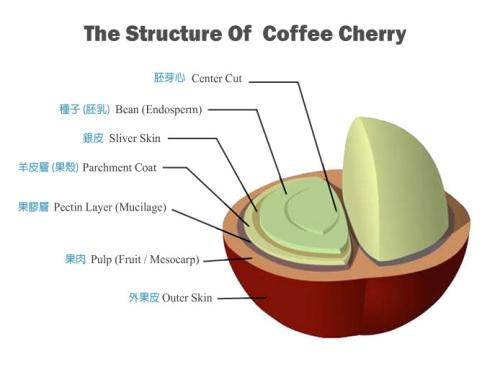
From the outside in, the layers can be roughly divided into skin, pulp, mucilage, parchment (also called the parchment layer), silver skin and, at the centre, the coffee seed. Processing removes those outer layers of skin, pulp and mucilage to leave the seed, which becomes the coffee we drink once it is roasted.
Common Coffee Processing Methods
Let's look at how the bean is extracted. Common processing methods fall mainly into three groups: natural, washed, and the intermediate methods such as honey, wet hulling, semi-washed and semi-natural. Today we will start with what natural and washed processing actually involve.
Natural Processing Method
Natural processing is a relatively ancient method, low in cost and fairly simple. It reduces the coffee's moisture content through extended drying.
Natural Processing Steps
The harvested cherries are poured into large water tanks. Ripe, full cherries sink to the bottom, while underdeveloped or overripe cherries float and have to be removed. In some water-scarce areas, cherries are screened with mesh nets instead.

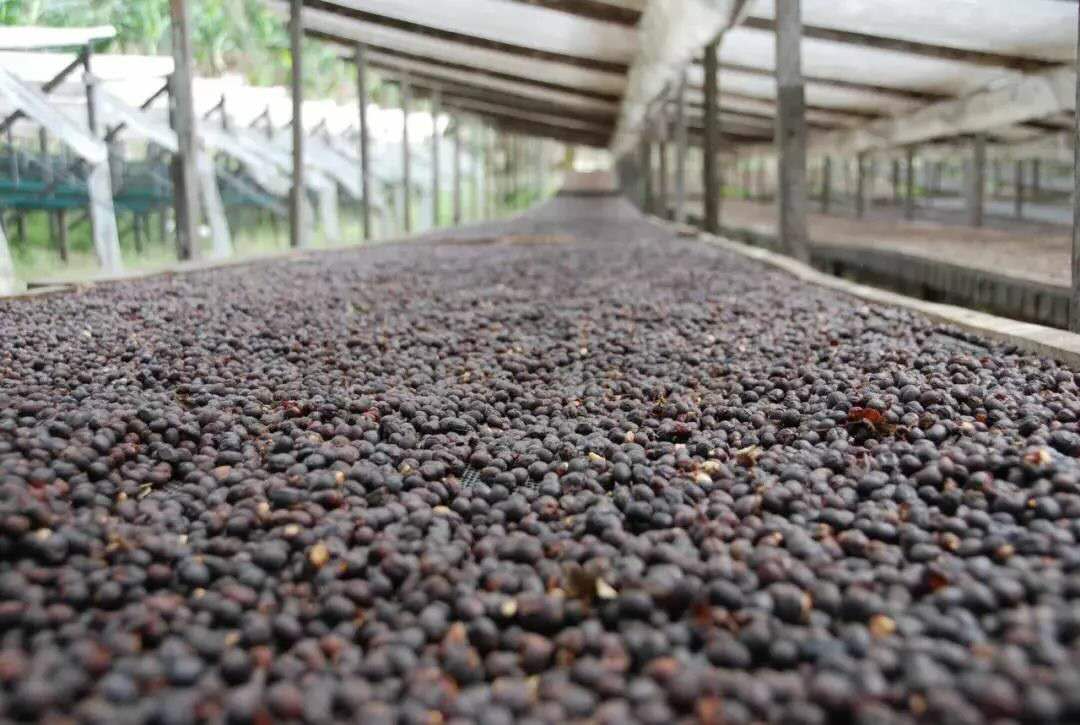
After screening, the whole cherries, skin, pulp and mucilage included, are spread directly on cement floors or drying beds and dried naturally until moisture reaches about 12%, which takes roughly two to four weeks depending on the climate of the origin. Once drying is complete, a hulling machine removes the dried skin, pulp and parchment, and the green coffee beans are ready.
Natural processing is cheaper and simpler, but it has drawbacks. Because the fruit must sit in the sun, it demands a particular climate and environment, and it is generally concentrated in tropical countries with distinct wet and dry seasons. With so many uncontrollable factors such as weather and environment, careless handling easily produces defective beans, insect damage, rot and mould, and therefore more flavour impurities.
Coffee cherries also hold a great deal of moisture. Left in one place for more than twenty days they will naturally ferment, and excessive fermentation easily turns to rot. If the cherries are piled too thickly without ventilation, the rot becomes worse, so a great deal of labour is needed to turn the piles frequently and keep air moving. Natural processing also involves very little screening: only a rough pass after harvest, and then straight into sacks. Its defect rate is higher than that of washed processing.
Even so, excellent naturally processed coffee has higher sweetness, fuller body and more complex aromas.

Natural processing also divides into traditional natural and refined natural.
Traditional Natural
The natural process is labour-intensive. Hand-picked, high-sugar cherries are first placed on African raised beds for about 10 days of sun-drying, then moved into greenhouses covered with plastic sheets to capture more direct heat and continue drying; alternatively the harvested cherries are spread in the farm's own courtyard until moisture reaches 11.5%.
Slow drying lets the green beans develop more natural sweetness from within, but it also demands closer attention and precise calculation of how often to turn them. When the bright red cherries finally turn black and give off aromas of fruit cake, caramel or even sherry, the process is complete.

Refined Natural
In recent years, as the market has chased more extreme coffee flavours, many experienced and capable producers have begun controlling the details of natural processing to make higher-quality beans and show what coffee flavour can do.
Instruments such as refractometers, for example, are used to determine when to harvest, so that cherries of consistent ripeness taste cleaner, while higher-sugar red cherries also raise the coffee's sweetness.
Specially designed raised drying tables, meanwhile, give the fruit more air convection and produce a more even dry.
Washed Processing Steps
If you follow processing methods closely, you will notice that many specialty coffees are in fact washed. The washed method was invented by the Dutch in the 18th century and suits rainy regions. The process is fairly complicated, yet it is currently the most common way of processing green beans.
Harvested cherries go into water tanks and soak for about 24 hours. Ripe cherries sink, while unripe and overripe cherries float and can be removed.

A machine removes the skin and pulp, leaving only beans wrapped in parchment. At that point the beans still carry a layer of mucilage, and washing is designed to clean it off.
The mucilage adheres strongly and is not easy to remove. It must sit in tanks for about 18-36 hours to ferment and break down. There are two fermentation styles, wet and dry: as the names suggest, one adds water and the other does not. During fermentation the seed and internal pulp undergo special changes, and this is the step that most affects flavour in the washed method. Some farms add hot water or enzymes to speed fermentation, which harms quality and is unwelcome among specialty coffee drinkers.
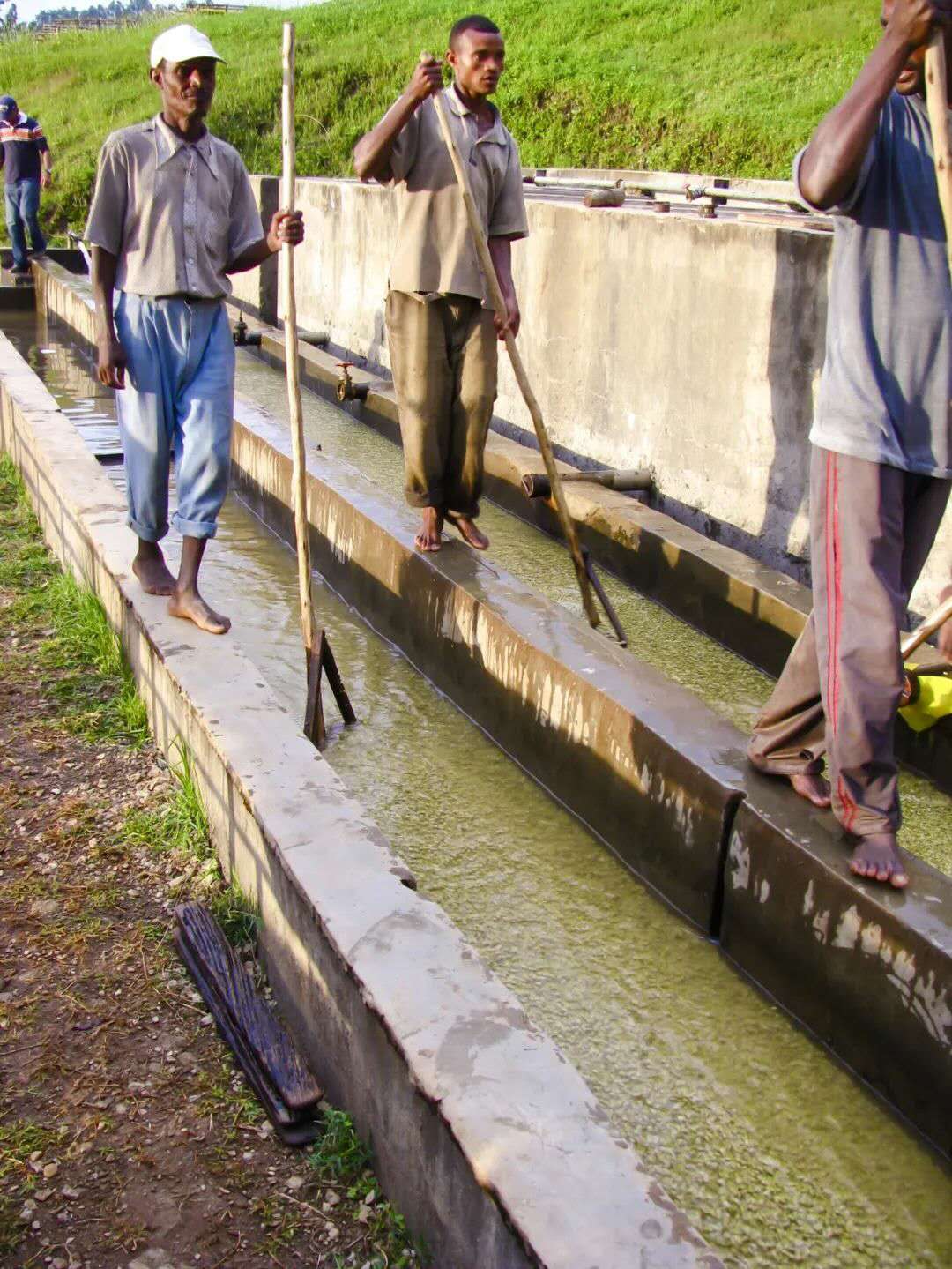
Farms using the washed method must build washing tanks and be able to bring in a continuous supply of fresh water. During processing the fermented beans are moved back and forth in the tanks, and the friction between beans plus the flow of water washes them until they are smooth and clean.
After washing, the beans are still wrapped in parchment at a moisture content of 50%. They must be dried down to 12%, or they will go on fermenting, moulding and rotting. Sun-drying is the better approach: it takes 1-3 weeks, but the flavour is excellent and widely favoured. Some places use machine drying instead, which cuts processing time sharply but gives an inferior flavour compared with sun-dried coffee.
The dried beans can then be stored in warehouses or sent to a factory for hulling to remove the parchment and silver skin.
Washed processing removes impurities such as stones and debris and screens out defective beans at each step, so the green beans look more uniform and are generally considered high-quality coffee. They also trade at higher prices than naturally processed beans. Washing preserves the coffee's original flavour and also enhances its brightness, or acidity, and its distinctive fruit aromas.
The biggest disadvantage of washed coffee is that the beans can easily pick up fermentation odours during processing. When they do, it is usually because the fermentation tanks have not been managed and maintained well. Soaking the parchment-covered beans in the tanks overnight will remove the mucilage, but if the microorganisms in the tank change, the beans can take on fermentation smells.

The equipment for washed processing is also relatively expensive, and the steps are labour-intensive, which raises production costs.
Comparing Natural and Washed Processing
Both methods are thoroughly common today. The difference is one of order: natural processing dries the fruit first and removes the skin afterwards, while washed processing removes the skin first and dries afterwards. Given how much the two differ, how can you tell which method a bean has been through?
Natural vs. Washed Coffee Bean Comparison
Here we compare FrontStreet Coffee's Natural Yirgacheffe Red Cherry with its Washed Yirgacheffe Gedeb.
The green bean information is as follows:
Natural Beans: FrontStreet Coffee Natural Red Cherry
Region: Ethiopia, Yirgacheffe
Estate: Atlant Estate
Altitude: 1700-2200m
Variety: Local indigenous varieties
Processing Method: Natural processing

Washed Beans: FrontStreet Coffee Yirgacheffe Gedeb
Region: Ethiopia, Yirgacheffe
Estate: Gedeb Cooperative
Altitude: 2000-2100m
Variety: Local indigenous varieties
Processing Method: Washed processing

As green beans, natural beans look yellowish-green with more silver skin, while washed beans are bluish-green with less.

Once roasted, however, natural beans show very little silver skin while washed beans show more.
The reason is that washed beans are soaked in water for long periods during processing, which separates the silver skin from the bean. When the parchment is finally removed, the outer silver skin peels away with it, leaving very little on the surface of the washed green bean. Natural beans are the opposite: the fruit skin and pulp stay attached to the outside, and the silver skin clings tightly to the bean. When the parchment comes off, the silver skin does not fall away easily, so plenty of it remains on the surface of natural green beans.
Although green beans show washed beans with less silver skin and natural beans with more, during roasting it is the silver skin along the centre line that is hardest to remove. Natural beans, whose outer silver skin is connected in one piece, detach more easily along with the silver skin at the centre line, so roasted natural beans shed their silver skin very cleanly.
Washed beans are the reverse. Because there is almost no outer silver skin to connect it, the silver skin in the centre-line crack cannot detach easily and stays after roasting. That is why, judged by the roasted bean, washed beans carry more silver skin and natural beans carry less.

Flavor Comparison
Natural beans such as Natural Red Cherry keep the whole fruit skin and pulp through drying, so the fermentation of the pulp brings charming wine-like and fermented aromas to the cup, and the sweetness is quite obvious.
Washed beans such as Yirgacheffe Gedeb are better at preserving the coffee's own flavour, with brighter acidity and cleaner flavours.
For more specialty coffee beans, please add FrontStreet Coffee on private WeChat: kaixinguoguo0925
FrontStreet Coffee Recommendation
Honey processing grew out of pulped natural, or semi-natural, processing: the skin is removed and the bean is dried with some mucilage still attached, which shortens drying and avoids the off-flavours that careless fermentation can bring. FrontStreet Coffee's Cerrado is a classic Brazilian pulped-natural coffee, with distinct cream, peanut, nut and chocolate flavours.
Brazil's success caught Costa Rica's attention. Costa Rican producers borrowed the pulped-natural approach and refined it around how much mucilage to leave and how long to dry, creating honey processing and, in turn, the clearer categories of black honey, red honey, yellow honey and white honey. FrontStreet Coffee's Blackberry coffee uses black honey processing, which removes almost none of the mucilage and dries for at least two weeks under cover to keep the sun from drying it too fast and to allow fuller sugar conversion. Turned at intervals to avoid uneven heating and over-fermentation, it is medium-light roasted and shows grape, berry and ripe blackberry flavours.
Raisin honey processing is a further refinement: the cherries are pre-dried on raised beds for at least three days before the skin and pulp are removed, keeping 100% of the mucilage. FrontStreet Coffee's Mozart uses this method, and whether brewed as pour-over, cold brew or in a moka pot it shows osmanthus, pineapple and raisin aromas. FrontStreet Coffee's Strawberry Candy, a blend of Panama Geisha and raisin-honey Costa Rican coffee, adds the classic Geisha orange-blossom honey to grape and dried blueberry, with soft fruit acidity and an almond finish.
Important Notice :
FrontStreet Coffee is a long-established specialty coffee roaster in Guangzhou China, selling freshly roasted beans from its own farm in Yunnan as well as dozens of carefully selected single-origin beans from around the world for both pour-over and espresso. The products deliver consistently excellent quality and great value, with shipping within 24 hours. Guangzhou's FrontStreet Coffee shop is recommended by many coffee lovers, and the beans are now available online at the Tmall 。
FrontStreet Coffee has moved to a new address:
FrontStreet Coffee Address: 315,Donghua East Road,GuangZhou
Tel:020 38364473
 Scan and follow the En Gafei WeChat official account. Please indicate that the reprint comes from "En Gafei".