How to Brew Yunnan Small Bean Coffee for Great Taste Without Bitterness - Pour-Over Catimor Coffee Brewing Tips and Steps

Not long ago, asking about coffee meant asking whether it was imported. Today, people are far more likely to tell you that China's own Yunnan small-bean coffee is genuinely delicious. With the push for domestic products, Yunnan coffee now appears in every coffee shop. But even though it has become well known and widely recognized, it is still poorly understood—in particular, few people know how to brew Yunnan coffee so it actually tastes good. Today, FrontStreet Coffee shares how.
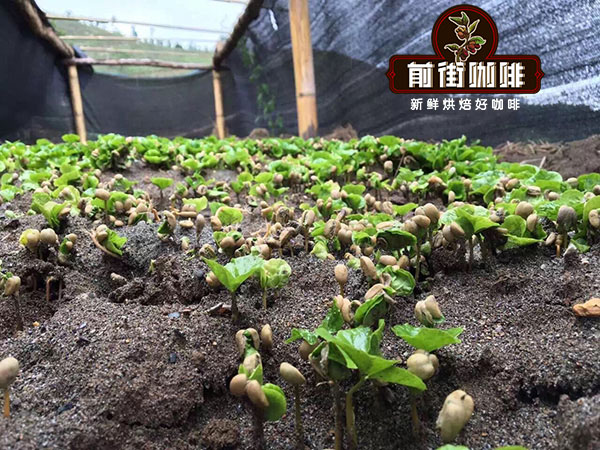
Yunnan is China's largest coffee-growing region, with a climate exceptionally suited to coffee cultivation—it sits squarely in the golden belt. The western and southern parts of Yunnan Province lie between 15°N and the Tropic of Cancer, with most areas at elevations of 1,000–2,000 meters. The terrain is mountainous and sloped with dramatic variation, the soil fertile, sunshine abundant, rainfall plentiful, and the day-night temperature swings large. FrontStreet Coffee believes it is precisely these unique natural conditions that shape the flavor of its Yunnan small-bean coffee: rich and mellow in body, gentle yet aromatic, full in taste, with a distinctive fruity acidity.
Why FrontStreet Coffee Loves Yunnan Coffee
FrontStreet Coffee loves Yunnan coffee because it is China's own coffee. We carry two Yunnan small-bean varieties: Catimor and Typica. Because Catimor carries Robusta genes, its flavor falls somewhat short of Typica. In Lincang, Yunnan, FrontStreet Coffee also runs its own plantation, growing the ancient variety—Typica.

Yunnan Coffee Growing Regions
Yunnan coffee cultivation is concentrated in Lincang, Baoshan, and Pu'er. These areas combine low latitude, high altitude (1,000–2,000m), and large day-night temperature differences, making Yunnan a golden growing region for high-quality Arabica (small-bean) coffee.

Baoshan:
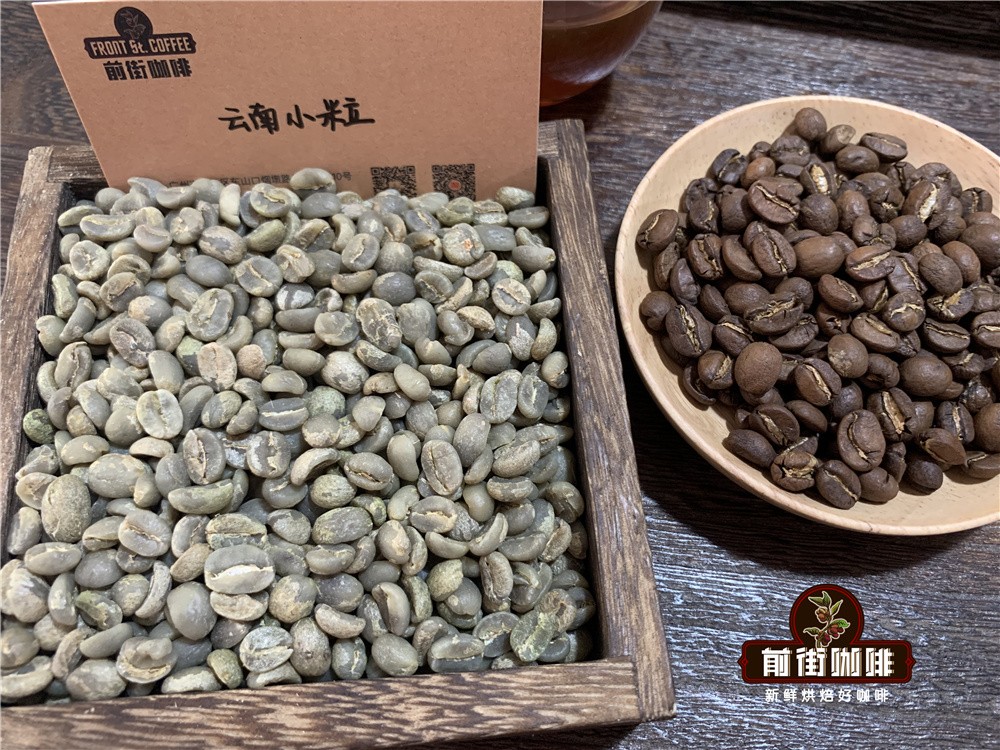
FrontStreet Coffee's Yunnan small-bean coffee comes from Baoshan. Baoshan averages 21.5°C, with highs up to 40.4°C and essentially no frost all year, making it a widely recognized best origin for small-bean coffee. The coffee grown here is famous at home and abroad for being rich but not bitter, aromatic but not intense, with small, uniformly shaped beans, full aroma, and fruity notes. Tasting experts from international coffee organizations have rated Yunnan coffee in the same category as Colombian wet-processed small-bean coffee—the world's highest quality tier. Yunnan Catimor beans are correspondingly sold as "Yunnan small-bean coffee" under market convention.
Pu'er:
Pu'er's coffee history spans a century: cultivation began in the late 19th century and industrialized in 1988. Today the city's coffee-growing area reaches 767,000 mu, making it the mainland's largest-growing, highest-producing, and best-quality main coffee region as well as its coffee trade hub.
Lincang:
Lincang lies in southwestern Yunnan Province, with the Tropic of Cancer crossing its southern part. It borders Pu'er to the east, Dali to the north, Baoshan to the west, and Myanmar to the southwest, and takes its name from the nearby Lancang River—a brilliant pearl on China's southwestern frontier. Lincang's average annual temperature runs 16.8–17.2°C, with distinct wet and dry seasons and abundant sunshine.

FrontStreet Coffee established its own manor in the Lincang growing region, and in 2021 it produced its first home-grown bean—the FrontStreet Coffee 2013 Natural Typica Coffee.
Yunnan Coffee Bean Varieties
The most widely cultivated coffee in Yunnan today is Catimor, with small amounts of Typica and Bourbon also grown around Baoshan. All belong to the Arabica species in the broad sense, but the differences among them remain significant.
In the 1970s and 1980s, coffee leaf rust swept through many Central and South American countries and devastated production. In response, Portugal's coffee research center, CIFC, crossed Timor (which carries Robusta genes) with Caturra (a Bourbon mutation) in 1959 to create Catimor—disease-resistant and high-yielding. To combat leaf rust, and encouraged by coffee organizations, Central and South America began widespread Catimor cultivation in the 1980s.

Thanks to the Robusta genes inherited from Timor, Catimor resists coffee leaf rust, coffee berry disease, and pests, and can be grown intensively with high, stable yields. But it also inherits Robusta's flavor defects, often described in cupping as a "devil's aftertaste": insufficient aroma, bitter taste, and sometimes a harsh astringency.
Yunnan Coffee Bean Processing Methods
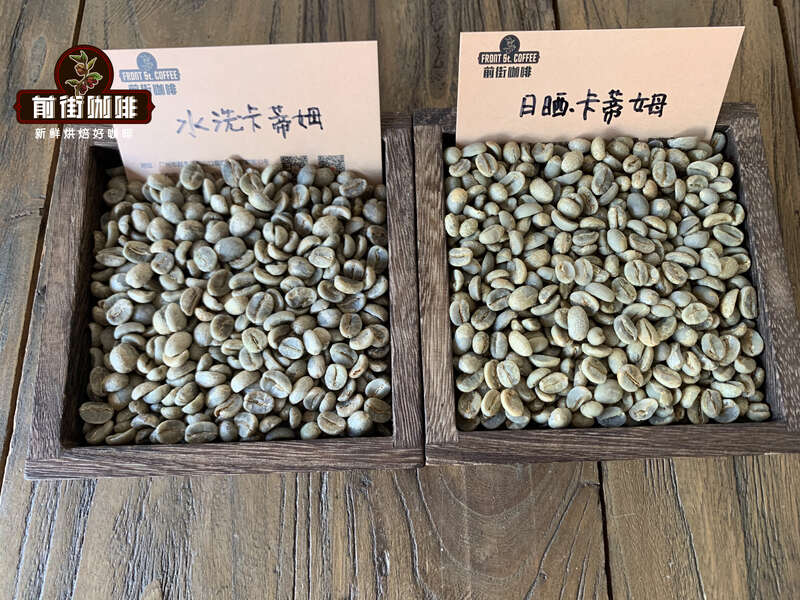
When FrontStreet Coffee visited Yunnan during the growing season, we learned firsthand what a rainy season really means—sunny for a few minutes, then raining for half an hour. Because of the perennial rains and unstable climate, most Yunnan beans are washed. Naturals exist too, however: FrontStreet Coffee's Catimor line includes both washed Yunnan small-bean coffee and natural Catimor, and of course the natural Typica from our own manor.

FrontStreet Coffee's Brewing Parameters for Yunnan Catimor Coffee
Since Yunnan coffee's flavor leans nutty rather than brightly acidic, FrontStreet Coffee roasts it medium to preserve the herbal aroma and gentle acidity of Yunnan beans, then brews it in a V60 with a finer grind and higher water temperature. Pour the grounds into the dripper and you can already smell the herbal, nutty fragrance of the beans.
FrontStreet Coffee believes a good cup comes down to four things: water temperature, grind size, coffee-to-water ratio, and brewing technique.
1. Water Temperature
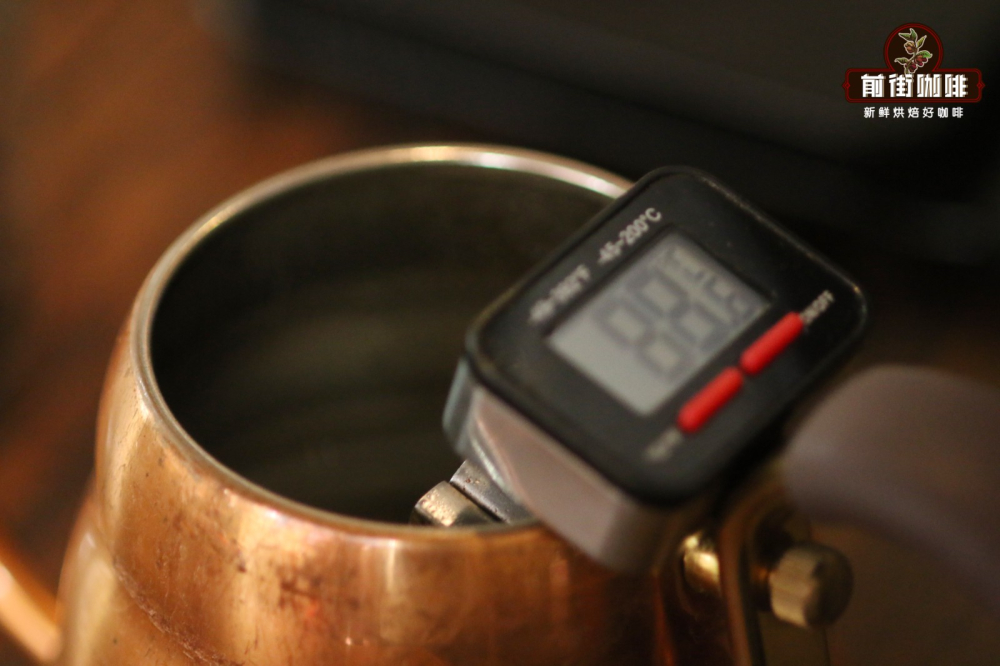
FrontStreet Coffee selects water temperature by roast level. As the roast deepens, the beans lose soluble substances, so dark roasts get lower temperatures to avoid pulling out undesirable flavors. For light to medium roasts, FrontStreet Coffee recommends 90–91°C; for medium-dark, 88°C.
2. Grind Size
Grind size also relates to roast level. It refers to the size of the coffee particles and governs contact time between coffee and water. The finer the grind, the more the water extracts in the same time—but too fine easily tips into over-extraction. The coarser the grind, the less is extracted—but too coarse leads to under-extraction.

Since everyone's grinder differs, settings will vary. FrontStreet Coffee suggests buying a #20 cupping calibration sieve with 0.85mm apertures. Take 10g of beans, grind at your usual setting, and sift—weighing what passes through (sift until no more falls through).
A pass rate of 70–75% (7–7.5g from 10g) suits this coffee best. General pour-over targets are 80% for light roasts and 75% for medium-dark. If your pass rate exceeds the target, grind coarser; if it falls short, grind finer.

3. Coffee-to-Water Ratio
Here are FrontStreet Coffee's drip parameters for flavor strength, derived from SCAA Golden Cup extraction theory:
[Bold Flavor] 1:10–1:11 (equivalent to Golden Cup standard 1:12.5–1:13.5)
[Medium Flavor] 1:12–1:13 (equivalent to Golden Cup standard 1:14.5–1:15.5)
[Light Flavor] 1:14–1:16 (equivalent to Golden Cup standard 1:16.5–1:18.5)

A coffee-to-water ratio of 1:14.5–1:15.5 most easily reaches the Golden Cup extraction rate of 18–22% and concentration of 1.15–1.35%.
FrontStreet Coffee therefore suggests the foolproof 1:15 ratio.
4. Brewing Technique
Finally, technique matters greatly. Common approaches include the three-stage pour, single-pour, and drip methods. FrontStreet Coffee recommends the three-stage pour for beginners, since it works across light, light-medium, and medium-dark roasts. Its segmented extraction clearly expresses the coffee's front, middle, and back-end flavors and better safeguards the final presentation. Here's how to do it.
Three-Stage Pour-Over Technique
(FrontStreet Coffee's three-stage method for Yunnan Catimor)
Use a V60 for a richer cup: water at 88°C, ratio 1:15, 15g of coffee, grind at 75% pass on a #20 standard sieve.

First Pour: Bloom (helps release gas)
First rinse the V60 so the filter paper seats snugly, discard the rinse water, add 15g of coffee, and bloom with 30g of water for 30 seconds. Many coffee lovers don't know why blooming is necessary. It happens because beans undergo a series of chemical reactions and physical changes during roasting; once a certain roast level is reached, they accumulate large amounts of gas—mostly carbon dioxide.
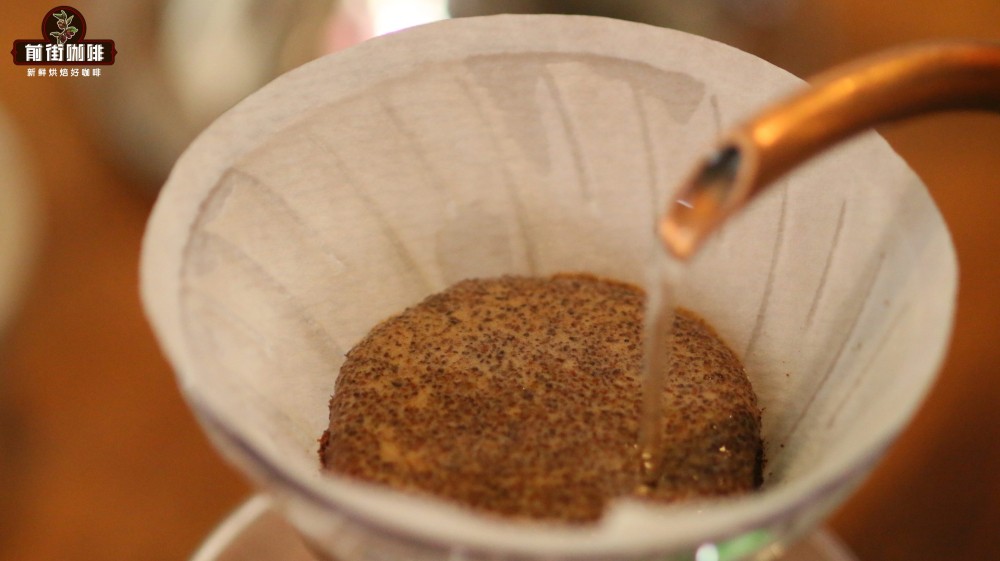
Generally, the fresher the coffee and the closer to the roast date, the more bubbles appear during the bloom, and dark roasts degas more than light roasts. FrontStreet Coffee's beans are all freshly roasted, so we generally recommend customers rest them for about three days first, letting the beans release carbon dioxide in advance—this avoids instability and under-extraction during brewing.
After the bloom vents the gas, the particles can absorb water evenly for more uniform extraction. A good bloom helps the grounds release gas quickly, fully, and evenly while letting them saturate at the same pace—the whole purpose and meaning of the pour-over bloom.
Second Pour
After the 30-second bloom, start the second pour. Use a small stream in circles from the center until you reach 125g, then stop. To concentrate the column's penetrating power, keep the circles small—about the size of a coin—then widen outward. From this point, watch the water volume: don't let it exceed the height of the coffee bed. In other words, stop adding water when the level nears the filter paper.

Third Pour
When the coffee bed drops to half the dripper's height, make the third pour with the same technique, up to 225g. Wait until dripping finishes completely before removing the dripper.
During this pour, watch how fast the water level falls. Again start from the center in circles, keeping the water below the bed height. You'll notice foam spreading across the surface. The goal of the third pour is to increase the tumbling of the particles so all the settled ones lift and release their solubles.

Once you stop pouring, the tumbling particles begin to settle; the falling water level must then drive enough flow to keep particles rubbing against each other. When grounds sink and compact, they clog the bed—so pay special attention to your pouring rhythm. Too many interruptions let the grounds soak continuously, which pulls astringency and undesirable flavors into the tail end of extraction.
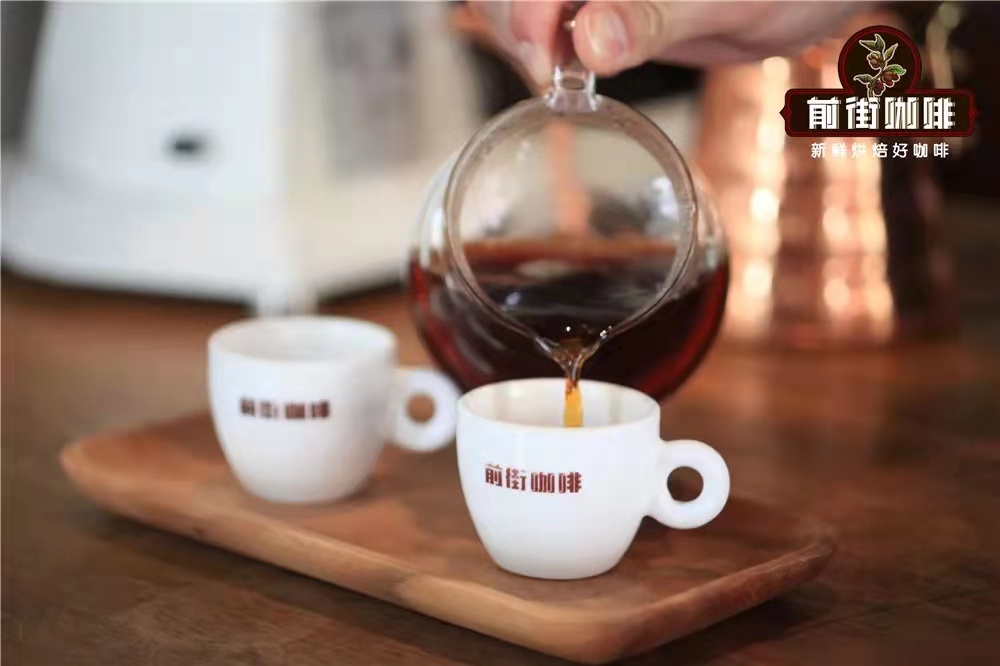
Timing from the first pour, total extraction is 2'00". Give the finished coffee a gentle swirl in the server, then pour into cups and taste.
[FrontStreet Coffee Washed Yunnan Small-Bean Coffee Flavor]: Herbal, nutty aroma, chocolate, caramel, tea-like sensation.
[FrontStreet Coffee Natural Yunnan Catimor Coffee Flavor]: Nuts, chocolate, spices, caramel, plum.
FrontStreet Coffee Brewing Recommendations
FrontStreet Coffee has always believed freshness is crucial to a good brew. All beans we ship are within 5 days of roasting, because we know deeply how much freshness shapes flavor. Our roasting philosophy is "Freshly Roasted Good Coffee," ensuring every order arrives fresh. The resting period runs about 4–7 days, so beans reach customers right at peak flavor.

Some customers ask us to grind the beans in advance, which is fine—but FrontStreet Coffee must remind you: once beans are ground, resting is unnecessary, because during shipping the pressure of carbon dioxide in the sealed bag helps mellow the flavor, so you can brew immediately on arrival. Pre-ground coffee should be brewed promptly, though: it oxidizes quickly once exposed to air, meaning the flavor dissipates faster and never quite returns. FrontStreet Coffee therefore recommends buying whole beans and grinding fresh before each brew to enjoy the coffee at its full flavor.
FrontStreet Coffee Recommendation
Yunnan coffee is better known as "Yunnan small bean"—small bean being simply another name for Arabica, whose fruit is the smallest of the three original coffee species. The story traces back to 1904, when the French missionary Tian Deneng carried Typica seeds from Vietnam into Yunnan and planted the province's first coffee tree in Zhukula village, Binchuan County. Thanks to Yunnan's superb geography and climate, small-bean coffee took off, and the region sits right on the golden growing band around the Tropic of Cancer, with fertile slopes, abundant sun, plentiful rain, and wide day-night temperature swings.
If you're just starting with Yunnan coffee, choose FrontStreet Coffee's Baoshan small bean. Baoshan's coffee history began in the mid-1950s with the patriotic overseas Chinese Liang Jinshan, and the warm, frost-free climate—especially the unique dry-hot valley around Lujiangba, with modest rainfall and big day-night swings—gives the coffee its distinctive sweet finish. Washed and medium-roasted, it shows gentle nut and chocolate aromas, a touch of plum acidity, and a friendly price that makes it the perfect first taste of Yunnan's terroir.
For a clearer window into the origin, step up to FrontStreet Coffee's 2013 Natural Typica. FrontStreet Coffee planted its estate in 2013 precisely to rediscover Yunnan's original regional flavor, choosing Typica—among the oldest and purest Arabica varieties, long recognized as a true specialty cultivar. Only fully ripe red cherries are natural-processed and medium-roasted for a balanced cup: dark berry tones with caramel sweetness, chocolate, a hint of dried apricot, and a black-tea finish. And if you'd like Yunnan in espresso form, the FrontStreet Coffee Black Cocoa Blend pairs Yunnan small bean with Brazilian Cerrado—the Brazil contributes mixed-nut aroma and balance, the Yunnan chocolate and citrus—producing an americano with balanced sweet, sour, and bitter notes of nuts and brown sugar, and a latte with almond-and-cream smoothness. It's a favorite among baristas and an ideal espresso for beginners.
Important Notice :
FrontStreet Coffee is a long-established specialty coffee roaster in Guangzhou China, selling freshly roasted beans from its own farm in Yunnan as well as dozens of carefully selected single-origin beans from around the world for both pour-over and espresso. The products deliver consistently excellent quality and great value, with shipping within 24 hours. Guangzhou's FrontStreet Coffee shop is recommended by many coffee lovers, and the beans are now available online at the Tmall 。
FrontStreet Coffee has moved to a new address:
FrontStreet Coffee Address: 315,Donghua East Road,GuangZhou
Tel:020 38364473
 Scan and follow the En Gafei WeChat official account. Please indicate that the reprint comes from "En Gafei".