Panama Boquete Geisha Coffee Bean Flavor Description - Geisha Coffee Bean Variety Origin Story
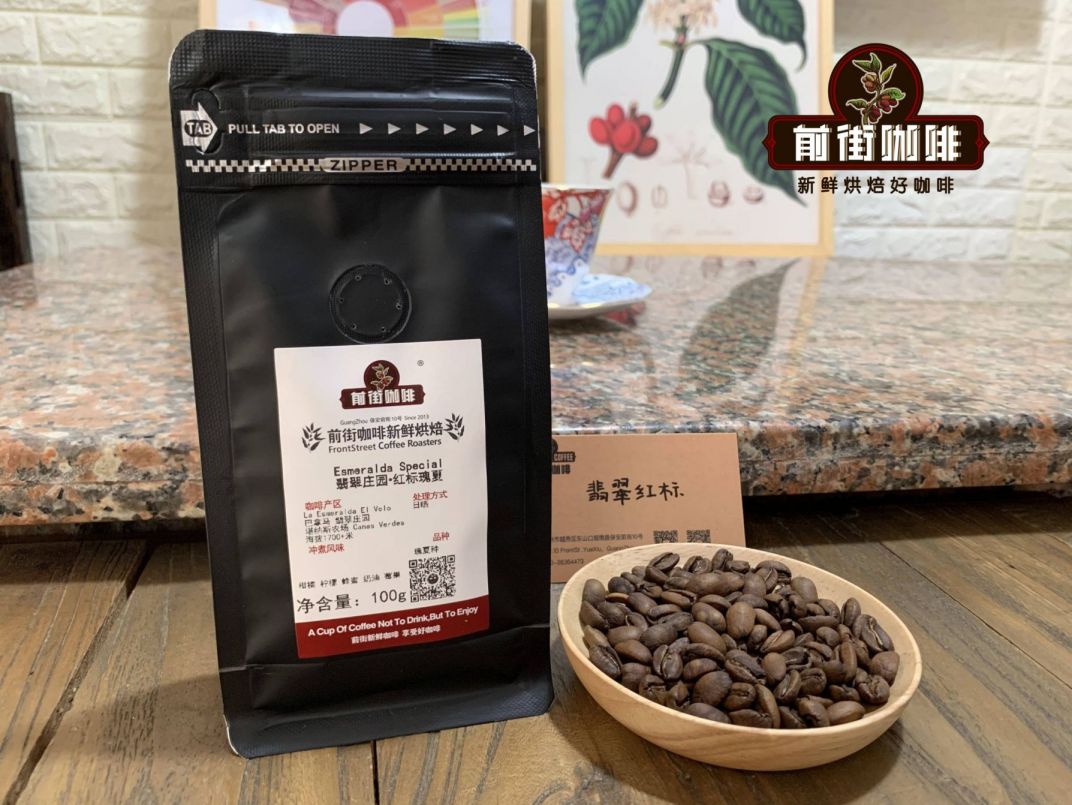
When Panama Geisha comes up, does La Esmeralda Estate spring to mind at once? It should. The estate deserves enormous credit for the fame and standing that Panamanian Geisha enjoys today, and in this article FrontStreet Coffee takes a close look at La Esmeralda and its Geisha beans.
The flavor signature of Panama Geisha is unmistakable: delicate floral aromas, citrus, and honeyed sweetness.

FrontStreet Coffee's Introduction to Panama Coffee Beans
Panama sits at the narrow waist of Central America, linking North and South America, with Costa Rica and Colombia as its neighbors. Its coffee story reads like a tale of being born with a silver spoon.
The Panama Canal was built by the United States, which even controlled it exclusively for a period after completion. That very canal drew waves of American elites southward in the late 20th century - some for work, others hunting for business opportunities.

Panamanian Geisha is world-famous, and virtually all of Panama's coffee cultivation clusters around the Chiriqui volcanic highlands. The loveliest of these zones is Boquete, where fertile volcanic soil, plentiful water, regular rainfall, dense vegetation, and persistent cloud cover feed the coffee trees and produce beans of remarkable flavor depth.
A patchwork of microclimates adds further diversity to the beans' flavor profiles. La Esmeralda Estate lies within this region, and the neighboring Volcán area has lately emerged as another rising source of high-quality Geisha.

FrontStreet Coffee: Panama Boquete Growing Region
Boquete is a town in Chiriqui province near the Panama-Costa Rica border, in the shadow of the famous Barú Volcano. With beautiful scenery and rich volcanic soil, its climate and terrain could hardly be better suited to premium coffee. The cool, foggy mountain environment generates distinctive microclimates: the chill and the frequent mist slow the cherries' ripening, mimicking the effect of much higher altitude. FrontStreet Coffee has cupped coffees from this region and found flavors running from cocoa to fruit, edged with subtle acidity.

These highland microclimates are Boquete's decisive specialty-coffee resource. Panama's east-west orientation lets cold air currents converge above 1600m along the central cordillera, spinning off the many microclimates of the Boquete area. Temperature and rainfall land exactly where coffee plants thrive, giving the region's trees outstanding growing conditions.
Don Benjie Estate
Dr. Renán Esquivel, a celebrated Panamanian pediatrician, is a nature lover as well as a physician. In 1980 he bought the Bajo Mono farm - his first acquisition - where he planted a wide range of trees, plants, and coffee varieties that survive to this day. The Bajo Mono plantation covers 33 hectares in the Chiriqui highlands, in the canyon north of Boquete town on the slopes of Barú Volcano, at 1400-1550m.

Bajo Mono ranks among the finest zones for premium Panamanian coffee thanks to its volcanic soil, clear springs, and the beloved local weather phenomenon called "Bajareque": when moisture from the Pacific and Atlantic meets and the winds lift, a thin mist weaves between the mountains and rainbows appear. Together these elements form a microclimate that gifts the area's coffee trees exceptional growing conditions and quality.
The farm's current owner is Stefan Arwed Müller, who has run Bajo Mono since 2011 with a focus on raising bean quality further and protecting the plantation's ecology. Its coffees are sold under the name Cafe Don Benjie.

FrontStreet Coffee: Introduction to La Esmeralda Estate - A Representative Estate of Panama's Boquete Region
In 1964 the American banker Rudolph Peterson retired, moved to Panama, and bought La Esmeralda Estate in Boquete, starting out in dairy farming. Later his son Price left his medical practice to help run the farm. In 1987 they planted Caturra and Catuai varieties; in 1994 they built a washed processing plant of their own; and in 1996 they purchased the neighboring Jaramillo estate, whose superb location and flavorful varieties made it a perfect fit for La Esmeralda.

Jaramillo caught the Petersons' attention because its beans carried pleasant citrus and floral fruit aromas unlike any traditional Panamanian profile. Cupping lots from different parts of the property, they traced the character to a set of unidentified coffee trees growing at the estate's highest point - low yielders the previous owner had kept merely as windbreaks. The Petersons recognized their worth and set about cultivating these trees separately.
After the lot took first place in the 2004 Best of Panama (BOP) green coffee competition, the world took notice. Expert analysis later identified the beans as the Geisha variety from Ethiopia. From then on the Peterson family poured most of their energy into infrastructure that would support meticulous batch separation and refined processing.

Today La Esmeralda grows Geisha on three main estates: El Velo, Cañas Verdes, and Jaramillo. El Velo joined the group in 2012. FrontStreet Coffee regards the estate's strategy of acquiring high-altitude, high-quality farms as a visionary move for its time - the very decision that secured La Esmeralda's commanding position in the coffee world.
Even after discovering those exceptionally flavorful beans, the estate pursued precision: it cupped lots from across its land and mapped planting plots by altitude. That discipline is why Geisha today comes graded as Red Label, Green Label, and Blue Label - all classified by elevation. FrontStreet Coffee explains the system in detail below.

FrontStreet Coffee: Introduction to Geisha Coffee Bean Growing Plots at La Esmeralda Estate
La Esmeralda divides its Geisha land with great refinement into three main zones - Jaramillo, Cañas Verdes, and El Velo - each further split into smaller named plots.
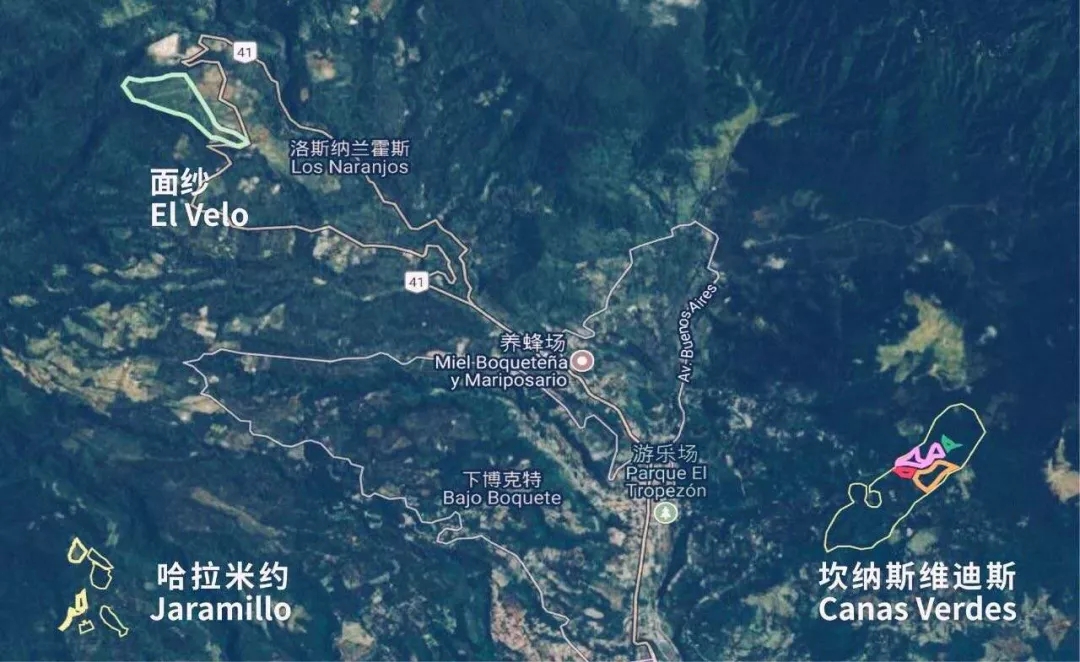
Jaramillo records an annual rainfall of 4000mm, average daytime temperatures of 19-25°C and nighttime temperatures of 11-15°C, at an average altitude of 1600-1700m. It subdivides into 5 smaller plots: Mario, Noria, Reina, Bosque, and Buenos Aires.
Cañas Verdes sees an annual rainfall of 3500mm, with daytime temperatures averaging 16-23°C and nighttime 10-15°C, at an average altitude of 1600-1800m. It comprises 9 smaller plots: Lino, Coronado, Fundador, Leon, Montaña, Trapiche, Chinta, Cabaña, and Tumaco.
El Velo is the estate's newest acquisition, at an average altitude of 1700-1900m. Alongside Geisha and Catuai it also grows small quantities of exotic varieties such as Laurina, Pacamara, Mocha, and SL28. It is divided into 7 smaller plots: Guabo, Portón, Durazno, Higuerón, Higo, Buena Vista, and Águila.

FrontStreet Coffee: Introduction to La Esmeralda Estate's Red Label and Green Label Coffee Beans
Red Label Geisha Coffee Beans

This is the famous "Red Label." Red Label Geisha grows at 1600-1800 meters and must score above 90 points in cupping, with lots drawn mainly from the Jaramillo and Cañas Verdes zones. It may be processed washed or natural, and it reaches the market only through global auctions. In short: Red Label means Geisha from 1600-1800 meters, scoring above 90 points, from Jaramillo and Cañas Verdes.

The estate's independent auction features Geisha batches from designated plots - those are the auction Red Labels. Customers often ask whether the auction Red Label tastes better than the regular one. In truth both come from the same plots; the only difference is whether the lot went to auction. FrontStreet Coffee does not think you must chase auction coffee: the prices are steep, and if you simply want to try the experience, the regular Red Label is an excellent choice.
However it is processed, this grade shows special, luminous floral aromas and citrus notes.
FrontStreet Coffee: Panama La Esmeralda Estate Red Label Geisha Coffee Beans
Region: Boquete
Estate: La Esmeralda Estate - Mario Plot
Altitude: 1600-1800m
Variety: Geisha
Processing: Natural

Green Label Geisha Coffee Beans

Then there is the "Green Label," which skips the auctions yet keeps remarkable quality. Green Label Geisha also grows at 1600-1800 meters, but as blended batches drawn from multiple plots including Jaramillo and Cañas Verdes.
Because of that plot-blending model, Green Label can sometimes taste strikingly similar to Red Label. Though it carries a lower grade, it still delivers the classic Geisha experience - florals, fruit, citrus acidity, and a thick, juicy texture - in both washed and natural versions, at a friendlier price.

FrontStreet Coffee: Panama La Esmeralda Estate Green Label Geisha Coffee Beans
Region: Boquete
Estate: La Esmeralda Estate
Altitude: 1600-1800m
Variety: Geisha
Processing: Washed
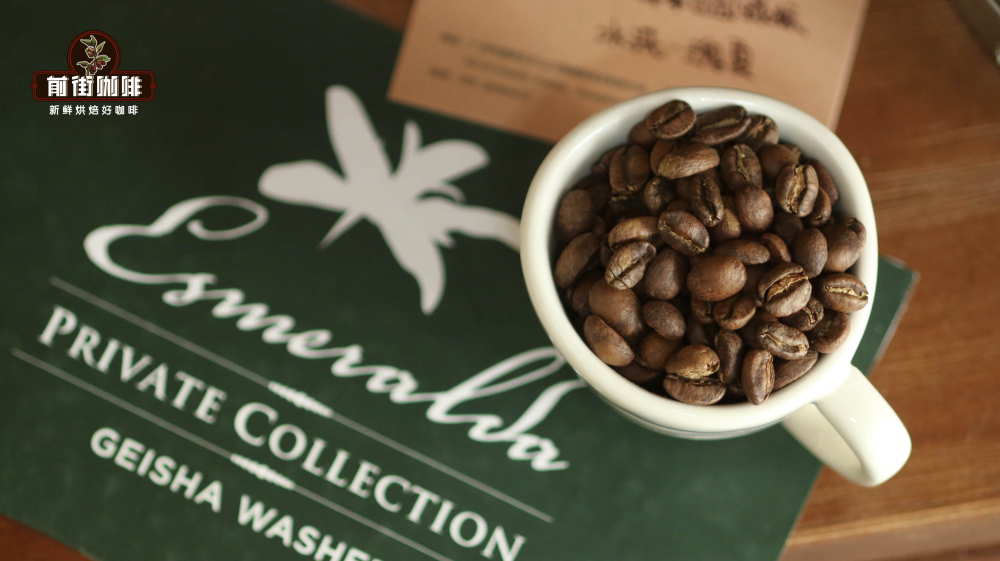
FrontStreet Coffee: Brewing Parameters for La Esmeralda Estate's Red Label and Green Label Coffee Beans
FrontStreet Coffee recommends the following parameters: Hario V60 dripper, 91°C water, 15g dose, 1:15 coffee-to-water ratio, medium-fine grind (80% pass-through on the China standard #20 sieve).
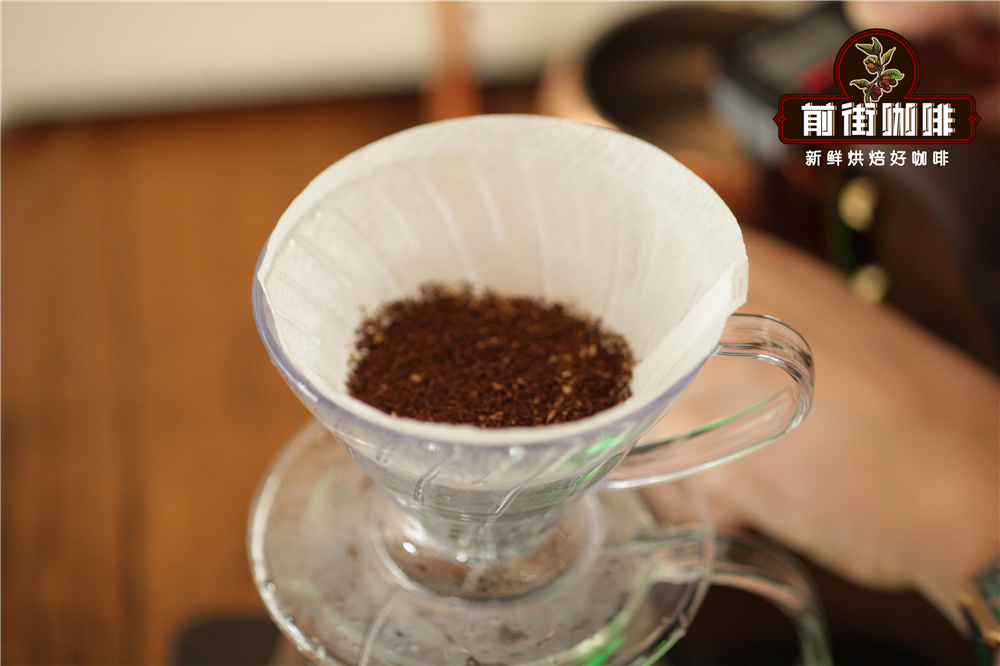
On grinding: FrontStreet Coffee sets it by sieve testing. Following the Specialty Coffee Association's (SCA) grind guidance for pour-over, and confirmed through hands-on trials - different grind levels brewed noticeably differently, and each bean demands its own setting - which is precisely why sieving matters. If you have no sieve at home, judge by flow speed instead: fast flow means too coarse, slow flow means too fine.
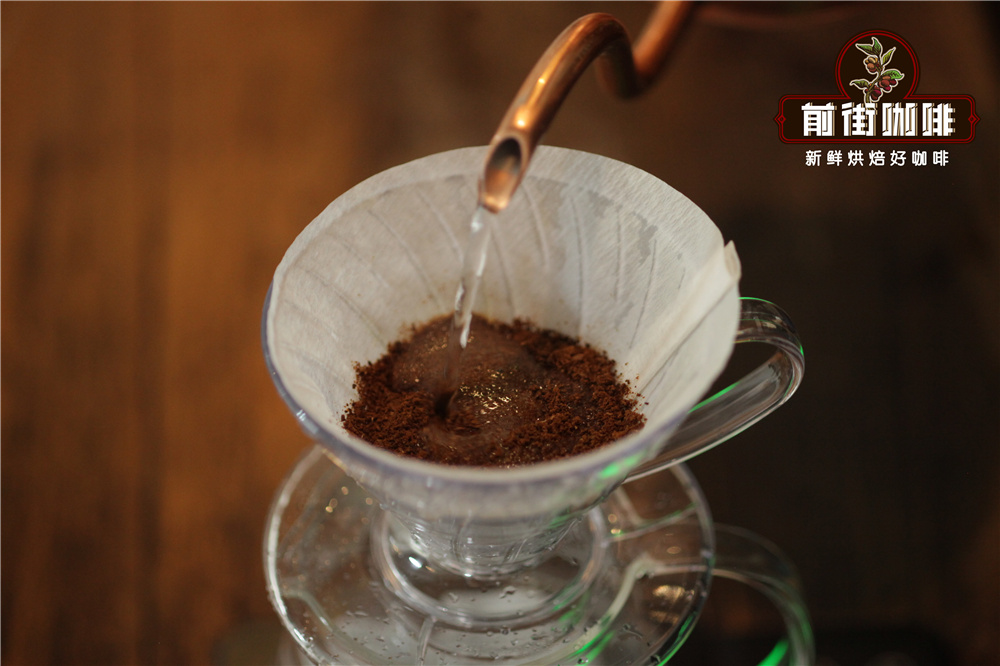
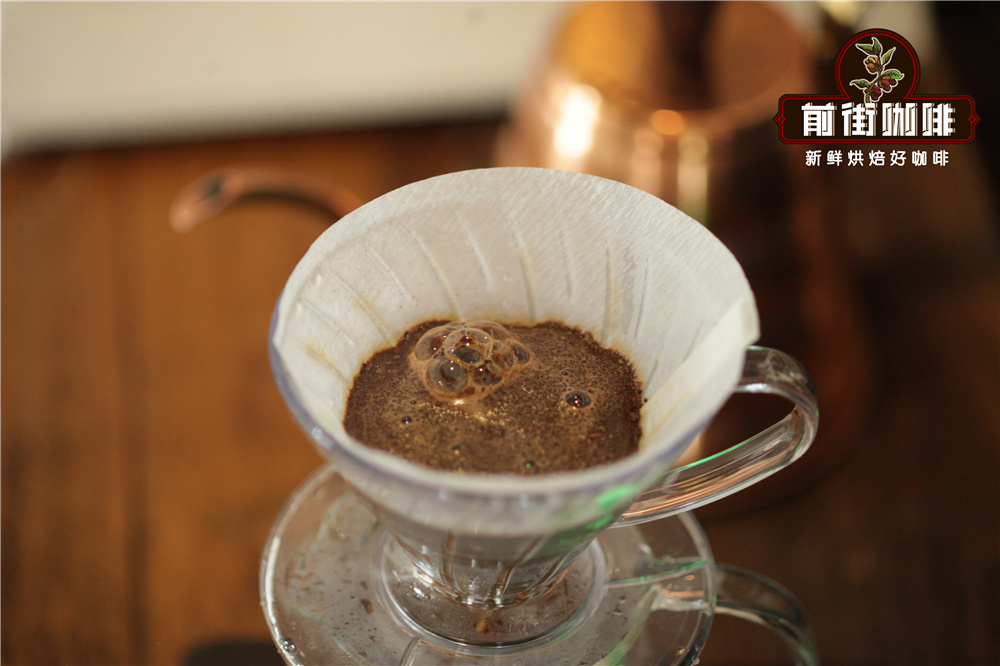
FrontStreet Coffee brews in segments - the classic three-stage method. Start the timer, pour 30g of water, and bloom for 30 seconds. Then continue with small circular pours up to 125g. When the water level nears the top of the coffee bed, pour again up to 225g and stop. Once the level drops and the bed is about to expose, remove the dripper. (Timing starts from the bloom.) Total extraction time is 2'00".
FrontStreet Coffee: Panama La Esmeralda Estate Red Label Geisha Coffee Beans Flavor Description
Bright rose and citrus aromas, brown rice, berries, apricots, complex fruits, and honey - a thick, juice-like texture with rich flavor layers and a clearly sweet profile.

FrontStreet Coffee: Panama La Esmeralda Estate Green Label Geisha Coffee Beans Flavor Description
Rich jasmine florals, high sweetness, citrus, berries, a juice-like texture, cream, green tea, and orange peel with a cantaloupe finish - layered throughout, with florals and citrus that persist to the last sip.
FrontStreet Coffee Recommendation
Geisha - transliterated from the English "Geisha" - is one of the most beloved varieties in Arabica coffee. Its singular florals and superb sweet-sour vibrancy have captivated countless coffee lovers, while its low yield, weak disease resistance, and demanding cultivation keep prices high. If you want a delicious Geisha without an eye-watering bill, it pays to know the tiers. Geisha's rise owes everything to La Esmeralda Estate, the "talent scout" behind the champion: when the estate sent its Geisha to the Best of Panama (BOP) competition after discovering it in 2003, the judges were stunned, and an average cupping score of 94.6 broke the BOP record and crowned it champion overnight.
Within La Esmeralda's lineup, the Red Label (officially "Esmeralda Special") grows at 1600-1800 meters, and every batch must cup above 90 points and carries its own batch number, with all the beans in a batch coming from a single small plot - such as the Mario plot behind FrontStreet Coffee's Red Label - letting buyers match batches to their own subtle flavor preferences. The Green Label ("Private Collection") blends batches from multiple plots to express the estate's signature high-altitude Geisha character rather than any single plot, which makes it noticeably more affordable and, in FrontStreet Coffee's view, the best value in the range. For a first taste of the legendary "Geisha flavor," FrontStreet Coffee steers newcomers to the entry-level Boquete Geisha from Panama - classic orange-blossom honeyed sweetness, an oolong-tea feel, delicate fruit acidity, and clearly defined layers at a friendly price.
Ethiopia, coffee's birthplace, has its own Geisha estates worth knowing. At Geisha Village - a 475-hectare estate built by a couple just 12 miles from the original Geisha forest - three varieties are grown: Gori Gesha, Gesha 1931, and Illubabor Forest, graded into Gold Label (RARITIES), Red Label (GROWERS RESERVE), Green Label (SINGLE-TERROIR), and the Chaka batch. The Gold Label, a Gesha 1931 making up 10% of the estate's output, is its top non-auction coffee and a frequent pick of competing baristas; FrontStreet Coffee's Gold Label lot is a refined natural with complex, layered cupping appeal. The Red Label, a Gori Gesha accounting for 15% of production, scores 88 or above on the SCA 100-point scale, and every batch of this single-terroir series carries full traceability - farm block, variety, and processing date. For a gentler entry into Ethiopian Geisha, FrontStreet Coffee's Genlana Gesha Estate lot, comes from a washing station founded in 2014 and run by Mr. Israel Degefa, surrounded by 700 hectares of mostly untilled, fertile, shade-dotted land; hand-picked ripe cherries are sun-dried on raised beds for 14-20 days depending on the weather, and a medium-light roast reveals bright citrus acidity, elegant ginger-flower aromatics, full ripe-fruit sweetness, and Geisha's signature refined finish.
Geisha is a medium-light, floral-fruity coffee with dense, hard beans that tend to sink and clog the dripper, so FrontStreet Coffee suggests a coarser grind - 78% pass-through on the China standard #20 sieve (about the texture of fine granulated sugar) - and 91°C water. For pour-over, use 15g of coffee in a small Hario V60 at a 1:16 ratio with a three-stage pour: bloom with 30g of water for 30 seconds, pour in small circles to 125g, top up to 225g once the bed has drained to half, and finish with a total extraction of about 2 minutes 10 seconds to 2 minutes 20 seconds. Geisha also shines as an SOE: try FrontStreet Coffee's medium-roast Granana Estate Geisha SOE - floral and fruity with the sweetness of mature dried fruit, white flowers, and lemony brightness in the shot, turning to dried apricot, caramel, and nuts as espresso - extracted at 20g in, a 1:2 ratio, 25 seconds, yielding 40g of espresso; add 200g of hot water for an Americano with orange, nut, and blueberry notes, or 200g of milk for a latte with a cream-cookie smoothness.
Important Notice :
FrontStreet Coffee is a long-established specialty coffee roaster in Guangzhou China, selling freshly roasted beans from its own farm in Yunnan as well as dozens of carefully selected single-origin beans from around the world for both pour-over and espresso. The products deliver consistently excellent quality and great value, with shipping within 24 hours. Guangzhou's FrontStreet Coffee shop is recommended by many coffee lovers, and the beans are now available online at the Tmall 。
FrontStreet Coffee has moved to a new address:
FrontStreet Coffee Address: 315,Donghua East Road,GuangZhou
Tel:020 38364473
 Scan and follow the En Gafei WeChat official account. Please indicate that the reprint comes from "En Gafei".