Differences Between Indonesian Mandheling and Arabica Coffee - PWN Golden Mandheling Coffee Bean Flavor Characteristics

If you're new to coffee, the jargon on a bag of beans can feel impenetrable — but one label you've almost certainly seen, on every chain-café menu, is "100% Arabica." What does that actually mean? And if you love Mandheling, where does it fit? FrontStreet Coffee thinks the clearest way to answer both questions is to start with what Arabica coffee is in the first place.
The genus Coffea contains roughly 100 species, but only two matter at scale: Arabica and Robusta. The most consequential difference between them — the one that shapes both bean physiology and flavor — is the altitude at which they grow. Generally speaking, the higher the altitude, the better the flavor.

Arabica is the most popular coffee on the planet: more than 60% of the world's beans are Arabica.
Fine Arabica grows high — roughly 550-1,920 meters. At altitude, cooler and more variable climates slow the cherries' growth, giving them and the beans inside more time to develop complexity. Arabica's ideal temperature band is 19-21°C, with a maximum annual average of 24°C, which makes subtropical regions perfect for it. Fertile volcanic soil suits it just as well: volcanic soils carry a combination of physical, chemical, and mineral properties that outperform other soil types agriculturally, and that fertility is crucial to the plants' development. Volcanic soil's low density and stable but porous structure hold moisture while staying relatively drought-resistant, and its high permeability lets roots grow deep and drain freely, so they never sit wet enough to rot.
The trade-off is fragility: Arabica is highly sensitive to its environment. Robusta, by contrast, is hardy and immune to many of the diseases that plague Arabica. Its harsher growing conditions yield a stronger, harsher flavor, which is why Robusta is widely used in espresso blends and instant coffee. FrontStreet Coffee's commercial blend does include Robusta — deliberately, to boost espresso crema and add depth to the flavor profile.
Robusta is often described as bitter, rubbery, and grainy, and it's not only the growing conditions: Robusta beans carry roughly twice the caffeine of Arabica, and more caffeine and chlorogenic acid produce harsher flavors in the brew and affect texture too. Still, not all Robusta deserves the reputation — FrontStreet Coffee maintains that well-grown fine Robusta doesn't show those negative flavors at all.

Is Mandheling Arabica or Robusta?
So which is it? Anyone who knows FrontStreet Coffee's Mandheling knows its singular herbal character — some customers even call it earthy. Yet its heavy body, silky texture, and rich caramel finish have won over plenty of connoisseurs.
To answer the question properly, start with where Mandheling came from.
Mandheling, from Sumatra, Indonesia, is one of the world's most distinctive coffees. Where most coffees are named for a region or country, Mandheling is named after the Mandheling people, who traditionally grow and process the beans. Legend has it that during World War II, a Japanese soldier stationed in Sumatra asked a local where his coffee came from; the man misunderstood and thought he was being asked about his ethnicity, so he answered "Mandheling." The soldier later returned home but couldn't forget the coffee, and commissioned a local trader to buy it for him — and from that day on, Mandheling coffee had its name. That trader was none other than the famous green-coffee house PWN (PT. Pawani).

FrontStreet Coffee's Golden Mandheling
FrontStreet Coffee's PWN Golden Mandheling factory certificate and green bean bags
FrontStreet Coffee's Golden Mandheling is imported directly from PWN. Plenty of "Golden Mandheling" circulates on the market, and much of it is counterfeit. Two simple checks separate real from fake: green bean bags printed with the PWN logo, and the PWN Golden Mandheling factory certificate. As the story above suggests, PWN is Indonesia's most famous green-coffee house and naturally acquires the best Mandheling — and because it has registered "Golden Mandheling" as a trademark, only coffee produced by PWN is the genuine article.

Mandheling is grown mainly in North Sumatra — Lintong, Sidikalang, Tanah Karo, and Simalungun among them. For the 2020 harvest, FrontStreet Coffee's Golden Mandheling shifted from the Lake Toba area north to the Gayo Mountain region. Why did PWN make the move? The Gayo hillside coffees grow at 1,100-1,600 meters and are superb, but years of instability in the region once made exports difficult; with conditions settled, exports now run smoothly, coffee cultivation in Aceh has matured, and quality is more assured than ever.

Mandheling Varieties
The 2020 harvest also changed the variety: from Typica to Ateng — the Indonesian name for Catimor. With that, the answer is settled: Mandheling is Arabica. Its varieties aren't limited to Catimor and Typica, either; Caturra and the Timor hybrid appear as well. FrontStreet Coffee carries five Mandheling coffees: Golden Mandheling, Aged Mandheling, Lintong Mandheling, Tiger Mandheling, and the Sumatra Wahana Estate Natural Mandheling.
Brewing Guide for FrontStreet Coffee's Golden Mandheling
How do you get the best cup from FrontStreet Coffee's Golden Mandheling? Here is our recipe:
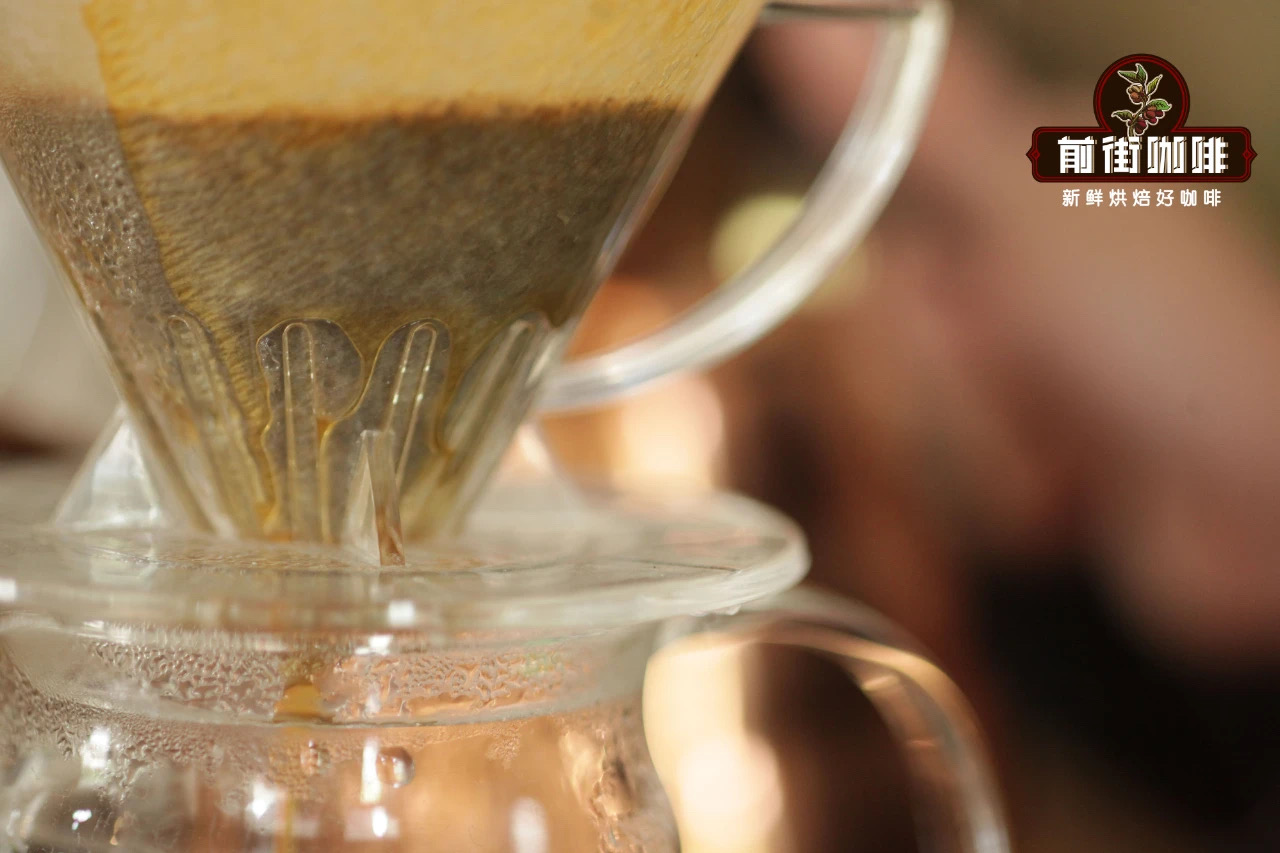
Brewing Parameters:
- Dripper: KONO
- Water Temperature: 88°C
- Grind Size: Medium-coarse (75% pass-through on a #20 standard sieve)
- Coffee-to-Water Ratio: 1:15
- Roast Level: Medium-dark roast
- Brewing Method: Multi-stage extraction
Brewing Technique:
Pour 30g of water to bloom for 30 seconds. Then pour to 120g and pause. Once the level in the coffee bed drops to about half, continue pouring slowly up to 225g. When all the water has drawn through, remove the dripper. Total extraction should run around 2 minutes.

FrontStreet Coffee Recommendation
Among all Mandhelings, Golden Mandheling is the perfectionist's pick, and FrontStreet Coffee's lot shows why. PWN selects only beans above an 18-size screen and demands fewer than 3 defects in every 300g green sample to meet the top G1 grade — then runs three rounds of hand sorting on top to strip out the last flawed beans, maximizing both cleanliness and sweetness. It also explains why genuine PWN Golden Mandheling is limited: much of the production goes to Japan and the US markets. The hallmark Mandheling character comes from Sumatra's wet-hulled processing — a method born of the island's relentless rain, in which parchment is stripped from the beans while they're still half-dry to speed up drying — producing that heavy, earthy, herbal cup coffee lovers either can't resist or can't forget.
Brew it as a pour-over to see Golden Mandheling at its best: 15g of coffee at a 1:15 ratio, water just below 90°C, a coarse-sugar grind, and three pours — a 30g bloom to degas the bed, a second pour to lift the bed and pull out the golden crema, and a gentle center pour at the end to raise sweetness. The cup lands with a thick, velvety body, caramel sweetness, and chocolate and nut flavors, with almost no acidity — ideal for anyone who dislikes sour coffee. If you'd rather run Mandheling through an espresso machine, FrontStreet Coffee's Classic Blend, built on Brazil's creamy nuttiness plus medium-dark Mandheling (with a touch of Robusta for crema), delivers butter, roasted chestnut, and caramel with sandalwood-herbal-spice complexity — effortless for both lattes and layered dirty drinks.
Important Notice :
FrontStreet Coffee is a long-established specialty coffee roaster in Guangzhou China, selling freshly roasted beans from its own farm in Yunnan as well as dozens of carefully selected single-origin beans from around the world for both pour-over and espresso. The products deliver consistently excellent quality and great value, with shipping within 24 hours. Guangzhou's FrontStreet Coffee shop is recommended by many coffee lovers, and the beans are now available online at the Tmall 。
FrontStreet Coffee has moved to a new address:
FrontStreet Coffee Address: 315,Donghua East Road,GuangZhou
Tel:020 38364473
 Scan and follow the En Gafei WeChat official account. Please indicate that the reprint comes from "En Gafei".