Can Arabica Coffee Beans Be Used for Pour-Over? Price, Characteristics, Origin, and Processing Methods
FrontStreet Coffee: Arabica Coffee Beans for Pour-Over Brewing - Price, Characteristics, Origin, and Processing Methods
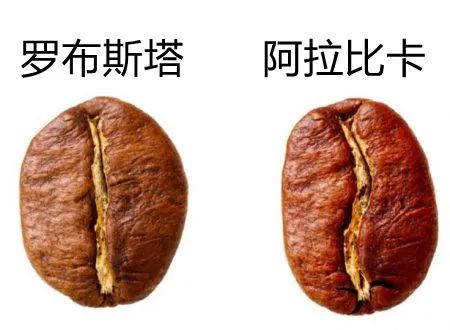
Nearly every cup of coffee we drink day to day comes from the Arabica species, yet this fact rarely gets pointed out. It usually only comes up when someone wants to draw a contrast with the other major commercial species, Robusta. In this article, FrontStreet Coffee takes a closer look at what makes Arabica coffee special.
Arabica Coffee: The Small Bean Variety
Arabica (scientific name: Coffea arabica) is also known as small-grain coffee, and its original home is Ethiopia. At first, Arabica coffee was valued mainly as a medicine; only later did people develop the habit of roasting the beans and brewing them. In the 16th century, Arab traders carried it around the world through trade, and over time it grew into the popular beverage we know today. Many of the specialty coffees we're most familiar with are Arabica varieties — Jamaican Blue Mountain, Panamanian Geisha, and Ethiopian Yirgacheffe among them.

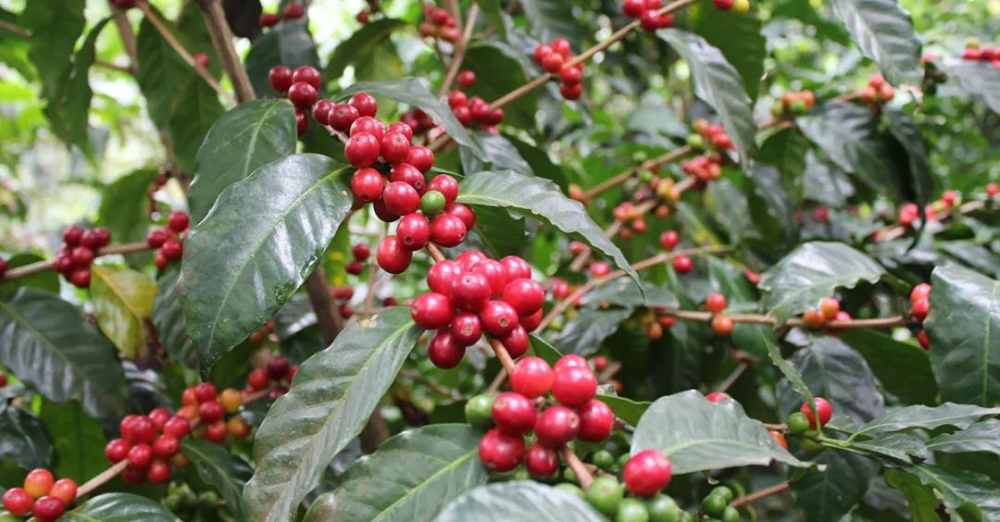
Arabica is a fairly large shrub that thrives in mountainous terrain at altitudes of 600–2,200 meters (Ethiopia even has plots as high as 2,350 meters that still produce excellent quality), with ideal temperatures of 15°–24°C and annual rainfall of 1,200–2,200 millimeters. The leaves are oval and dark green, and the fruit is oval too, usually holding two slightly flattened beans. The beans themselves are well rounded: oval from the front, with a narrow, curved S-shaped crease down the middle and a relatively flat, gently curved back. FrontStreet Coffee even keeps two Arabica trees planted beside its Dongshankou store — feel free to have a look next time you stop in for a coffee.
Arabica's chlorogenic acid content is relatively low, roughly 5.5% to 8%. Besides acting as an antioxidant, chlorogenic acid is also a key part of the plant's defense against insects, which is why Arabica is more vulnerable to pests and weather stress. It is generally grown at higher altitudes, sets less fruit, and grows more slowly. As a result, the yield per hectare is lower than Robusta's, which makes growing Arabica considerably more expensive.

The Flavor of Arabica Coffee
Much of the bitterness we perceive in coffee traces back to chlorogenic acid. Robusta carries more caffeine, amino acids, and chlorogenic acid, so it naturally lacks the delicate aromatics unique to Arabica and delivers a heavier, harsher bitterness instead. Arabica's caffeine content sits at around 0.9% to 1.2%, and its fat content is 60% higher than Robusta's. Compared with the strong-flavored Robusta bean, Arabica has less caffeine and roughly twice the sugar, which is why Arabica coffee tastes smooth and sweet, with layered acidity and aroma — and why it has become the default choice for most coffee drinkers.

As specialty coffee culture keeps spreading, people hold ever-higher standards for flavor, texture, and overall quality. Only high-grade Arabica beans really meet those expectations. Most of FrontStreet Coffee's pour-over single origins are Arabica varieties, and that tells you something: when it comes to clean, pure flavor, drinkers consistently prefer Arabica over Robusta.
What Are the Common Arabica Varieties?
As a broad category, Arabica splits into nearly 3,000 varieties, almost all of them descended from Ethiopia's two oldest native landraces, Typica and Bourbon, which mutated after being planted out in South America and Asia. Coffee being an agricultural product, its flavor is always bound up with variety, climate, altitude, soil, and farm management — it is a natural, honest expression of the variety and its terroir. Below, FrontStreet Coffee has picked out a few representative varieties to help you get to know Arabica better.

Typica
Typica is one of the oldest native varieties from Ethiopia, identified sometime around the 15th to 16th century. The trees grow tall, the young top leaves are bronze-colored, and the beans are relatively large and elongated, with pointed tips that curve up slightly — a bit egg-shaped. Typica coffee typically shows citrus acidity with a sweet finish, and many drinkers praise it as elegant and clean. Unfortunately, low yields and poor resistance to leaf rust have led farmers to replace it with hardier varieties over time.
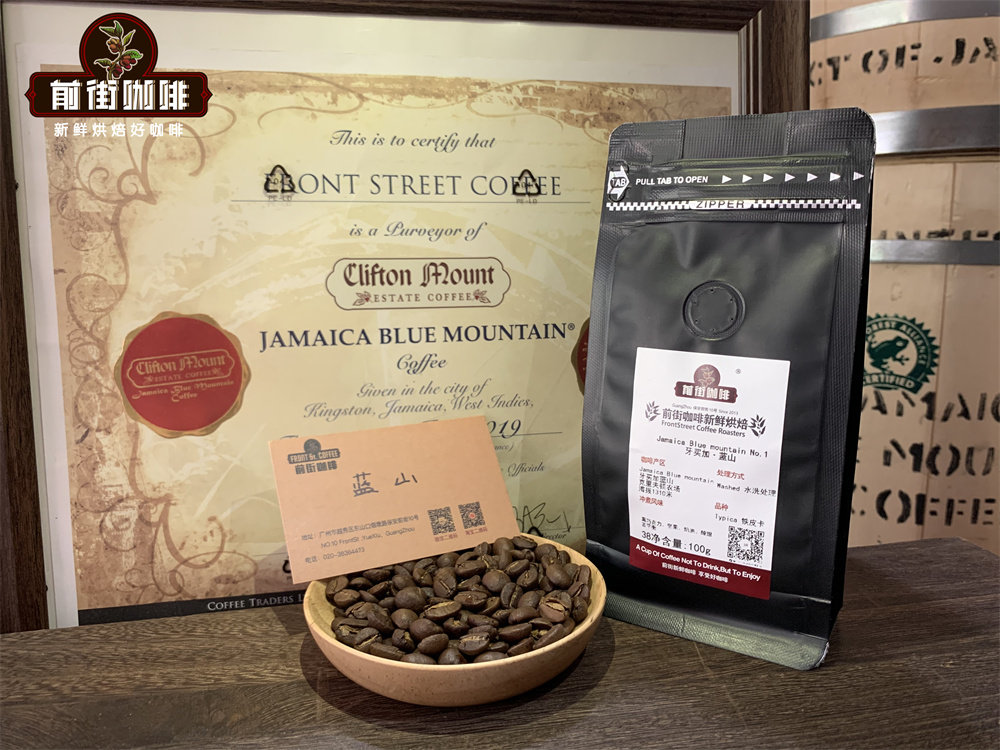
Typica was brought to Jamaica by Sir Nicholas Lawes in the 18th century and soon spread into the Blue Mountains, where it has been grown for more than two hundred years. Blue Mountain's Typica has adapted to the island's tropical rainforest climate and developed noticeably stronger disease resistance — particularly against coffee berry disease. FrontStreet Coffee believes the delicate, clean cup of Blue Mountain is inseparable from Jamaica's careful stewardship of Typica, which let the variety settle into the local terroir; the outstanding soils and unique microclimate of the Blue Mountains certainly help too. FrontStreet Coffee's authentic Blue Mountain No. 1 is roasted medium-dark to bring out chocolate and nut aromas while keeping a soft acidity and sweetness, for an overall balanced cup.
Geisha
Anyone who drinks pour-over regularly has heard of Panamanian Geisha, which has become one of the defining icons of modern specialty coffee thanks to its dazzling aroma. The Geisha variety traces back to the Typica lineage and likewise originated in Ethiopia, coffee's birthplace.

Geisha is fussy about where it grows: it demands high altitude, fertile soil, and cloud or shade cover, and it cannot tolerate direct, harsh sunlight. The owner of Hacienda La Esmeralda has noted that the farm needs plenty of shade trees to shelter the delicate Geisha, and that traditional pruning must be used in the early planting years or the plants easily die. Geisha grown at higher altitudes takes longer to mature its cherries and expresses more complex, distinctive flavors. Unusually, Geisha trees have thin foliage, which means photosynthesis is inefficient; their root systems are also fragile and slow to take up water and nutrients, so yields are very low. Combined with high-altitude growing conditions, the fruit also ripens later than most.
Today Geisha is planted across many coffee regions and reigns as the new king of specialty coffee, with Latin American countries such as Panama, Guatemala, and Colombia producing some of the finest lots. Panamanian Geisha stands out even among other Geishas. On FrontStreet Coffee's bean list, the most sought-after option is unquestionably the famous Geisha from Hacienda La Esmeralda, offered in several tiers — Red Label Geisha, Green Label Geisha, and Volcanic Geisha — each with its own character. High-quality Geisha of this kind carries an intoxicating perfume of rose, citrus, berries, and honey that keeps enthusiasts coming back.

Bourbon
Bourbon is a natural mutation of Typica in which the slender, pointed bean shape has become rounder. It was first identified on Bourbon Island (today's Réunion), off the east coast of Africa. In 1715, after the French transplanted round-bodied Yemen Mocha seedlings to that island (renamed Réunion after the French Revolution), the variety took the name Bourbon. Bourbon reached Brazil for cultivation in 1727.

Yields are not especially high, but compared with the more delicate Typica, Bourbon resists leaf rust noticeably better. High-altitude Bourbon cups show rich, refined flavor, fragrant aromatics, and smooth acidity. The Bourbon cherries we usually see move from green to pale yellow, orange-yellow, red, and finally deep red at full ripeness — what we call Red Bourbon. A rarer type, Yellow Bourbon, ripens to a bright yellow; FrontStreet Coffee's Brazil Queen Estate coffee is a Yellow Bourbon.
Brazilian coffee as a rule shows low acidity, paired with a rich aroma, an extremely smooth entry, and a refreshing finish. FrontStreet Coffee's pulped-natural Red Bourbon, a representative Brazilian cup, delivers clear nut and chocolate notes, moderate caramel sweetness, a smooth body, and excellent overall balance. FrontStreet Coffee includes it in its daily-beans series — the daily beans are flagships of each major growing region, presenting each region's foundational flavors. Coffee newcomers can learn what a region tastes like at its core, then branch out toward other regional styles based on their own preferences.

Caturra
Caturra is a natural mutation of Bourbon, discovered in Brazil in 1937. The plants are compact, and disease resistance is on the weak side, but because Caturra can be planted at high density and bears heavily, its yields beat Bourbon and many other varieties. It is widely grown across Central America. Flavor-wise, Caturra shows bright acidity and a texture packed with fruit; after a medium-dark roast it reveals chocolate and nut sweetness, and it has taken top honors at plenty of coffee competitions.
Many beans on FrontStreet Coffee's list contain Caturra. If you'd like to get to know this variety's flavor, FrontStreet Coffee suggests starting with the Colombian daily beans — washed Caturra with exceptional cleanliness. To spotlight classic Colombian character, FrontStreet Coffee roasts them medium-dark, bringing out nut, dark chocolate, and caramel aromas.
SL28 & SL34
Between 1935 and 1939, Scott Laboratories prefixed every variety it selected and bred with "SL". The lab gathered 42 varieties from different origins and evaluated their yield, quality, drought tolerance, and disease resistance, numbering and screening them until SL-28 and SL-34 emerged as the standouts. SL28 belongs to the Bourbon genetic group: its beans are short and round with a thick body, showing upward-lifting acidity and pronounced sweetness.

SL34 comes from the Typica genetic group. Its beans are oval and look flatter from the side than Typica, with a less full body, balanced sweet-and-sour flavors, and a caramel finish. FrontStreet Coffee's Kenya Cherry Tomatoes beans are drawn from these two varieties and washed over 72 hours, expressing the full acidity of plum, brown sugar, black plum, and cherry tomato.
FrontStreet Coffee Recommendation
Since this article is all about getting to know Arabica, a natural next step is tasting a classic single origin from the species' birthplace. For newcomers who want to understand Ethiopia as a region, FrontStreet Coffee always recommends starting with our washed Yirgacheffe daily beans. They are known for white jasmine florals, bright citrus and lemon acidity, and a distinct tea-like finish — and the friendly price has made them the first specialty bean for countless coffee drinkers.
Yirgacheffe is a small town in Ethiopia's southern Sidama zone, sitting at roughly 1,700–2,100 meters, with coffee planted above 1,800 meters — some of the highest coffee terrain in the world. The area was historically wetland, and the name Yirgacheffe has become shorthand for that instantly recognizable white floral character and lemon-citrus acidity. The region's reputation grew so large that in 2010 the Ethiopian Commodity Exchange formally separated it from Sidama, giving the world the household name it is today.
If you prefer a fruitier profile, FrontStreet Coffee's natural Red Cherry Yirgacheffe uses fully ripe, hand-sorted cherries dried whole on raised beds, turned every 2–3 hours during the first days to prevent uneven fermentation. After three to five weeks of sun-drying, the dried fruit is hulled and rested in warehouse. Because the beans dry inside the fruit, the cup keeps classic Yirgacheffe character while adding tropical fruit: citrus-like acidity, a berry-juice juiciness, honeyed sweetness, and a creamy smoothness.
For brewing, FrontStreet Coffee suggests a V60 at 90–91°C with 15 g of coffee at a 1:15 ratio, ground to fine-granulated-sugar size (80% pass through a #20 sieve). Bloom with 30 g of water for 30 seconds, pour to 125 g by the 1-minute mark, then finish with the remaining 100 g (about 225 g total on the scale) by roughly 1:35. Drawdown completes between 2:00 and 2:10 — lift the dripper off and enjoy.
Important Notice :
FrontStreet Coffee is a long-established specialty coffee roaster in Guangzhou China, selling freshly roasted beans from its own farm in Yunnan as well as dozens of carefully selected single-origin beans from around the world for both pour-over and espresso. The products deliver consistently excellent quality and great value, with shipping within 24 hours. Guangzhou's FrontStreet Coffee shop is recommended by many coffee lovers, and the beans are now available online at the Tmall 。
FrontStreet Coffee has moved to a new address:
FrontStreet Coffee Address: 315,Donghua East Road,GuangZhou
Tel:020 38364473
 Scan and follow the En Gafei WeChat official account. Please indicate that the reprint comes from "En Gafei".