How Many Coffee Beans Can One Coffee Tree Produce and How Many Typica Coffee Trees Can Be Planted Per Acre
In Yunnan, where the Catimor variety dominates the fields, why has Typica become the backbone of FrontStreet Coffee's plantation? And how many coffee trees fit on a single mu of land — how much fruit does that land actually yield? FrontStreet Coffee answers these questions one by one.
How Many Coffee Trees Can Be Planted Per Mu? How Much Coffee Can One Mu Produce?
In FrontStreet Coffee's experience growing Yunnan coffee, Catimor grows in a straight, cylindrical habit that suits dense planting, so growers typically set out 330 trees per mu and harvest roughly 300kg per mu. Typica is another story entirely: its main vertical trunk can climb to 5 meters, and compared with other varieties the spacing between branches — and between nodes on the same branch — is much longer. That means only about 100 Typica trees fit per mu, with an approximate yield of 100kg per mu.
Coffee Tree Growing Conditions
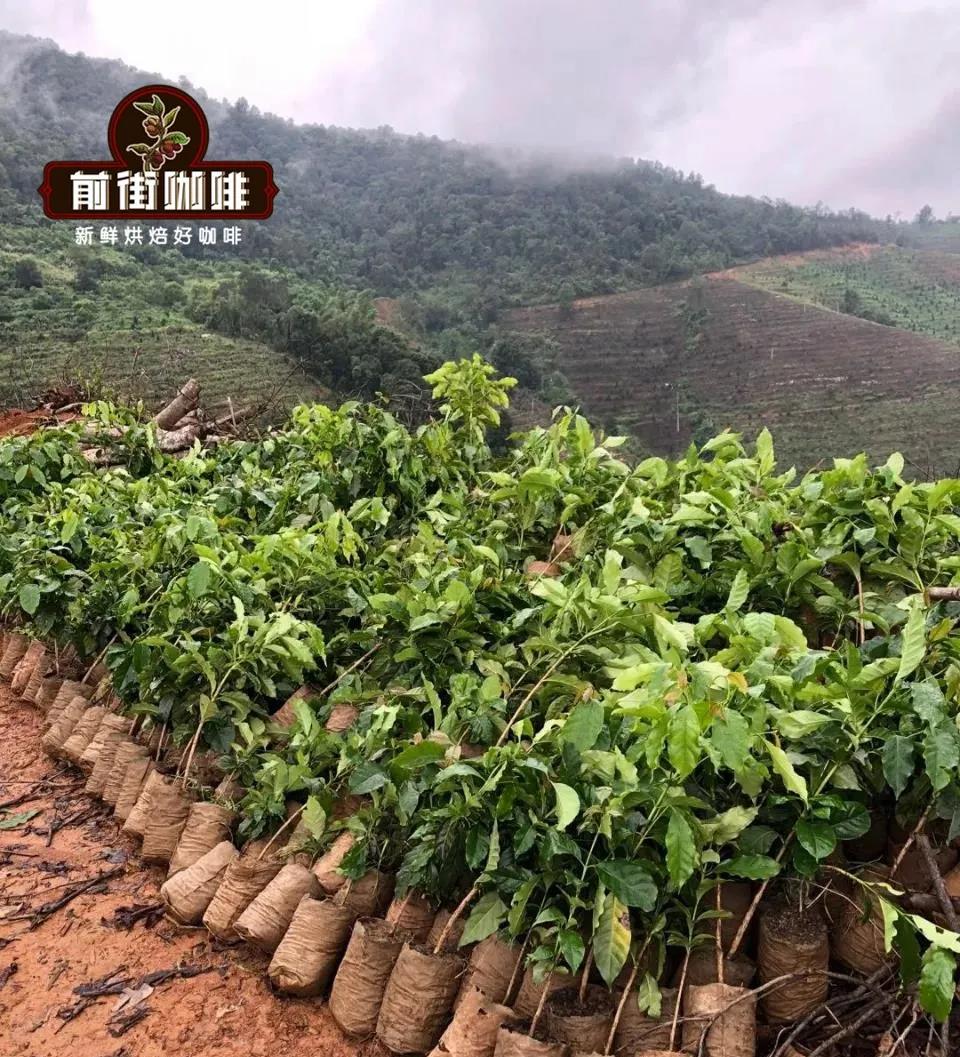
The ideal conditions for coffee look like this: a warm climate holding between 15-25°C, and annual rainfall of 1500-2000 millimeters whose timing lines up with the trees' flowering cycle. Beyond well-timed rain, fertile, well-drained soil is essential. And although sunlight is indispensable for growth and fruiting, overly intense sun actually suppresses coffee trees — which is why producing regions routinely interplant shade trees. The sweet spot for altitude runs from 500 to 2000 meters. In other words, the bar for growing great coffee is high: sunlight, rainfall, soil, temperature, plus the harvesting and processing methods applied to the beans, all shape the quality in the final cup.
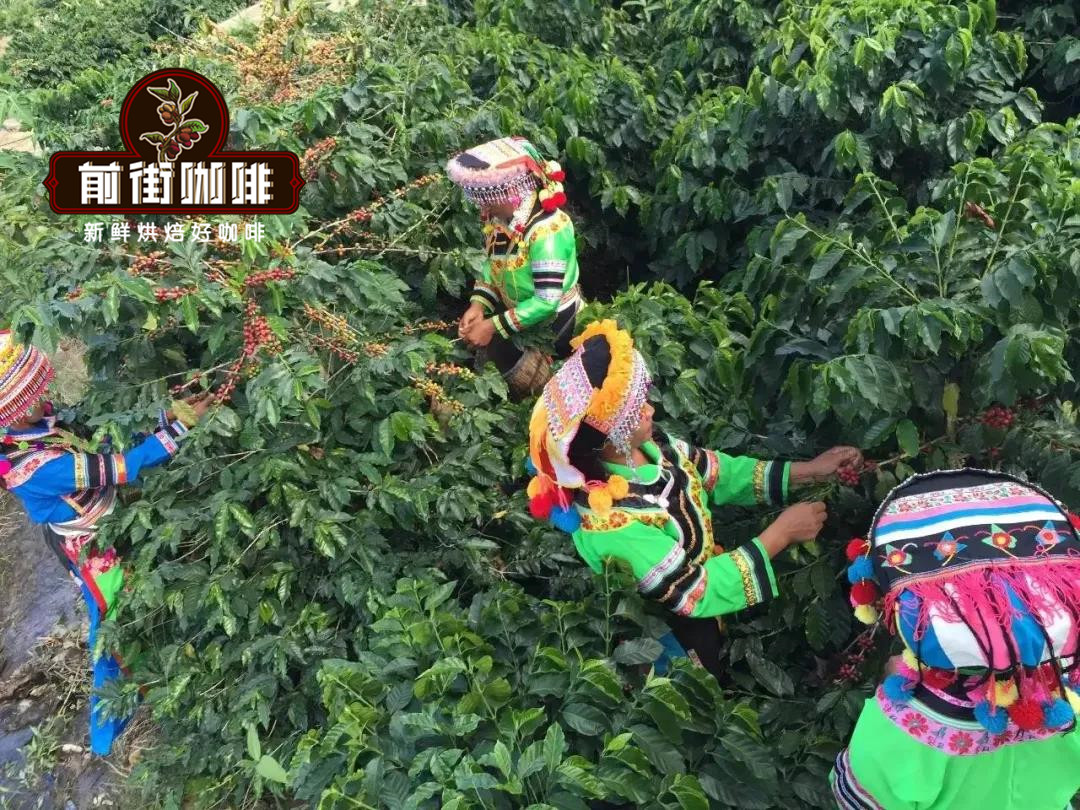
FrontStreet Coffee's Yunnan plantation sits at 1200m in Baoshan. The Baoshan growing region averages 21.5°C, essentially never frosts, and enjoys abundant rain year-round — nearly perfect conditions for coffee trees. Baoshan coffee is rich without bitterness and fragrant without harshness, its small, uniformly shaped beans delivering a mellow, full flavor with fruity undertones.
How Long Does It Take for Coffee Trees to Flower and Bear Fruit?
Coffee trees flower for the first time at around three years of age. The white, five-petaled, tubular blossoms carry a faint jasmine scent in dense, clustered inflorescences. The petals fall within two or three days, and fruits appear several months later. Each fruit is a drupe about 1.5 centimeters across — green at first, gradually yellowing, then turning red as it ripens, so much like a cherry that everyone simply calls them coffee cherries. That is the moment to harvest.
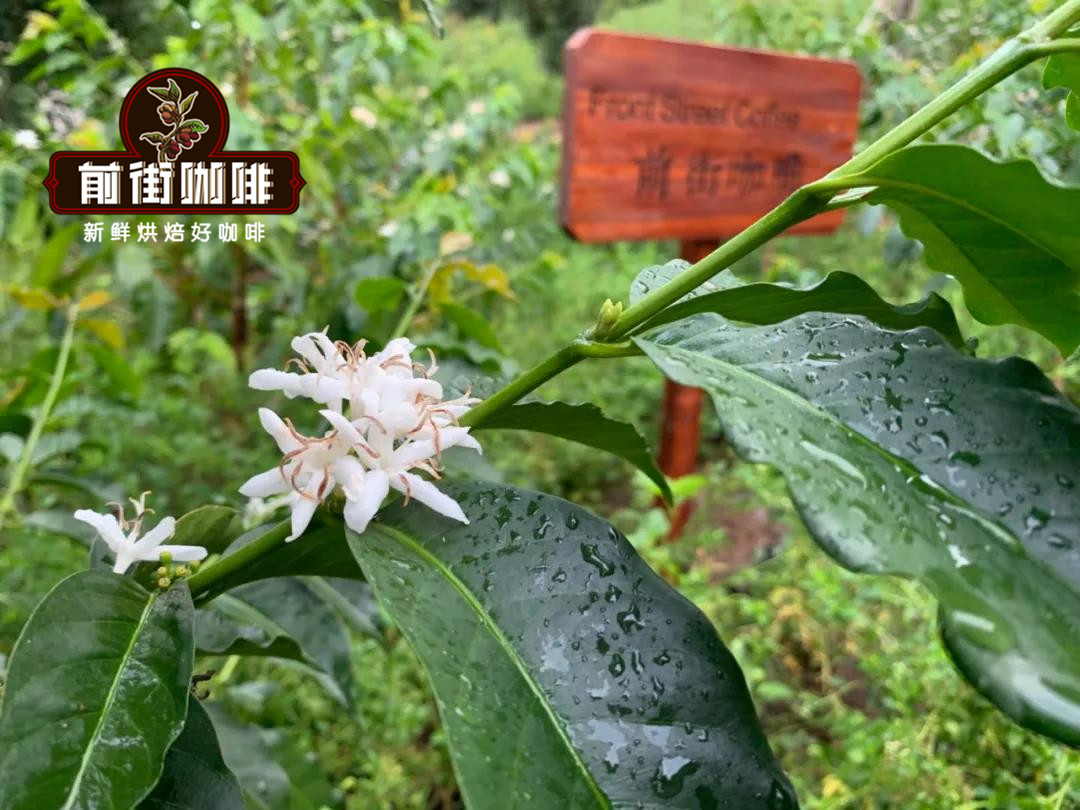
Each coffee cherry holds two seeds: the coffee beans. They sit upright, facing each other flat side to flat side. Each bean wears a thin inner membrane called the silver skin, wrapped in a yellow outer skin known as the endocarp. Around all of that lies the mucilaginous pulp — the soft, sweet coffee flesh — with the husk forming the outermost layer.
In Yunnan Where Catimor Prevails, Was Typica Actually the First Variety Planted?
Commercial coffee history in Yunnan reaches back to the early 20th century, though at that stage it was mostly foreign missionaries growing coffee for their own tables. Large-scale cultivation began in the 1950s, with most of the output exported to the Soviet Union. Considering Yunnan's growing environment and the quality of the cup, Typica was the variety of choice in that era.
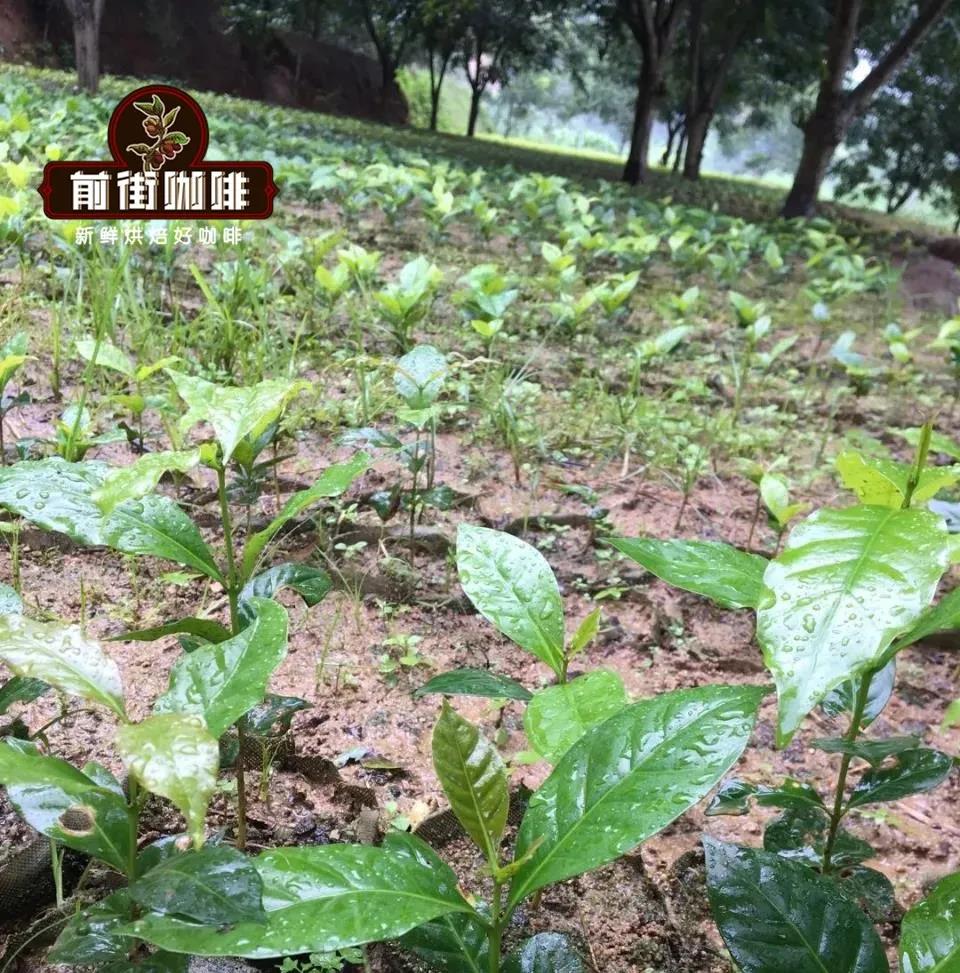
The trouble is that Typica is a fussy, low-yielding diva. Its flavor is undeniably elegant — clean, balanced, pristine — but the trees yield little per plant, demand high altitude, succumb easily to coffee leaf rust, and shrug off almost nothing in the way of pests and disease. At altitudes too low for Typica to express its character, farmers get the worst of both worlds: low yields and sickly trees. And back then, without any specialty-coffee consciousness to speak of, farmers had every reason to steer clear. Since flavor quality was suffering anyway, Yunnan growers gradually switched to Catimor — the hybrid offspring of Arabica and Robusta.
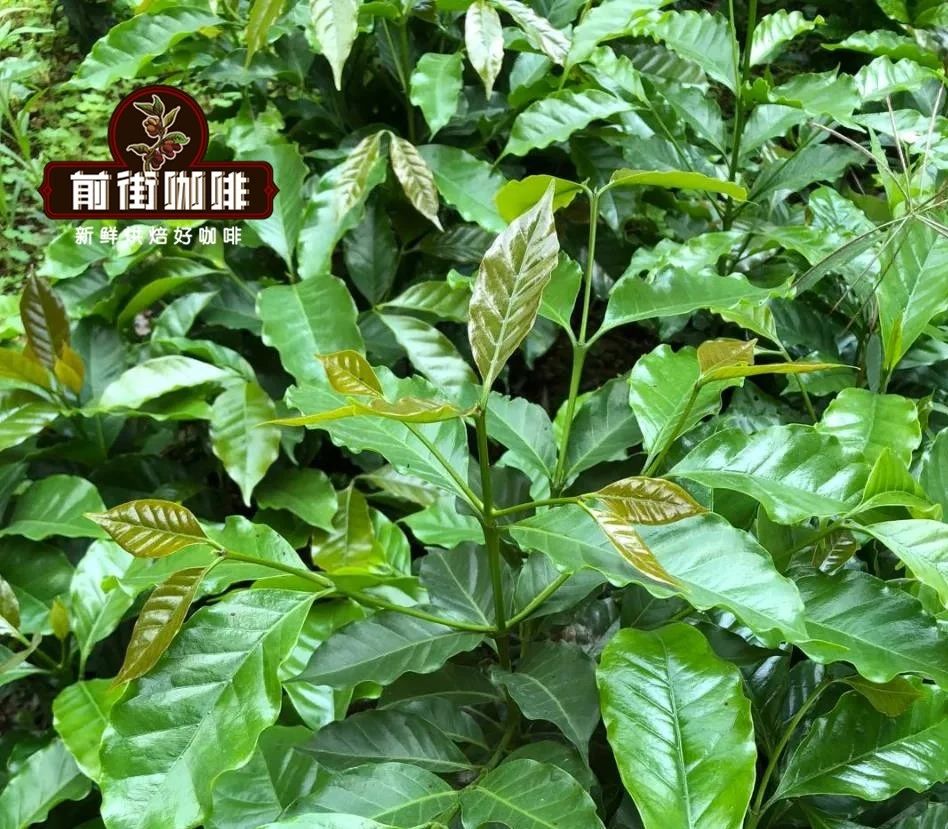
FrontStreet Coffee chose to plant Typica as the centerpiece of its plantation out of a conviction that fixing Yunnan coffee's flavor has to start at the root. Right now, Yunnan coffee leans heavily on exotic processing methods to quickly patch over unpleasant flavors, which has locked consumers into the impression that "only specially processed Yunnan coffee is drinkable." Typica offers an elegance and cleanliness that no special process can fake. In the end, whether a coffee tastes good comes down to the variety itself — special processing is no long-term answer.
Main Green Bean Processing Method in Yunnan Coffee — Washed Processing
When FrontStreet Coffee visited the Yunnan growing region during harvest season, it got a true lesson in what "rainy season" means: sunny for a few minutes, pouring for half an hour. It is precisely this relentless, unstable weather that makes washed processing the default for most Yunnan beans. After harvest, a depulper strips most of the pulp from the beans, and the parchment coffee then goes into a clean water tank to ferment, loosening whatever mucilage remains.
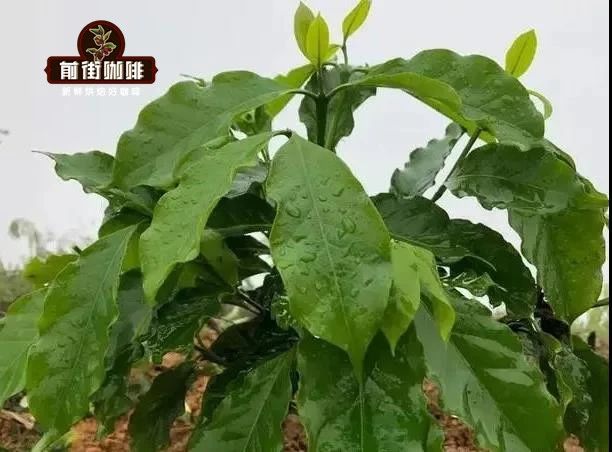
Until roughly five years ago, washed processing was the first choice for quality coffee. The water channel floats out unripe and defective beans, and fermentation is easy to control — so unlike naturals, washed coffees carry no off-flavors. Instead they show distinct fruit acidity, a touch more complexity, and a notably cleaner cup, free of harsh or astringent notes.
How Does FrontStreet Coffee Roast Yunnan Typica Coffee Beans?
Yangjia 800N roaster (batch size 300 grams): Preheat to 200°C with the air damper at 3. After 1 minute, drop the heat to 160°C; the turning point comes at 1'32". Yellowing starts at 5'40" and 149°C — the grassy aroma vanishes completely, dehydration is done, so hold the heat and open the damper to 4. At 6 minutes, reduce heat to 140; at 7 minutes, down again to 120.
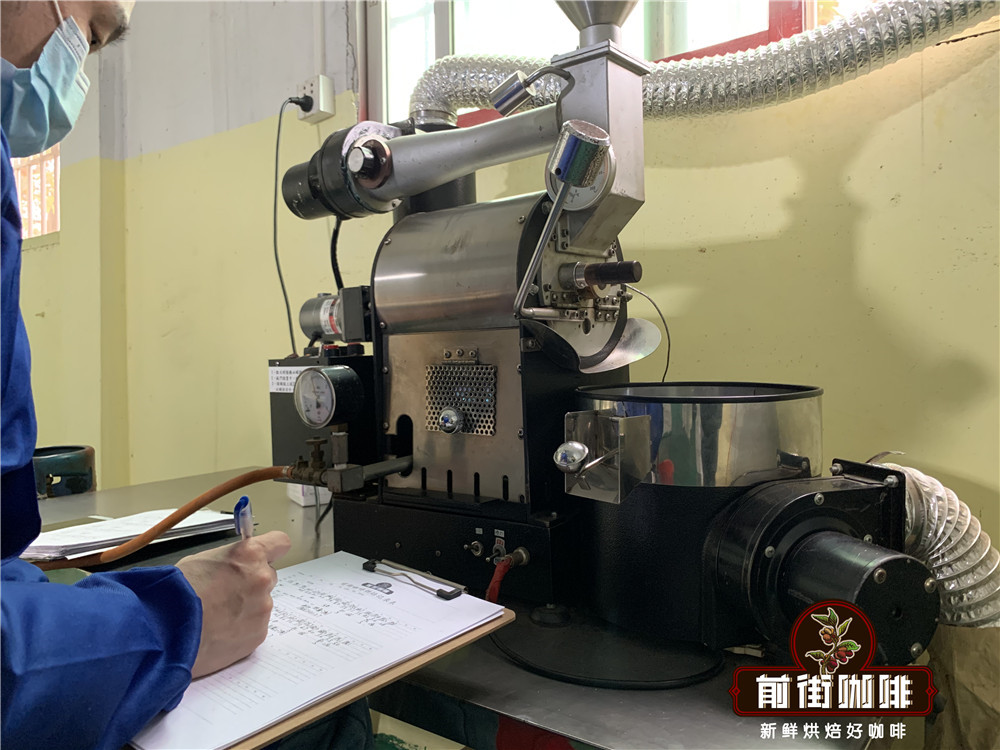
At 8 minutes, the beans show ugly wrinkles and black spotting, and the toast aroma clearly turns to coffee aroma — the prelude to first crack. Now listen closely for the crack. It arrives at 8'37"; cut the heat to 90 and open the damper fully to 5. At 9 minutes, ease the heat down another 20 degrees. Let first crack develop for 2'00", then drop the beans at 196°C.
How Does FrontStreet Coffee Brew Yunnan Typica Coffee?
Dripper: Hario V60 (the rib design sharpens the coffee's layering)
Dose: 15g
Ratio: 1:15
Grind size: Medium-fine (76% pass-through rate with a 0.85mm aperture sieve)
Temperature: 90°C
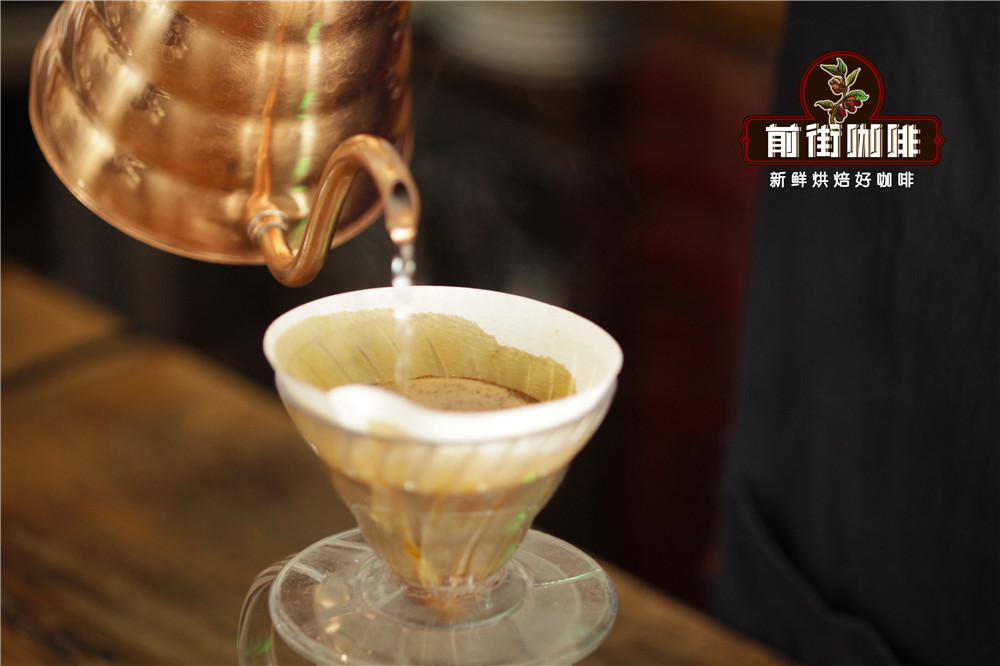
FrontStreet Coffee brews this coffee in segments. Start with 30g of water for a 30-second bloom, during which the bed puffs up into a "hamburger." For the second pour, add 125g in small circles from the center — pour from a height of 4cm with a gentle hand to keep agitation low, at a flow rate of 4g per second. When the level falls to half the height of the coffee bed, begin the third pour: just as gentle, spiraling outward from the center until the scale reads 225g. Let the drawdown finish completely; total extraction time is 2'01". Swirl the finished brew gently to homogenize it, then taste.
Brewing Flavor
The first sip brings a rich fruit aroma with melon and herbal notes. The mid-palate turns to nuts and milk chocolate, and the finish shows lively, bright plum acidity. As the cup cools from hot to warm, the sweetness and acidity unfold in layers — sweet first, then tart — with apricot and citrus-toned acidity and a black tea finish laced with brown sugar.
FrontStreet Coffee Recommendation
To taste Yunnan for yourself, FrontStreet Coffee's Yunnan Arabica (small-bean) coffee from Baoshan — washed and medium roasted — is the ideal entry point: gentle nut and chocolate sweetness with a light plum acidity at an accessible price. For a clearer expression of the region, the FrontStreet 2013 Natural Typica, grown on FrontStreet's own estate and made only from fully ripe red cherries, brings dark berry tones, caramel sweetness, chocolate, a hint of dried apricot, and a black tea aftertaste. And if you prefer your Yunnan as espresso, the FrontStreet Dark Cocoa Blend — Yunnan small-bean beans joined with Brazil Cerrado — balances nutty, brown-sugar sweetness in an Americano and a smooth almond-and-cream texture in a latte.
Important Notice :
FrontStreet Coffee is a long-established specialty coffee roaster in Guangzhou China, selling freshly roasted beans from its own farm in Yunnan as well as dozens of carefully selected single-origin beans from around the world for both pour-over and espresso. The products deliver consistently excellent quality and great value, with shipping within 24 hours. Guangzhou's FrontStreet Coffee shop is recommended by many coffee lovers, and the beans are now available online at the Tmall 。
FrontStreet Coffee has moved to a new address:
FrontStreet Coffee Address: 315,Donghua East Road,GuangZhou
Tel:020 38364473
 Scan and follow the En Gafei WeChat official account. Please indicate that the reprint comes from "En Gafei".