Costa Rica Yellow Honey Coffee Flavor Profile, Characteristics, Varieties, Grind Settings, and Processing Method Introduction
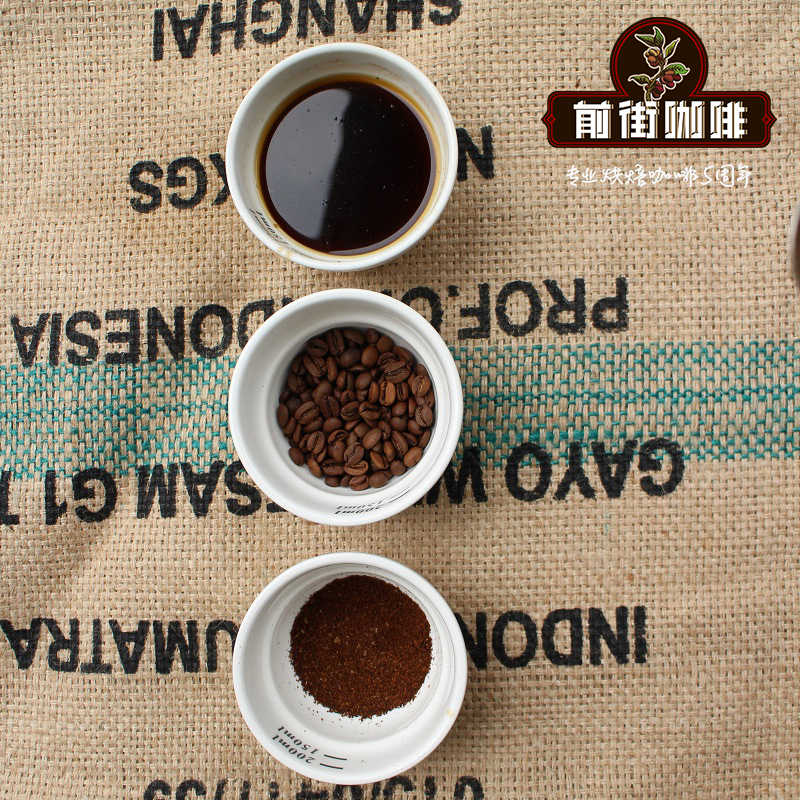
FrontStreet Coffee is back today to continue sharing about Costa Rica's honey-processed coffee, and this time we are focusing on yellow honey processing. The finest coffee beans from Costa Rica are known as "Strictly Hard Beans" (SHB), grown at high altitudes above 1,500 meters. Because the day-night temperature swings at those elevations are large and rainfall is abundant, the growing period is extended, which helps concentrate the flavor compounds. The coffee FrontStreet Coffee is sharing today is a yellow honey-processed Strictly Hard Bean, with traditional honey-processing flavors and a distinctive mouthfeel. Read on to learn more.
Different regions produce coffee with distinct characteristics through different processing methods. So even for beans from the same origin, what differences arise when the processing method changes? Today, let us compare yellow honey processing with washed processing in Costa Rica's Tarrazu region.
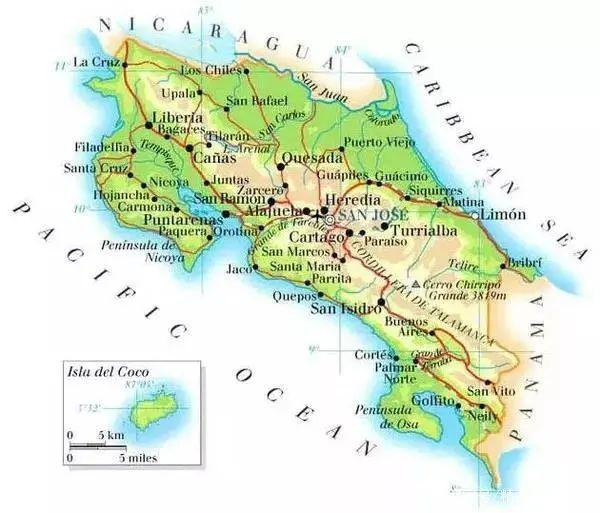
Tarrazu, Costa Rica
Tarrazu is one of the most valued coffee-growing regions in Costa Rica and one of the world's major coffee-producing areas. Costa Rica's volcanic soil is extremely fertile and well drained, making the country the first in Central America to grow coffee and bananas commercially. Premium Costa Rican coffee is called "Strictly Hard Bean" (SHB), which can grow above 1,500 meters. Altitude has always been a challenge for coffee growers. The higher the altitude, the better the beans - not only because higher altitude increases the beans' acidity and thus enhances flavor, but also because lower nighttime temperatures at higher elevations slow the tree's growth, resulting in more concentrated flavor. Altitude also brings abundant rainfall, which benefits the trees. Still, growing coffee high up has drawbacks: the extra transportation cost must be weighed, and it can make production unprofitable. Costa Rica's coffee industry has adopted new technologies to raise efficiency, including "electronic eyes" that sort beans and identify irregularly sized ones.
Processing Method: Yellow Honey
Honey processing is popular across Central America and is practically the most common processing method in Costa Rica. It sits between natural and washed processing. It keeps the cleanliness of washed coffee while significantly raising sweetness and caramel flavors, because the fruit mucilage - which is extremely high in sugar - is dried together with the beans in the sun. The character of honey-processed coffee depends largely on how the pulper is set: the more fruit pulp retained, the more pronounced the honey-processing characteristics. Producing honey-processed coffee does require farms to take on some risk, especially for black honey, because the more pulp is retained, the higher the chance of over-fermentation. Based on the degree of mucilage retention, the styles are divided into black honey, red honey, yellow honey, and white honey.
Yellow honey processing retains 60% of the mucilage for drying; the drying method requires the most direct heat absorption, receiving maximum sunlight to dry, taking about 8 days to reach a stable moisture content.
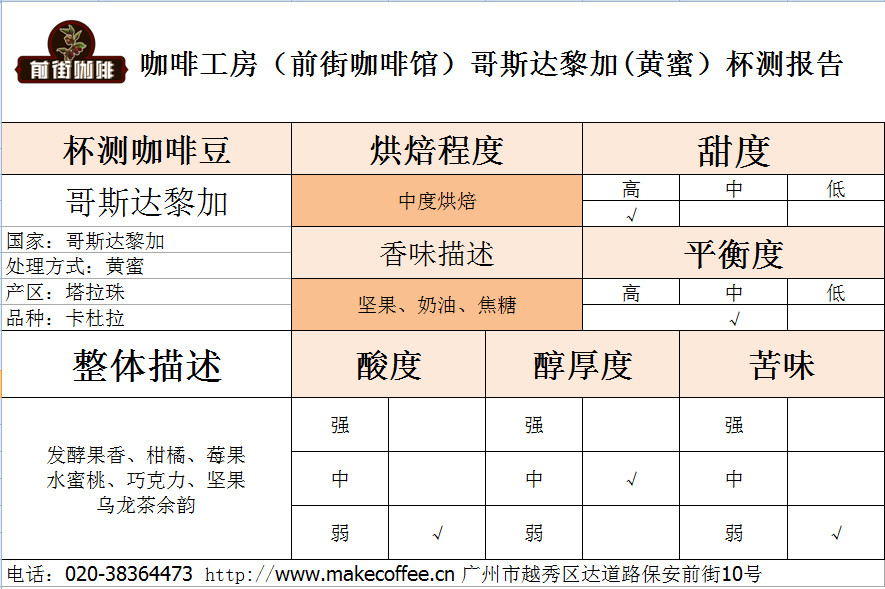
FrontStreet Coffee Costa Rica Yellow Honey Cupping Notes: Obvious fermented fruit aroma, with flavors of berries, citrus, and peach.
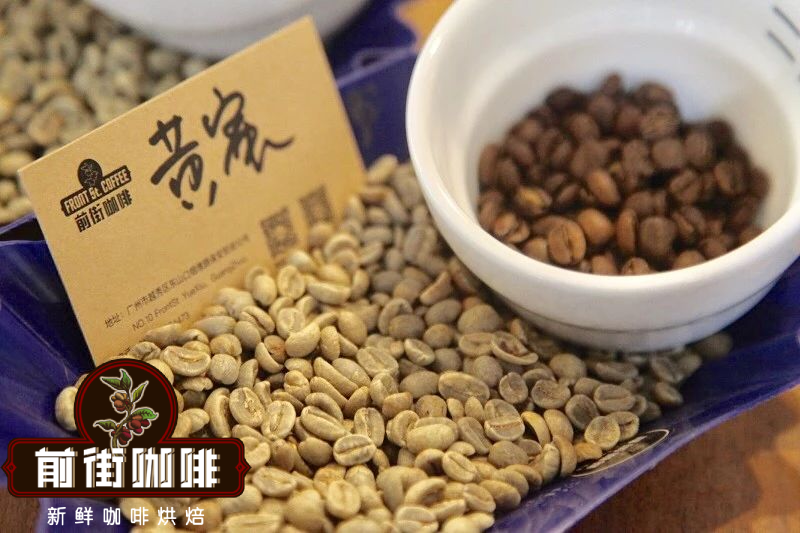
Taking FrontStreet Coffee Costa Rica Yellow Honey as an Example
Region: Tarrazu
Variety: Caturra, Catuai
Altitude: 1,950 meters
Processing: Honey processing
FrontStreet Coffee Pour-over Parameters: Dripper: V60; Grind size: BG-6L; Water temperature: 90C; Coffee dose: 15g; Coffee-to-water ratio: 1:15; Total brew time: 2:00

Specific Pour-over Technique: Bloom with 30g of water for 30 seconds; first pour: slowly pour 90g of water in a circular motion, stopping at a reading of 120g, then wait for the water level to drop to the coffee bed surface. Second pour: increase the water flow and pour 105g in a circular motion, stopping at a reading of 225g, then wait for the coffee bed to be exposed before removing the dripper.
Tasting Notes
Pour-over: An obvious fermented aroma on the palate, with citrus acidity, chocolate-like sweetness in the mid-palate, and a caramel aftertaste and green tea sensation in the finish, with floral and cedar aromatics lingering in the aftertaste; overall well balanced.
FrontStreet Coffee Recommendation
Yellow honey sits in the middle of the honey-processing spectrum, and if you enjoy its balance of cleanliness and sweetness, FrontStreet Coffee's honey-processed coffees let you explore both ends of that range. FrontStreet Coffee's Costa Rica Blackberry uses a black honey process, which removes almost none of the mucilage, dries for at least two weeks under cover to keep the sun from drying it too quickly, and turns the cherries at intervals so the sugar converts fully and no uneven heating causes over-fermentation. Roasted light-medium, it gives off an intense fresh-flower aroma when ground and pours out grape, berry, and ripe blackberry flavors.
For an even more intense expression, FrontStreet Coffee's Mozart takes the raisin honey approach, a modern variation on traditional yellow, red, and black honey. The cherries are pre-dried on raised beds for at least three days until they take on a raisin-like state, then the skin and pulp are removed and the honey steps continue with 100% of the mucilage retained - a process that demands strict timing and is harder than black honey. It brings a richer, fruitier sweetness, and whether you brew it as a pour-over, a cold brew, or in a moka pot, you get distinctive osmanthus, pineapple, and raisin aromas.
Important Notice :
FrontStreet Coffee is a long-established specialty coffee roaster in Guangzhou China, selling freshly roasted beans from its own farm in Yunnan as well as dozens of carefully selected single-origin beans from around the world for both pour-over and espresso. The products deliver consistently excellent quality and great value, with shipping within 24 hours. Guangzhou's FrontStreet Coffee shop is recommended by many coffee lovers, and the beans are now available online at the Tmall 。
FrontStreet Coffee has moved to a new address:
FrontStreet Coffee Address: 315,Donghua East Road,GuangZhou
Tel:020 38364473
 Scan and follow the En Gafei WeChat official account. Please indicate that the reprint comes from "En Gafei".