Sumatra Coffee Beans: Elevation, Cultural Significance, Stories, Pricing, and Flavor Profile
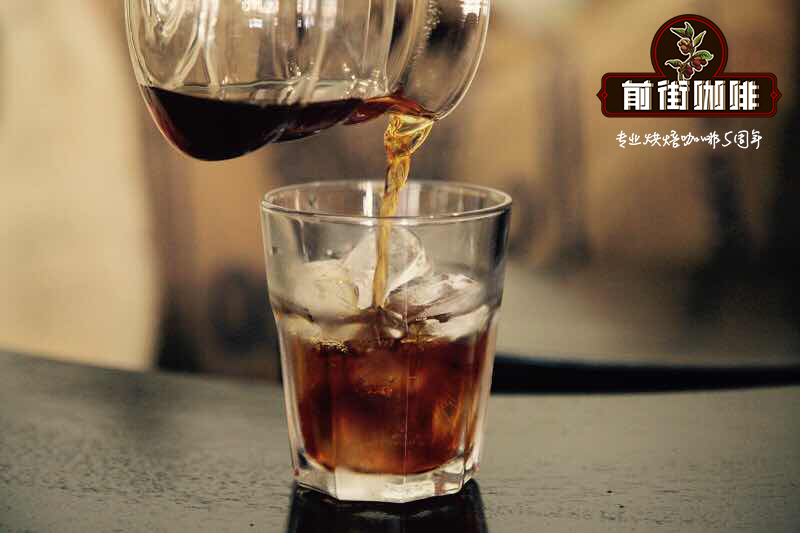
Indonesian Sumatra Mandheling Premium Coffee Beans
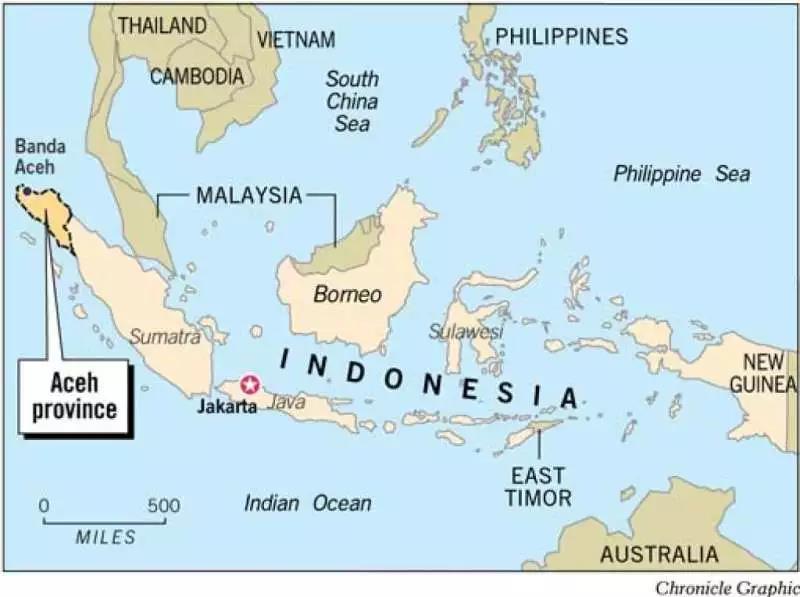
Indonesia is the world's largest archipelagic country. Arabica coffee was introduced there and began to be cultivated during the Dutch colonial period in the 18th century, and today the country ranks among the world's top five coffee producers, with its main growing regions on Sumatra, Java, and Sulawesi. Northern Sumatra has relatively high terrain and elevation, and two areas dominate its Arabica production: Aceh province, where Lake Tawar sits, and North Sumatra province, home to Lake Toba and Lintong.
(I) FrontStreet Coffee Aceh Sumatra Tiger Mandheling
Region: Aceh
Varieties: Caturra, Typica, Sidikalong
Soil: Volcanic soil
Altitude: 1500m
Processing Method: Wet Hulling
01 | Region Introduction
Lake Tawar lies in the Gayo mountains of Aceh province in northern Sumatra. Indonesia straddles the equator with a humid tropical rainforest climate, abundant rainfall, and fertile volcanic soil rich in nutrients for coffee. But the region is remote and transportation is difficult, so coffee cultivation here only began in 1924 - and it is still carried out mostly with traditional shade-grown, pesticide-free organic farming.
In Aceh, coffee is the region's second-largest export crop. An estimated 60,000 small-scale coffee farmers work there, each owning about 1-2 hectares. The traditional Indonesian coffee trade runs through multiple point-to-point supply chains: beans pass through layers of intermediaries before accumulating into large export shipments. Direct trade - a single window buying from farmers and arranging export - remains quite rare in Indonesia's system.
02 | Processing Method
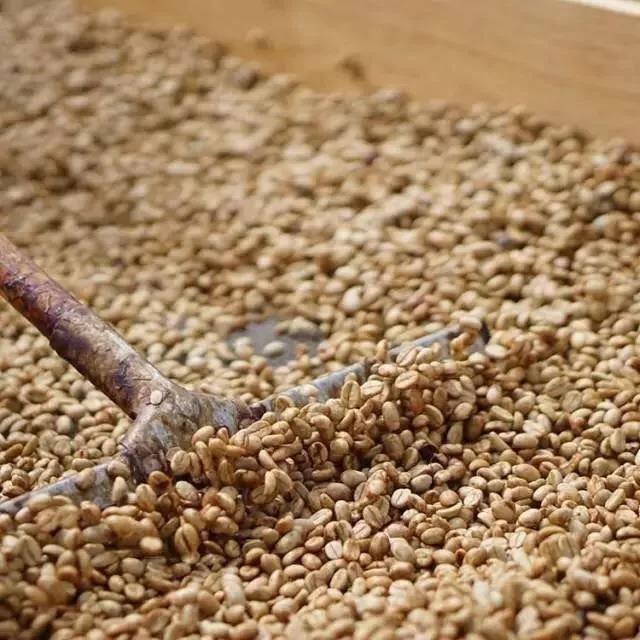
Wet Hulling - called Giling Basah in the local language - is a traditional Indonesian processing method. The name makes it sound similar to wet processing (washed), but the flavors in the cup are completely different. Wet-hulled coffee typically has a rich, intense flavor with a very distinct personality.
Wet Hulling Processing Steps:
- Remove fruit skin and pulp, retaining parchment and mucilage
- Ferment in water tanks
- Wash away the mucilage
- Sun-dry with parchment for 2-3 days until moisture content reaches 20-24%
- Hull off the parchment
- Dry the green beans to 12-13% moisture content
- Prepare for export
Why Use Wet Hulling?
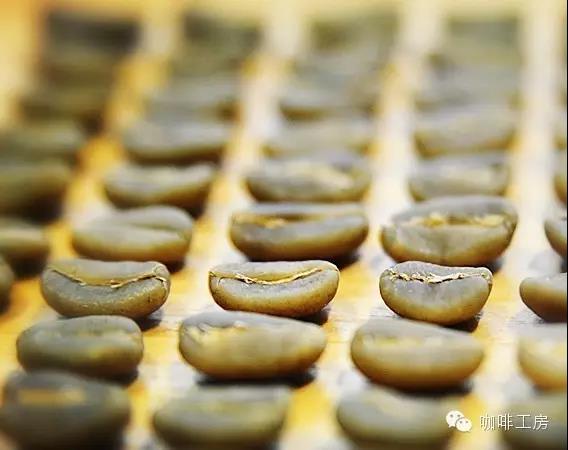
a. Climate
The tradition stems from local weather. Indonesia's humidity stays between 70-90% year-round with constant typhoons, and in some areas annual rainfall reaches 2,000mm. Green beans fear rain above all else - so how does Indonesia overcome such conditions to produce rich, mellow Mandheling? Wet Hulling is the answer.
Under tropical conditions coffee normally takes an average of 2-3 weeks to dry, and in Indonesia's humidity that becomes a serious problem: the coffee stays at high moisture for a long time, making it easier for bacteria to penetrate the beans. As FrontStreet Coffee has observed, in regular washed processing the beans dry with the parchment on, which protects them to some extent - but Wet Hulling removes the parchment for the final drying stage, letting sunlight strike the green beans directly so they dry 2-3 times faster than washed coffee.
b. Economics
Dutch colonists first brought coffee to Indonesia in the 17th century, and they wanted bigger and faster returns. Wet Hulling cuts the time coffee spends on the farm and slashes labor costs - exactly the investor mentality of quick profits and low costs, which helped drive the method's adoption.
c. Defects and Kuku Kambing (Goat Hoof Beans)
When the parchment is hulled off in Wet Hulling, the coffee's moisture is still as high as 20-24%, whereas in regular processing beans are dried to 10-12% before hulling. In this "semi-dry" state the parchment clings to the surface of the beans, making hulling harder than with fully dry beans and demanding greater friction.
But semi-dry beans are also fragile, their hardness far below fully dried beans, so they bruise and crack easily under pressure. These are the "horse hoof" or "goat hoof" beans - locally called kuku kambing.
Wet Hulling's ultra-fast pace also leaves Mandheling with a higher defect rate, so processing plants assign staff to manual defect sorting - generally DP (double picking) and TP (triple picking). Triple-picked Mandheling grades out cleaner than double-picked.
03 | Green Bean Analysis
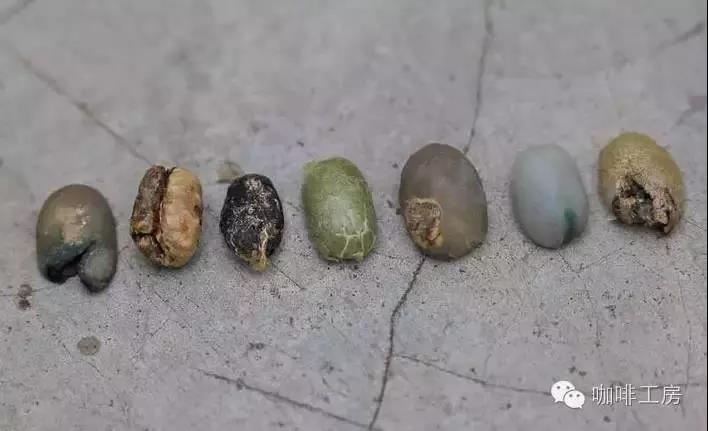
FrontStreet Coffee Indonesia Tiger Mandheling
The varieties are Caturra, Typica, and Sidikalong. Caturra brings lemon or citrus acidity, though its sweetness lags behind Typica and Bourbon because it depends heavily on how often and how much growers fertilize. Caturra is highly productive, but maintaining that productivity demands constant fertilizing and pruning, producing short, bushy plants - and with a 2-year harvest cycle and high care costs, production stays constrained.
Typica is the variety closest to the original species. Its beans are slightly elongated, like a stretched egg, and in Central America it is called Arabigo or criollo. It has clean lemon acidity and a sweet aftertaste, but low resistance to leaf rust makes it hard to care for; low per-plant yield plus a long harvest cycle (once every 2 years) keeps production limited.
FrontStreet's Tiger Mandheling green beans are round, greenish-yellow, uniform, and carry high moisture. The roasting target is medium-dark, to eliminate excess acidity and build body and balance.
In the first roasting batch, the dropping temperature ran high, with an entry temperature of 200 degrees and strong heat. Because this bean grows at only medium altitude and has a very soft texture, the roaster extended the dehydration phase with a heat-reduction slide to drive off excess moisture and avoid astringency. Heat was adjusted down when the beans reached the yellowing point - after dehydration, before first crack - to avoid scorching the bean surface. The beans dropped 4 minutes after the end of first crack and 20 seconds before second crack, extending caramelization to showcase the bean's excellent cleanliness and sweetness.
Roasting machine: Yangjia 600g semi-direct flame. Preheat to 200°C, open damper to 3. After 30 seconds, adjust heat to 160°C, damper unchanged. Return to temperature at 1'45", maintain heat. At 5'18", the bean surface turns yellow, the grassy smell disappears completely, and the dehydration stage ends. Reduce heat to 140°C, adjust damper to 4.
At 7'30" dehydration is complete; reduce heat to 140°C. At 8'55" the bean surface shows wrinkles and black spots, and the toast aroma clearly shifts to coffee aroma - the prelude to first crack. Listen carefully from here. At 9'00" first crack begins: reduce heat to 110°C and open the damper fully to 5 (adjust heat very carefully - not so small that the crack sound dies). Develop for 4'00" after first crack and drop at 203°C.
The cup is relatively balanced with high cleanliness, showing distinct cream, dark chocolate, and nut flavors.
(II) Golden Mandheling
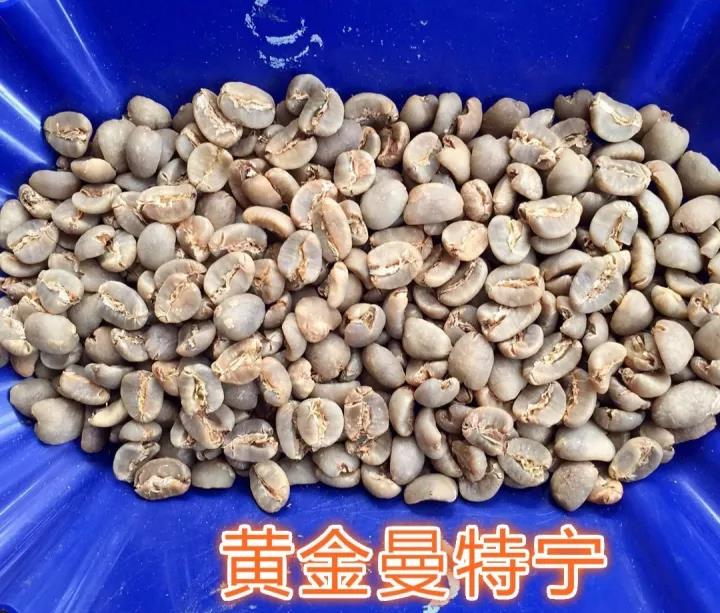
01 | Region Introduction
Mandheling, also known as "Sumatra coffee," comes mostly from North Sumatra, where the Ateng variety dominates. Coffee from the Lake Tawar area in the north can be called Aceh coffee or Lake Tawar coffee; Lintong and the Lake Toba area to the south can be called Mandheling, and Lintong is the actual Mandheling producing region. The best Mandheling varieties include four types: Sidikalang, Bergendar, Siborong-borong, and Telok Sanggul.
Lake Toba sits in central North Sumatra province. Dutch colonists moved "Java Mandheling" north to the Lake Toba area in 1888, creating the modern Mandheling legend. Lake Tawar lies in central the Aceh Special Administrative Region at the northern tip of Sumatra, with an area less than one-tenth of Lake Toba's - yet in recent years both its coffee quality and production have surpassed Lake Toba.
The Gayo Mountains lie in the Aceh growing region of northern Sumatra. Most of the coffee farmers there are local, and the name "Gayo" comes from a tribe in Aceh. The area has ideal growing conditions, a long coffee culture, and unique flavors. Coffee is widely grown organically without chemical fertilizers, which is why Gayo coffee is often called Gayo organic coffee.
What is "Golden Mandheling"?
Any discussion of "Golden Mandheling" must start with PWN - an abbreviation that gets mixed into Mandheling coffee names everywhere. It actually stands for a company: the Pwani Coffee Company.
PWN is one of Indonesia's most famous coffee acquisition companies, buying mainly Mandheling. Nearly all of Indonesia's best growing areas supply it, so most of its beans are unique specialty coffees. Golden Mandheling is that company's product: after acquiring the green beans, PWN runs them through multiple rounds of manual selection to pick out only full, defect-free beans. Only beans that survive that layer-by-layer screening can be classed as Golden Mandheling.
PWN has registered "Golden Mandheling" as a trademark, which means only Golden Mandheling produced by PWN is genuinely "Golden Mandheling." Beans on the market labeled Golden Mandheling but not from PWN should properly be called Specialty Mandheling - "Golden Mandheling" is, at heart, a company product name.
FrontStreet's Golden Mandheling is also wet-hulled. The general expectation for wet-hulled beans is earthy, smoky, chocolatey flavor, with acidity described as "low" - rich and mellow, though sometimes called dull. The low acidity comes from a shorter, less effective fermentation and longer drying. As for the "earthy flavor," opinions vary: some blame the varieties common in wet-hulled areas (Timor Hybrid and Catimor, both carrying Robusta blood), some say it is the organic interaction between green beans and their environment, and some say it is simply too many defect beans. There is some truth to all of them.
03 | Green Bean Analysis
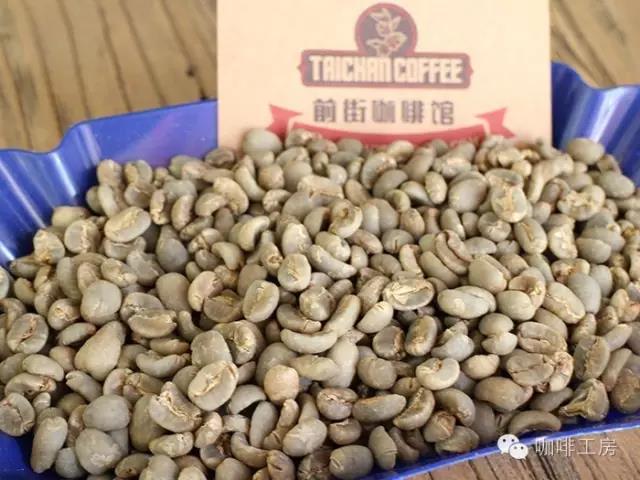
Golden Mandheling
Origin: Sumatra Island, Indonesia
Processing Method: Wet Hulling
Variety: Typica
Roast Level: Medium-Dark
FrontStreet chooses to drop before second crack, retaining some soft acidity. The cup is high in sweetness, fragrant, rich and mellow: toasted bread, pine, caramel, cocoa, with slight earthy notes.
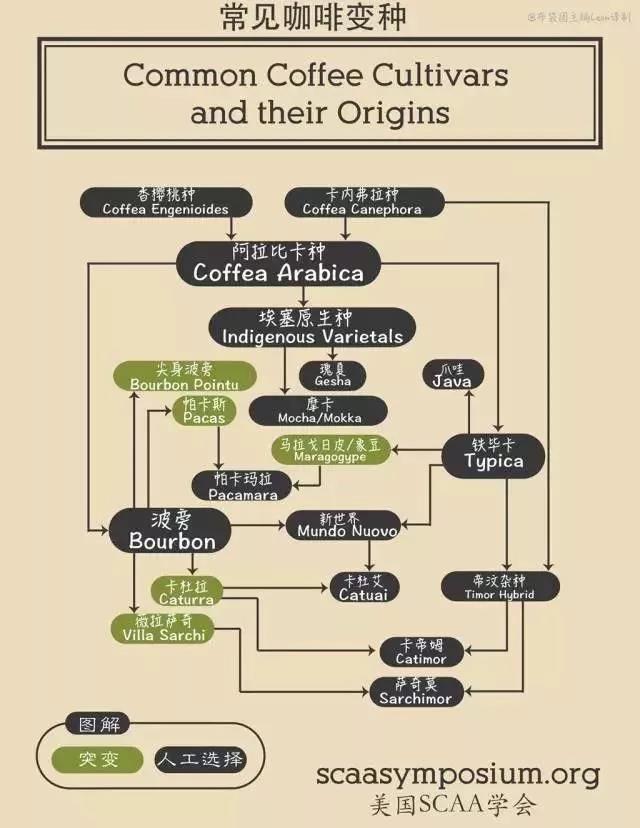
Within the specialty coffee system, Sumatra is a wonderful oddity: the famous Mandheling is not the name of a producing region, nor of a variety - and even its varietal origins are hopelessly tangled.
Ateng - a hybrid between Arabica and Robusta with several subtypes, widely planted across Sumatra and other Indonesian islands. Bluntly put, it is a branch of Catimor, with Ateng being the local name.
Djember - a quick search shows Djember is a place name in Sumatra, which makes the variety look mysterious, but it is actually S-795. Because the variety was spread to the island by the Jember Coffee Research Center, locals call S-795 by that name. And what is S-795? A hybrid created by Indian botanists crossing the Typica mutant Kent with S-288 - which is itself a natural hybrid of Arabica and Liberica.
TimTim - this is the Timor Hybrid, a natural cross of Arabica and Robusta; the familiar Catimor was created by hybridizing it again.
Tim Tim - Longberry Mandheling
Tim Tim is an Indonesian bean. Because of its long shape, many call it the "horse face bean" and some call it long Mandheling. It is not a pure variety but a natural hybrid of Arabica and Robusta, discovered on Timor Island in the 1940s and cultivated for its natural disease resistance. In the Americas it is called Hybrido de Timor, abbreviated Tim Tim; in Indonesia it is also called Bor Bor.
04 | Roasting Analysis
Golden Mandheling is a high-moisture green bean - its moisture deviation from natural-process beans is high - so dehydration needs special attention. For high-moisture beans, close the damper right after charging, steam for 30 seconds, then open it to 3 until the beans turn light green or white, open to 4, and after first crack open fully to 5.
FrontStreet suggests keeping good records before roasting: bean moisture, density, origin, processing method, and the roasting room's temperature and humidity - then plan the curve and record the chemical and physical changes along the way. That data helps you understand the final result and refine the curve.
Roasting Curve:
Preheat to 200°C, open damper to 3. After 1 minute, adjust heat to 160°C, damper unchanged. At 5'40", temperature 148°C, the bean surface turns yellow, the grassy smell disappears completely, and dehydration is complete. Adjust heat to 140°C, damper to 4.
At 9'40" the bean surface shows wrinkles and black spots and the toast aroma turns to coffee aroma - the prelude to first crack. Listen carefully. At 9'54" first crack begins: reduce heat (damper fully open; adjust heat very carefully - not so small that the crack sound dies) and drop at 204.5°C.
FrontStreet Coffee Cupping Report:
Golden Mandheling tastes cleaner than Lintong Mandheling: Mandheling's usual herbal, earthy, woody flavors are almost gone, caramel sweetness is stronger, and the fruit acidity is relatively bright and elegant. Lintong Mandheling is generally best roasted past second crack to reduce off-flavors, but Golden Mandheling shows good transparency and sweetness whether dropped before or after second crack - giving roasters a much wider interpretive range.
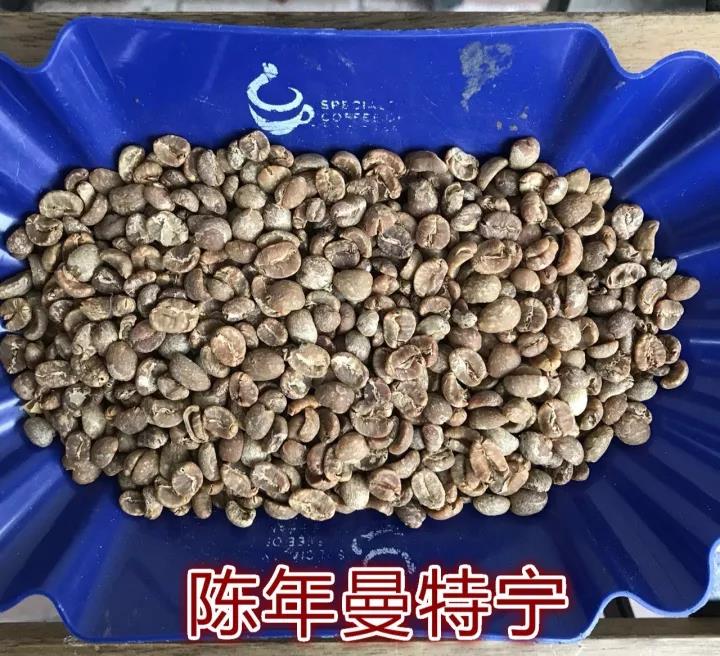
(III) Aged Mandheling
01 | Region Introduction
Asia's most famous coffees come from the islands of the Malay Archipelago: Sumatra, Java, and Kalimantan. Of these, Sumatran Mandheling is the most renowned, with two famous product names: Sumatra Mandheling DP First Grade and Classic Sumatra Mandheling. The DP First Grade has a long aftertaste with a wild mountain fragrance - that earthy note characteristic of primeval forests.
Mandheling comes mainly from two regions. One is the Aceh region, covering five producing areas: Lake Tawar, Gayo Mountain, the Gayo tribe, Aceh Mandheling, and Takengon Mandheling. The other is the North Sumatra region, with four producing areas: Lake Toba, Lintong, the Mandailing tribe, and the Batak tribe.
Aged Bean Processing Method
Aged coffee does not simply mean green beans stored a long time - left alone, green beans deteriorate, fading from fresh green to white to yellow, going flavorless, even attracting insects. Like aged wine, green beans must be properly processed and deliberately stored long-term before they can truly be called "Aged Coffee."
So-called Aged beans (Aged bean) are green beans aged naturally through extended storage, usually 2-3 years. The changes include reduced acidity, color change, and thickened bean texture. The storage environment must be cool and ventilated, and because it is relatively dark and the timeline is long, aged coffee can hardly escape complex flavors reminiscent of mold - what people commonly describe as burlap bag or leather.
02 | Green Bean Analysis
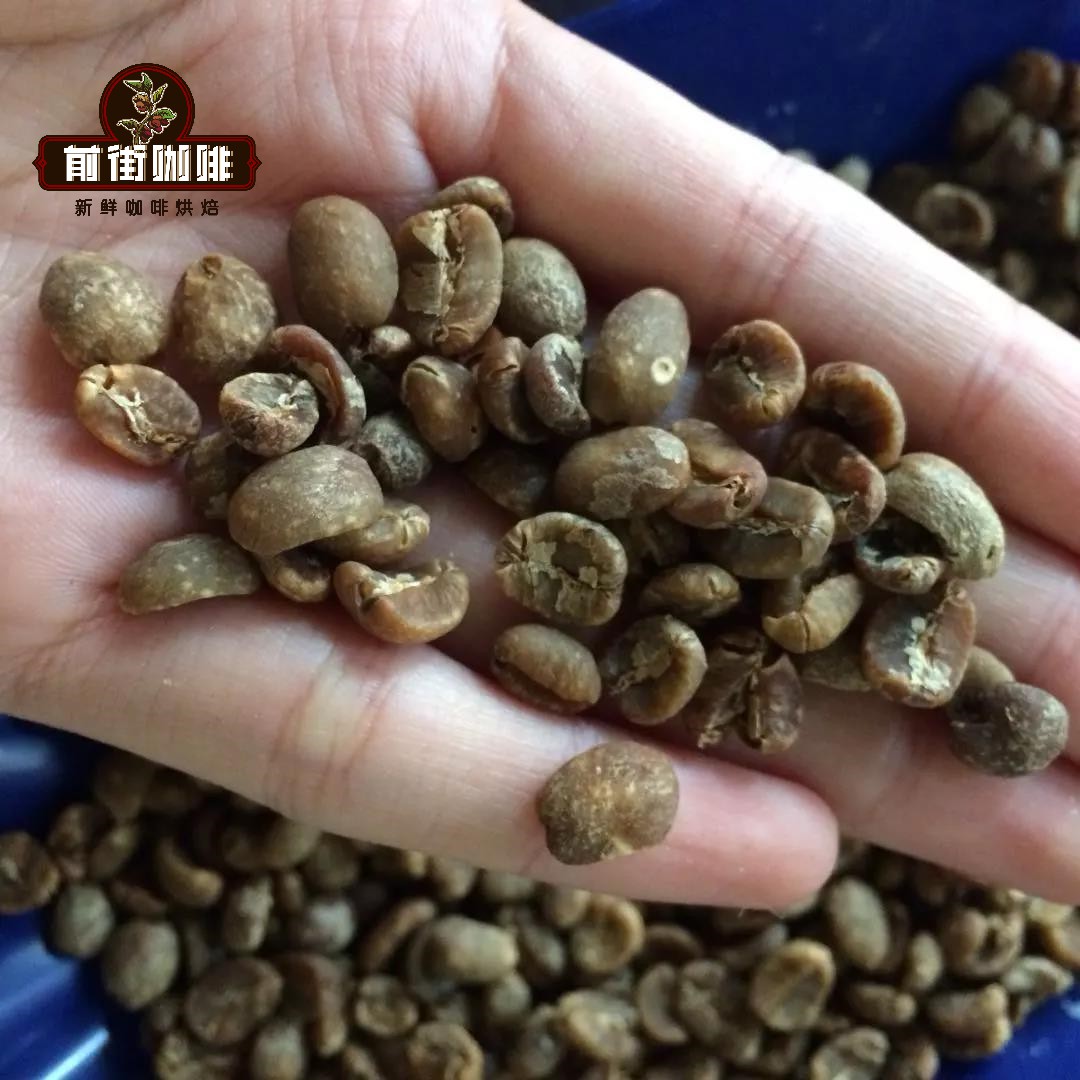
Properly stored beans change in both taste and appearance: acidity drops, color darkens and loses moisture, texture thickens and improves, sweetness takes on honey aromas, and some original green bean defects become less obvious. Aged beans must be stored under strictly controlled conditions - regular uniform turning, humidity and ventilation adjustments - to prevent insect infestation or mold. Notably, aging generally does not happen at the farms or estates; it is a commercial activity of green bean distributors and brokerage companies.
03 | Roasting Analysis
Aged Mandheling looks somewhat ugly. The baptism of time wears away Mandheling's acidity and increases its purity, with a rounder medium-dark flavor. Because Mandheling green beans are dense and aged beans carry low moisture, heat adjustments at every stage must be especially careful - and for Mandheling, take care not to scorch the oils on the bean surface.
Yangjia 800N, 550g green beans. Specific operation: preheat to 200°C, open damper to 3. After 1 minute of steaming, adjust heat to 160°C, damper unchanged. At a furnace temperature of 165°C, adjust heat once, down to 140°C. At 5'35", temperature 146°C, the bean surface turns yellow, the grassy smell disappears completely, dehydration is complete - open damper to 4.
At 9 minutes, wrinkles and black spots appear on the bean surface and the toast aroma turns to coffee aroma - the prelude to first crack. Listen carefully. At 9'30" first crack begins: reduce heat to 80°C with the damper fully open to 5 (adjust heat very carefully), then reduce to 40°C and drop at 197.4°C.
FrontStreet Coffee Recommended Brewing:
Dripper: KONO dripper
Water Temperature: 88°C
Grind Size: Fuji Mill grind 4
Brewing Method: water-to-coffee ratio 1:14, 17g of coffee, first infusion with 25g of water, 30s bloom, second infusion to 238g, extraction time about 2:30.
Analysis: The KONO dripper has few ribs at the bottom, so the filter paper sits tightly against the walls and restricts airflow. That gives water and grounds longer contact and soaking time, securing both extraction time and extraction rate for a coarse grind - the grounds extract fully, thickening the texture and concentrating the flavor.
Flavor: high balance, clean, thick and solid texture, with a persistent dark chocolate aftertaste.

FrontStreet Coffee Recommendation
Sumatra's three flagship Mandheling styles each tell the same wet-hulled story differently. FrontStreet's Aceh Tiger Mandheling (Aceh, 1500m, Caturra/Typica/Sidikalong on volcanic soil) is the connoisseur's pick: balanced, highly clean, with distinct cream, dark chocolate, and nut flavors - and its aroma outshines even the Gold. FrontStreet's Golden Mandheling is PWN's registered product, built on strict defect screening that lifts cleanliness and sweetness above ordinary Mandheling, cupping with toasted bread, pine, caramel, and cocoa and an acidity that stays bright and elegant.
If your taste runs to time-softened flavors, Aged Mandheling is the rarest expression: green beans held 2-3 years in cool, ventilated storage with regular turning until acidity fades into honeyed sweetness and Pu-erh-like depth, with burlap-and-leather undertones. Brew it FrontStreet's way - KONO dripper, 88°C, Fuji grind 4, 1:14 ratio, 17g of coffee, 25g bloom for 30s, then to 238g in about 2:30 - for a clean, thick, balanced cup with a persistent dark chocolate finish.
- FrontStreet Coffee Aceh Tiger Mandheling - 1500m, wet-hulled, cream/dark chocolate/nuts, outstanding aroma
- FrontStreet Coffee PWN Golden Mandheling - G1, triple hand-sorted, caramel sweetness, bright elegant acidity
- FrontStreet Coffee Aged Mandheling - 2-3 year storage, honey sweetness, dark chocolate finish
Important Notice :
FrontStreet Coffee is a long-established specialty coffee roaster in Guangzhou China, selling freshly roasted beans from its own farm in Yunnan as well as dozens of carefully selected single-origin beans from around the world for both pour-over and espresso. The products deliver consistently excellent quality and great value, with shipping within 24 hours. Guangzhou's FrontStreet Coffee shop is recommended by many coffee lovers, and the beans are now available online at the Tmall 。
FrontStreet Coffee has moved to a new address:
FrontStreet Coffee Address: 315,Donghua East Road,GuangZhou
Tel:020 38364473
 Scan and follow the En Gafei WeChat official account. Please indicate that the reprint comes from "En Gafei".