Panama Hacienda La Esmeralda Diamond Mountain Coffee Beans: Varieties, Processing Methods, Flavor Characteristics, and Origin

When it comes to Panama coffee, enthusiasts are certainly familiar with the Geisha beans from Hacienda La Esmeralda. The estate's Catuai and Catimor varieties, however, are probably less well known. Does that mean these two varieties are of inferior quality? Of course not. Hacienda La Esmeralda has also established them as two separate brands, Diamond Mountain and Palmyra. This article explains what the Diamond Mountain brand from Panama's Hacienda La Esmeralda is all about.
FrontStreet Coffee Panama Hacienda La Esmeralda Natural Diamond Mountain Coffee Beans
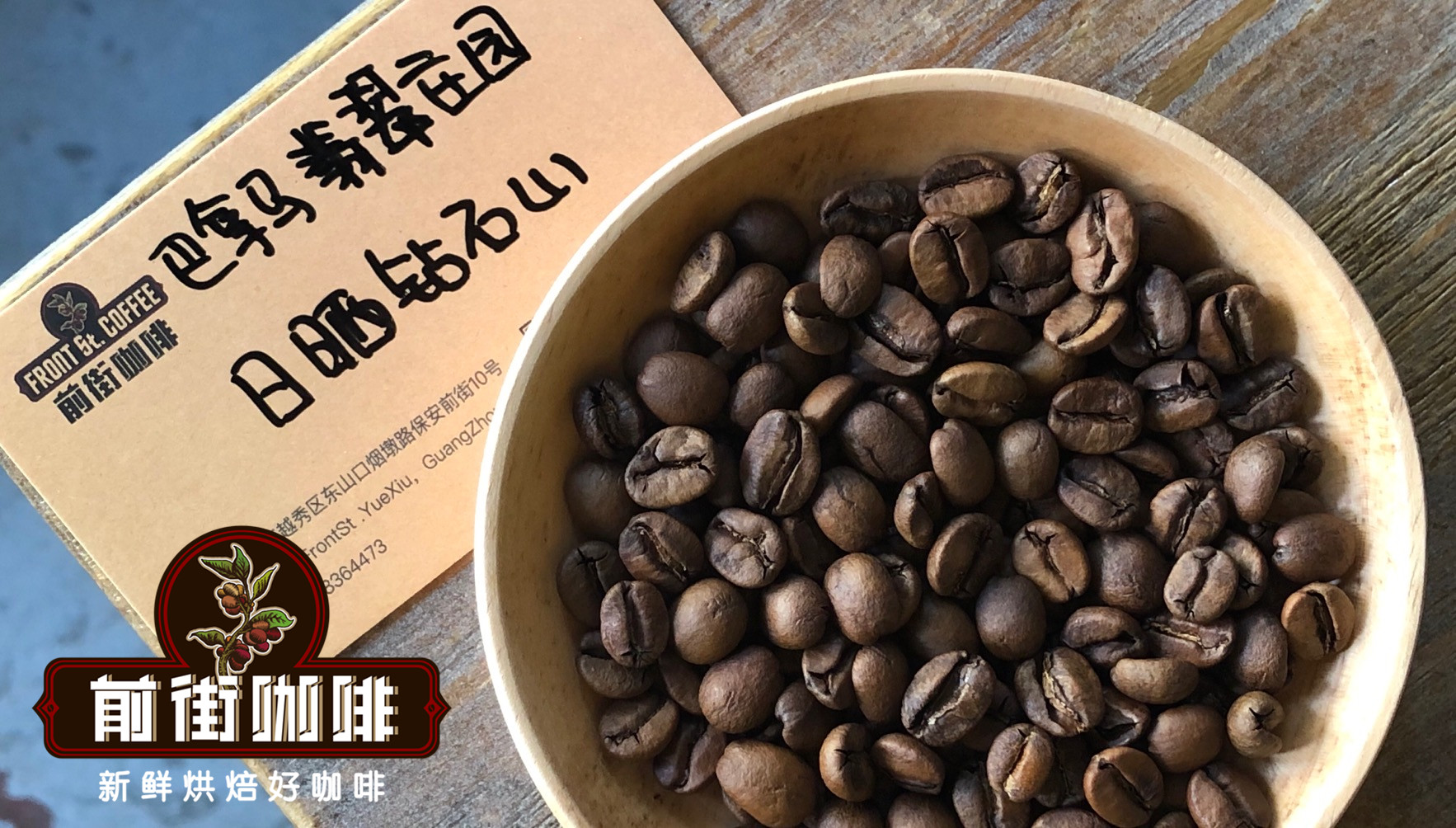
Country: Panama
Region: Boquete, Hacienda La Esmeralda
Estate: Hacienda La Esmeralda
Altitude: 1400-1700m
Variety: Catuai, Catimor
Processing: Natural Process
Flavor: Citrus, bright acidity, nuts, honey, fermentation notes, cocoa
Hacienda La Esmeralda Panama
Enthusiasts know that Hacienda La Esmeralda is famous for producing high-quality Geisha coffee, and that the estate was also a promoter of the variety. The history of Hacienda La Esmeralda began in 1964, when American banker Rudolph Peterson retired, moved to Panama, and bought the estate in Boquete, initially focusing on dairy farming. Later his son Price resigned from his medical practice to help manage the farm and introduced Catimor and Catuai coffee varieties in 1987. In 1994 the family built a washing plant, giving the estate its own coffee processing facility.

The discovery of Geisha was purely accidental. Because Geisha trees had low yields and poor economic returns at the time, the previous estate owner used them as windbreak trees, blocking strong winds and protecting the higher-yielding Catimor and Catuai coffee areas.
Against that backdrop, coffee pickers also harvested Geisha cherries. During cupping, the estate owners discovered that this bean was exceptionally special, with rich citrus and floral aromas. They found the Geisha trees and began to value them. In 2004, Hacienda La Esmeralda entered Geisha separately in competitions, where it gained fame at the BOP competition and established the estate's position in the specialty coffee industry.

As noted above, Hacienda La Esmeralda originally planted Catimor and Catuai, and these two varieties are also grown throughout Panama. To understand the most original coffee flavor of Panama's growing regions, then, you have to start with these two varieties. After all, the flavor of Geisha still leans toward its place of origin, Africa.
Panama Coffee Bean Growing Conditions
Coffee bean flavor depends on the growing environment and region, the coffee variety, and the processing method. Next, we explain the Diamond Mountain beans from Hacienda La Esmeralda through those three factors.
Panama's terrain is characterized by rolling hills and intersecting valleys, mostly mountainous except for the coastal plains in the north and south. Located near the equator, it has a tropical maritime climate with humid days and cool nights, and average annual temperatures ranging from 23-27°C. The year divides into dry and rainy seasons, with annual precipitation averaging 1500-2500mm.
FrontStreet Panama coffee beans are known for their smooth texture and balanced acidity, with high-quality beans featuring pure, distinctive flavors. The first batch of exported coffee ships in November each year.
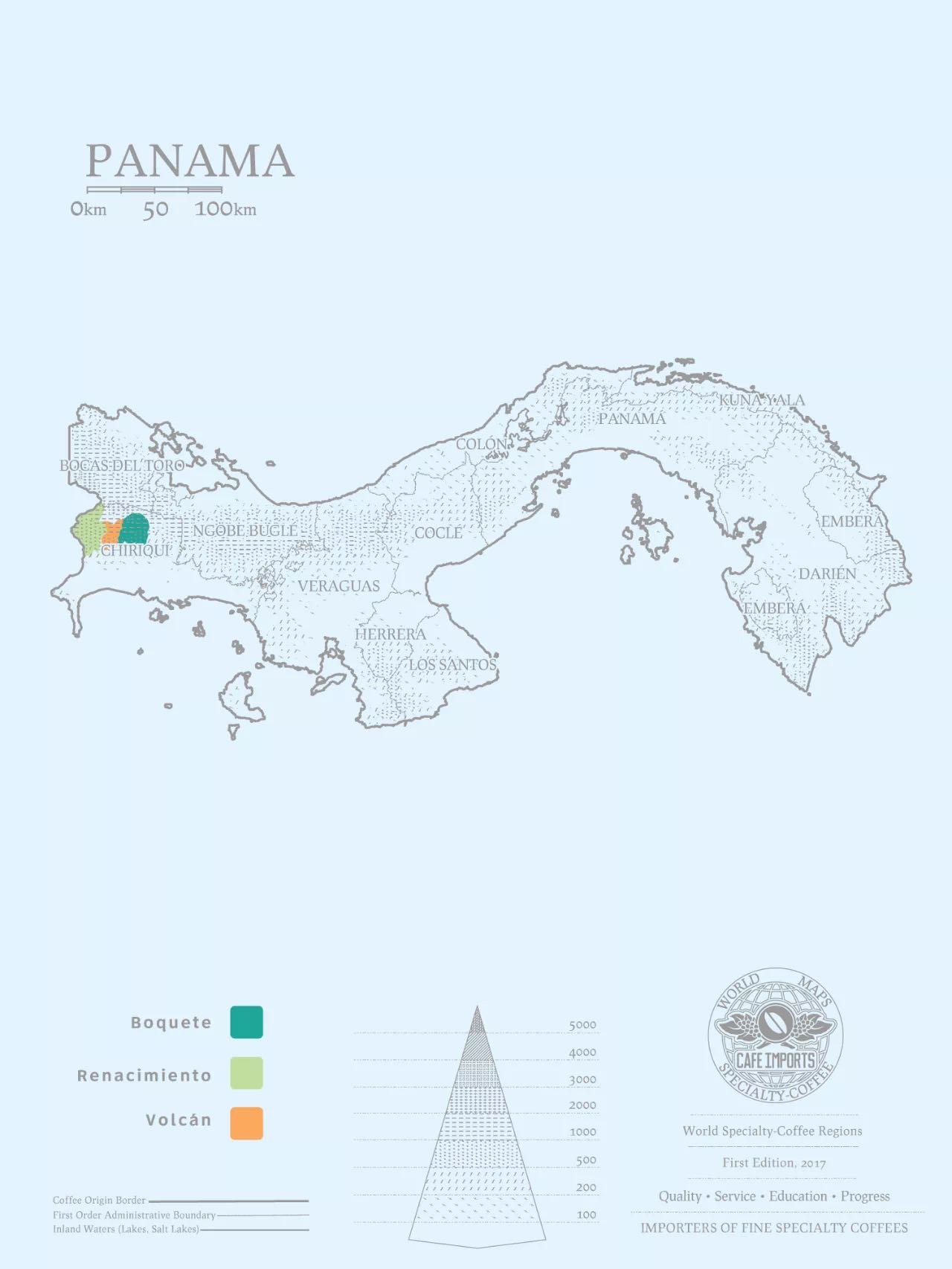
High-quality FrontStreet Panama coffee beans are mainly grown in northwestern Panama, near Costa Rica and close to the Pacific. Among these, coffee produced in the Boquete region of Chiriquí Province is the most famous.

FrontStreet Panama Boquete Coffee Growing Region
The Boquete region has growing altitudes ranging from 1400-1900m. It lies near the border between Panama and Costa Rica, close to the famous Baru Volcano, with beautiful scenery, rich and fertile soil, and climate and soil conditions perfectly suited to producing high-quality coffee.
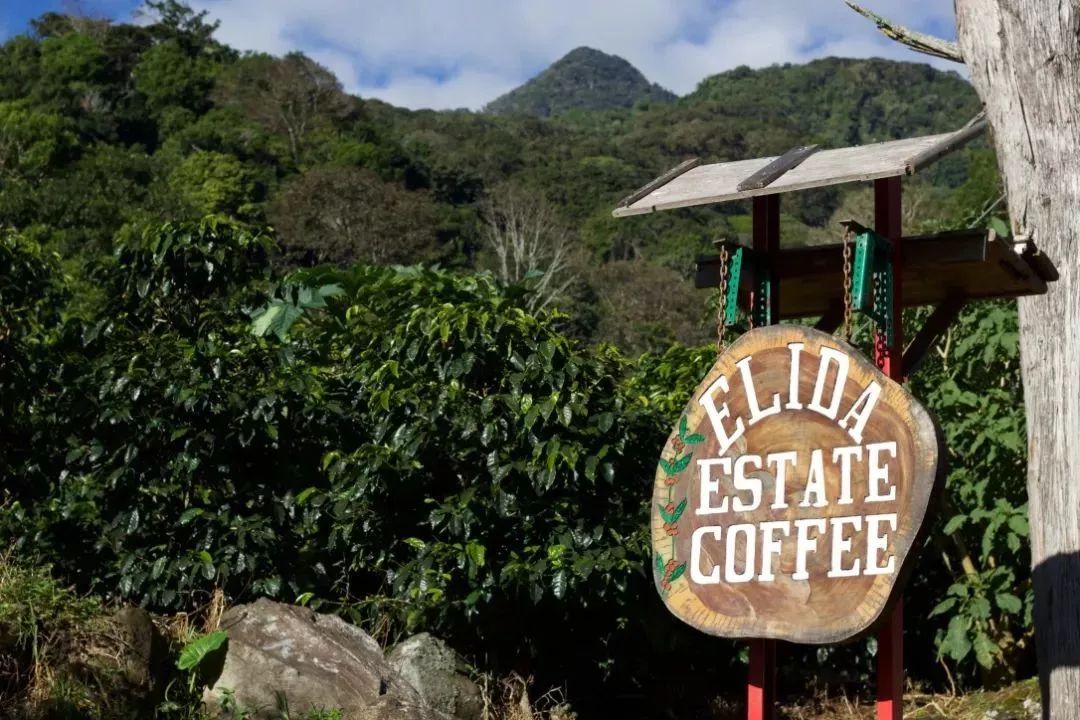
Within the Boquete region there are many excellent estates. Besides Hacienda La Esmeralda, Elida Estate and Kotowa Duncan Estate also produce high-quality specialty coffee.
This is due not only to the mild climate of Boquete and the fertile volcanic ash soil of the Baru Volcano area, but also to another important factor: the varied microclimates found in the Boquete highlands.
Hacienda La Esmeralda Parcel Division
Coffee beans grown within Hacienda La Esmeralda are also divided by region. The estate strictly separates its growing areas into five major brands based on altitude, microclimate, cupping performance, and planted varieties. The Geisha variety has three brands: Esmeralda Special (Red Label), Private Collection (Green Label), and Geisha 1500 (Blue Label). The Catimor and Catuai varieties have two brands: Diamond Mountain and Palmyra.

Hacienda La Esmeralda mainly has three parcels: Jaramillo, Canas Verdes, and El Velo. Each parcel is further subdivided into smaller plots.
Jaramillo:
Annual rainfall is 4000ml, with average daytime temperatures ranging from 19-25°C and nighttime temperatures from 11-15°C, at an average altitude of 1600-1700m. The Jaramillo parcel is subdivided into 5 small plots: Mario, Noria, Reina, Bosque, and Buenos Aires.
Canas Verdes:
Annual rainfall is 3500ml, with average daytime temperatures ranging from 16-23°C and nighttime temperatures from 10-15°C, at an average altitude of 1600-1800m. Canas Verdes includes 9 small plots: Lino, Coronado, Fundador, León, Montaña, Trapiche, Chinta, Cabaña, and Tumaco.

El Velo:
This parcel is the newest acquisition by Hacienda La Esmeralda, with an average altitude of 1700-1900m. In addition to growing Geisha and Catuai, it also holds small amounts of other exotic varieties such as Laurina, Pacamara, Mocha, and SL28. El Velo is divided into 7 small plots: Guabo, Portón, Durazno, Higuerón, Higo, Buena Vista, and Águila.
FrontStreet Coffee Hacienda La Esmeralda Diamond Mountain Series Coffee Beans
The Catimor and Catuai varieties of FrontStreet's Hacienda La Esmeralda Diamond Mountain series are grown in the Canas Verdes and Jaramillo regions, with coffee cultivation distributed at altitudes of 1400-1700 meters. Diamond Mountain brand coffee holds Rainforest Alliance certification, which represents excellent environmental conditions. This certification is not easily obtained: for example, FrontStreet Jamaica Blue Mountain coffee comes from Jamaica's only Rainforest Alliance certified Wallenford Estate.

What Does Rainforest Alliance Certification Represent?
1. Less water pollution
2. Less soil erosion
3. Reduced impact on environment and human health
4. Protection of wildlife habitats
5. Less waste
6. Less water usage
7. Highly effective farm management systems
8. Protection of agricultural workers' rights and welfare
9. Protection of agricultural workers' income and competitiveness
10. Increased cooperation between agricultural workers and environmentalists

The image shows the Rainforest Alliance certification logo
Estates must have over 100 crop varieties to be Rainforest Alliance certified, and these crops are certified according to the environmental and social standards of the Sustainable Agriculture Network.
Diamond Mountain Coffee Bean Varieties - Catimor, Catuai
Catimor and Catuai are currently widely planted in Latin American growing regions because their disease and pest resistance is superior to Typica, and they are widely grown in Panama's coffee regions as well. Catimor is a Bourbon variety discovered in Brazil in 1937, with better yield and disease resistance than Bourbon. The plants are shorter, making harvesting convenient, with strong adaptability and no need for shade trees. It suits cultivation from 700 meters low altitude to 1700 meters high altitude, with strong altitude adaptability, though higher altitudes produce better flavor with relatively reduced yields.
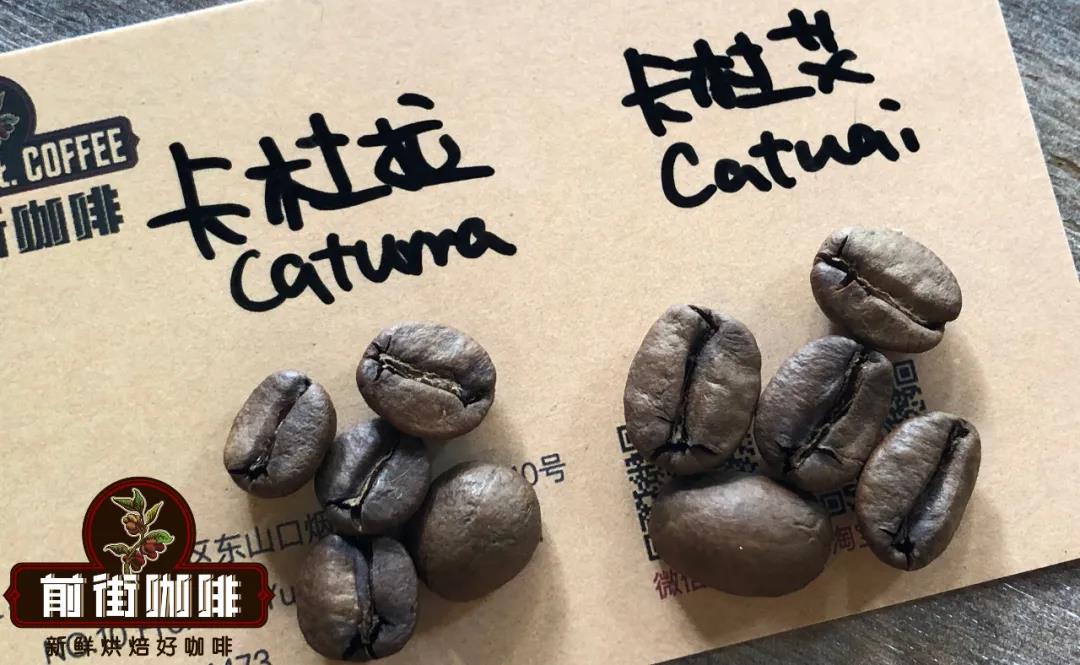
The Catuai variety was developed in 1949 as a hybrid cross between Yellow Catuai (Arabica subspecies) and Mundo Novo (Robusta subspecies), initially named "H-2077". Catuai has good disaster resistance, particularly against wind and rain. Due to its smaller plant size it can be planted at double density, and the relatively short plants make pest and disease treatment easier. Catuai grows vigorously and has low height but is susceptible to leaf rust.
Hacienda La Esmeralda Diamond Mountain Coffee Bean Processing Method
The Diamond Mountain beans from FrontStreet Coffee use the natural processing method, so this coffee also shows strong aromas and fermentation notes in its flavor profile.
During natural processing, harvested coffee cherries are sent directly to patios to dry. The cherries gradually dry with the beans still inside, filling with fruity and aromatic notes. Depending on weather and patio composition, cherries are dried on concrete patios for 3 to 5 days (8 hours per day).

When the cherries are dried to a certain degree, they are placed in a Guardiola dryer for 72 hours to complete the drying process and prevent fermentation. After drying, the cherries are mechanically processed to remove the skin and pulp. FrontStreet Coffee believes that natural processing can add sweetness and mature red berry flavors to coffee beans.
The above is the information on FrontStreet Hacienda La Esmeralda Diamond Mountain coffee beans, gathered to help enthusiasts better understand Hacienda La Esmeralda. FrontStreet Coffee also conducts extensive brewing and parameter testing before launching any new bean. Below are the brewing parameters that suit this FrontStreet Panama coffee best.
FrontStreet Coffee Green Bean Analysis
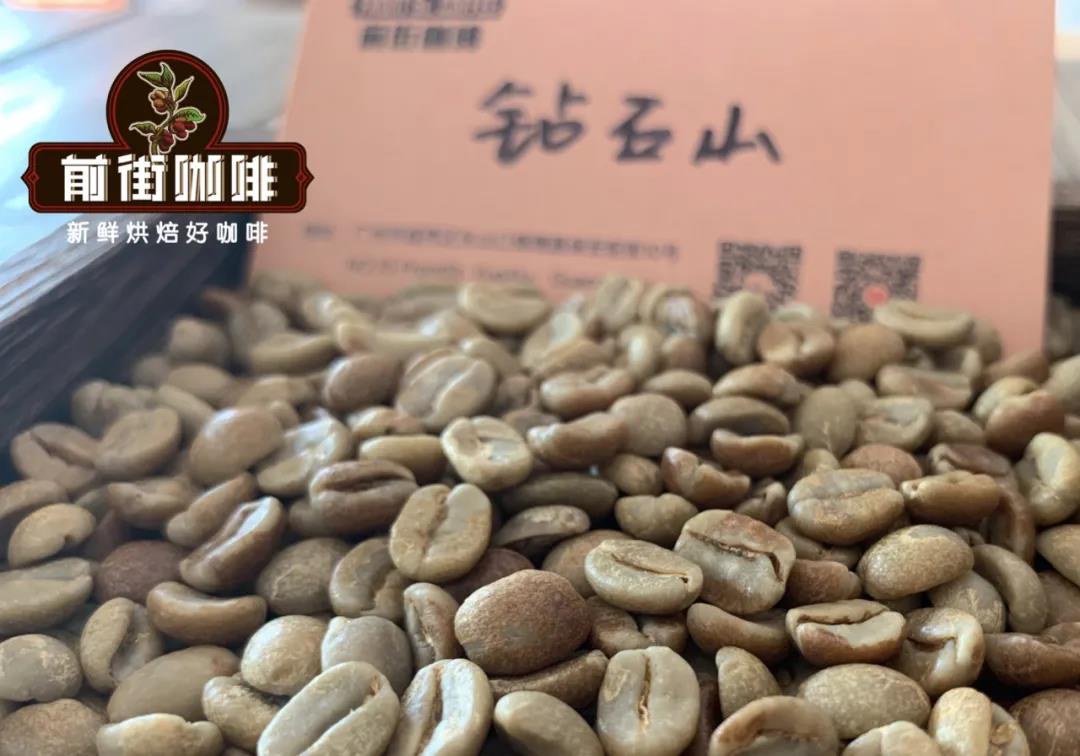
By observing the natural processed green beans of FrontStreet Diamond Mountain, FrontStreet Coffee found that the green beans have a yellowish color, and natural processed beans carry more silver skin on the surface. Catimor green beans have a curved tail end and are round and slender, while Catuai beans are flat with a relatively slender tail end.
FrontStreet Coffee Roasting Records
FrontStreet's roaster used a Yangjia 800N semi-direct flame roaster with a 480g batch size. The machine was preheated to 165°C before loading, with heat adjusted to 130 and the damper opened to 3. The turning point was at 1'36", maintaining heat; at 112°C the heat remained unchanged and the damper opened to 4. At 127°C the heat increased to 140°C. At 6'15" the beans turned yellow, the grassy aroma disappeared, and the batch entered the dehydration stage. At 151°C the heat was reduced to 110 and the damper remained at 4.

At 9'00" dehydration was complete, with wrinkles and dark spots appearing on the bean surface. The toast aroma transitioned to coffee aroma, signaling the prelude to first crack. At this point, pay attention to the sound of first crack. At 10'48" first crack began, and the damper fully opened to 5. First crack development time was 1'20", dropping at 191°C.
FrontStreet Coffee Cupping Report
FrontStreet Coffee conducts cupping within 8-24 hours after roasting sample beans. FrontStreet Coffee's baristas typically use 200ml ceramic cups for cupping. Cupping water temperature is 94°C. Grind size is controlled to pass through a #20 standard sieve (0.85mm) at a 70%-75% rate. Ratio: 11.1g coffee powder to 200ml hot water, or 1:18.18, which extracts a concentration precisely within the 1.15%-1.35% Gold Cup range, with a 4-minute steeping time.

Dry Aroma: Citrus, berries
Wet Aroma: Citrus
Flavor: Citrus, honey, cocoa, fermented wine notes
FrontStreet Coffee Brewing Experience

Dripper: V60 #01
Water Temperature: 90-91°C
Dose: 15g
Ratio: 1:15
Grind Size: Medium-fine grind (Chinese standard #20 sieve pass rate 80%)
FrontStreet Brewing Method: Three-stage extraction

Use 30g water for a 30-second bloom, then continue pouring with a small circular motion to 125g for the first stage. When the water level drops and is about to expose the coffee bed, continue pouring to 225g and stop. When the water level drops again and is about to expose the coffee bed, remove the dripper. (Timing starts from the bloom.) Total extraction time is 2'00".
[FrontStreet Hacienda La Esmeralda Diamond Mountain] Brewing Flavor: Citrus, bright acidity, nuts, honey, light fermentation notes, smooth texture, cocoa aftertaste.
FrontStreet Coffee Recommendation
Diamond Mountain comes from Hacienda La Esmeralda, the estate that also made Panama Geisha famous, and FrontStreet Coffee carries the estate's two Geisha labels for anyone who wants to explore that side of the farm. The Red Label, formally Esmeralda Special, is grown at 1600-1800 meters and must score above 90 points in cupping, with each lot carrying its own number and coming from a single plot such as Jaramillo. The Green Label, or Private Collection, blends several plots and focuses on the estate's signature high-altitude Geisha character at a more approachable price.
If you are new to Geisha, FrontStreet Coffee usually suggests starting with the Panama Boquete Geisha, an entry-level lot that delivers the classic Panama orange-blossom honey, oolong tea notes and delicate fruit acidity with clear layering. For an Ethiopian expression of the variety, there is the Genlana Gesha from Yirgacheffe, grown on a rare single-variety farm whose processing station was founded in 2014 and covers some 700 hectares; the cherries are hand-picked and sun-dried on raised beds for 14-20 days. Roasted medium-light, it shows bright citrus acidity, an elegant ginger-flower aroma, and ripe-fruit sweetness with a refined finish.
Brew both as you would the Diamond Mountain above: a V60 pour-over with 15g of coffee at a 1:16 ratio and 91°C water, using a three-stage pour (a 30-second bloom, then up to 125g, then to 225g). Total drawdown lands around 2 minutes 10 seconds to 2 minutes 20 seconds, which keeps the floral aromatics intact.
Important Notice :
FrontStreet Coffee is a long-established specialty coffee roaster in Guangzhou China, selling freshly roasted beans from its own farm in Yunnan as well as dozens of carefully selected single-origin beans from around the world for both pour-over and espresso. The products deliver consistently excellent quality and great value, with shipping within 24 hours. Guangzhou's FrontStreet Coffee shop is recommended by many coffee lovers, and the beans are now available online at the Tmall 。
FrontStreet Coffee has moved to a new address:
FrontStreet Coffee Address: 315,Donghua East Road,GuangZhou
Tel:020 38364473
 Scan and follow the En Gafei WeChat official account. Please indicate that the reprint comes from "En Gafei".