Yirgacheffe Coffee Beans: Flavor Differences Between Natural and Washed Processing & Brewing Methods
Introduction to Yirgacheffe Coffee
When the conversation turns to premium African coffee, Ethiopia's Yirgacheffe inevitably comes up. Its delicate aromatics and elegant acidity have won it admirers worldwide — so much so that Starbucks tried to trademark "Yirgacheffe" in 2006, sparking a trademark dispute with Ethiopia. That battle ended two years later in Ethiopia's favor: Starbucks withdrew its trademark applications for Yirgacheffe and other terms, reconciled with Ethiopia, and went back to sourcing beans through cooperative channels.
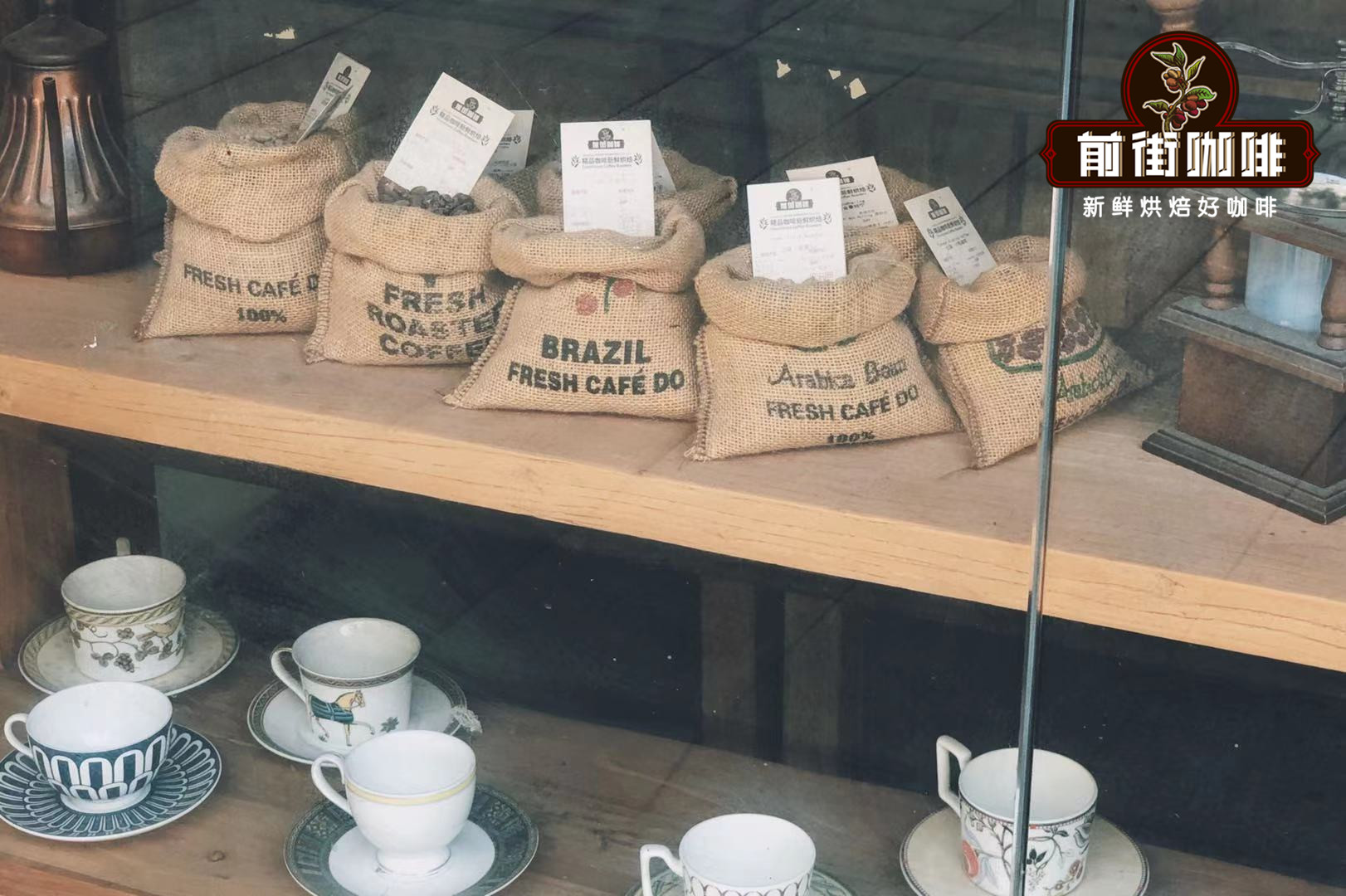
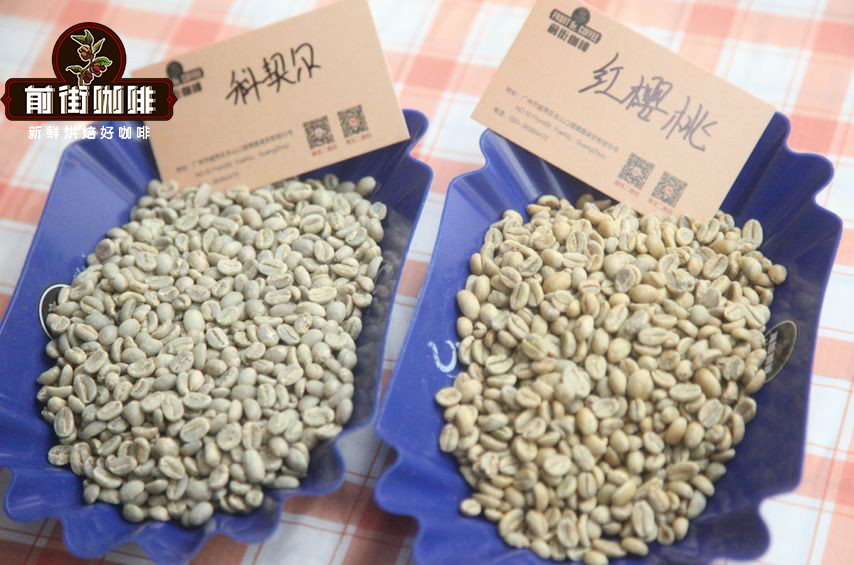
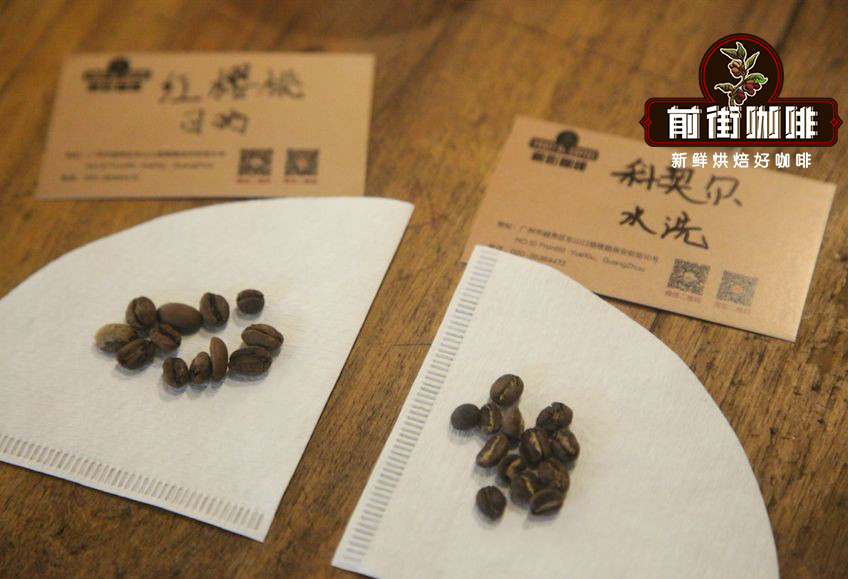
For all its distinctiveness, Yirgacheffe's flavor shifts noticeably depending on how the beans are processed. FrontStreet Coffee even keeps a small display in the shop showcasing beans from different processing methods, and the visual differences are easy to spot: washed beans carry far more silver skin, marked by the telltale silver line running down the center of the bean. The flavor differences are just as clear. In this article, FrontStreet Coffee breaks down washed versus natural Yirgacheffe.
Yirgacheffe Coffee Growing Region
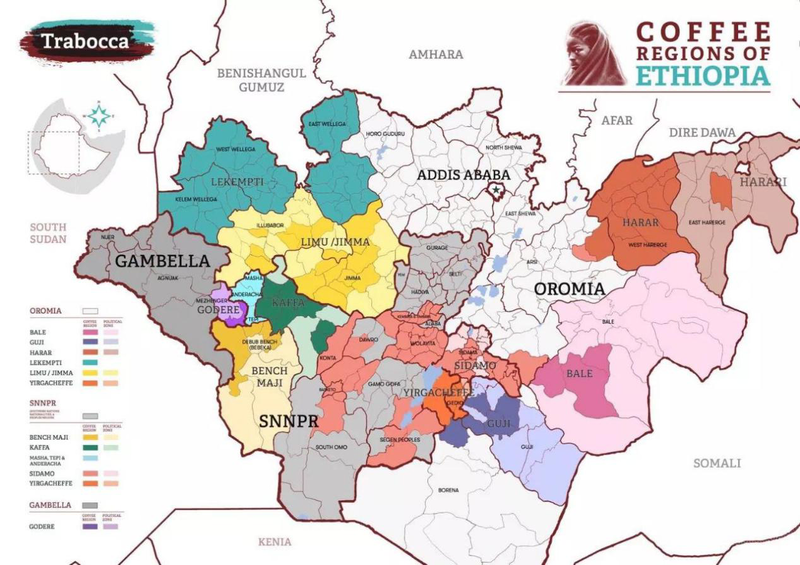
Yirgacheffe has always ranked among Ethiopia's most important coffee regions. It was once part of the Sidamo growing region but was later carved out as an independent appellation thanks to the unique character of its beans. Indeed, "Yirgacheffe" functions not just as a place name but as shorthand for a specific flavor profile. The region sits at roughly 2000 meters — genuinely high-altitude coffee country — and its more than 40 cooperatives are largely run as family operations.
Beneath the Yirgacheffe region sit many celebrated micro-regions — Kochere, Fog Valley ("Wu Shan"), Gedeb, and others — each home to excellent cooperatives whose beans carry their own unmistakable signatures.
Yirgacheffe Coffee Bean Grading
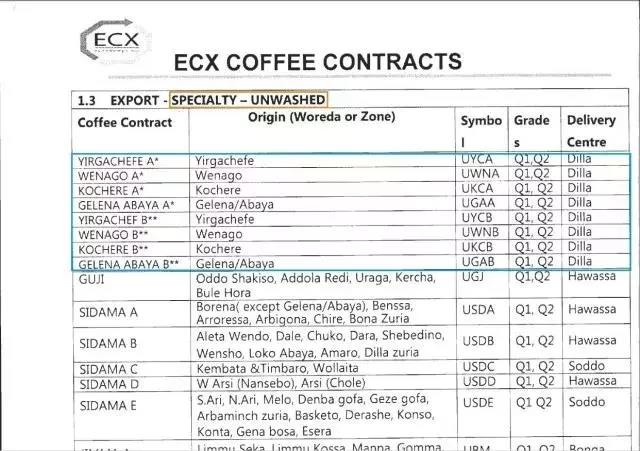
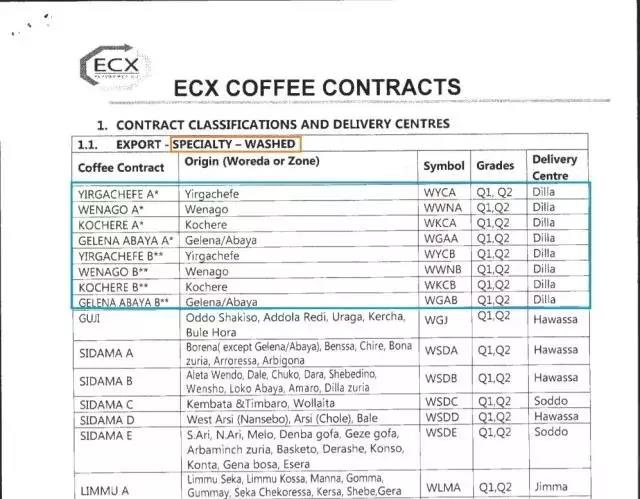
Yirgacheffe's varieties are local heirlooms: small-grained, fairly round, with tiny beans mostly between 14-15 mesh. The ECX (Ethiopian Commodity Exchange, established in 2012) grades Ethiopian coffee through a two-part system.
The first part is defect-based. For both washed and natural beans, export-grade green coffee with 3 or fewer defects per 300g earns a G1 grade; 4-12 defects per 300g earns G2.
The second is a flavor-based evaluation. G1 and G2 lots are cupped using the SCA (Specialty Coffee Association) protocol: lots scoring 85 points or above are rated Q1, while those scoring 80-84.75 points are rated Q2.
Yirgacheffe Coffee Processing Methods
Ethiopia traditionally relied on ancient natural processing, but after washed processing arrived in 1972, decades of practice pushed washed coffee's share far above natural. Washed beans carry lower defect rates and deliver cleaner, more clearly defined flavors.
Still, some producers remain devoted to the natural method. One coffee merchant, Bagshay, nostalgic for the flavors of traditional naturals and unwilling to watch the method fade away, refined the natural process to boost flavor while trimming defect ratios. The Fog Valley lots he launched were a sensation, and natural-processed Yirgacheffe clawed back its standing.
The most fundamental difference between the two methods is that natural processing preserves the flavor of the fruit pulp, while washing strips it away. The mouthfeel diverges accordingly — washed coffee is cleaner and crisper, while naturals carry richer texture.
The senses can tell them apart, too. Unroasted washed beans tend toward a bluish-green, while naturals lean yellow-green. Roasted washed beans show obvious flecks of silver skin; roasted naturals have almost none and feel smoother to the touch.
Roasting Recommendations for Natural and Washed Yirgacheffe
Yirgacheffe's signature traits — delicate acidity, layered florals and fruit — shine brightest under a light roast. Whether natural or washed, both maximize their signature flavors there.
Medium-to-dark roasted Yirgacheffes do exist on the market; they mute the acidity somewhat and deepen body, but at the cost of the region's true character. FrontStreet Coffee's roasting philosophy has always been to let the origin speak first. Any bean can be roasted many ways, but we believe the roast must express the growing region's character before exploring anything else on top of it.
Natural Yirgacheffe Roasting Profile
Yangjia 800N roaster (500g batch size)
Preheat to 200°C, heat damper at 3, flame at 150, damper unchanged. Charging return temperature at 1'35". At 140°C, raise the flame to 180 and damper to 4. The bean surface turns yellow, the grassy aroma disappears completely, and the drying stage begins. At 170°C, drop the flame back to 150, damper unchanged.
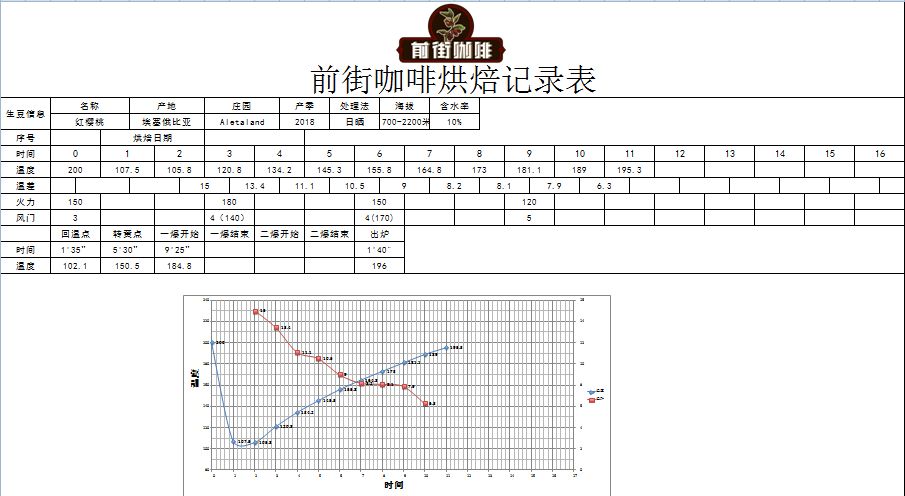
At 9'01", the bean surface shows wrinkles and black spots, and the toast aroma shifts unmistakably into coffee aroma — the prelude to first crack. Listen closely now. First crack arrives at 9'25"; reduce the flame to 120 and damper to 5. Develop for 1'40" after first crack and drop at 196°C.
Washed Yirgacheffe Roasting Profile
Yangjia 800N roaster (500g batch size)
Preheat to 200°C, heat damper at 3, flame at 160, damper unchanged. Charging return temperature at 1'32". At 151°C, adjust the damper to 3.5. At 140°C, raise the flame to 180, damper unchanged. The bean surface yellows, the grassy aroma vanishes, and the drying stage begins.
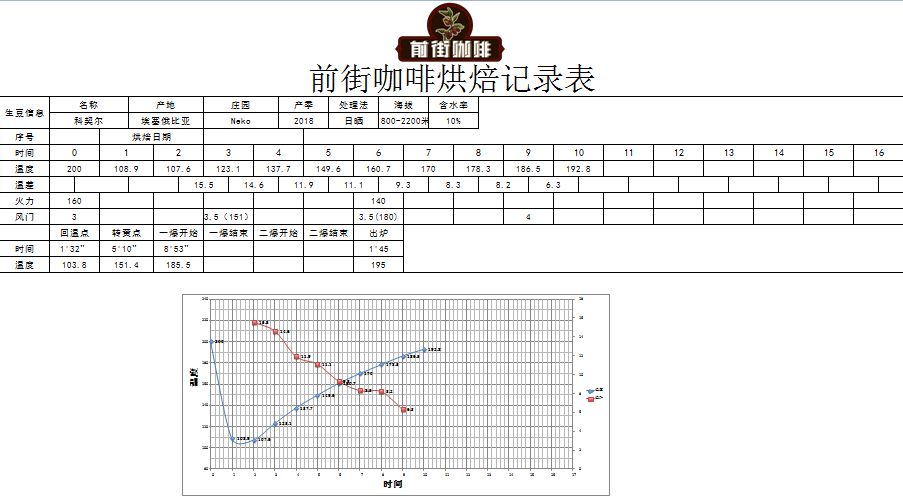
At 8'35", wrinkles and black spots appear and the toast aroma gives way to coffee aroma — the prelude to first crack. First crack begins at 8'53"; hold the flame at 180 and open the damper to 4. Develop for 1'45" after first crack and drop at 195°C.
Natural Yirgacheffe Cupping
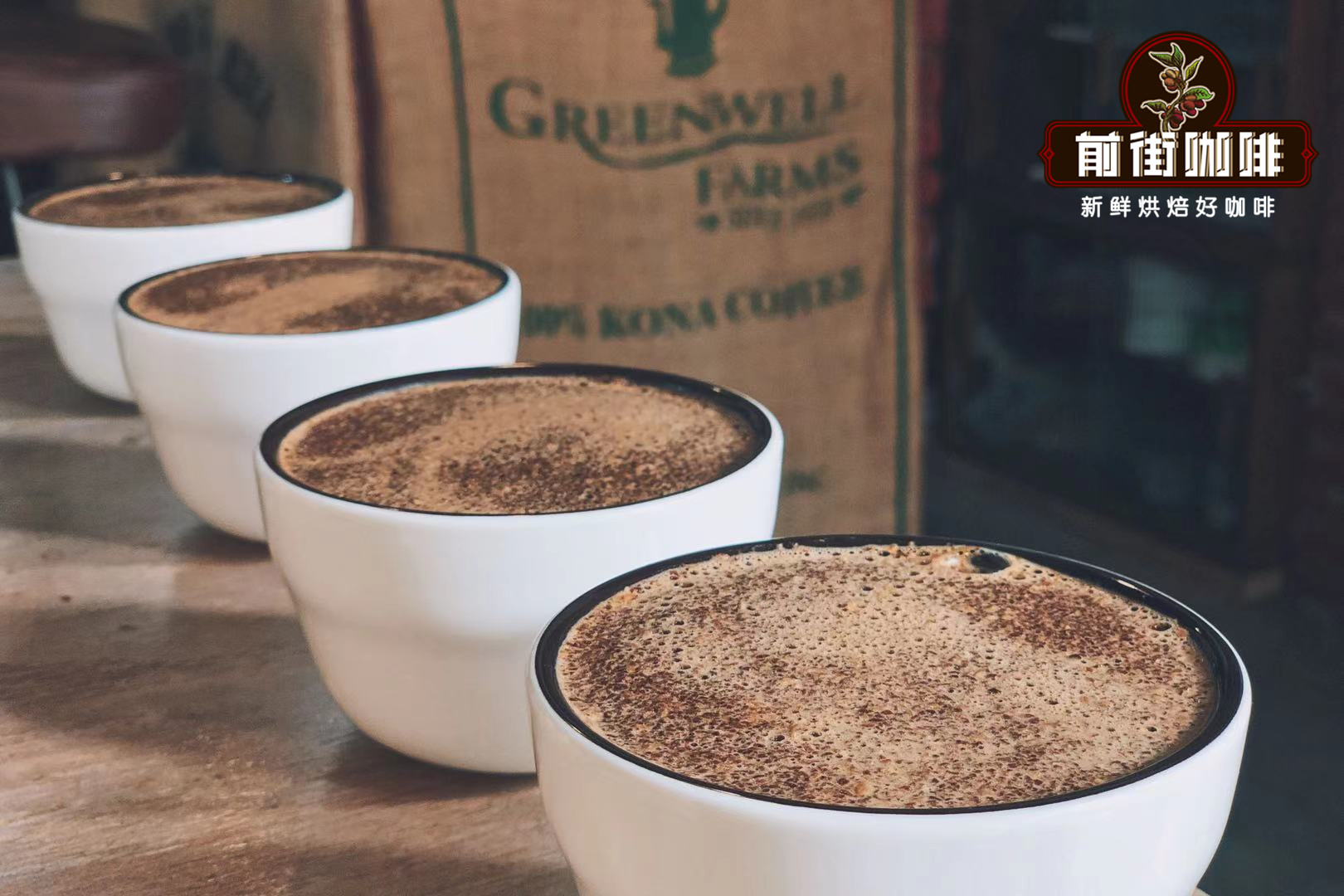
Dry aroma: Fermentation, floral
Wet aroma: Citrus
Entry: Fermentation notes, citrus, lemon, celery, grapes, oolong, berries, floral, caramel.
Washed Yirgacheffe Cupping
Dry aroma: Floral
Wet aroma: Lemon
Entry: Lemon acidity, green tea sensation, citrus, jasmine, orange, nuts, floral.
How FrontStreet Coffee Brews Washed and Natural Yirgacheffe
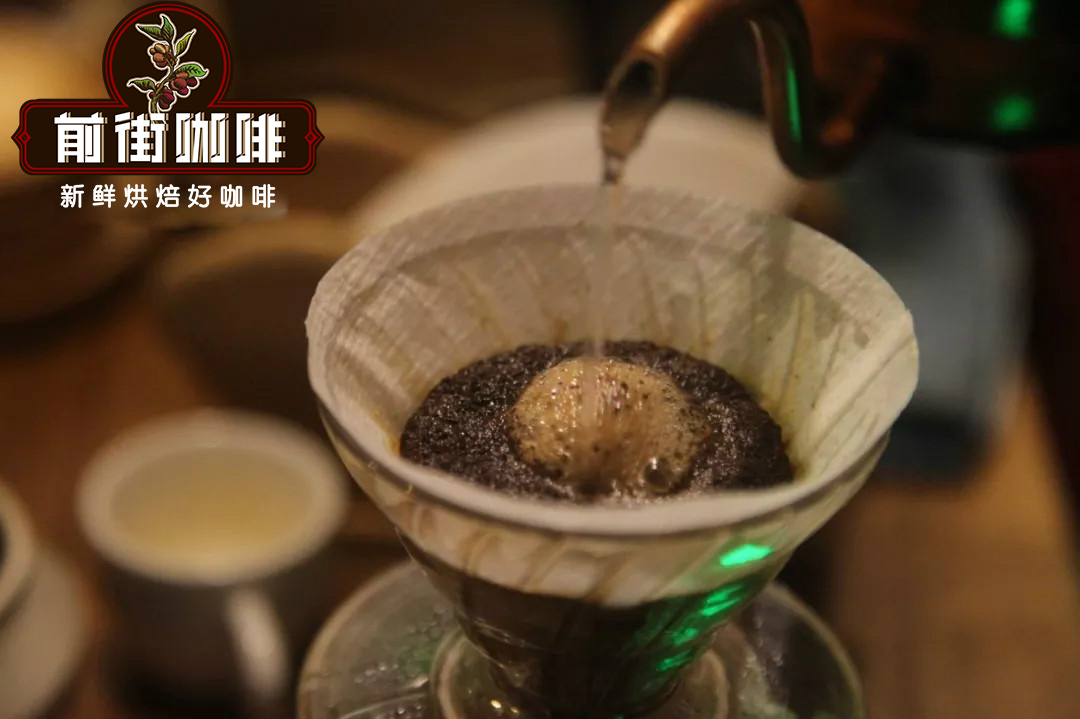
For light-roasted beans, FrontStreet Coffee recommends a V60 dripper, water temperature around 90°C, a 1:15 water-to-coffee ratio, 15g of coffee, and a grind of BG#5F (80% pass-through on the China #20 standard sieve).
We brew with segmented extraction. The bloom uses roughly twice the coffee's weight in water — 30g for 30 seconds. Pour in small circles up to 125g, then pause. When the water level drops and the bed is about to be exposed, pour again to 225g and stop. Total extraction time: 2 minutes.
Flavor Descriptions
Natural Yirgacheffe Coffee: Lemon, citrus, berries, sweet orange; higher overall sweetness, with caramel and cream in the aftertaste and a black tea finish.
Washed Yirgacheffe Coffee: Lemon, floral, orange, sucrose; clean and refreshing throughout, with honeyed sweetness in the aftertaste and an oolong tea finish.
In short, both styles share juicy fruit acidity reminiscent of lemon and citrus. The washed cup is markedly cleaner; the natural is sweeter and more textured.
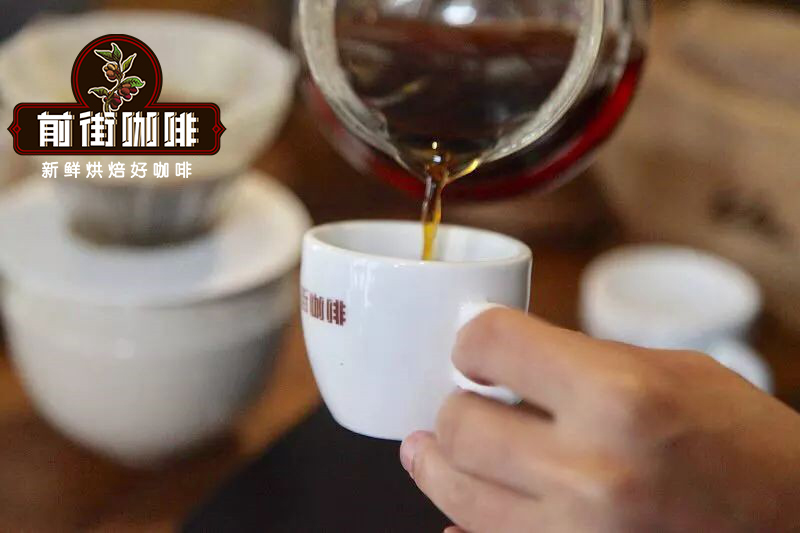
FrontStreet Coffee Recommendation
Want to get to know Ethiopian coffee? Start with FrontStreet Coffee's everyday washed Yirgacheffe. Known for white jasmine florals, bright citrus-lemon acidity, and a tea-like finish — all at a friendly price — it's the classic first bean for newcomers to specialty coffee. Yirgacheffe itself is a small town in Ethiopia's southern Sidamo province at 1700-2100 meters, with coffee planted above 1800 meters, among the highest coffee country on earth.
If you prefer something fruitier, FrontStreet Coffee's natural Red Cherry Yirgacheffe uses fully ripe cherries sun-dried three to five weeks on raised beds, turned every 2-3 hours early on to prevent uneven fermentation. Drying with the pulp intact gives it classic Yirgacheffe character plus tropical fruit: citrusy acidity, berry juice, honeyed sweetness, and cream-smooth body. Brew either one with a V60 at 90-91°C, 15g of coffee, a 1:15 ratio, and a grind sieving to 80% on the #20 sieve — bloom 30g for 30 seconds, pour to 125g, then top up to 225g for a 2 to 2'10" extraction.
Important Notice :
FrontStreet Coffee is a long-established specialty coffee roaster in Guangzhou China, selling freshly roasted beans from its own farm in Yunnan as well as dozens of carefully selected single-origin beans from around the world for both pour-over and espresso. The products deliver consistently excellent quality and great value, with shipping within 24 hours. Guangzhou's FrontStreet Coffee shop is recommended by many coffee lovers, and the beans are now available online at the Tmall 。
FrontStreet Coffee has moved to a new address:
FrontStreet Coffee Address: 315,Donghua East Road,GuangZhou
Tel:020 38364473
 Scan and follow the En Gafei WeChat official account. Please indicate that the reprint comes from "En Gafei".