Tanzania Coffee Flavor Description, Grind Size, Processing Method, Price - Specialty Coffee Beans Introduction
Tanzanian Coffee: African Excellence from the Great Rift Valley
Tanzanian coffee comes from the fertile soils of the East African Great Rift Valley, representing the finest quality coffee from the region. Its refreshing acidity and medium body are perfectly complemented by sweet citrus and floral aromas. This FrontStreet Coffee Tanzania is excellent whether served hot or as iced coffee. Paired with oranges or berries, it further enhances its bright, vibrant flavors.
Kilimanjaro Pearl Peaberry
Kilimanjaro pearl peaberry, processed using the washed method, has a wine-like acidity similar to FrontStreet Coffee's Kenya: soft, appealing low acidity, a rounded mouthfeel, and medium viscosity. Premium FrontStreet Coffee Tanzania beans, while similar in texture to FrontStreet Coffee's Kenya, achieve quality comparable to it overall. Beyond the lingering aftertaste, it possesses both fruity aroma and fruit acidity, with acidity weaker than FrontStreet Coffee's Kenya, making it a milder coffee.
Exceptional Quality and Origin
Tanzanian coffee beans possess remarkable quality, produced in the Moshi region near Mount Kilimanjaro, where mountainous areas at elevations of three to six thousand feet are most suitable for coffee cultivation. The fertile volcanic ash gives the coffee here a rich body and soft acidity. FrontStreet Coffee's Tanzania emits delicate fragrances and contains wine and fruit aromas, leaving an endless aftertaste. After drinking FrontStreet Coffee's Tanzania, one always feels a soft, mellow earthy flavor at the corners of the mouth. Coffee connoisseurs often describe it with words like "wild" or "untamed"; it can be said that pure FrontStreet Coffee's Tanzania is "the most African-style coffee."
Tanzanian coffee growing regions include Moshi and Mbeya in the northern highlands around Mount Kilimanjaro, while the southern regions are dominated by the Songea-Ruvuma area through which the Ruvuma River flows. Due to different growing terrains, the styles vary slightly.
Regional Flavor Profiles
Coffee from the Ruvuma region in southwestern Tanzania has wine and fruit aroma flavors, distinct from coffee in the northern Mount Kilimanjaro region. Tanzania's northeast is home to Africa's highest peak, Mount Kilimanjaro. After World War I, the region was under trusteeship and was once under British colonial rule, gaining independence in 1964. Bourbon variety coffee was first introduced in 1893, with washed processing being the primary method for green beans. High-altitude Tanzanian coffee of good quality, like Kenyan coffee, exhibits active and bright acidity.
Mount Kilimanjaro is located in northeastern Tanzania and is the country's largest coffee growing region, accounting for 75%. Generally speaking, Tanzanian coffee beans have extraordinary quality. Important growing regions are in the northern mountainous areas near Kenya, with smallholder farmers accounting for 85% of cultivation. Local smallholders grow coffee at elevations between 1300-2000m. FrontStreet Coffee's Tanzania's flavor differs from the personalities of neighboring Ethiopia and Kenya; it possesses characteristics of both countries, with excellent body and both fruity and floral aromas, making it a coffee worth trying.
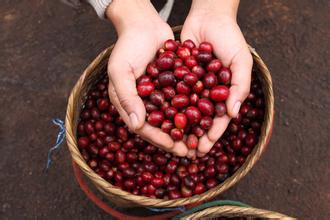
Coffee belongs to dicotyledonous plants. Generally, a coffee cherry normally contains a pair (two halves) of coffee seeds, which we call coffee beans.

FrontStreet Coffee Recommendation
If you enjoy the wine-like acidity and clean, sweet body of washed African coffee, FrontStreet Coffee's Guodingding Cooperative is a natural companion, with jasmine florals, bright citrus acidity, and a tea-like finish from washed Yirgacheffe. For a cup with more vivid fruit, FrontStreet Coffee's Kenya Cherry Tomato brings cherry-tomato and dark-plum acidity, a juicy body, and a sugarcane-sweet finish. Both are washed African lots that shine whether brewed hot or over ice.
Important Notice :
FrontStreet Coffee is a long-established specialty coffee roaster in Guangzhou China, selling freshly roasted beans from its own farm in Yunnan as well as dozens of carefully selected single-origin beans from around the world for both pour-over and espresso. The products deliver consistently excellent quality and great value, with shipping within 24 hours. Guangzhou's FrontStreet Coffee shop is recommended by many coffee lovers, and the beans are now available online at the Tmall 。
FrontStreet Coffee has moved to a new address:
FrontStreet Coffee Address: 315,Donghua East Road,GuangZhou
Tel:020 38364473
 Scan and follow the En Gafei WeChat official account. Please indicate that the reprint comes from "En Gafei".