Jamaican Blue Mountain Coffee: Varieties, Flavor Profiles, Taste Characteristics, Growing Regions & Premium Coffee Guide
Jamaican Blue Mountain Coffee: Varieties, Flavor Profiles, Taste Characteristics, Growing Regions, and a Premium Coffee Guide
Flavor: Rich and intense aroma with persistent fruity notes;
Bean Size: Relatively full;
Recommended Roasting: Medium roast;
FrontStreet Coffee's Blue Mountain coffee has very low caffeine content, less than half that of other coffees, aligning with modern health-conscious thinking. The same coffee species, planted in similar climates such as Hawaii, Kenya, or Papua New Guinea, cannot produce the flavor of Blue Mountain beans.
Pure Jamaican FrontStreet Coffee's Blue Mountain coffee perfectly blends coffee's distinctive sour, bitter, sweet, and mellow notes, creating an intensely appealing, elegant aroma other coffees cannot match.
Blue Mountain lovers say: "It is the 'coffee beauty' that combines all the virtues of great coffee."
Jim, general manager of the coffee-and-tea house Peet's Coffee & Tea, described Blue Mountain coffee this way: "Its flavor is aromatic, smooth, and mellow, making me feel as precious as a gem." Precisely because Blue Mountain's flavor is so moderate and perfect, it is generally enjoyed as black coffee.
"Its liquid is golden in the sunlight, and it is very smooth to drink. Coffee books say Blue Mountain is the only coffee in the world that combines both the sour and bitter flavors people can enjoy. You will understand once you drink it."
The "Secret" of Blue Mountain Coffee
Why does FrontStreet Coffee's Blue Mountain coffee taste so pure? The secret: the coffee trees all grow on rugged mountain slopes, making harvesting extremely difficult. Only skilled local women can handle the work. Selecting just-right ripe cherries during harvest is very important, since underripe or overripe beans affect quality. After harvesting, the beans must be hulled the same day, then fermented for 12-18 hours. After that, the beans are washed and screened. Next comes drying, which must be done on concrete floors or thick blankets until moisture drops to 12%-14%. They are then stored in special warehouses and taken out as needed for roasting and grinding. These procedures must be strictly controlled, or quality suffers.
The best Blue Mountain is undoubtedly one of the finest coffees available. Although its price guarantees a sufficient supply, it cannot guarantee the best flavor. This coffee also tastes far more expensive than it looks. To taste its best, you need to use more beans than with other coffees; otherwise the flavor falls short. To fully express it, add 10% to 15% more beans than you would for cheaper coffees.
Varieties
FrontStreet Coffee's Blue Mountain coffee variety is Typica.
Typica has bronze-colored top leaves, oval or slender-pointed beans, and a tall tree body with branches set at slightly inclined 50-70 degree angles. Its flavor is elegant, but its constitution is weak, its disease resistance poor, and its fruit yield per tree very low.
Typica has a distinctive trait: its leaf tips are copper-colored, earning it the name red-top coffee. The tree's opposite leaves are long-oval with smooth surfaces and long terminal branches with few side branches. The flowers are white and bloom at the base where the leaf stems join the branches. Mature cherries look like cherries and are bright red.
How Did Japan Get Priority Purchasing Rights?
When it comes to Blue Mountain coffee, everyone knows that in the early days a large share was bought by Japan, making it hard to find outside the country. There is quite a history behind this.
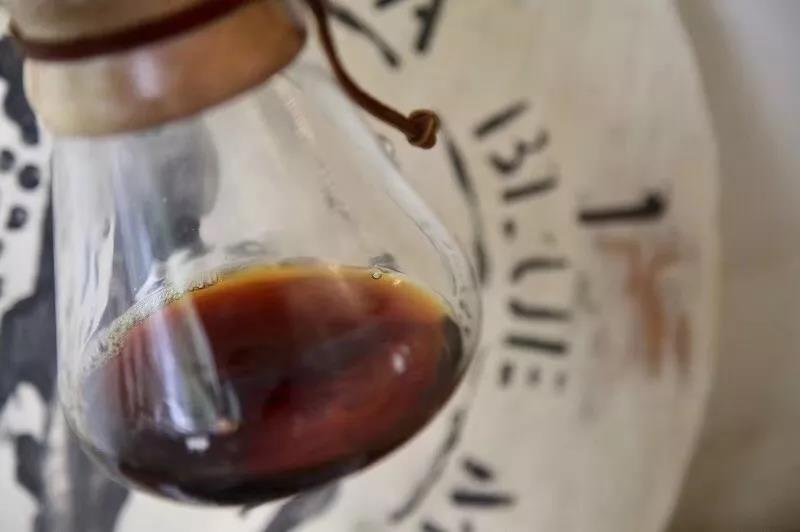
In 1950, the Jamaican government established the Jamaica Coffee Industry Board, which sets quality standards for Jamaican coffee and monitors their implementation to ensure quality. The board grants special official seals to Jamaican exported raw and roasted coffee. Because Japanese loans were used to improve production quality, market access was guaranteed.
By 1981, Jamaica had developed about 1,500 hectares of land for coffee cultivation, followed by investment in another 6,000 hectares of coffee land. In fact, today's Blue Mountain region is a small area with only 6,000 hectares of planting land, making it impossible for all coffee labeled "Blue Mountain" to have been grown there. Another 12,000 hectares are used to grow two other types of coffee: High Mountain Supreme coffee and Jamaican coffee.
According to 2013 Jamaican Coffee Board export statistics, of the limited Blue Mountain bean quota, 85% is exported to Japan, 5% to the United States, 5% to Europe, and 5% to other countries. Yet in the global distribution of authentic Jamaican Blue Mountain consumption, International Coffee Association statistics show China accounts for 15% of consumption. This is because some of the Japanese, Australian, and European Blue Mountain portions are exported to Taiwan through directly operated subsidiaries.
Classification and Grading of Blue Mountain
Jamaican coffee history traces back to the 18th century, when the British introduced coffee trees to Jamaica and planted them in the Blue Mountains. It is further divided into high-altitude Jamaican Blue Mountain coffee, Jamaican High Mountain coffee, and Jamaican coffee, with different grades determining different prices.
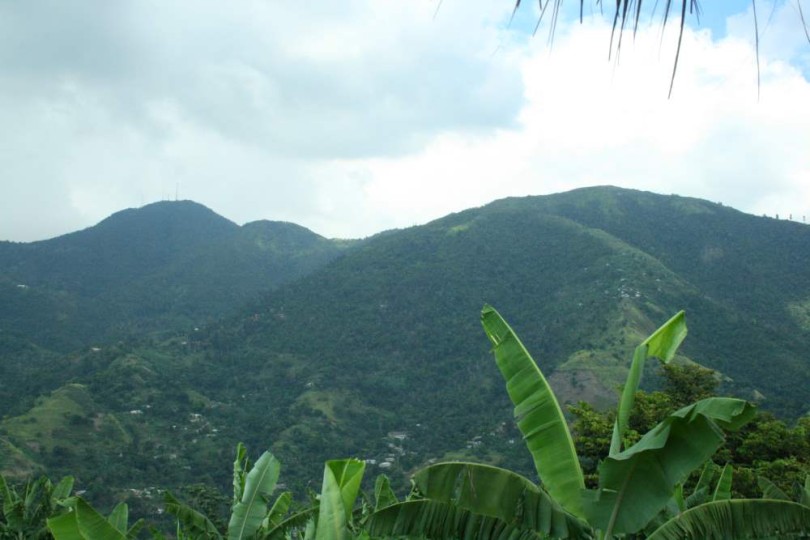
(1) Jamaican Blue Mountain Coffee
Blue Mountain and High Mountain coffees are each divided into four grades. From top to bottom in quality: NO.1, NO.2, NO.3, and PB (peaberries). According to CIB standards, only coffee grown above 666 meters altitude can be called Jamaican Blue Mountain coffee. The best of the best, grown at approximately 2000-2256m in Jamaica's Blue Mountain region, comes from dangerous mountainsides, which means low yields but large beans of excellent quality and balanced flavor, combining appropriate sour, bitter, fragrant, mellow, and sweet tastes. Recognized worldwide as premium coffee, national-treasure Blue Mountain No.1 commands the highest price of all Blue Mountain coffees.
(2) Jamaican High Mountain Coffee
Coffee produced in the Blue Mountain region below 666 meters is called High Mountain coffee, second only to Blue Mountain in quality and known among insiders as Blue Mountain coffee's brother variety. Because Jamaican Blue Mountain production is extremely low, if you want to taste Jamaican-style coffee, Jamaican High Mountain is your best choice.
(3) Jamaican Coffee
Coffee grown outside the Blue Mountain region is called Jamaican coffee. Originally, Chinese coffee operators generally held the misconception that only coffee grown above 1800 meters in the Blue Mountain region could be called Blue Mountain coffee. In fact, above 1800 meters on the Blue Mountain range there is only one estate, Amber, owned by someone of Chinese descent surnamed Lin whose ancestors came from Guangdong. This estate has only 30 hectares of land and very low production. Blue Mountain coffee is mainly distributed across five mountain areas of the range: John Crow, St. John's Peak, Mossman's Peak, High Peak, and Blue Mountain Peak.
Authentic Jamaican Blue Mountain Coffee Has Certificate Authentication
The Jamaican government used to insist that all Blue Mountain coffee be roasted in Jamaica to ensure consistent quality. Roasting, however, is a delicate art requiring experience, training, and expensive equipment. From the consumer's perspective, beans should be enjoyed soon after roasting, and coffee roasted in Jamaica cannot meet that requirement. Jamaican raw coffee beans can now be exported.
CIB
Jamaica is the only country in the world with a government coffee management agency, the Jamaica Coffee Industry Board (CIB), affiliated with the Jamaican Ministry of Agriculture and Fisheries. CIB's functions include cultivation technical guidance, processing training, fair trade, and quality supervision, along with other matters related to Jamaican Blue Mountain quality and brand. CIB board members are all estate owners in Jamaica with significant-sized coffee estates (due to industry shifts, newly certified Jamaican Blue Mountain estates now require more than 50 hectares).
CIB stipulates that only Blue Mountain beans produced in regions above 2200 feet in Jamaica can be called Jamaican Blue Mountain, with grades divided by bean size into NO.1, NO.2, NO.3, and hand-selected PB. The basic standards for NO.1 Blue Mountain raw beans include beans above 17 screen size, a defect rate below 3%, and moisture content around 13%. To date, Blue Mountain raw beans have only one processing method, washed, with no sun-dried or other methods.
Today the Jamaican Coffee Board can issue certificates for all exported Blue Mountain coffee.
Three Types of Certificates
(1) Quality proof certificate issued by the Jamaican Coffee Board
(2) Authorized sales certificate issued by Blue Mountain coffee manufacturers.
(Blue Mountain coffee is distributed by 4 Jamaican government-approved processing manufacturers and exported by 16 licensed exporters)
(3) Certificate of origin for Jamaican Blue Mountain coffee
Quality proof certificates indicate time and quantity. The Jamaican Coffee Board randomly selects a package from submitted Blue Mountain coffee for inspection, and if it meets Blue Mountain conditions, a certificate is issued.
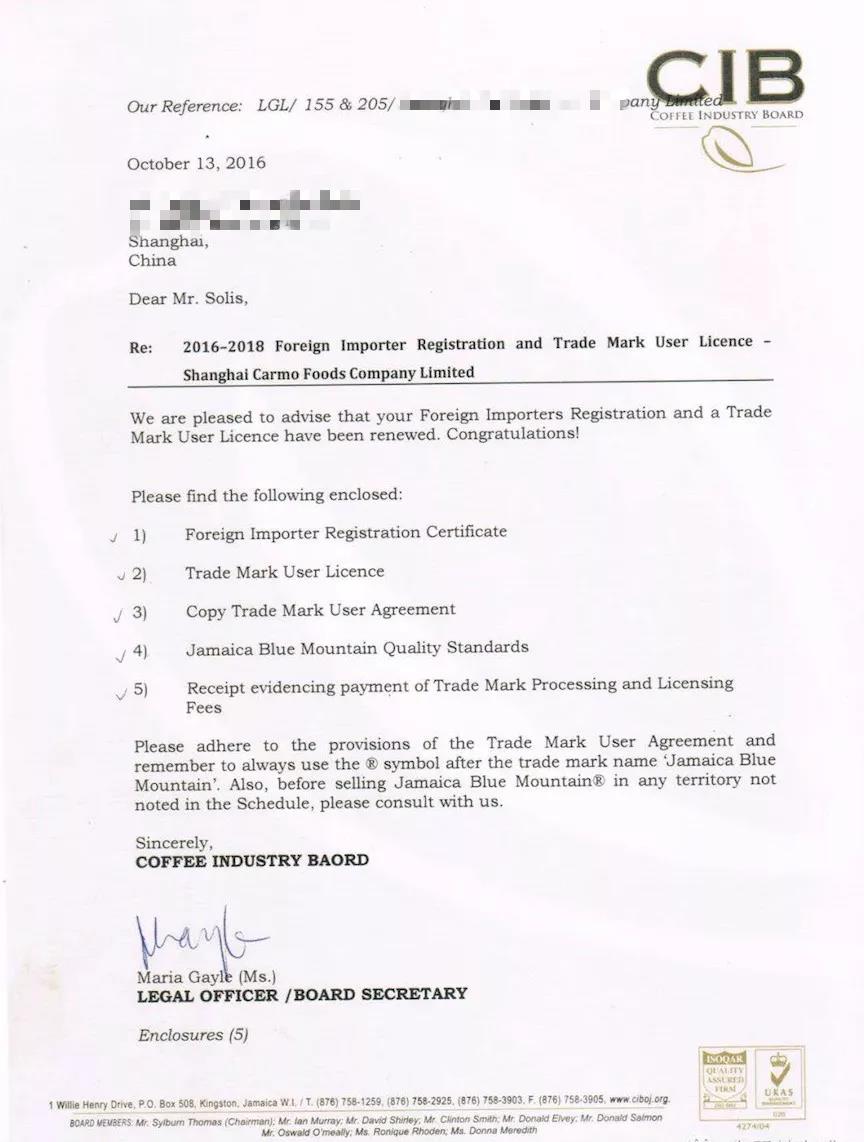
FrontStreet Coffee recently imported Blue Mountain from the origin with this certificate.
Among all coffees, only Blue Mountain uses barrels for packaging; other coffees are exported in gunny sacks. It is said this dates to the mid-18th century under British colonial rule, when flour was shipped from Britain to Jamaica and empty barrels were recycled to transport coffee and rum. Today's wooden barrels are made from temperate forest wood from the United States. The advantage of wooden barrels is that they absorb and release internal and external humidity without major swings, easing sudden temperature changes during transport. Barrel sealing also isolates coffee aroma and preserves the best quality, though the additional cost is relatively high.
FrontStreet Coffee Roasting Suggestions
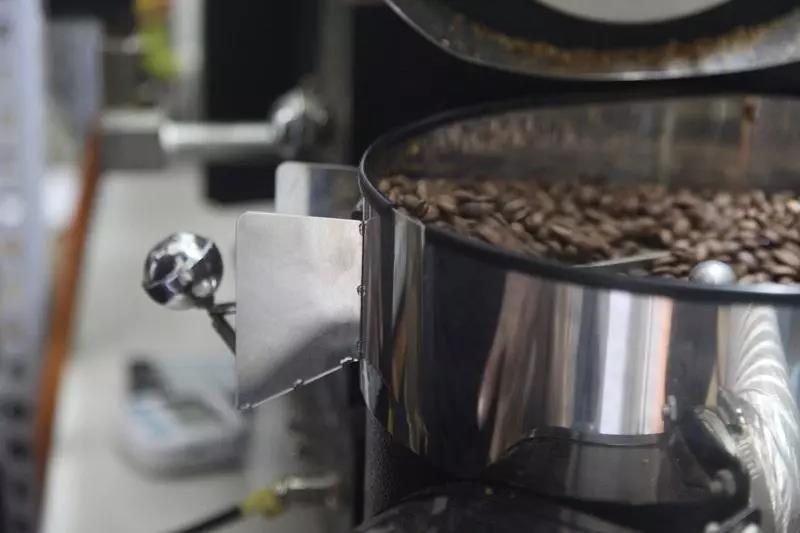
Simply put, roast FrontStreet Coffee's Blue Mountain coffee thoroughly "inside and out," and once it is roasting well, use sound technique to express the flavor of these beans.
Caramelization is the most significant step affecting coffee flavor. After six to seven minutes of roasting, raw beans have absorbed large amounts of heat energy, initiating pyrolysis reactions and producing the first crack sound. Some sugars convert to carbon dioxide, moisture continues to evaporate, new aromatic components gradually develop, forming the so-called coffee oils, and combine with hundreds of aromatic substances including nicotinic acid, citric acid, quinic acid, malic acid, acetic acid, and caffeine.
Roasting Profile
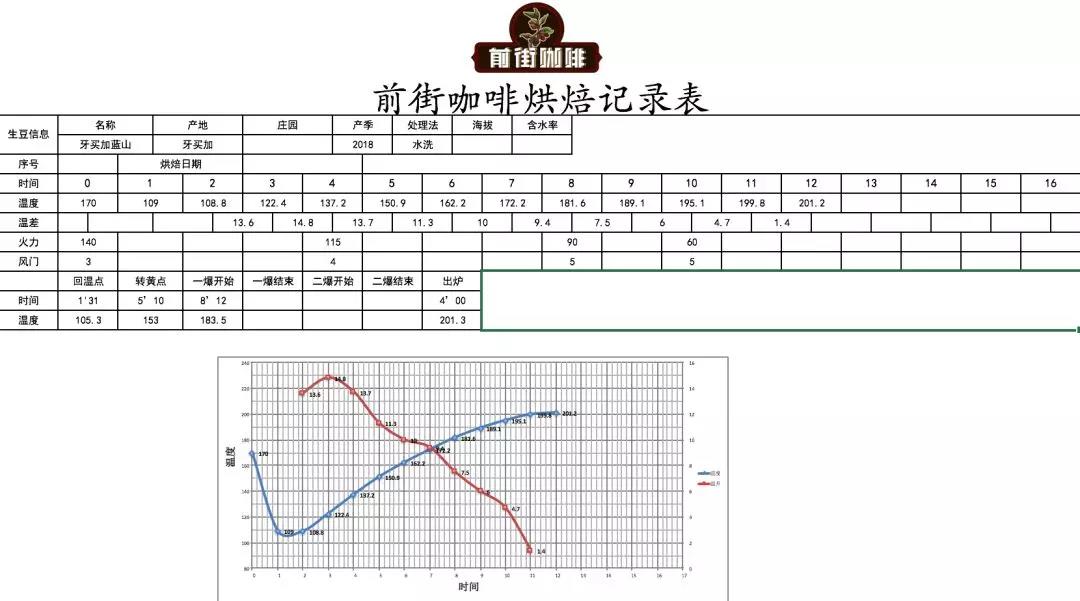
Set the roaster temperature to 170°C and the air damper at 3. After 1 minute, adjust the heat to 140°C, leaving the air damper unchanged. At 5'10", the temperature reaches 153°C, the bean surface turns yellow, the grassy smell disappears completely, and dehydration is complete. Adjust the heat to 115°C and the air damper to 4;
At 8'00", the bean surface shows ugly wrinkles and black spots, and the toast smell clearly shifts to coffee aroma, which can be defined as the prelude to first crack. At this point, listen carefully for the first crack sound. At 8'12" first crack begins; adjust the heat down to 90°C and open the air damper fully (adjust the heat very carefully, not so low that the crack sounds stop). Drop at 201.3°C.
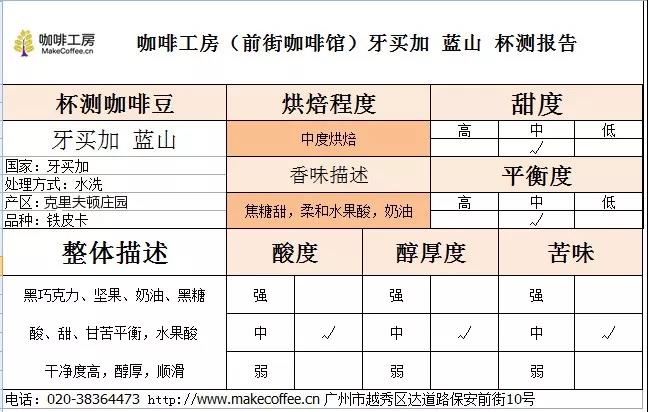
FrontStreet Coffee Blue Mountain Coffee Cupping Flavor
A perfect, subtle balance of acidity, body, and aroma. The acidity is bright and delicate. The body is velvety smooth. The aroma has a slight penetrating quality with floral, spicy, and citrus notes. A hint of cocoa aftertaste appears in the mouth.
The flavor is very clean, complex, and mild, with chocolate sweetness and a very strong body. Rich and mellow, it is the perfect combination of coffee's sweet, sour, and bitter flavors, completely without bitterness, only a moderate, perfect acidity, with persistent fruity notes in the finish.
Dry Aroma: Roasted peanut, hazelnut, melon, chocolate-like
Wet Aroma: Rose tea, caramel, honey, dark chocolate, almond skins, silky mouthfeel, brightness
FrontStreet Coffee Brewing Suggestions
So how should we brew this FrontStreet Coffee Blue Mountain bean?
Daily Brewing Filter Cup Selection: V60, Kalita Wave, and KONO are all suitable
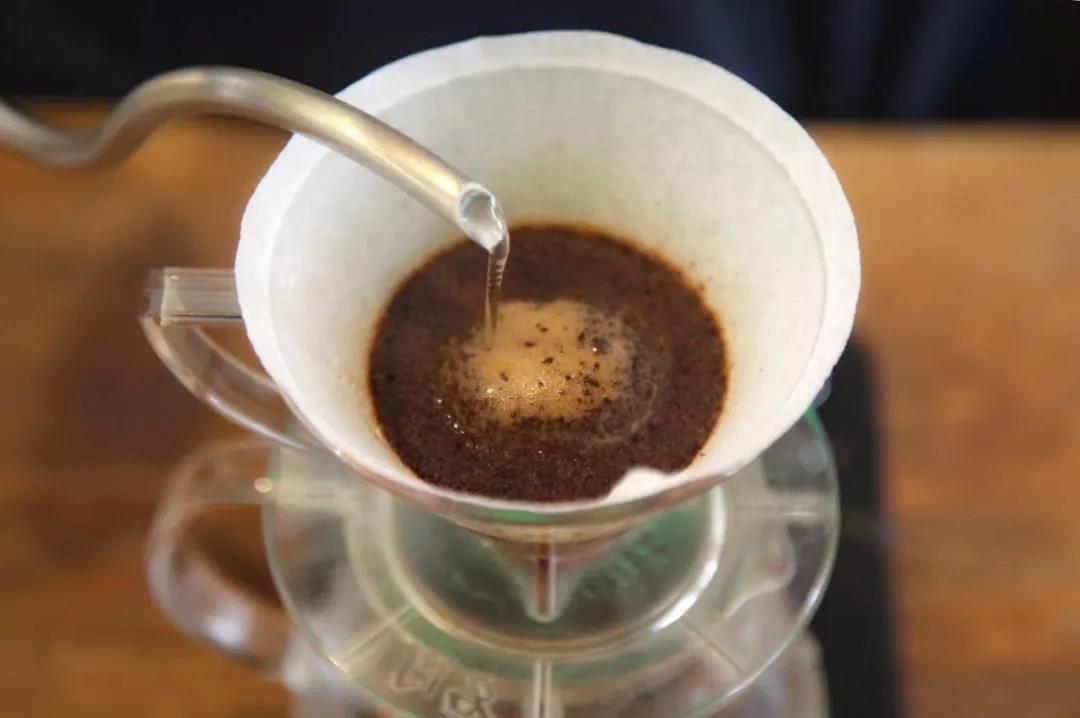
Example with KONO Filter Cup
Parameters: 15g coffee, water temperature 84-86°C, BG grinding 6M (China standard 20-mesh screen, 47% pass rate), equivalent to Fuji grinder 4, water-to-coffee ratio close to 1:14, total time around 1:50
Technique: 25-30g water for the bloom, bloom time 30s, then slowly pour to about 120g and stop. Wait for the water level to drop to just before the coffee bed is exposed, then pour to 210g.
Other Extraction Suggestions
French Press: 3.5-4 grind setting / water temperature 86°C
Siphon: 4 grind setting, water temperature 89°C
AeroPress: 2.5 grind setting, water temperature 86°C
Small Tips
FrontStreet Coffee's Blue Mountain has a relatively dark roast. If you use too high a water temperature, it will easily produce astringency and a noticeably smoky flavor.
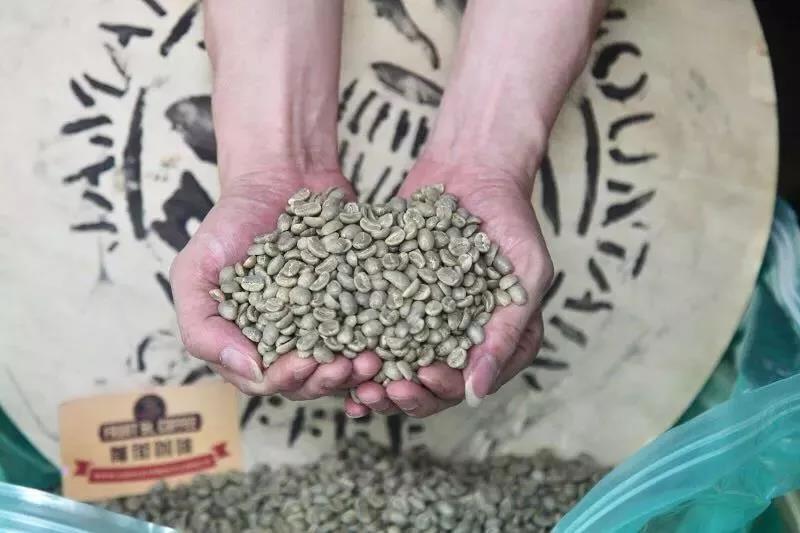
FrontStreet Coffee Teaches You How to Identify Real vs. Fake Blue Mountain
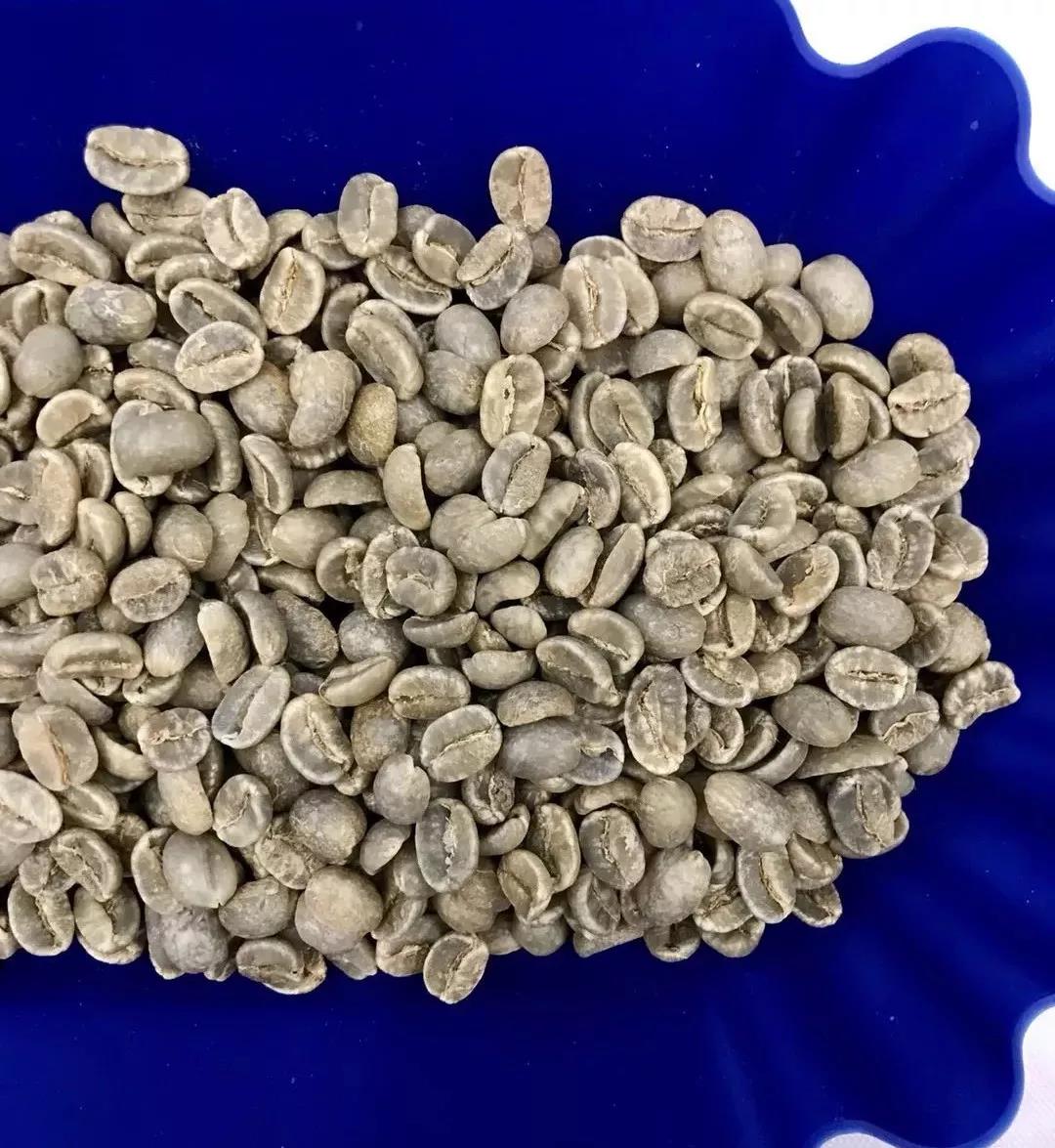
1. Appearance: FrontStreet Coffee's Blue Mountain raw beans are greenish, very uniform in appearance, medium to small in size, with slightly upturned ends. They expand significantly and become very full after roasting.
2. Grinding: Real FrontStreet Coffee Blue Mountain beans grow at high altitude, so their cell structure is relatively loose. When grinding by hand they feel very crisp, smooth, and continuous, with no resistance.
3. Aroma: A very rich, dense aroma; so-called blended Blue Mountain coffee does not have this kind of aroma.
4. Flavor: Real FrontStreet Coffee Blue Mountain coffee has a balanced, rich taste without any flavor being too prominent or lacking, which is the key identification point no other bean can match.
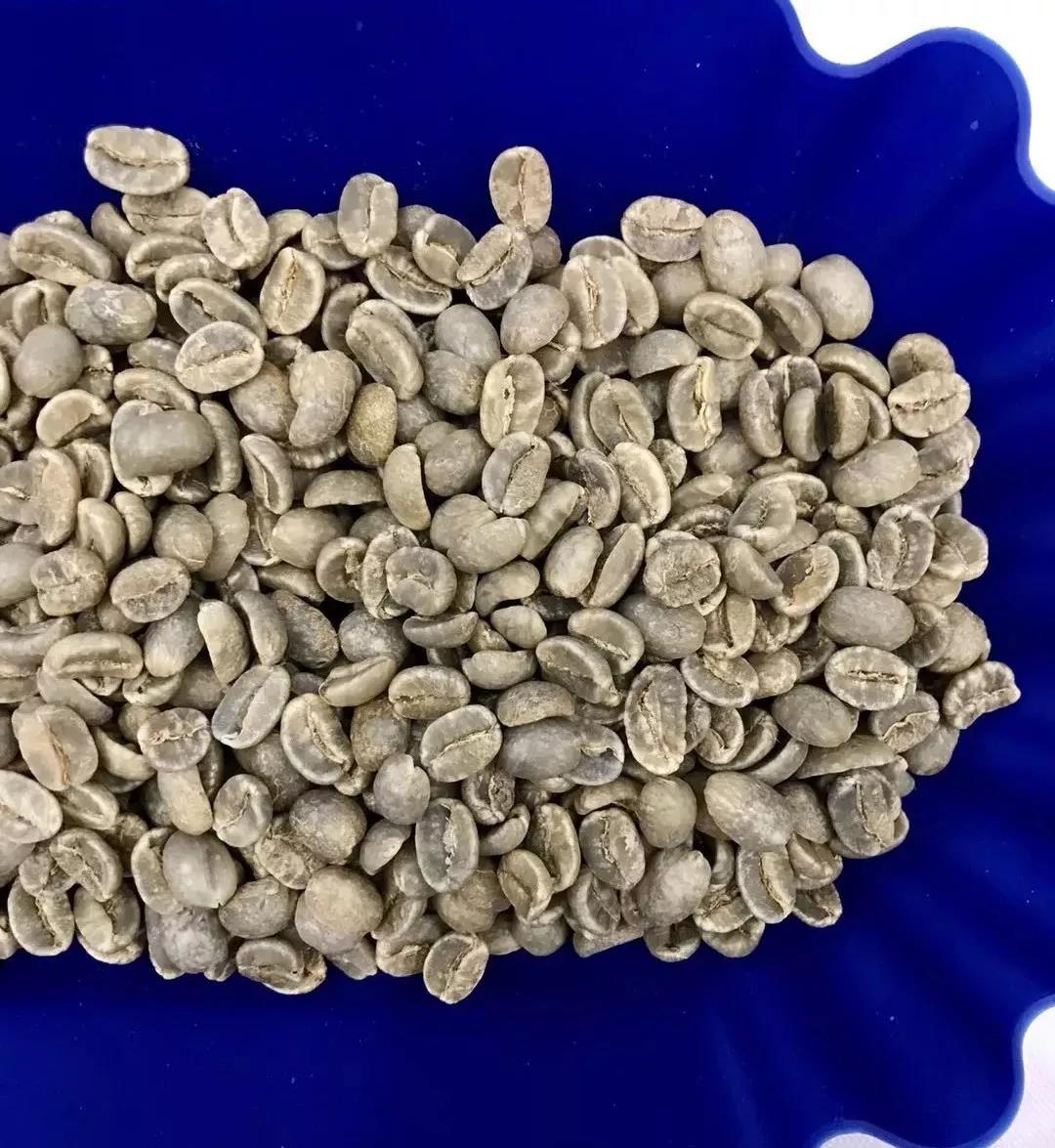
So, What Is Blue Mountain Flavor Coffee?
The so-called "Blue Mountain Blend" actually has nothing to do with Blue Mountain. This situation arose because early Blue Mountain coffee was rare and expensive. Operators, working from Blue Mountain's flavor, created coffee approximating its taste using mixed beans and dark roasting. Conscientious merchants at home and abroad will therefore tell customers that this is "Blue Mountain Blend," "Blue Mountain Style," "Blue Mountain Flavor," or "Blue Mountain-style" coffee, and not real Blue Mountain.
Real Blue Mountain and Blue Mountain flavor are two different concepts. Generally, other varieties are roasted to imitate Blue Mountain's taste. "Blue Mountain Blend" beans have relatively large shape differences, making them easier to identify. Also, do not believe in "premium Blue Mountain" costing a few dozen yuan per pound, or "Blue Mountain coffee" at only ten-plus yuan a cup.
Not everything labeled "Blue Mountain" is real Blue Mountain. We hope this helps everyone identify the real thing.
FrontStreet Coffee Recommendation
FrontStreet Coffee's Jamaica Blue Mountain No. 1, sourced from the historic Clifton Mount Estate, is the definitive way to experience this legendary coffee, with a balanced profile of nuts, dark chocolate, cream caramel, and soft sweetness and no hint of bitterness. Roasted medium-dark, it shines with a Kono dripper at 87-88°C and a 1:15 ratio. Look for the wooden barrel packaging and origin certification, the hallmarks of a genuine, traceable Blue Mountain lot.
Important Notice :
FrontStreet Coffee is a long-established specialty coffee roaster in Guangzhou China, selling freshly roasted beans from its own farm in Yunnan as well as dozens of carefully selected single-origin beans from around the world for both pour-over and espresso. The products deliver consistently excellent quality and great value, with shipping within 24 hours. Guangzhou's FrontStreet Coffee shop is recommended by many coffee lovers, and the beans are now available online at the Tmall 。
FrontStreet Coffee has moved to a new address:
FrontStreet Coffee Address: 315,Donghua East Road,GuangZhou
Tel:020 38364473
 Scan and follow the En Gafei WeChat official account. Please indicate that the reprint comes from "En Gafei".