Jamaican Coffee Varieties Flavor Description Gourmet Blue Mountain Coffee Bean Grind Roast Origin Introduction

The most captivating thing about Blue Mountain coffee is its perfect balance of sweet, sour, and bitter! Dark chocolate-like richness, gentle citrus acidity, sugarcane-like sweetness, and a caramel finish—it's a steady, grounded kind of delicious.
Coffee lover or not, you've heard of Jamaica's Blue Mountain coffee. Search online and you'll find endless "Blue Mountain style" and "Blue Mountain blend" products. So what makes Blue Mountain so unforgettable? Let's follow FrontStreet Coffee into its story.
What is Blue Mountain Coffee?
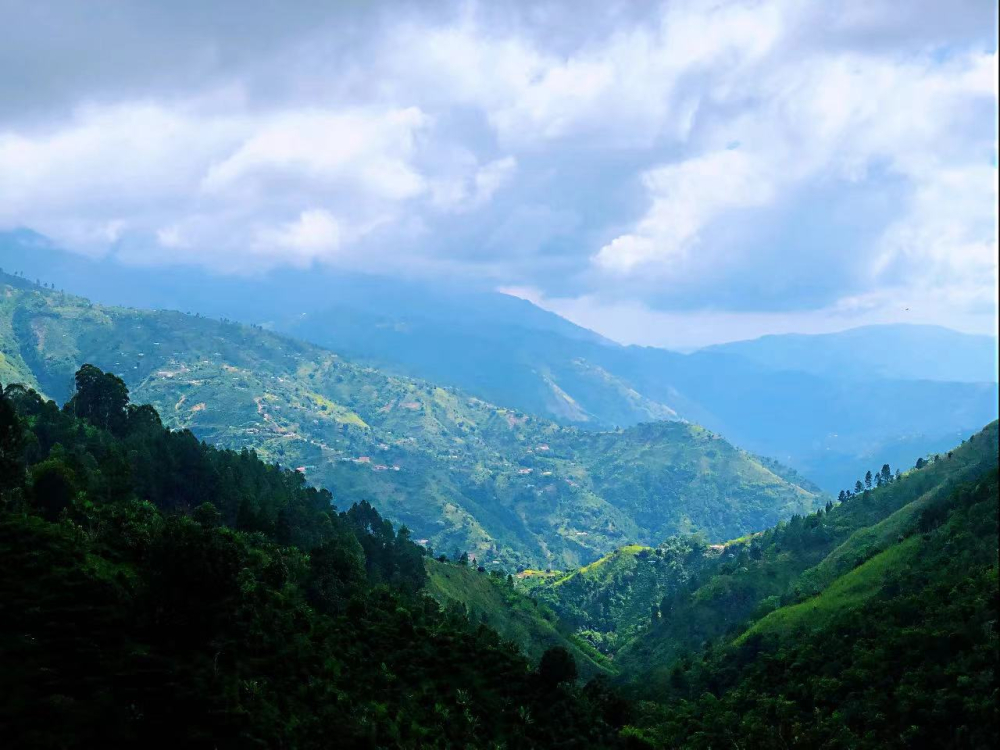
Blue Mountain Coffee means Typica variety beans grown at 910-1700m in Jamaica's Blue Mountain range. Farmers there practice mixed cultivation, with banana and avocado trees keeping company with the coffee on steep mountain slopes. Those fruit trees shade the coffee, letting it grow in a cool, misty, moisture-rich environment.

Introduction to Blue Mountain Coffee Typica Variety
The Blue Mountain variety is Typica, the oldest line in the Arabica family. It was brought to the Blue Mountains in the 18th century, and after two hundred years of adaptation, Blue Mountain Typica has become a hardier Arabica—well suited to local conditions and producing an exquisite flavor that can't easily be copied anywhere else.

Blue Mountain Coffee Environment and Cultivation Harvesting
The Blue Mountains sit squarely in the golden coffee cultivation belt; island climate, volcanic soil, and terrain together create ideal conditions. But unlike most producing countries, which chase yield with high-volume, lower-quality varieties, Jamaica's government puts quality first—willing to sacrifice quantity to protect the Blue Mountain name.
Strictly speaking, Jamaica's "Coffee Industry Management Law" restricts Blue Mountain cultivation to four administrative regions: St. Andrew, St. Thomas, Portland, and St. Mary. The law specifies that only Typica grown at 910-1700 meters may be named Jamaica Blue Mountain Coffee. These four production zones cover just 1/3 of the total Blue Mountain cultivation area; the remaining 2/3 grows Jamaica High Mountain and Jamaica Prime coffee. In recent years, less than 15% of Jamaica's coffee beans have qualified to carry the Blue Mountain label.

That makes Jamaica one of the world's smaller coffee producers. Brazil, the largest exporter, can produce 12,450 tons of coffee a year, while Jamaica's annual production runs 1,260-2,400 tons—and only about 25% of that (300-600 tons) can be labeled "Blue Mountain Coffee." Harvesting is brutally difficult in this terrain; only skilled local pickers can do it, and only properly ripe cherries make the cut, since underripe or overripe fruit ruins quality. Every Blue Mountain coffee bean is 100% hand-picked.
Blue Mountain Coffee Processing Method and Grading System
After harvest, Blue Mountain cherries are pulped the same day and fermented in clean water tanks for 12-18 hours. The beans are then washed to remove mucilage and defective beans and laid out to sun-dry on concrete floors or thick blankets until moisture falls to 12%-14%, after which they rest in dedicated warehouses.

Once dried, the beans are graded by size into four grades: NO.1, NO.2, NO.3, and Peaberry. The top grade, NO.1—Blue Mountain No.1—calls for beans between 17-18 mesh with a defect rate no higher than 2%, uniform and full.

Blue Mountain No.2 requires 96% of beans to be 16 mesh or larger with defects under 2%; Blue Mountain No.3 requires 96% at 15 mesh or larger, again with defects under 2%.
Why is Blue Mountain Coffee So Expensive?
Exactingly detailed standards govern cultivation, harvesting, processing, export packaging, and certification—down to which organic fertilizers may be used during growth. All that care costs money, so higher prices are only reasonable.
Carefully selected Blue Mountain No.1 beans command more than other grades, though Blue Mountain No.1 is not the most expensive coffee in the world—just pricier than beans from many other origins.

FrontStreet Coffee currently sells Blue Mountain No.1 from Clifton Manor, at 1,310m the oldest coffee-growing area in Jamaica's Blue Mountains. Roasted, it costs 158 yuan per 100g, and a cup at FrontStreet Coffee's physical store runs just 60 yuan for 195-200ml.
To let coffee lovers taste Blue Mountain No.1 at its aromatic peak, FrontStreet Coffee ships all Blue Mountain No.1 within 5 days of roasting.
How to Identify Authentic Blue Mountain Coffee Beans?
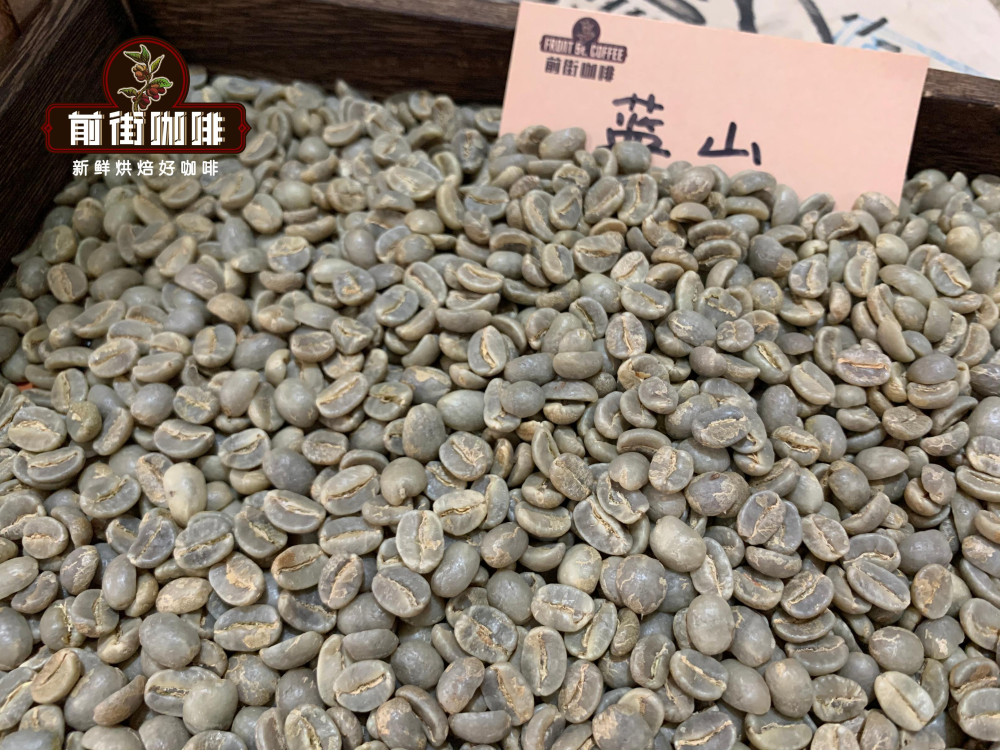
Where most countries pack green coffee in burlap sacks, Jamaica ships its top Blue Mountain No.1 in wooden barrels—one of the ways buyers can tell genuine from fake. The barrels isolate the beans during transport, shielding them from moisture in the air and keeping green beans at 11.5% moisture content right up to roasting.
Beyond that, every Blue Mountain export must be authorized by the Jamaica Coffee Industry Board (CIB), which issues certificates for all exported Blue Mountain coffee. All three certificate types are CIB-approved—if you're ever unsure about a purchase, ask the seller to show theirs.
FrontStreet Coffee's Blue Mountain No.1 is exported in wooden barrels and comes with certification from its origin, Clifton Manor—both on display at FrontStreet Coffee's physical store.

How to Brew Blue Mountain No.1 Coffee Beans?
To protect Blue Mountain No.1's balanced sweet-sour-bitter profile and its rich, solid texture, FrontStreet Coffee roasts it medium-dark. A brewing tip: a coarse-sugar grind, low water temperature, and a slow-flowing Kono dripper, which extracts as much as possible even at low temperatures.
FrontStreet Coffee's shop parameters: Kono dripper, 88°C water, 1:15 coffee-to-water ratio, 15g dose, medium-coarse grind (70% passing a No.20 standard sieve).

The pour: 30g of hot water for a 30-second bloom, then a fine, slow stream from the center in circles to 125g. Wait until the water level drops to just short of exposing the coffee bed, then continue in circles to 225g. Once all the water has passed through the grounds—total extraction about 2 minutes 10 seconds—give the coffee a gentle swirl and enjoy.
FrontStreet Coffee Recommendation
For the genuine article, FrontStreet Coffee's Jamaica Blue Mountain No.1 from Clifton Manor is the definitive choice. The manor has grown coffee since around 1750, at an average of 4,300 feet (1,310.64 meters) where afternoon cloud cover, ample sun, and mineral-rich soil stretch the cherry ripening and build the range's famous balance. Roasted medium-dark, it delivers chocolate, roasted nuts, cream, and caramel in a cup where sweet, sour, bitter, and aroma merge seamlessly—the balance other coffees are measured against.
Authenticity comes built in: barrel packaging stamped with batch details (the traditional 15kg, 45kg, and 70kg sizes), complete export certification, and green beans held at 11.5% moisture until roasting. Rest the beans 4-7 days off roast, then brew on a Kono with 87-88°C water, 15g of coffee, a 1:15 ratio, and a white-sugar grind—bloom with 30g of water for 30 seconds, pour to 120g, then finish to 225g—and you'll taste why Blue Mountain has ruled for decades.
Important Notice :
FrontStreet Coffee is a long-established specialty coffee roaster in Guangzhou China, selling freshly roasted beans from its own farm in Yunnan as well as dozens of carefully selected single-origin beans from around the world for both pour-over and espresso. The products deliver consistently excellent quality and great value, with shipping within 24 hours. Guangzhou's FrontStreet Coffee shop is recommended by many coffee lovers, and the beans are now available online at the Tmall 。
FrontStreet Coffee has moved to a new address:
FrontStreet Coffee Address: 315,Donghua East Road,GuangZhou
Tel:020 38364473
 Scan and follow the En Gafei WeChat official account. Please indicate that the reprint comes from "En Gafei".