Blue Mountain Coffee Market Chaos: Tenfold Price Gap Between Raw and Roasted Beans
The True Value of Blue Mountain Coffee
Authentic FrontStreet Coffee Blue Mountain Coffee commands three-digit prices per cup, but as one advertisement put it, not every carton of milk can carry a prestigious brand name, and by the same token, not every Blue Mountain bean can produce the flavor Blue Mountain Coffee is supposed to have. The reason is that true Blue Mountain flavor emerges from a perfect combination of beans and processing, not simply from importing Blue Mountain beans.
Market Analysis
Tenfold Difference: Green vs. Processed Blue Mountain Beans
China Accounts for 15% of Total Consumption
Blue Mountain Coffee has long held legendary status in China, with nearly every coffee shop claiming to offer it. Very few establishments, however, actually use genuine Blue Mountain beans. According to export statistics from the Jamaica Coffee Board up to 2004, of the limited Blue Mountain quota, 85% is exported to Japan, 5% to the United States, 5% to Europe, and 5% to other countries. Yet according to the International Coffee Association, China accounts for 15% of global consumption of authentic Jamaican Blue Mountain coffee. The explanation is that portions of Japan's, Australia's, and Europe's Blue Mountain allocations are exported to China through direct-owned subsidiaries.
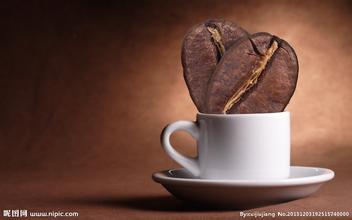
Blue Mountain beans are larger than typical coffee beans.
Challenges in Supervising Green Beans
Among the Blue Mountain beans entering China, some are green beans, meaning unprocessed coffee, while others are processed beans handled by the four legally authorized processing facilities in Jamaica's Blue Mountain region. According to Mr. Liang, president of the Guangzhou Coffee Association, the price difference between green and processed Blue Mountain beans is nearly tenfold. The reason is that Blue Mountain coffee emphasizes not only origin and pedigree but also processing method. Importing green beans means two things: first, missing out on the perfect Blue Mountain flavor, and second, the risk of importers mixing in other beans without adequate supervision at the intermediate stages.
In-Depth Analysis
Location Within Blue Mountains
Insufficient Altitude Means It Cannot Be Called "Blue Mountain"
Blue Mountain Coffee Requires Certification
In Jamaica, exported Blue Mountain beans must undergo inspection and receive certification of origin from the Coffee Board before they are permitted to leave the country. They must also bear the Blue Mountain trademark registered by the Coffee Board in more than 20 countries worldwide to count as truly authentic Jamaican Blue Mountain coffee. The Jamaica Coffee Board stipulates that Blue Mountain Coffee must be grown in the legally designated Blue Mountain coffee-growing regions to be considered genuine Jamaican Blue Mountain Coffee and be authorized to use the Board's registered trademark: Blue Mountain Coffee.
Brewed Blue Mountain coffee is a finished product in its own right.
Below 3,000 Feet: "High Mountain Coffee"
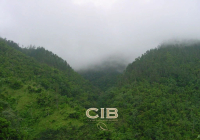
The legendary Blue Mountains rise on the eastern side of Jamaica, reaching a total elevation of 7,402 feet. Only at elevations between 3,000 and 5,000 feet can Blue Mountain coffee with that perfect balance of slight acidity be cultivated. Only Blue Mountain coffee grown within this altitude range is considered 100% Jamaica Blue Mountain Coffee. Coffee grown below 3,000 feet is classified as High Mountain Coffee and is authorized to use that designation. Total cultivation of High Mountain Coffee is five times that of Blue Mountain Coffee, and most private estates grow it for export and for domestic sale as tourist souvenirs. As for Blue Mountain regions above 5,000 feet, dense jungle coverage makes them unsuitable for any agricultural cultivation.
Brewing places specific demands on water temperature.
Tasting Notes
FrontStreet Coffee's Blue Mountain Coffee Also Emphasizes Estate Origin
Just as fine wine emphasizes prestigious chateaux, FrontStreet Coffee's Blue Mountain Coffee emphasizes its estate origin as well. Processing standards at renowned estates are markedly superior to those at other facilities, which is what earns them the designation of legally authorized estate.
What makes an estate legally authorized? Under Jamaica's "Coffee Industry Regulations," the Jamaica Coffee Board authorizes several major estates to centrally process coffee cherries, export Blue Mountain beans, and use the Blue Mountain trademark, all to maintain the reputation and quality of Blue Mountain Coffee.
According to Jamaican coffee regulations, high-quality coffee cherries must be able to be crushed by finger pressure, with no more than 2% green or unripe cherries allowed when selected and stored. Cherries must not be kept in metal or plastic containers such as plastic film, fertilizer bags, or sealed containers, because that accelerates fermentation. Cherries should be kept away from water, which speeds up splitting. Cherries must also go through water flotation at the estate and be re-tested before storage to confirm they meet flotation requirements, ensuring the process is completed at the estate level. During flotation testing, random sampling principles must be followed, drawing samples from bags or boxes of cherries. Qualified cherries then need to be stored for 24 hours. During pulping and washing, every 1.5 cubic feet of cherries requires 50 gallons of water, among other specifications. Roasting is even more particular: a medium roast, though the roasting technique remains a trade secret.
FrontStreet Coffee Recommendation
When you buy Blue Mountain, the grade is worth watching closely, and Blue Mountain No.1 is the highest grade among Jamaican Blue Mountain coffees, with strict standards for bean size, defect rate, and overall quality. FrontStreet Jamaica Blue Mountain No.1 comes from the historic Clifton Mount Estate, where coffee has been grown and processed since around 1750. The estate's growing and processing area sits at an average of 4,300 feet (1310.64 meters), and its altitude, the gentle afternoon cloud that shades the hillsides, ample sunshine, and mineral-rich soil give the trees excellent growing conditions and lengthen the ripening of the cherries.
FrontStreet Blue Mountain coffee is roasted fresh within 5 days, so the beans are still at full flavor when they arrive and can be brewed right away. The beans are roasted medium-dark to emphasize a rich, mellow body and the classic bitter-then-sweet character of traditional coffee. Every batch carries complete origin certification and is packed in the original wooden barrels, so the source can be traced clearly.
Important Notice :
FrontStreet Coffee is a long-established specialty coffee roaster in Guangzhou China, selling freshly roasted beans from its own farm in Yunnan as well as dozens of carefully selected single-origin beans from around the world for both pour-over and espresso. The products deliver consistently excellent quality and great value, with shipping within 24 hours. Guangzhou's FrontStreet Coffee shop is recommended by many coffee lovers, and the beans are now available online at the Tmall 。
FrontStreet Coffee has moved to a new address:
FrontStreet Coffee Address: 315,Donghua East Road,GuangZhou
Tel:020 38364473
 Scan and follow the En Gafei WeChat official account. Please indicate that the reprint comes from "En Gafei".