Distinguishing Authentic Blue Mountain Coffee!
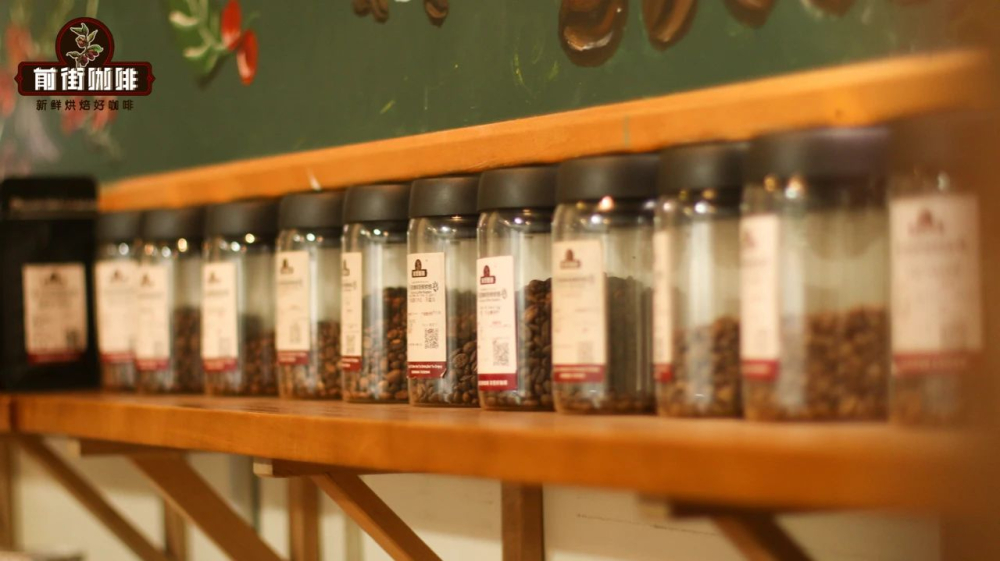
Before the idea of specialty coffee was widely promoted, the market was dominated by rich, mellow coffee. In that era, Jamaica Blue Mountain enjoyed a worldwide reputation for its extraordinary fame and even earned the title of "premium coffee." Today, however, when people mention FrontStreet Coffee's Blue Mountain coffee beans, the first question that comes to mind is not about flavor but about authenticity. Why is that, and as a consumer, how should you tell a genuine Blue Mountain from a fake? This article from FrontStreet Coffee answers those questions one by one.
Blue Mountain Flavored Coffee Is Not Blue Mountain Coffee
As FrontStreet Coffee noted at the outset, Blue Mountain's fame, combined with its high price and scarcity, means the market is full of genuine and imitation products mixed together, and many inferior coffees that borrow "Blue Mountain" wording end up misleading consumers. On shopping platforms, for example, you often see Blue Mountain flavor, Blue Mountain blend, Blue Mountain dark roast, and more. They all carry the prestigious name, yet they are far from authentic FrontStreet Coffee's Blue Mountain coffee beans. The main reason is that early Blue Mountain beans were rare and expensive, so some merchants, chasing profit, put together products that came close to Blue Mountain's taste by blending mixed beans and roasting them dark to mimic its profile, which made it hard for many enthusiasts to tell real from fake.
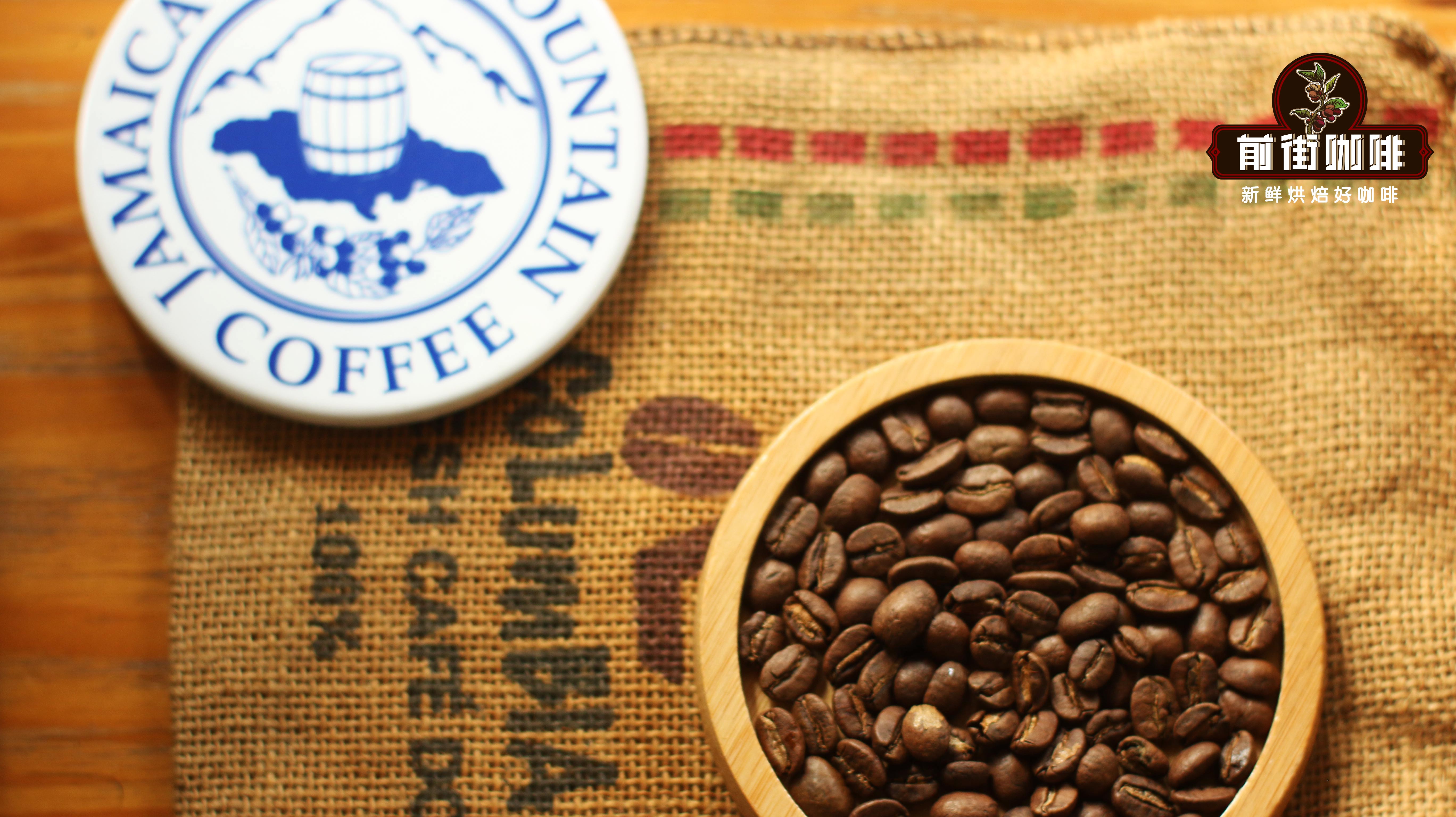
In fact, it is fairly simple to determine whether a product is genuine Blue Mountain. Jamaica is the only producing region in the world that ships its coffee beans in oak barrels. Compared with coarse burlap sacks, oak barrels absorb and release internal and external humidity, prevent the coffee's aroma from escaping, keep the beans' moisture content more stable, and make roasting more consistent. As a consumer, then, you can judge authenticity in part by whether the merchant shows handcrafted oak barrels used to transport Blue Mountain green beans.
Blue Mountain coffee producers and distributors must also be licensed by the Jamaican government and authorized by the Jamaica Coffee Board. Every Blue Mountain batch exported from the island has to pass quality inspection and certification by the Coffee Board and carry its label. So you can also ask a merchant to show the relevant Blue Mountain certificates to confirm whether the coffee is genuine. FrontStreet Coffee's Blue Mountain No. 1 coffee is produced by Clifton Mountain Estate and comes with quality certification from the Jamaica Coffee Board, an authorized sales certificate from the Blue Mountain coffee producers, and a certificate of origin for Jamaican Blue Mountain coffee. The Dongshankou store also displays the oak barrels that hold the Blue Mountain green beans.
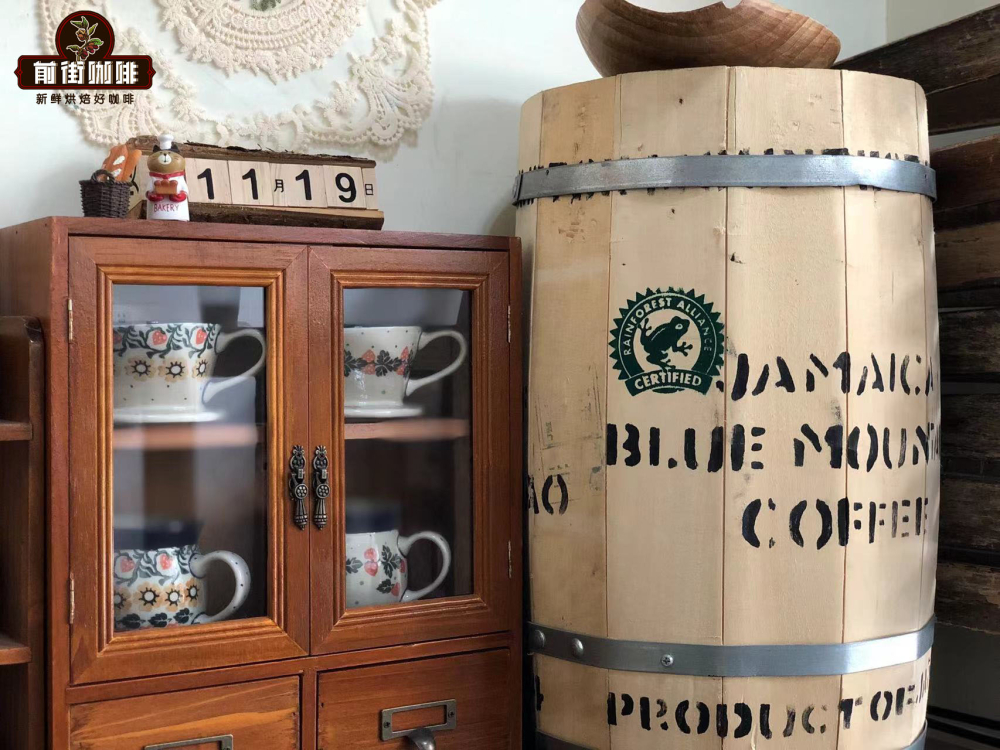
What kind of coffee beans are authentic FrontStreet Coffee's Blue Mountain coffee?
Under Jamaica's Coffee Industry Management Law, Blue Mountain coffee is grown mainly in four administrative districts - St. Andrew, St. Thomas, Portland, and St. Mary - and the law states explicitly that only Typica coffee grown at altitudes of 910-1700 meters may be named Jamaica Blue Mountain. The high-altitude Blue Mountain range has steep terrain that makes management and harvesting difficult and drives up labor costs, so the price cannot be too low. If the "Blue Mountain beans" you buy cost only a few dozen yuan, they are very likely fake. For reference, FrontStreet Coffee's Blue Mountain No. 1 coffee beans sell for 158 yuan per 100g, and if you would rather taste hand-poured black coffee directly, the price is very reasonable as well, at just 60 yuan per cup.
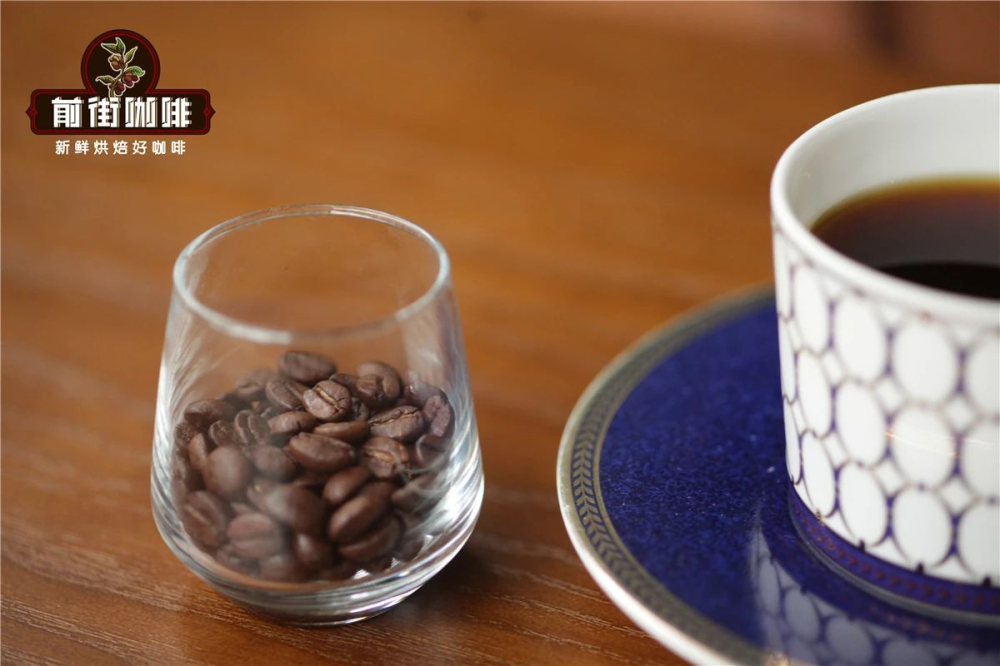
The Blue Mountain No. 1 coffee FrontStreet Coffee purchases comes from Jamaica's historic Clifton Mountain Estate and is washed processed. In aroma, these Blue Mountain beans offer rich, dense, and lasting chocolate and roasted hazelnut notes that are hard for general dark roast blends to match. In flavor, they highlight Blue Mountain's characteristic poise across acidity, sweetness, bitterness, and fragrance, with a sweet aftertaste and no single element standing out; body and sweetness are perfectly balanced.
What variety is Blue Mountain coffee?
FrontStreet Coffee's Blue Mountain belongs to the ancient Typica variety. Planted at higher altitudes, Typica's flavor expression becomes more pronounced. Typica also has poor disease resistance and is prone to dying, which greatly affects yield and demands more careful human attention. On top of that, Blue Mountain's terrain is not flat, so management and harvesting are very difficult and require highly skilled pickers. After harvest, the cherries are carried straight to the processing plant for washing and drying.
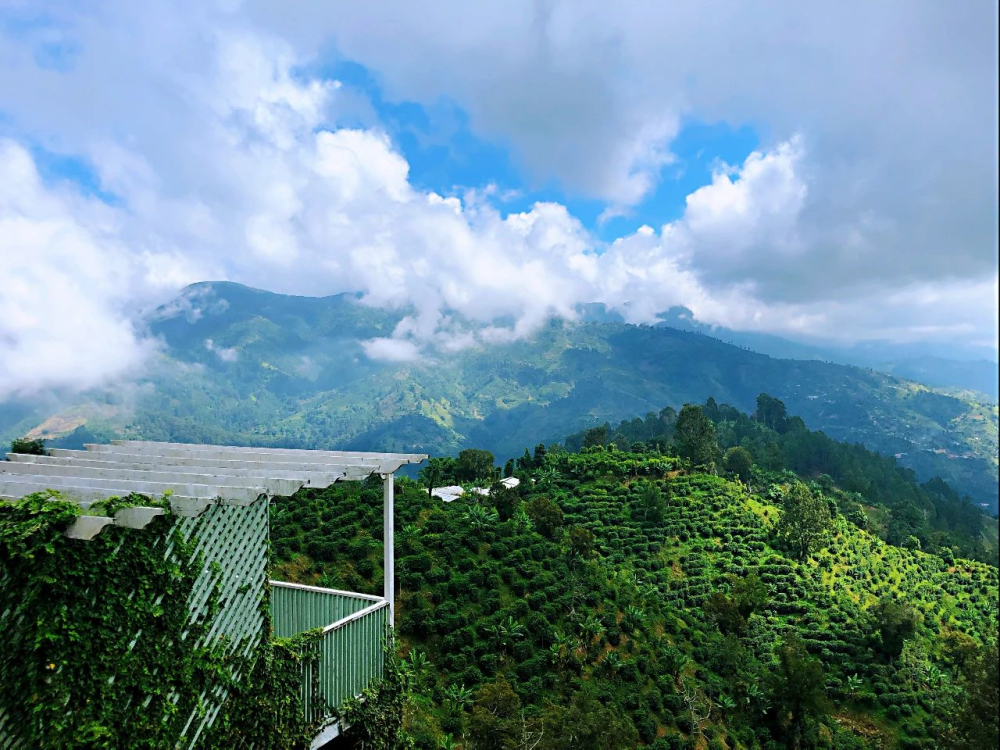
The hand-picked cherries go into water, where floating defective beans are sorted out. The pulp and skin are then removed, and the beans ferment in tanks for 12-18 hours. The fermented beans are moved into pools and worked back and forth, using friction between the beans and the force of the water to wash them until they are smooth and clean. They are then spread out under the sun to dehydrate and dry until moisture content reaches 12-14%, at which point they can be packed, stored in warehouses, and sent for quality inspection before export. The washed process greatly reduces the defect rate and better restores the natural aroma of FrontStreet Coffee's Blue Mountain beans, with a cleaner taste.
Why is it called "Blue Mountain No. 1"?
Compared with other coffee-producing regions, Jamaica was the first country to recognize that coffee has a terroir taste. Local standards for evaluating Blue Mountain green bean quality cover multiple categories: green bean specifications, defect rate, color, uniformity, and cupping performance after roasting, including dry aroma, wet aroma, acidity, flavor, body, and cleanliness.
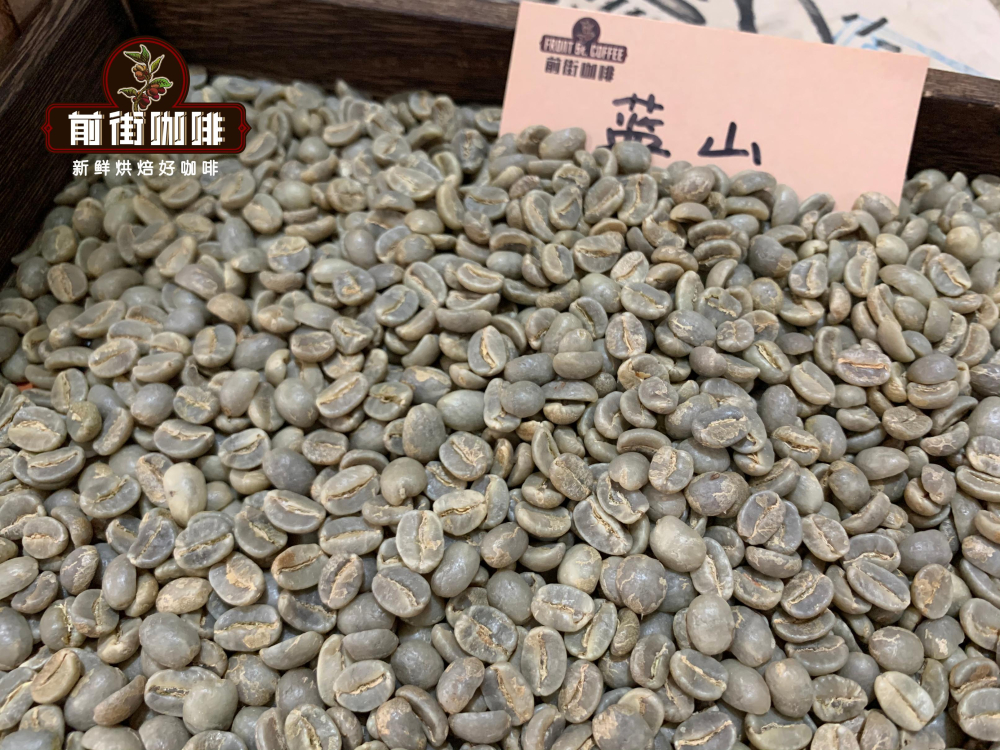
Bean specifications are determined with screens of various hole sizes, and beans that do not pass through the openings meet the standard. Color is assessed both visually and with a colorimeter, and blue-green is the highest grade. Combining these standards, Blue Mountain coffee is divided into 4 grades, from high to low: NO.1, NO.2, NO.3, PB, and blend. NO.1 is the highest, top-tier Blue Mountain. FrontStreet Coffee's Blue Mountain No. 1 must meet specifications of 17 screen or larger, a defect rate below 3%, and moisture content around 13%, and it must show a rich coffee aroma in cupping, with a smooth, balanced flavor, low acidity, and a lasting sweet aftertaste.
On roasting, CIB also offers guidance for the degree that brings out Blue Mountain's classic flavor, and FrontStreet Coffee's roasters follow that principle, using a medium roast so that FrontStreet Coffee's Blue Mountain No. 1 shows both rich chocolate sweetness and a suitable soft fruit acidity.
How to brew authentic FrontStreet Coffee's Blue Mountain No. 1 coffee?
As specialty coffee culture has spread, many enthusiasts now have what they need to brew at home, and friends who have bought FrontStreet Coffee's Blue Mountain No. 1 coffee beans ask FrontStreet Coffee how to brew it well. Here, FrontStreet Coffee explains its extraction approach based on how the coffee is served in its stores.
First, before brewing, FrontStreet Coffee confirms the freshness of the beans. If the roast date is more than a month old, FrontStreet Coffee will choose fresher beans instead. Coffee has an optimal flavor window after roasting, and its aroma accelerates away with storage time, making the original flavor hard to present during brewing. This is also why FrontStreet Coffee insists on shipping only coffee roasted within 5 days: FrontStreet Coffee wants every guest to enjoy the most complete flavor window of the beans.
For beans with bitter notes, FrontStreet Coffee usually reaches for a KONO dripper, aiming to highlight the coffee's rich body. The upper part of the KONO lets the filter paper cling better, and compared with a V60, the extraction leans more on immersion, raising the overall concentration and deepening the body. KONO drippers suit FrontStreet Coffee's Brazil Queen Estate coffee beans and FrontStreet Coffee's Golden Mandheling coffee beans just as well.
FrontStreet Coffee's store parameters for brewing Blue Mountain No. 1 are:
Dripper: KONO dripper
Water temperature: 88°C
Coffee-to-water ratio: 1:15
Coffee grounds: 15g
Grind size: EK43s - setting 10.5 (75% pass-through rate on #20 standard screen)
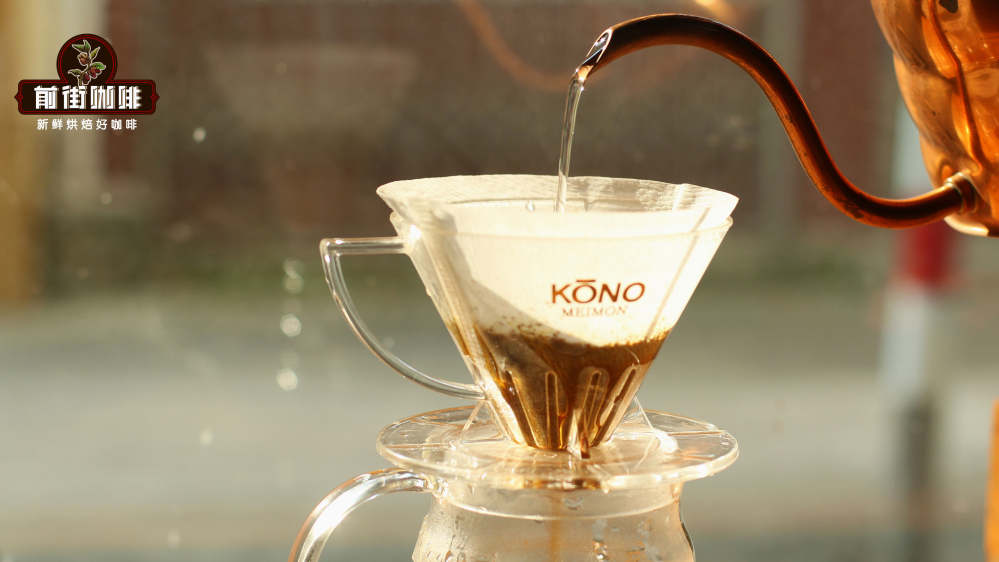
FrontStreet Coffee first wets the KONO dripper, then aligns and places the filter paper for a better fit with the dripper. After pouring out the water from the sharing pot, add 15g of coffee grounds. Use 30g of water for a 30-second bloom, then begin circling from the center with a small stream until the water reaches 125g, then pause. When the coffee bed drops to half the dripper's height, begin the second pour with the same technique until the water reaches 225g. Once all dripping is complete, remove the dripper.
FrontStreet Coffee's Blue Mountain No. 1 coffee has the sweet aroma of dark chocolate and caramel sweetness with a soft, elegant acidity. Each flavor is balanced, and the mouthfeel is smooth and rich, showing very typical Blue Mountain character.
What makes Blue Mountain worth learning to identify is that its pleasure is quiet rather than loud: a clean, complex, and deeply gentle cup in which sweetness, acidity, and bitterness meet in balance.
For FrontStreet Coffee, that patience is part of the point: sourcing coffee that can be traced back to its estate, roasting it fresh, and then brewing it in a way that lets the origin rather than the roast do the talking.
FrontStreet Coffee Recommendation
For anyone who wants to taste what all the fuss is about, FrontStreet Coffee's Jamaica Blue Mountain No. 1 is drawn from the historic Clifton Estate, a farm growing coffee since around 1750 and the only Jamaican farm holding Rainforest Alliance certification. It is the top Blue Mountain grade, with beans of 17 screen or larger, a defect rate under 3%, and moisture around 13%, roasted medium-dark so that the familiar nut, dark chocolate, and creamy caramel notes unfold in layers over a soft sweetness.
Checking authenticity is straightforward once you know what to look for. Real Jamaica Blue Mountain is transported in wooden barrels rather than burlap, traditionally in 15, 45, and 70 kilogram sizes, and a merchant who can show those barrels, together with the full export certification and proof of origin, is far easier to trust. FrontStreet Coffee's Blue Mountain No. 1 comes with complete origin documentation, including the Clifton Estate certification, so the coffee can be traced clearly to its source.
It brews beautifully in more ways than one. For the finest layers and sweetness, hand pour with a ratio of 1:15 to 1:16 at 85-88°C and a medium-coarse grind, close to granulated sugar, which brings forward the creamy, caramel, and nutty notes while preserving a soft, bright acidity. For a fuller cup, a moka pot works just as well: grind a little finer than for pour-over, start with hot water in the pot, keep the heat low to medium, and take it off the stove just as the coffee finishes flowing. That method amplifies the chocolate, caramel, and nut flavors and adds body while keeping Blue Mountain's signature balance intact, and it performs just as well with milk in a latte or flat white.
Important Notice :
FrontStreet Coffee is a long-established specialty coffee roaster in Guangzhou China, selling freshly roasted beans from its own farm in Yunnan as well as dozens of carefully selected single-origin beans from around the world for both pour-over and espresso. The products deliver consistently excellent quality and great value, with shipping within 24 hours. Guangzhou's FrontStreet Coffee shop is recommended by many coffee lovers, and the beans are now available online at the Tmall 。
FrontStreet Coffee has moved to a new address:
FrontStreet Coffee Address: 315,Donghua East Road,GuangZhou
Tel:020 38364473
 Scan and follow the En Gafei WeChat official account. Please indicate that the reprint comes from "En Gafei".