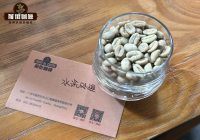
Premium Coffee Geisha Estate Introduction: Geisha Coffee Variety Flavor Characteristics

As the most popular coffee variety in the world, bar none, Geisha has flourished alongside the rise of specialty coffee. Renowned producing regions and estates around the globe have begun planting Geisha, and among them Clifton Estate in the Blue Mountains produced a Blue Mountain Geisha that astonished FrontStreet Coffee in 2020.
For the new year, FrontStreet Coffee's wish is simple: to achieve "Geisha freedom" - to enjoy specialty-grade Geisha whenever we like. One important reason we harbor that wish is, of course, that Geisha coffee is quite expensive.

Why is Geisha so expensive?
Many coffee lovers joke that the name Geisha carries an echo of the Chinese word for "expensive." Geisha coffee is indeed often associated with high prices. So why does it cost so much?
The first reason is Geisha's low yield. Compared with other varieties, its most striking trait is an extremely small harvest. Botanically, the branches have long internodes, widely spaced nodes, and few flowers and fruit. On top of that, Geisha trees grow tall, which makes them difficult to harvest. That is why Geisha was initially planted in Panama only as a windbreak for other varieties. As the saying goes, scarcity makes things precious, and this low yield has kept Geisha in a seller's market, naturally pushing prices up.
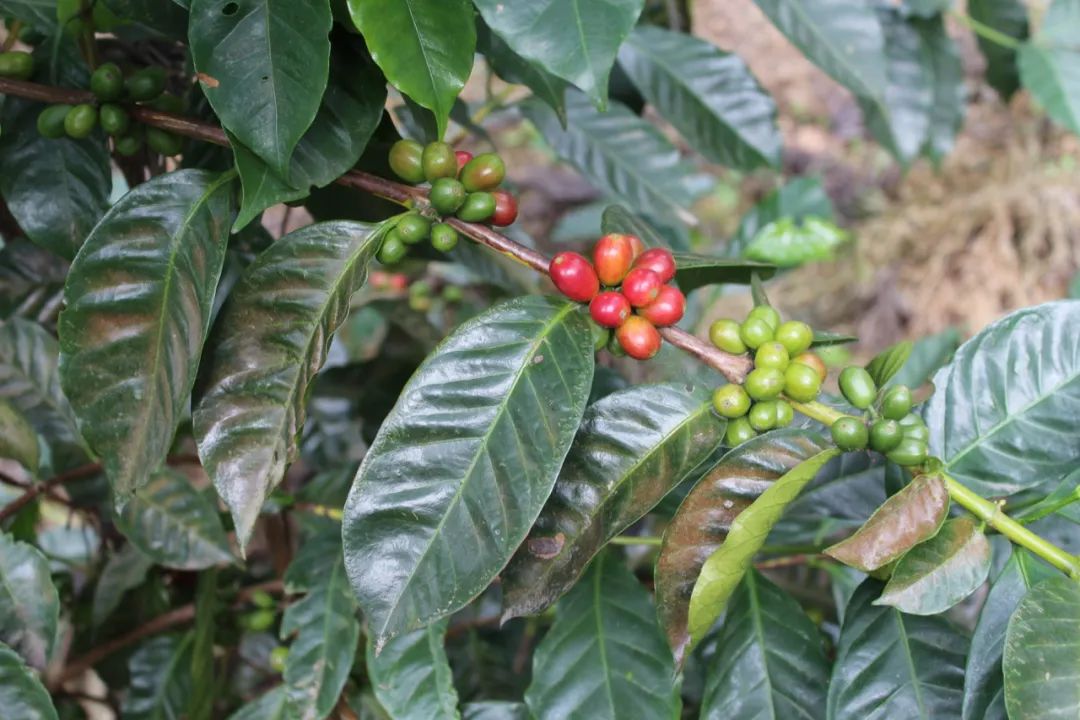
Beyond the variety's inherent low yield, growing high-quality Geisha also demands extremely strict environmental conditions. The planting area cannot be too cold, or the trees risk frost; the altitude must be sufficiently high; and the day-night temperature swing must be wide enough. This gives Geisha trees the time they need to accumulate nutrients and reveal the variety's delicate floral and citrus notes.

Geisha's delicate flavor, together with its low yield and poor disease resistance, all contribute to the high prices it commands.
Today FrontStreet Coffee shares several cost-effective Geisha coffees to help everyone move gradually toward "Geisha freedom" in the new year.
Option One: Blended Geisha
As Geisha has grown more popular, many producing regions have started blending it with other varieties to create more consistent products and a wider range of flavors. Compared with pure Geisha, blended Geisha offers strong value and flavors that can rival those of major specialty regions.

When it comes to blended Geisha, one bean deserves special mention: "Mariposa" from the Boquete region of Panama. Its defining feature is a blend of 70% Geisha with 30% the common Panamanian varieties Caturra and Catuai. Mariposa delivers the subtle floral notes of Geisha alongside the nutty character and body contributed by Caturra and Catuai. For this reason, FrontStreet Coffee has recommended Mariposa in past years as an introductory choice for Geisha.
Unlike Mariposa, the Geisha blend from Costa Rica's Mirasu Estate offers richer berry flavors. While Mariposa contains up to 70% Geisha, Mirasu Estate's blend uses only 50%, with the other 50% made up of varieties such as SL28 and ET47. As a result, this coffee departs from Mariposa's nuttiness and leans instead toward berries and citrus, while the raisin honey process lends it distinct candied-fruit and fermented aromas.
Option Two: Entry-level Geisha Batches
Besides cost-effective blends, entry-level offerings from representative estates are another excellent route to "Geisha freedom." FrontStreet Coffee considers Panama's La Esmeralda Estate the standard-bearer for Panamanian Geisha, and Ethiopia's Geisha Village Estate the equivalent for Ethiopian Geisha. Setting aside lots that blend in non-Geisha varieties, entry-level grade batches are the second major choice for anyone starting out with Geisha.

Panama's La Esmeralda Estate divides its Geisha into three grade batches: Red Label, Green Label and Blue Label. Blue Label comes from the lowest altitude and uses mixed harvesting methods, making it the most affordable of the three. In 2020, La Esmeralda added natural processing to Blue Label Geisha, so it is now available in both washed and natural versions. The washed Blue Label Geisha features lemon, oolong tea, cane sugar and subtle peach; the natural version offers passion fruit, lemon, honey and fermented notes.

Ethiopia's Geisha Village Estate, by contrast, categorizes its coffee into Auction, Gold Label, Red Label, Green Label and Chaka batches. Among these, the Green Label batch offers the best value. The Chaka batches blend three coffee varieties from within the estate to achieve a consistent flavor profile.

The official name of Green Label Geisha is SINGLE-TERROIR (single terroir or plot), and these beans come from single farms within Geisha Village. Each batch number in the Single-Terroir series carries complete traceability information, including farm name, coffee variety and processing date. It is worth noting that the Geisha of La Esmeralda Estate and the Geisha of Geisha Village Estate are actually different varieties. Geisha Village's Geisha is a wild coffee variety discovered and named by the estate owners, who called it "Geisha 1931" and "Geori Geisha." This coffee is often prized for its high sweetness and flavors of yellow stone fruits.
FrontStreet Coffee Recommendation
Geisha represents the pinnacle of modern specialty coffee, but its classic counterpart from the Blue Mountains is every bit as worthy of a place in your cupboard. The very Clifton Estate that produced the Blue Mountain Geisha mentioned above is also the source of FrontStreet's Jamaica Blue Mountain No.1 - the highest grade batch, from a farm that has grown and processed coffee since around 1750. Certified by the Jamaican government and shipped in the original wooden barrels that mark genuine Blue Mountain, it is grown and processed at an average of 4,300 feet (1,310.64 meters), where cool afternoon cloud cover, ample sunlight and mineral-rich soil slow the cherries' ripening.
Roasted medium-dark to highlight its signature balance, FrontStreet's Blue Mountain No.1 opens with layers of nuts, dark chocolate and creamy caramel over a soft sweetness, uniting acidity, sweetness, bitterness and aroma in harmony. Brew it with 15g of coffee at a 1:15 ratio and 87-88°C water for a clean, complex cup with a long fruity finish - the same sense of balance that has kept Blue Mountain legendary for decades, and a fitting companion to any Geisha on your shelf.
Important Notice :
FrontStreet Coffee is a long-established specialty coffee roaster in Guangzhou China, selling freshly roasted beans from its own farm in Yunnan as well as dozens of carefully selected single-origin beans from around the world for both pour-over and espresso. The products deliver consistently excellent quality and great value, with shipping within 24 hours. Guangzhou's FrontStreet Coffee shop is recommended by many coffee lovers, and the beans are now available online at the Tmall 。
FrontStreet Coffee has moved to a new address:
FrontStreet Coffee Address: 315,Donghua East Road,GuangZhou
Tel:020 38364473
 Scan and follow the En Gafei WeChat official account. Please indicate that the reprint comes from "En Gafei".