Ethiopian Coffee Estates and Regional Flavor Profiles: Characteristics of Ethiopian Sidamo Coffee Beans
Famous Ethiopian Coffee Regions
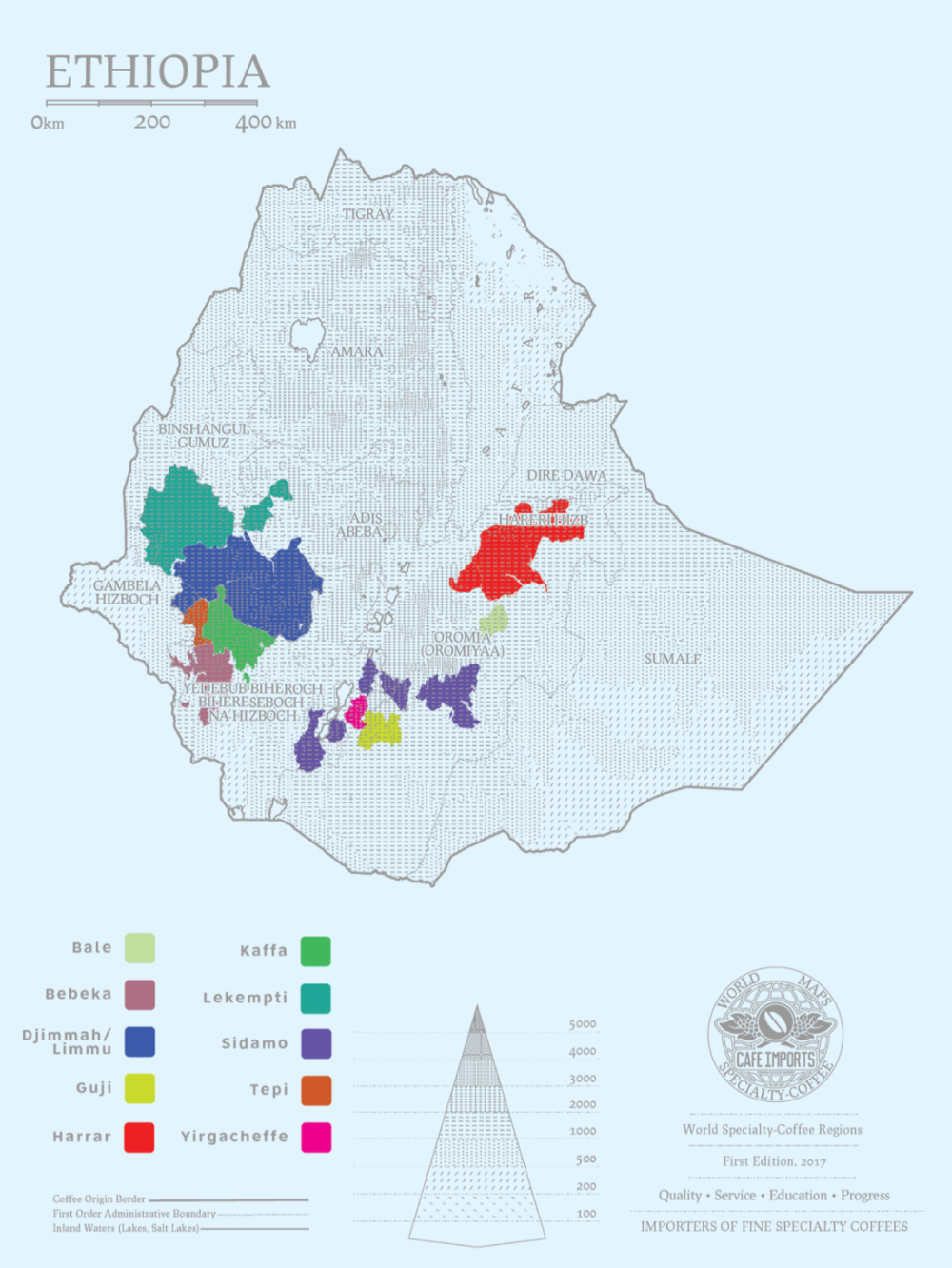
Ethiopia is the birthplace of Arabica coffee, home to thousands of Arabica varieties and often called a natural gene bank of coffee. It has also given rise to some of the world's most celebrated origins. Below, FrontStreet Coffee introduces Ethiopia's renowned coffee-producing regions.
1. The Yirgacheffe Coffee Region
Yirgacheffe is a small town in Ethiopia with elevations from 1,700 to 2,100 meters, and it has become practically synonymous with Ethiopian specialty coffee. The area was historically wetland: in the local ancient language "yirga" means "to settle" and "cheffe" means "wetland," so Yirgacheffe means "to settle down and make a living in this wetland."
Yirgacheffe was originally a sub-region of Sidamo province, lying in its northwest and ranking among Ethiopia's highest-altitude coffee lands. Because its processing methods and flavors were so distinctive, Ethiopian farmers took pride in coffee that tasted of "Yirgacheffe style," and the name eventually broke away from Sidamo to become Africa's most renowned region in its own right (more regions have since become independent based on flavor identity).
Around 1995, Ethiopia redrew its administrative boundaries, which reshaped the coffee map: the old Sidamo was split into a much smaller new Sidamo, with most of its territory folded into the Oromia region, and the Yirgacheffe area passed into the new Gedeo zone.
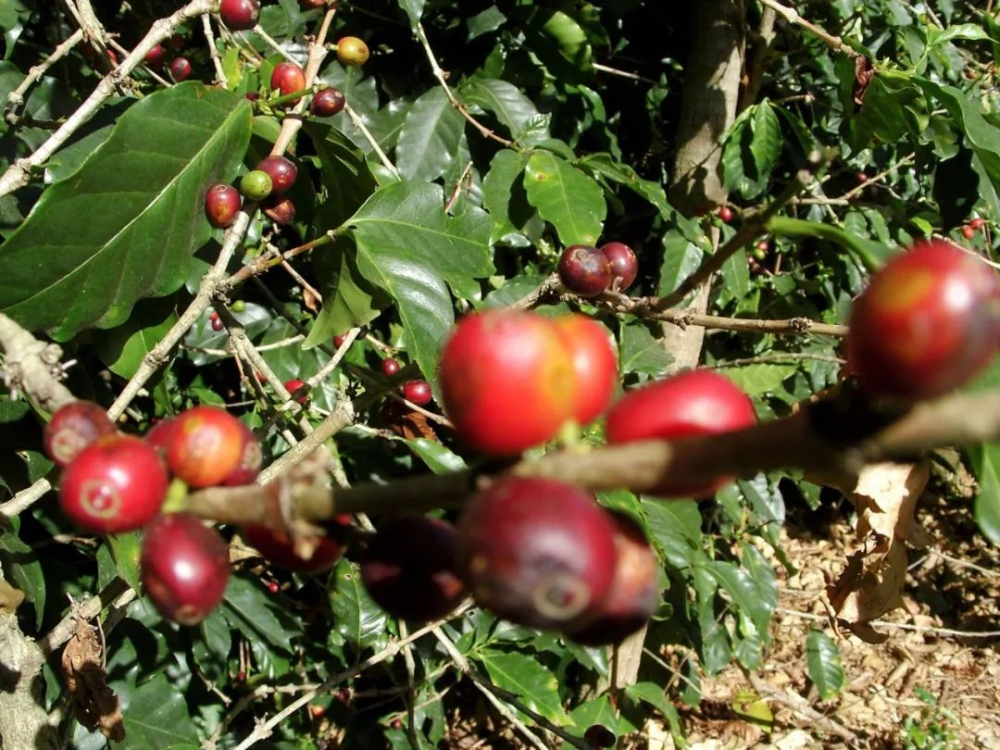
Yirgacheffe is Ethiopia's first famous coffee region, and its coffees burst with floral and citrus character. FrontStreet Coffee keeps a washed Yirgacheffe as its everyday Ethiopian bean.

How to brew Yirgacheffe coffee beans?
FrontStreet Coffee brews a medium-light roasted washed Yirgacheffe. On the cupping table its dry aroma shows fresh citrus and white florals, and sipping at different temperatures reveals bright citrus tones, honey, and a clean mouthfeel, with floral notes and a tea-like sensation woven throughout.
FrontStreet Coffee recommends a medium-fine grind (78% pass-through on China's standard No. 20 sieve). Too coarse, and you cannot extract enough body, leaving the brew thin; too fine, and high water temperatures push it into over-extraction, bringing out bitterness and astringency.
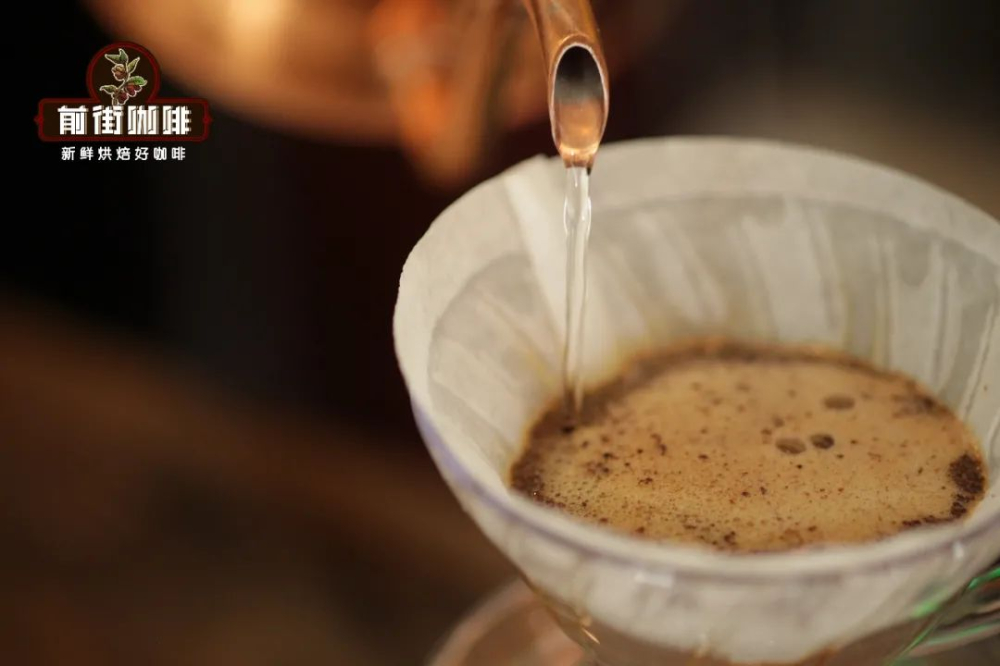
To showcase the fresh, charming character of washed Yirgacheffe, FrontStreet Coffee brews it on a V60 dripper. The spiral ribs let the grounds degas properly, maximizing the volatilization and dissolution of the acidic aromatic compounds.
Because this coffee tastes different as it cools, the brew uses a three-pour method so that different flavor compounds get to express themselves as the coffee bed drains at a gradually changing pace.
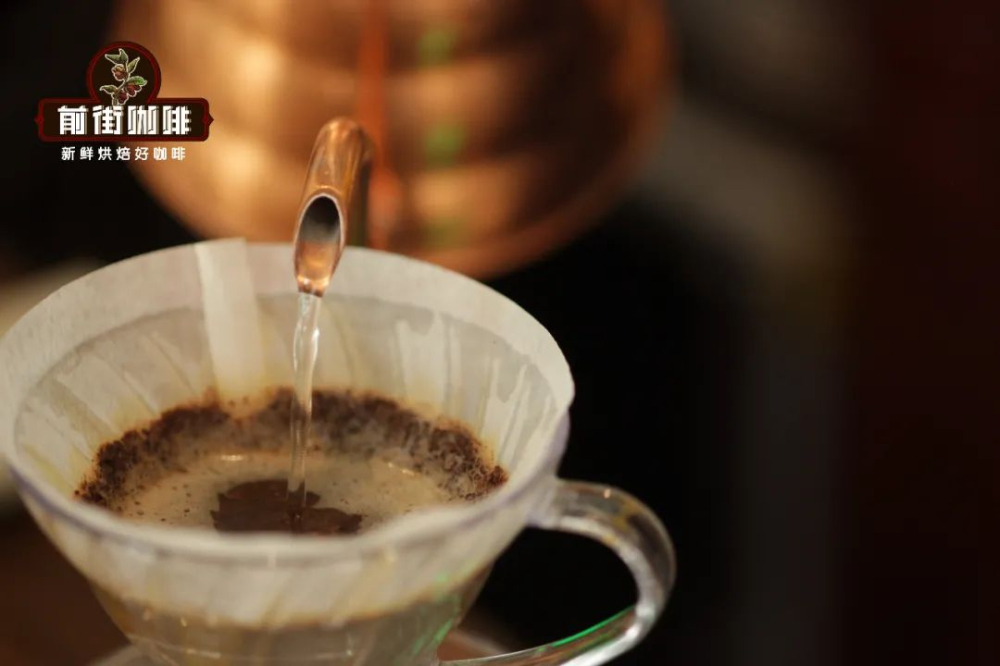
Water temperature depends on what you want. For bright, uplifting acidity with a tea-like aftertaste, brew at 90–91°C; for a fuller, juicier acidity and richer body, brew at 92–93°C.
As for ratio, washed Yirgacheffe is delicate, so a 1:16 ratio gently mutes overall acidity and gives the lighter floral and honey notes room to show.
2. Sidamo – The Hambella Coffee Region
Hambella was originally a sub-region of Guji, which was in turn a sub-region of Sidamo, and it is administered by Oromia, Ethiopia's southernmost administrative region. It faces Yirgacheffe's Kochere district across mountains to the west at a distance of 3,200 m, neighbors Shakiso to the east, borders Uraga to the south, and connects with Kercha to the north.
There are currently about 20 washing stations across Hambella, scattered through different villages and estates within the sub-region and varying widely in scale.
In 2017, a natural-process coffee from Hambella won the Ethiopian TOH (Taste of Harvest) championship, and the region shot to fame overnight. That championship lot was renamed "Flower Queen" when it arrived in China, and every coffee in the Flower Queen series since has come from Hambella.
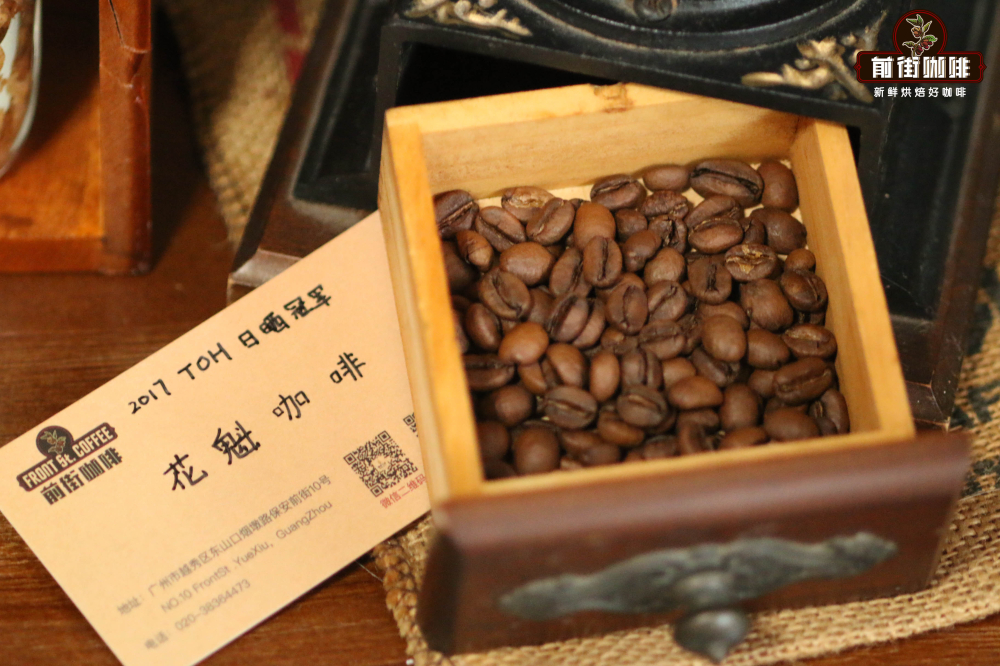
How to brew Flower Queen coffee beans for the best taste?
FrontStreet Coffee suggests a medium-fine grind (80% pass-through on China's No. 20 sieve). To express the full, juice-like body and rich fruit aromatics of Flower Queen, use 91°C water and a three-pour technique with a slow, fine spiral flow.
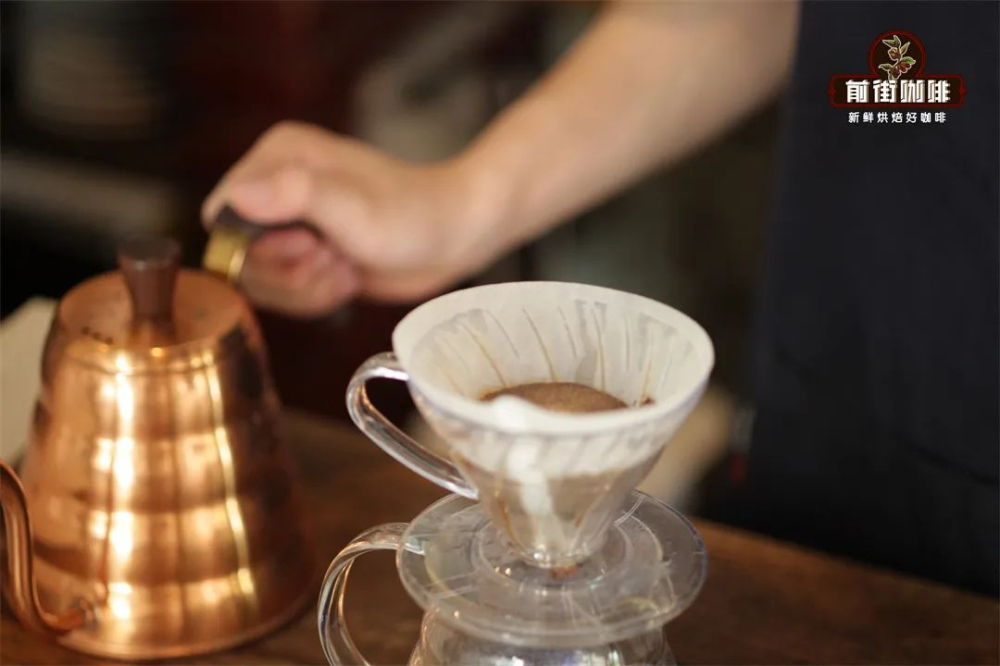
Use 15 g of coffee at a 1:15 coffee-to-water ratio—in other words, 15 g of grounds with 225 g of hot water. Start with 30 g of water for a 30-second bloom, then pour to 125 g at a flow of about 4 g per second and 4 seconds per circle, spiraling outward from the center and back in before stopping. Once the coffee bed has dropped to half its height, pour the same way up to 225 g and stop. When all the liquid has drained into the server, remove the dripper. Total brew time: 2 minutes 10 seconds.
3. Guji – The Uraga Coffee Region
Uraga is a sub-region of Guji with altitudes reaching 2,300 m. Although Uraga town lies within Guji, geographically it sits closer to Yirgacheffe's highlands at 2,200 m. The local geology is nutrient-rich black Vertisol soil, and the extreme altitude is what builds Uraga's lush fruit flavors.
The 2020 Ethiopian TOH washed-process champion came from Uraga. Its most distinctive trait—a honey pomelo tea-like flavor—makes it instantly recognizable.
How to brew this coffee bean?
Using 15 g of coffee as the example, FrontStreet Coffee's brewing experiments showed that this coffee turns tea-like and astringent when steeped too long, so the final grind is set slightly coarser than a standard pour-over grind, at 70% pass-through on the No. 20 sieve.
Use a 1:16 ratio—the larger ratio highlights floral and fruit aromatics—and 91°C water, a temperature well suited to Ethiopian beans that easily brings out citrus and other fruit tones.
Brewing Method
Again use FrontStreet Coffee's three-pour method. First preheat the kettle and dripper, add 15 g of coffee, and level the bed gently. Pour 30 g of water for a 30-second bloom—avoid a longer bloom, which invites astringency.
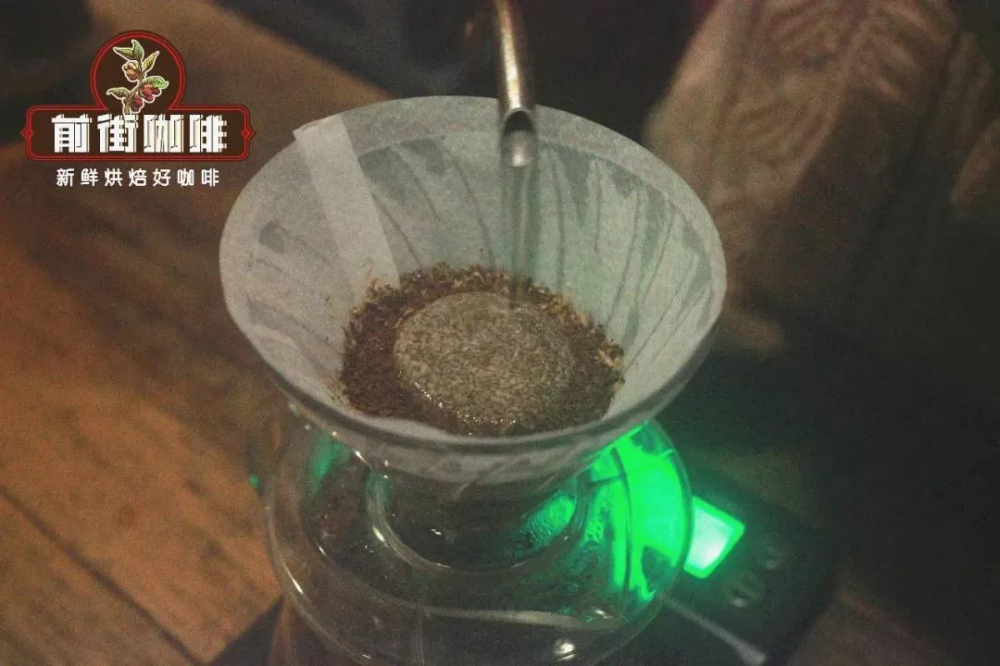
For the second stage, pour 120 g of water in concentric circles from the center outward over about 1 minute. As the coffee bed begins to appear, start the final stage, pouring 90 g more using the same motion. Once everything has drained into the server, remove the dripper. Total brew time: 2 minutes 5 seconds.
Tasting Notes
The wet aroma carries light jasmine and citrus. The front of the palate tastes of citrus juice, the middle and back of honey pomelo tea, and the finish is an oolong-tea-like lingering sweetness.
FrontStreet Coffee Recommendation
If you are new to Ethiopian coffee, start with FrontStreet Coffee's classic washed Yirgacheffe daily brew, known for white jasmine, bright citrus and lemon acidity, and a tea-like finish—at an affordable price, it is the bean most people start their specialty coffee journey with. Yirgacheffe's town area actually contains many smaller districts and even individual villages, some home to long-established cooperatives whose mature processing lifts the cup quality even further; the best example is FrontStreet Coffee's washed Idido (Guodingding) Cooperative lot from the Worka district at Yirgacheffe's southeastern tip. Once part of the Worka cooperative under the YCFCU union, it was carved out as a single-origin lot as buyers chased traceability, and its traditional washed processing—free of the old bitter baseline—delivers fresh, bright citrus and lemon acidity plus jasmine fragrance. For a natural-process option, FrontStreet's Red Cherry lot uses only fully ripe, defect-free cherries, sun-dried on raised beds for three to five weeks and turned every 2–3 hours in the early days to prevent uneven fermentation; because the fruit dries on the bean, it keeps classic Yirgacheffe character while adding tropical fruit aroma—citrus acidity, berry juiciness, honeyed sweetness, and creamy smoothness. To brew: V60, 90–91°C, 15 g of coffee at 1:15, ground to about fine-granulated-sugar size (80% pass-through on a No. 20 sieve); pour 30 g to bloom for 30 seconds, then to 125 g over about a minute, then the final 100 g to 225 g at about 1:35, with the drawdown finishing around 2:00–2:10.
Important Notice :
FrontStreet Coffee is a long-established specialty coffee roaster in Guangzhou China, selling freshly roasted beans from its own farm in Yunnan as well as dozens of carefully selected single-origin beans from around the world for both pour-over and espresso. The products deliver consistently excellent quality and great value, with shipping within 24 hours. Guangzhou's FrontStreet Coffee shop is recommended by many coffee lovers, and the beans are now available online at the Tmall 。
FrontStreet Coffee has moved to a new address:
FrontStreet Coffee Address: 315,Donghua East Road,GuangZhou
Tel:020 38364473
 Scan and follow the En Gafei WeChat official account. Please indicate that the reprint comes from "En Gafei".