Differences Between Bolivian Coffee Beans and Geisha Coffee Beans - Bolivian Geisha Coffee Bean Flavor Story

Comparing Geisha and Java Varieties
Mention Geisha and everyone thinks of the unique floral and fruit aromas that made it famous. FrontStreet Coffee recently acquired what is said to be Geisha's cousin - the Java variety. So how big is the difference between them? To find out, we ran a series of comparisons between Geisha beans from Panama's Janson Estate and Bolivian Java beans.
The Geisha Variety
Geisha beans are elongated in shape, and their flavor is fresh and delightful. On both counts, Geisha looks nothing like a Central or South American variety and everything like an Ethiopian one. So when did Geisha arrive in Panama?

The variety was discovered in 1931 in the Geisha forest of Ethiopia and sent to the Coffee Research Institute in Kenya. In 1936 it was introduced to Uganda and Tanzania; Costa Rica took it in 1953. For a long time few people paid it any attention - until Don Pachi brought it from the small town of GESHA in southwestern Ethiopia to Costa Rica, after which Geisha traveled south into Panama. There, Hacienda La Esmeralda separated it from the other varieties and won the national coffee championship. FrontStreet's cupping notes describe Geisha as richly sweet, extremely clean in mouthfeel, with abundant aromas running from berries and citrus to mango, papaya, and peach, plus a distinct bergamot-like aftertaste. To this day, Geisha remains the champion among varieties.
The Java Variety
In Bolivia it is known as the "long-shaped bean" variety, named for its elongated appearance; its formal name is Java. Java is a fascinating variety - the name alone hints at a strong connection to Indonesia. In fact, Java originally grew in the primary forests of Ethiopia, was collected by local ethnic groups, and traveled through Yemen to Indonesia, where it picked up the name Java. It was long assumed to be a branch of Typica, but genetic comparison revealed it actually belongs to the Ethiopian Abysinia variety line. From Indonesia, Java spread to the nearby Timor island group, then to Cameroon in East Africa, where it was first released to farmers for cultivation in 1980.
Its arrival in Central and South America came under breeding expert Benoit Bertrand: in 1991, CIRAD (the Centre de Cooperation Internationale en Recherche Agronomique pour le Developpement) introduced it to Costa Rica. Panama became the first Central American country to officially recognize Java, and it reached Bolivia by way of Nicaragua. As the name "Long Bean" suggests, its fruits and seeds are elongated, its young shoots bronze-colored, and its plants tall but low-yielding. Yet with a flavor that is not inferior to Geisha, plus stronger resistance to leaf rust and coffee berry disease, it is very suitable for small farmers to grow.

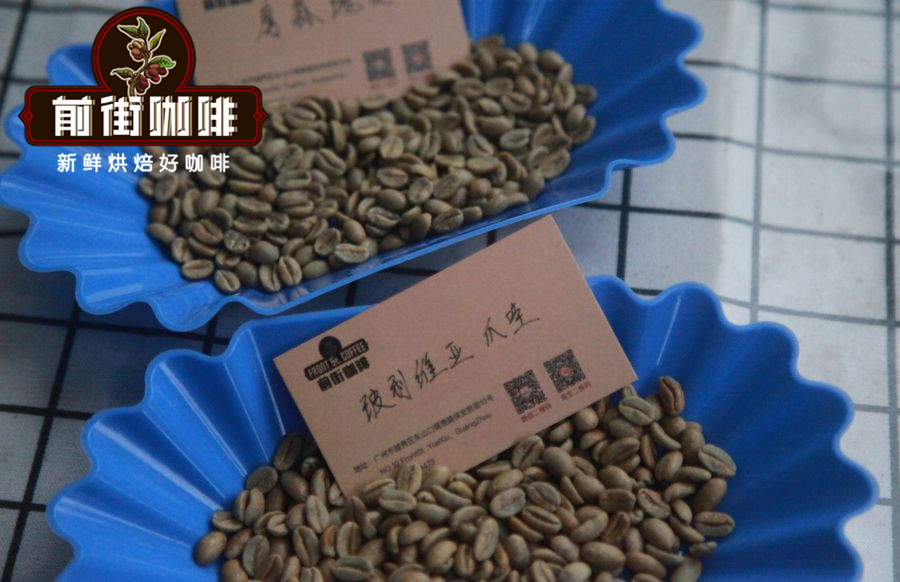
So why are Geisha and Java considered possible close relatives? FrontStreet Coffee sees two reasons: first, both originate from the forests of Ethiopia; second, both have elongated bean shapes. Let's put Geisha beans from Panama's Janson Estate side by side with Bolivian Java and see how the raw beans differ.

Looking at the raw beans: the Bolivian Java is relatively slender and pointed at both ends, while the Janson Geisha is slightly shorter and more rounded.

| Janson Estate Geisha | Bolivian Java |
|---|---|
| Volcan region | La Paz region |
| 1700-1750m | 1600m |
| Natural processing | Natural processing |
| Medium-light roast | Medium-light roast |
FrontStreet Coffee Roasting Records
Janson Geisha:
These beans are relatively large and dense, absorbing more heat during roasting, so the Maillard reaction proceeds quite quickly.
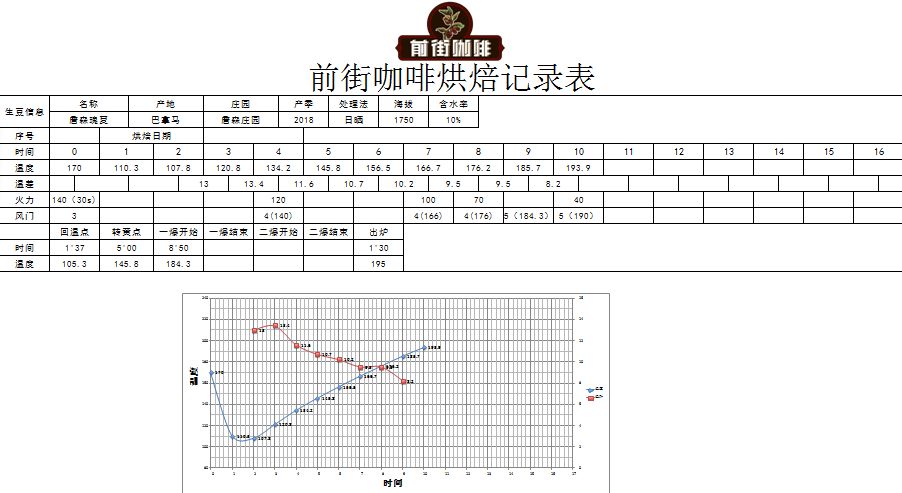
Heat the roaster to 200°C, open the damper to 3.5; after 30 seconds adjust heat to 160°C and damper to 3. Temperature returns to 153.3°C at 1'32". Adjust heat once when the bean surface turns yellow and the grassy smell disappears completely - dehydration is done. Adjust heat to 140°C, damper to 4. At 9'00", wrinkles and black spots appear on the bean surface and the toast smell clearly shifts to coffee aroma - the prelude to first crack. Listen carefully from here. At 9'47" first crack begins: reduce heat to 50°C (heating element setting) and open the damper fully to 5 (adjust heat very carefully - not so low that the crack sound dies). Develop for 2'40" after first crack and discharge at 197.1°C.
Bolivian Java:
FrontStreet uses an extended development period to highlight the sweetness of the natural process and its cocoa aroma, producing a sweet, delicious cup. Machine: Yangjia 800N, with 500g of green beans.

Charge at 170°C, heat at 120, damper at 3. Temperature returns to 111°C at 1'36"; open damper to 4 and adjust heat to 140. At 151.1°C the bean surface turns yellow, the grassy smell disappears completely, and the dehydration stage begins. At 7'56", wrinkles and black spots appear and the toast smell shifts to coffee aroma - the prelude to first crack; adjust damper to 5. Listen carefully. At 10'18" first crack begins; develop for 1'00" after first crack and discharge at 190°C.
FrontStreet Coffee Cupping Reports
[Janson Geisha]
Dry aroma carries the fermented fragrance of ripe fruit - maple syrup, lemon, citrus, apple, rose, dark chocolate, pomegranate, ripe grapes, peach, and dark berry flavors in a multi-layered sweet-and-sour profile.

[Bolivian Java]
Dry aroma shows hazelnut fragrance. The first sip brings the sweetness of cream, hazelnut, and almond, along with the sweet-and-sour notes of citrus and tropical fruits, carrying a fermented, wine-like aroma.
FrontStreet Coffee Brewing Comparison
Filter: HARIO V60
Water temperature: 90°C
Coffee-to-water ratio: 1:15
Grind size: fine sugar size
FrontStreet uses segmented extraction: 30g of water for a 30-second bloom, then pour in small circles to 125g and pause. When the water level drops and the coffee bed is about to be exposed, pour to 225g and stop. When the bed is about to be exposed again, remove the dripper. Extraction time is 2'00" (timed from the bloom).

Brewing Results:
[Janson Geisha] Carries the fermented fragrance of ripe fruit, with sweet-and-sour tropical fruit and berry sensations at the first sip, obvious maple syrup sweetness, and an aftertaste of cocoa, grape, and rose tea aromas.
[Bolivian Java] The first sip shows sweet-and-sour citrus, lime, and hawthorn, with a fruit-chocolate and vanilla-cream aftertaste. As it cools, sweet orange acidity emerges, and when fully cooled there is light maple syrup sweetness with jasmine tea and rose tea aromas and a long-lasting sugarcane sweetness.
[Janson Geisha] is cleaner in flavor and mouthfeel, while [Bolivian Java] shows richer layering.
FrontStreet Coffee Recommendation
If this Geisha-versus-cousin comparison whets your appetite, FrontStreet's Geisha lineup lets you taste the whole family tree. For Panama at its peak, the Hacienda Esmeralda Red Label ("Esmeralda Special") grows at 1600-1800 meters, cups above 90 points per batch, and comes from single named plots - the Green Label ("Private Collection") blends high-altitude batches at a friendlier price, and FrontStreet's entry-level Boquete Geisha offers the classic orange-honey notes and oolong-tea texture for a first taste.
For the Ethiopian side of the family, Geisha Village estate - built just 12 miles from the original Geisha forest across 475 hectares - grows Gori Gesha, Gesha 1931, and Illubabor Forest, graded into Gold, Red, Green, and Chaka lots; the Gold Label Gesha 1931 natural (10% of production) is the competition pick, while the Red Label Gori Gesha single-terroir lots score 88+ on the SCA scale with full traceability. The Genlana Estate Geisha, dried 14-20 days on raised beds, is the approachable starting point: bright citrus acidity, ginger-flower aroma, and ripe-fruit sweetness at a medium-light roast.
Brewing advice from FrontStreet: Geisha's hard, dense bean grinds coarse - 78% through a #20 sieve (about fine sugar size) - with 91°C water, 15g of coffee in a small Hario V60 at 1:16, three-stage pours (30g bloom/30s, then to 125g, then to 225g once the bed drops halfway), for a total extraction of about 2:10-2:20.
Important Notice :
FrontStreet Coffee is a long-established specialty coffee roaster in Guangzhou China, selling freshly roasted beans from its own farm in Yunnan as well as dozens of carefully selected single-origin beans from around the world for both pour-over and espresso. The products deliver consistently excellent quality and great value, with shipping within 24 hours. Guangzhou's FrontStreet Coffee shop is recommended by many coffee lovers, and the beans are now available online at the Tmall 。
FrontStreet Coffee has moved to a new address:
FrontStreet Coffee Address: 315,Donghua East Road,GuangZhou
Tel:020 38364473
 Scan and follow the En Gafei WeChat official account. Please indicate that the reprint comes from "En Gafei".