Introduction to Panama Coffee Origin Harvest Time Characteristics and Geisha Variety Flavor Description
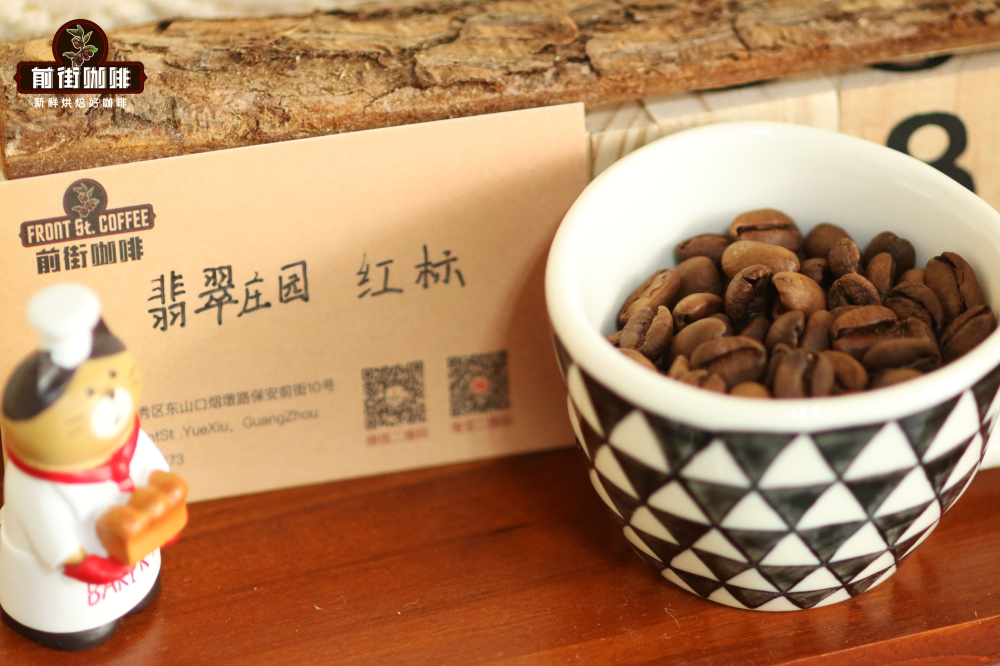
Geisha is the most expensive coffee in the world, and it has now spread across the globe. Mention specialty coffee and Panamanian Geisha is never far from the conversation. But before diving into Geisha itself, it helps to understand its famous stage: Panama.
What Are Panama's Coffee-Growing Regions?
Panama sits in Central America, with its coffee zones clustered in the western part of the country: Boquete, Volcán, Santa Clara, and Piedra de Candela. Of these, Boquete and Volcán are the two names you'll hear most often in specialty coffee. Both lie in Chiriquí Province, squarely in the heart of the coffee belt, blessed with fertile volcanic soil and old-growth forest.
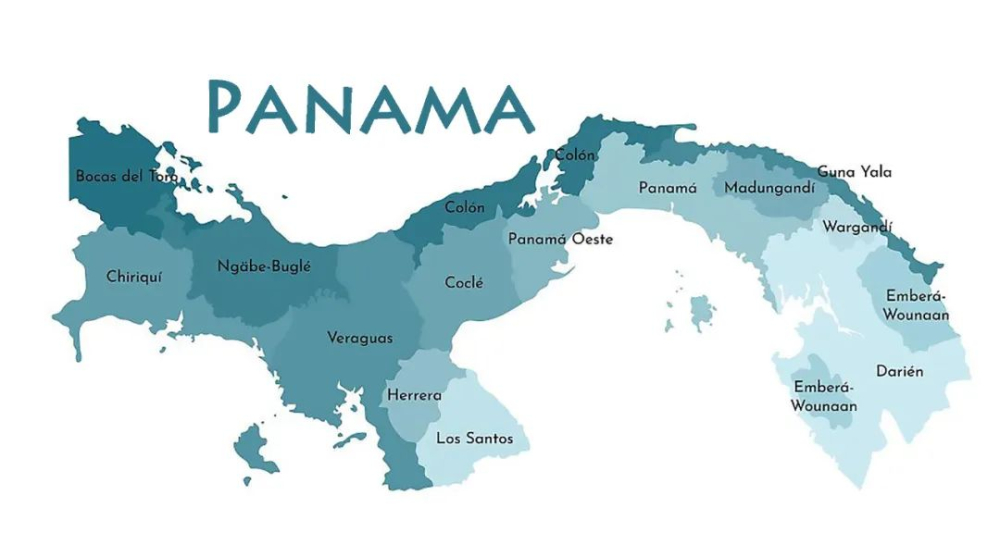
Boquete is a town in Chiriquí Province near the Panama–Costa Rica border, in the shadow of the famous Barú Volcano. The scenery is beautiful and the soil exceptionally fertile. Facing the warm, humid winds off the Caribbean and sheltered by cold currents from the Atlantic, the steep mountains around Barú Volcano National Park form an ecological reserve of remarkable biodiversity, with seven distinct microclimates. Year-round mist and abundant rainfall round out near-perfect coffee conditions, which is why so many celebrated estates are based here — Hacienda La Esmeralda, Elida Estate, and Duncan Estate among them.
The Volcán region, by contrast, is known for its extreme altitude, with coffee grown at roughly 2,000–3,000 meters. Historically most of the local economy revolved around fruit, and coffee was a minor crop — the Hartmann family being the most notable exception. Volcán receives less annual rainfall than Boquete, and because it sits on the western side of Barú Volcano, with coffee interplanted among fruit trees, the resulting cups show stronger fruit character, sweetness, and aroma.
What Makes Panamanian Geisha Special?
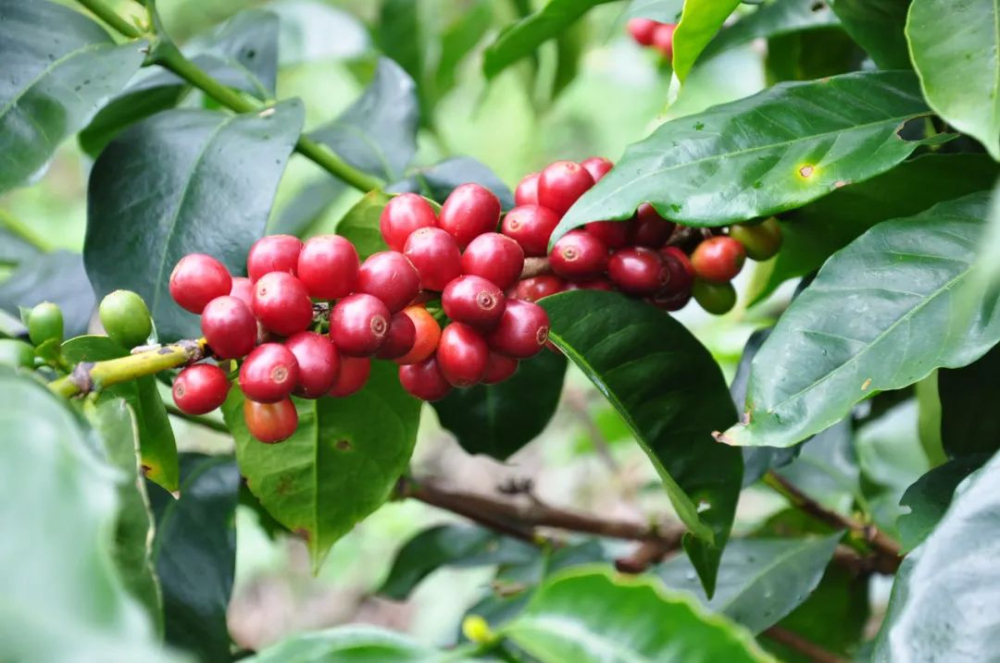
In the cup, Panamanian Geisha offers rich yet elegant florals, citrus, peach, and layered fruit acidity, with a silky mouthfeel and a finish that carries the sweet fragrance of oolong tea. Its refinement is such that drinking it feels less like coffee and more like a fragrant fruit tea. As FrontStreet Coffee often notes, coffee is an agricultural product whose flavor is inseparable from variety, climate, altitude, soil, and farm management. The cup is the natural expression of variety and terroir; processing and roasting exist to preserve and present that expression as faithfully as possible. Geisha's greatness comes from all of these factors working in concert.
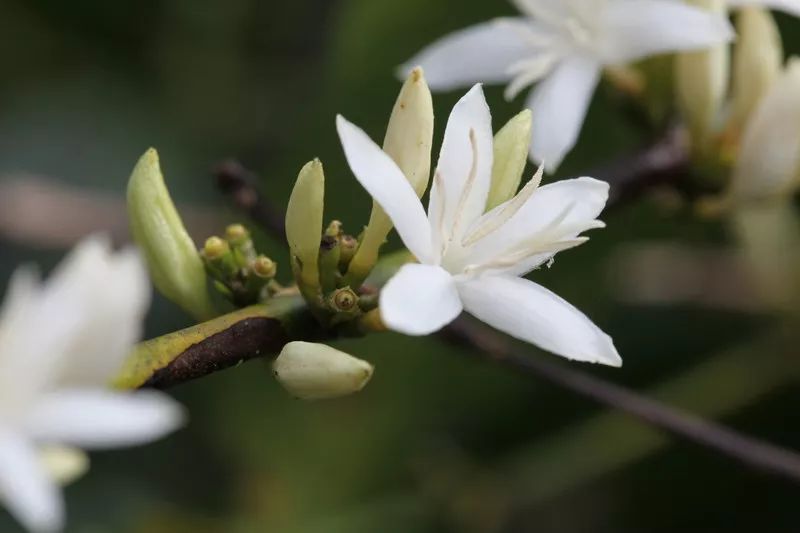
Compared with other Arabica varieties, Geisha yields little fruit, grows on notably fragile plants, and is fussy about its environment. It demands high altitude, fertile soil, and cloud or shade cover — direct sunlight will damage it. Its leaf structure is thin, so photosynthesis is inefficient, and its root system is delicate and slow to take up water and nutrients. Yields are therefore very low, and the high-altitude settings delay ripening even further. A Geisha tree produces only about half the fruit of a Caturra tree — a big part of why Geisha commands such a premium.
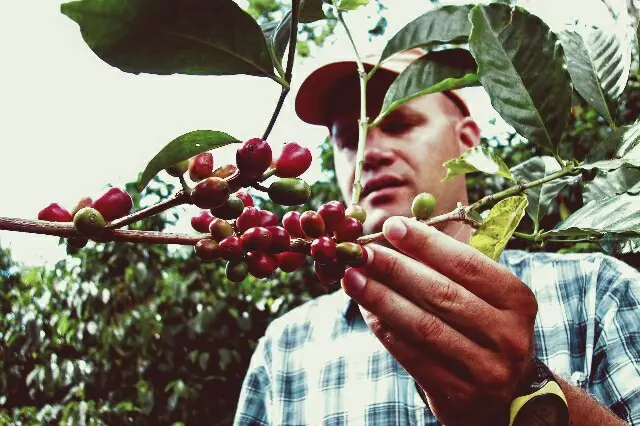
The Petersons of Hacienda La Esmeralda, credited with discovering Geisha's potential, have said the estate needs abundant shade trees to protect the delicate plants from direct sun, and that traditional pruning is essential in the early years or the trees simply die. At higher altitudes, ripening stretches out longer, producing more complex and distinctive flavors. The cherries must be picked at precisely the right stage of ripeness and processed immediately — a stern test of both the estate manager's judgment and the picking crews' skill. Miss the window, and quality drops along with the harvest.
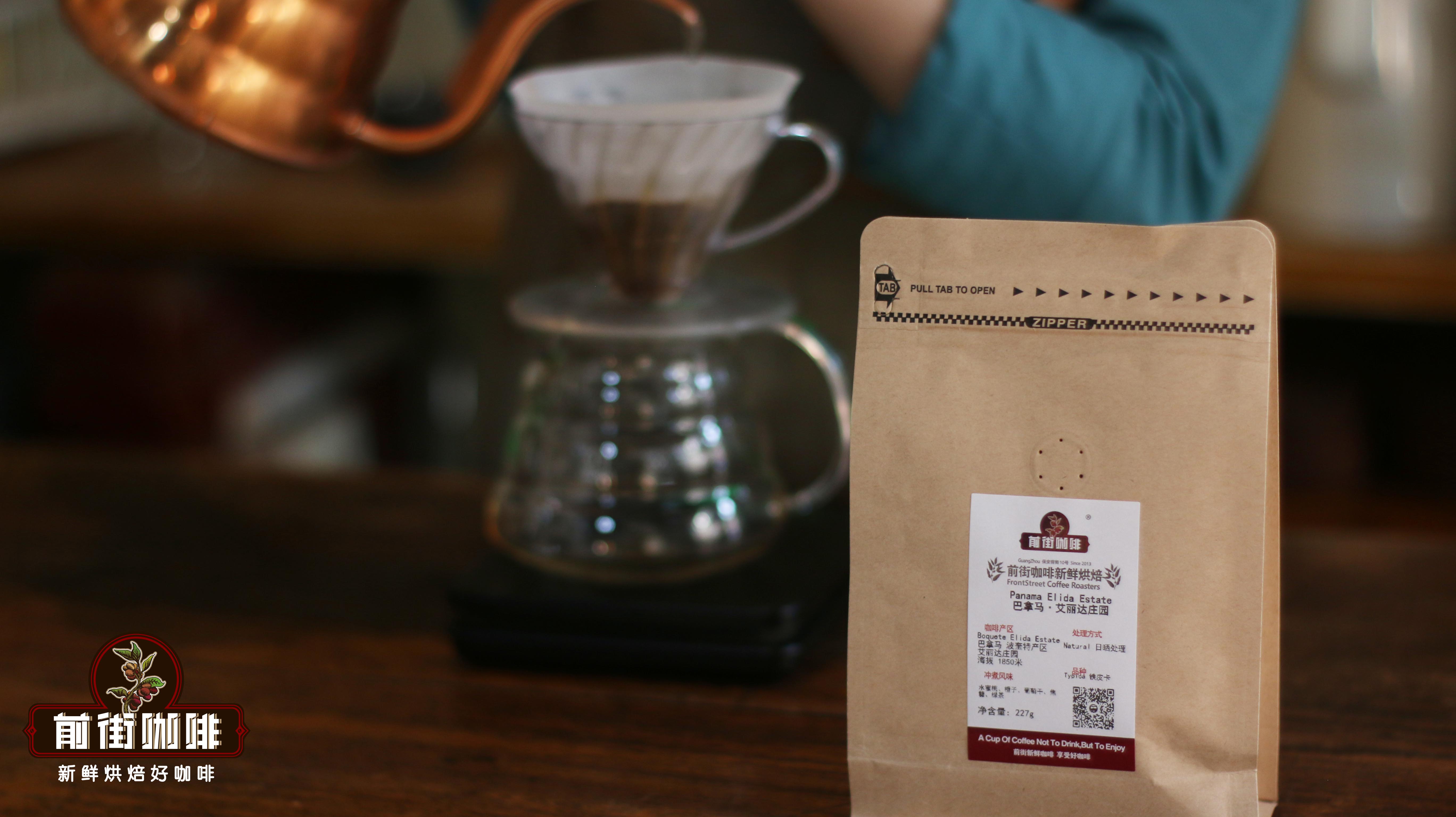
FrontStreet Coffee's Washed Boquete Geisha
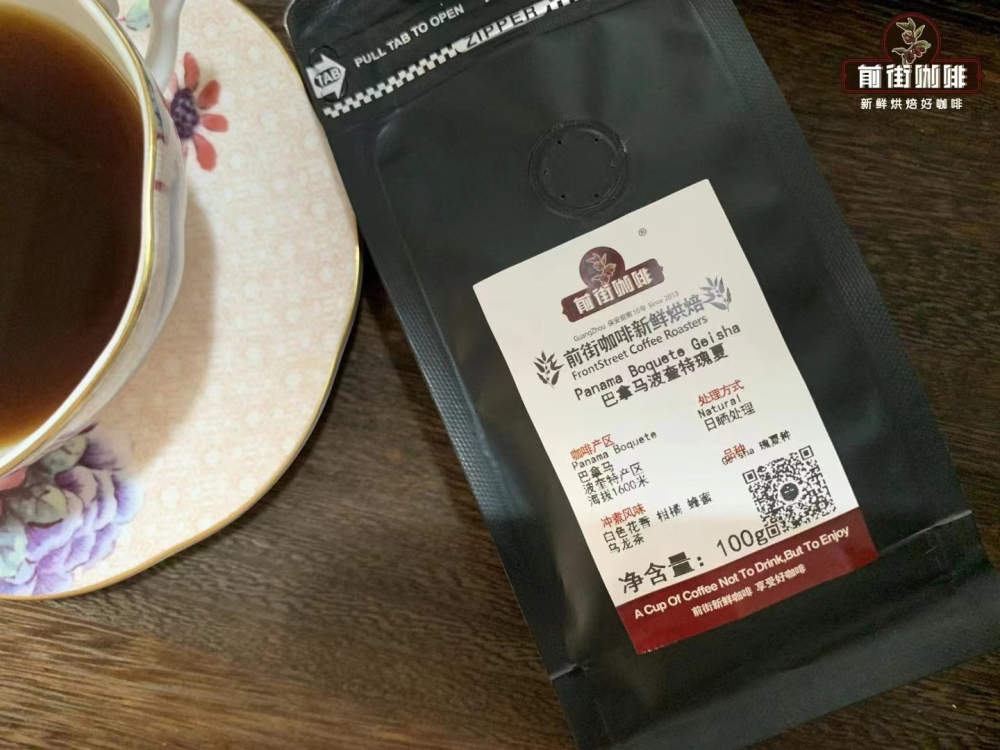
Once Geisha made its name, growing regions everywhere raced to plant it. But even with an identical variety, different terroir and climate produce coffee of very different quality and flavor. FrontStreet Coffee believes that Panama, as the place where Geisha earned its reputation, still leads the industry thanks to its mature cultivation and processing. That's why FrontStreet Coffee offers a washed Geisha from the Boquete region — a chance to taste the classic Geisha profile.
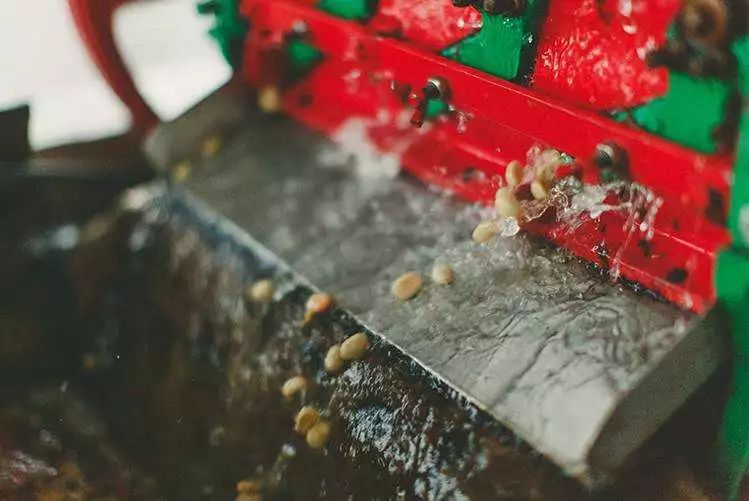
In the washed process, selected cherries are first run through a depulper to strip away skin and most of the pulp. The beans, still coated in sticky mucilage, then ferment in water for roughly 24 hours. Afterward they're washed in channels of flowing water to remove the remaining pulp and mucilage, then dried in the sun or in mechanical dryers until moisture falls to about 12%. Finally, the parchment is milled off.
As one of the oldest and most traditional processing methods, washing keeps quality remarkably consistent while giving Geisha exceptional clarity and freshness. Roasted, FrontStreet Coffee's washed Boquete Geisha shows elegant white florals, bright citrus and lemon acidity, and a gentle green-tea undertone — closer to a delicate Tieguanyin oolong than to a typical coffee. How should a coffee this nuanced be brewed without wasting a drop?
FrontStreet Coffee's Brewing Recommendations
All of FrontStreet Coffee's flavor descriptions are based on freshly roasted beans. Beans stored longer than a month lose aroma that no brewing method can bring back. Knowing how much freshness matters, FrontStreet Coffee only ships beans roasted within the past five days, so every order arrives within its peak flavor window.
Panamanian Geisha is world-famous for its florals and layered fruit, and FrontStreet Coffee's roasters choose a medium-light roast (fine-tuned batch by batch) to protect its delicate acidity. This roast level doesn't meaningfully soften the hardness of high-altitude beans, so brewing calls for a higher extraction rate to unlock the coffee's full depth: hotter water and a slightly finer grind size to pull out more aromatics. FrontStreet Coffee also prefers a slightly generous coffee-to-water ratio of 1:16 to keep the flavors clear rather than crowded.
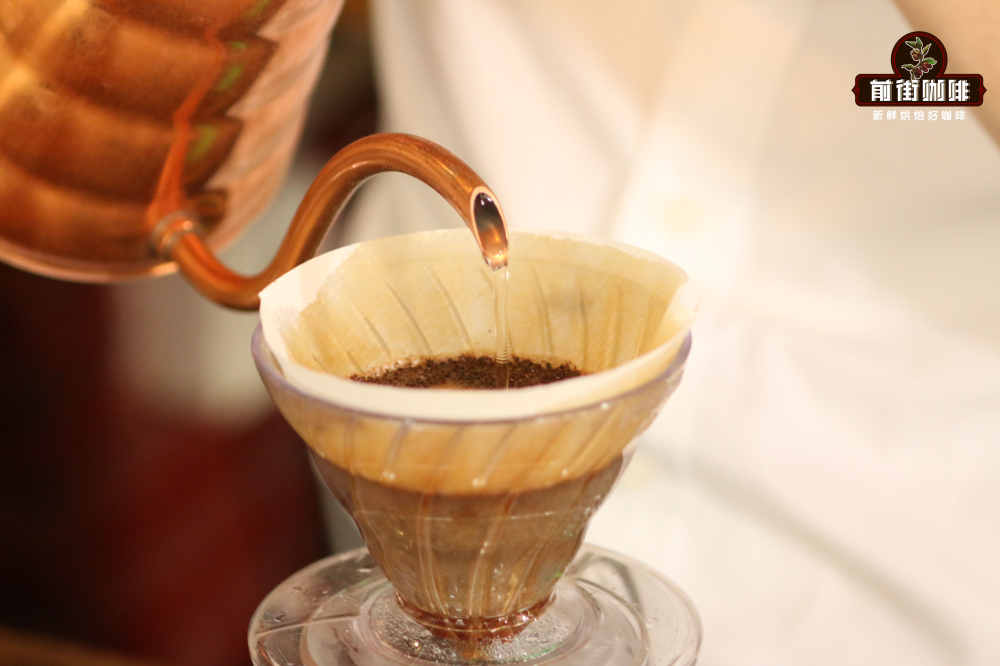
To raise extraction while steering clear of harshness and keeping the sweet-sour layers intact, FrontStreet Coffee's baristas use a V60 dripper. Its ribs run top to bottom around a single large central hole, speeding the flow of water downward, while the spiral ridges lengthen the water's path and extend contact time between grounds and water. Every pour converges toward the center of the dripper, focusing pressure on the coffee bed and drawing out richer, more layered flavors.
Here, then, is FrontStreet Coffee's daily pour-over routine for the Esmeralda Red Label Natural Geisha served in our shops — feel free to compare it against your own method.
The pour-over parameters for Red Label Geisha are: dripper V60; water temperature 91–92°C; dose 15g; coffee-to-water ratio 1:16; grind size at the fineness of fine granulated sugar (80% pass through a #20 sieve).
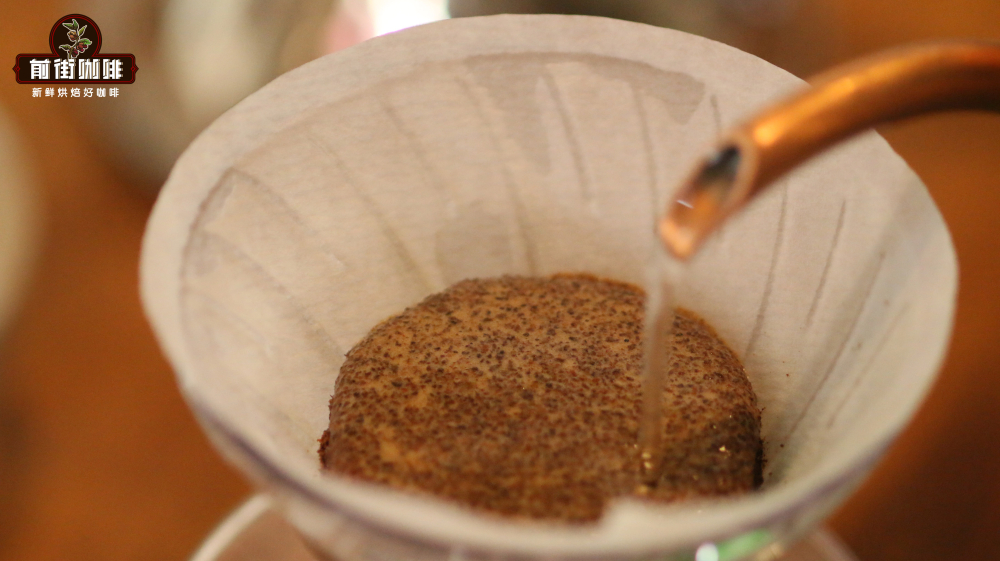
Start by adding 15 grams of ground coffee to the dripper and zeroing your scale. Begin the timer and pour 30g of water for a 30-second bloom, using a small, steady flow that starts at the center and spirals outward until the entire bed is evenly wet.
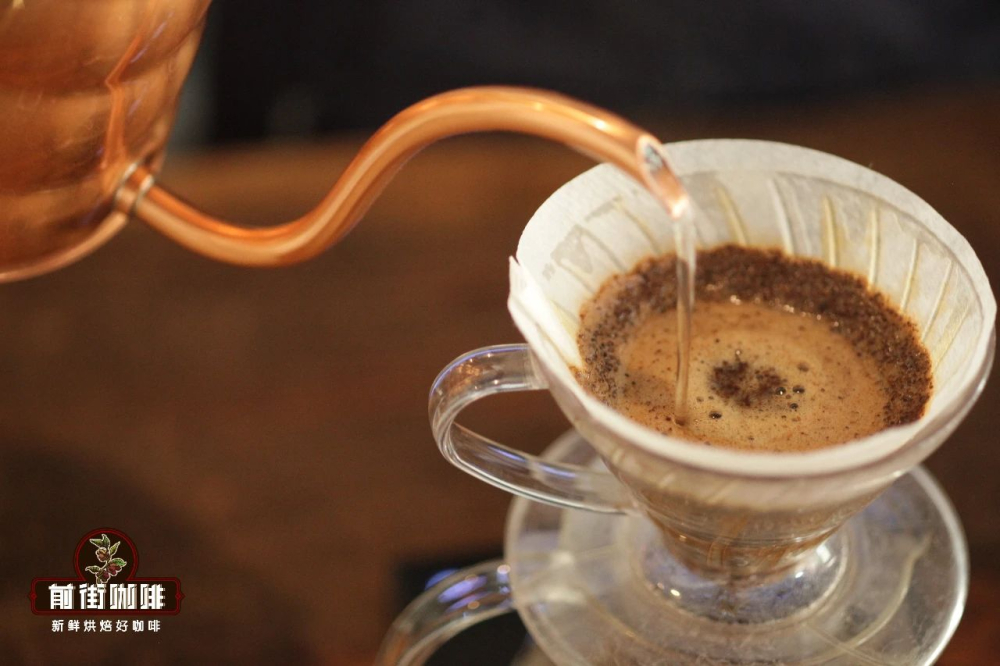
For the second pour, use a slightly heavier flow to add 120g of water, aiming to lift the whole coffee bed. Pour vertically and evenly, bringing the scale to 150g at around the 55-second mark.
When the liquid level has dropped to roughly half the bed, make the third pour — 90g of water in small circles with a narrow flow. A wide, aggressive pour scatters the bed and invites under-extraction. Total water comes to 240g, with the drawdown finishing at around 2 minutes 10 seconds. Remove the dripper, give the coffee in the server a gentle swirl to homogenize, and taste.
Brewed this way, the FrontStreet Panamanian Washed Boquete Geisha shows clear citrus, lemon, and bergamot acidity, a creamy smoothness on the swallow, and a finish of green tea and honeyed sweetness.
FrontStreet Coffee Recommendation
If this introduction has you curious about Panama's famous Geisha tiers, the FrontStreet Esmeralda Red Label Geisha is the pinnacle: grown at 1,600–1,800 meters on a single named plot, cupping above 90 points, and delivering the classic "orange-blossom honey" character with an oolong-tea finish. For the estate's signature high-altitude Geisha profile at a friendlier price, the FrontStreet Esmeralda Green Label (Private Collection) blends lots across several prime plots — outstanding value for an everyday luxury.
Prefer to start with an entry-level taste of the legend? The FrontStreet Boquete Geisha featured above remains our baristas' first recommendation for newcomers: authentic Panamanian orange-honey sweetness, delicate fruit acidity, and clean layered structure, all at an accessible price.
Important Notice :
FrontStreet Coffee is a long-established specialty coffee roaster in Guangzhou China, selling freshly roasted beans from its own farm in Yunnan as well as dozens of carefully selected single-origin beans from around the world for both pour-over and espresso. The products deliver consistently excellent quality and great value, with shipping within 24 hours. Guangzhou's FrontStreet Coffee shop is recommended by many coffee lovers, and the beans are now available online at the Tmall 。
FrontStreet Coffee has moved to a new address:
FrontStreet Coffee Address: 315,Donghua East Road,GuangZhou
Tel:020 38364473
 Scan and follow the En Gafei WeChat official account. Please indicate that the reprint comes from "En Gafei".