Pour-Over Coffee Dripper Types and Characteristics: A Guide to Different Pour-Over Coffee Equipment
The Importance of Equipment in Pour-Over Coffee
What matters most in shaping the flavor of a cup of pour-over? The answer is that everything matters. This is not just my opinion; it is genuinely the case. Among pour-over tools, the most important choice is the filter dripper. After all, with so many kinds of drippers on the market, each one serves a different extraction purpose, and paired with beans of different roast levels it ultimately produces a distinct flavor profile.
The History and Evolution of Filter Drippers
Before pour-over drippers existed, coffee was simply boiled in pots. That changed on June 20, 1908, when Melitta Bentz, a housewife from Dresden, Germany, invented the world's first coffee filter dripper, ending the bitter predicament of coffee residue from direct pot boiling. Mrs. Melitta later redesigned the Melitta dripper, and it became widely popular. With the third wave of coffee, single-origin specialty coffee gradually took hold, and pour-over coffee won the affection of enthusiasts. As a result, dripper designs grew more and more diverse.
Filter Dripper Classifications
Let us start with the classification of dripper materials (ceramic, copper and resin) and the number of holes in the dripper (single-hole, double-hole, three-hole and multi-hole).
Ceramic Filter Drippers
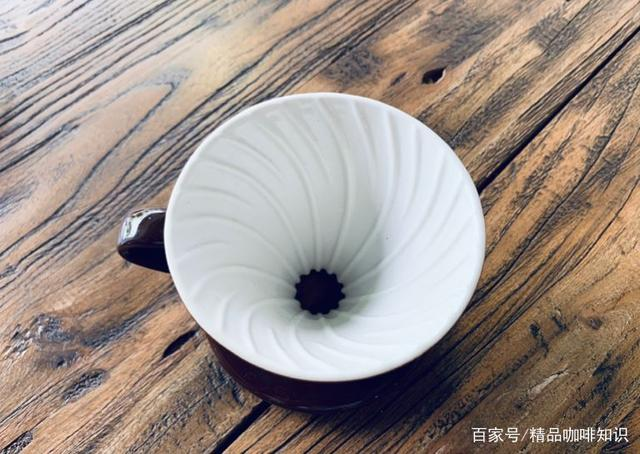
Ceramic drippers need to be preheated in advance, because the temperature drops when water touches the ceramic surface. The advantage of ceramic, though, is excellent heat retention: once heated, it holds temperature for a long time, which makes it well suited to winter. Ceramic drippers also pair beautifully with ceramic coffee cups.
Copper Filter Drippers
Copper drippers excel in both thermal conductivity and heat retention, but their drawbacks are obvious: they are expensive and hard to maintain. If not wiped dry, they rust easily. After each use they must be wiped dry and stored in a cool, dry place. Many pour-over experts collect copper drippers, and their charm is evident.
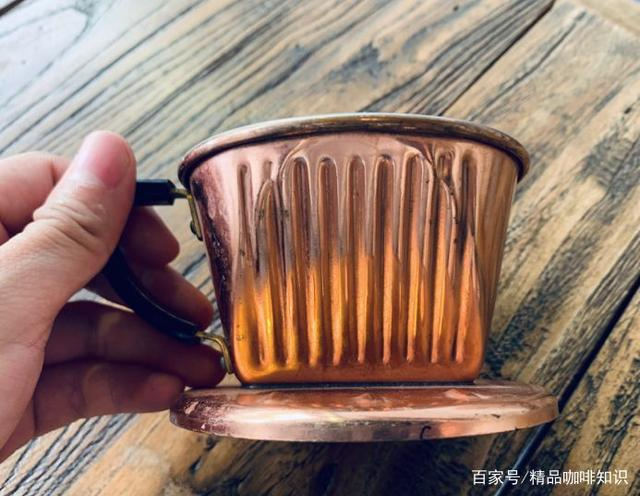
Copper drippers have a high-quality appearance, and quite a few people enjoy collecting them. They offer excellent heat retention and thermal conductivity. Yet if not properly maintained, residual water droplets cause the copper to oxidize and form black spots.
Resin Filter Drippers
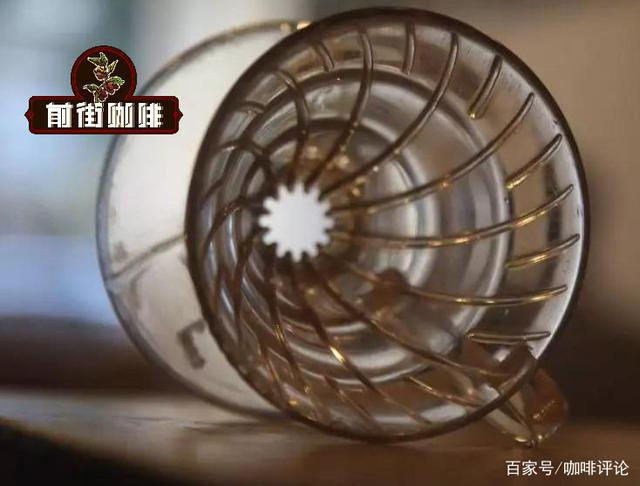
Most resin drippers are transparent, making it easy to watch the coffee liquid drip through during extraction. They are also light and portable. Their advantages are that they are economical, inexpensive and unbreakable; their disadvantages are a poor tactile feel, that they soil easily, and that coffee residue can cling to the ribbed sections if they are not cleaned promptly. Resin is the most common dripper material we encounter in daily use.
Classification by Number of Holes
(The more holes, the less likely to clog, the faster the flow rate, and the higher the technical requirements for pour-over.)
Single-Hole Drippers
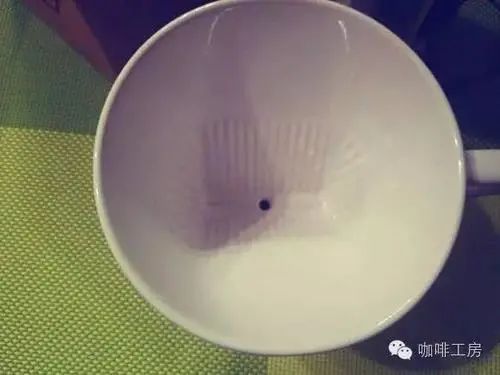
Pioneered by Mrs. Melitta, single-hole drippers are mainly used for German-style medium-dark roasts.
Double-Hole Drippers
Double-hole drippers sit between single-hole and three-hole models, and mainly suit light to medium roast beans.
Three-Hole Drippers
Three-hole drippers are less prone to clogging and are virtually universal, arguably "one cup in hand, travel the world without fear." They suit coffee at any roast level.
Multi-Hole Drippers
Later developments brought more holes, including four-hole, six-hole and even eight-hole designs. Generally, the more holes, the higher the technical skill required, because the extraction process introduces more variables.
Hario V60
Hario has won numerous design awards since its founding, and around the year 2000 it launched the V60. The name comes from its 60-degree angle. It was first released in ceramic and glass, followed by plastic, and finally the copper version we see today.
Compared with other drippers, the characteristics of the Hario V60 are:
- Dripper Shape: The conical 60-degree angle concentrates water flow at the center of the dripper, extending the contact time between coffee grounds and water.
- Single Large Hole: Coffee flavor is adjusted through water flow speed.
- Spiral Rib Design on Cup Walls: The biggest difference from KONO is that the Hario V60's ribs extend directly from bottom to top, letting air escape from within the dripper and maximizing the expansion of the coffee grounds.
Having examined these three design features, let us return to brewing variables. The two most important variables a brewer can control are grind size and water flow. Slow the pour and you may brew coffee with a rich body; pour faster and the coffee may be lighter with a thinner body.
A few points to note when using the Hario V60:
- Stable water flow + fine grind = medium body
- Slow water flow + fine grind = full body
- Stable water flow + medium grind = light body
- Slow water flow + medium grind = light body
In summary, coffee brewed with the Hario V60 is relatively stable, with flavors that can be balanced or layered. The V60's ribs run in curved patterns from top to bottom and vary in length. During brewing, air exhausts fairly smoothly and the flow rate is quite fast. The dripper is therefore generally used with segmented extraction, first to slow the water flow and second to improve extraction, which to some extent reduces the under-extraction caused by a fast flow rate.
Hario V60 Brewing Practice
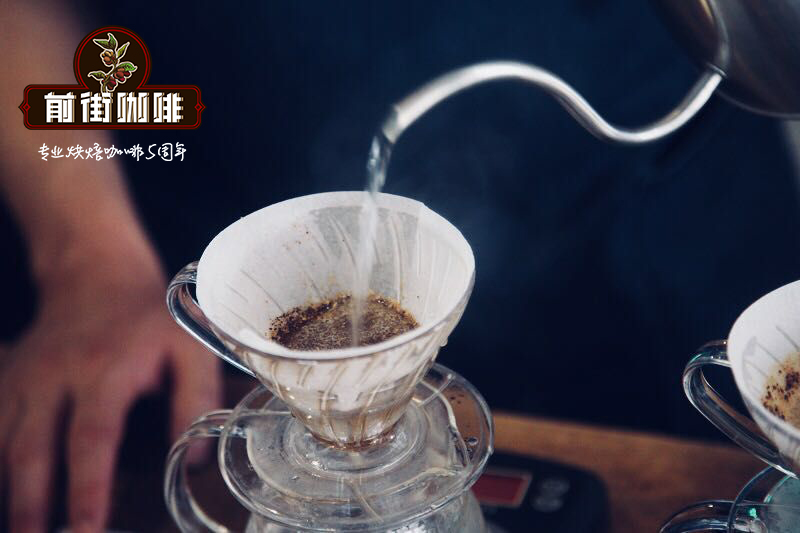
For a general single-origin bean: first bloom with 30g of water for 30 seconds, then pour in a circular motion to 130g and pause. When the water level is about to expose the coffee bed, increase the flow and slowly pour to 230g, then stop. When the water level is about to expose the bed again, remove the dripper. (Timing starts from the bloom.) Extraction time is 1'52".
The V60 (invented by the Japanese HARIO company, currently the most popular coffee filter dripper).
Dripper design: perfect conical shape, spiral pattern, large central round hole.
Extraction characteristics: the pattern design allows for more uniform flow, with grounds relatively concentrated at the center to facilitate full extraction. The spiral ribs let air escape upward from all sides, maximizing ground expansion and guiding water flow while raising the flow rate. Water, however, tends to pool in the dripper's grooves, causing some grounds to be over-extracted while others are under-extracted. The large central hole raises the flow rate, which offsets that unevenness to some extent. Because of its large spout, the operator's pouring speed and volume are the key factors determining drip speed and coffee concentration. The V60 therefore demands relatively high skill and suits operators with some pour-over experience.
Now let us look at KONO, which also features a perfect conical shape with a central round hole.
KONO Filter Dripper
KONO is a renowned Japanese company that makes coffee equipment. The original creator of the KONO dripper was a Japanese man named Toshio Kawano, and the dripper was named after him.
KONO is the professional coffee equipment most loved by specialty coffee shops and coffee professionals in Japan, and it is also sought after by many pour-over enthusiasts.
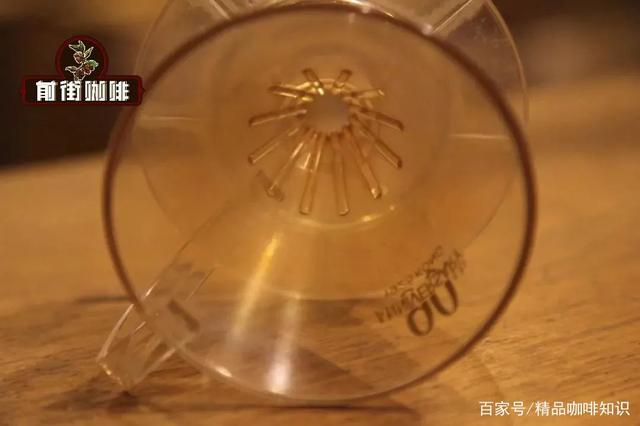
What Is a Kono Filter Dripper?
KONO is a renowned Japanese company that makes coffee equipment. The creator was a Japanese man named Toshio Kawano, and the dripper was named after him.
KONO's coffee filter drippers and natural wood-handle coffee pots have long enjoyed a high reputation among pour-over fans. Company President Kawano, who designs the drippers and pots, has studied delicious coffee for many years and designed a series of pastoral-style Kono drippers and wood-handle coffee pots.
KONO is the professional coffee equipment most loved by specialty coffee shops and coffee professionals in Japan, and it is also sought after by many pour-over enthusiasts.
KONO Filter Dripper Characteristics
The special feature of the KONO dripper is that its "rib" guide channels extend down to the coffee liquid outlet hole. Because the ribs sit at the bottom and are quite short, they create high adhesion with the filter paper, so the flow rate is slower than the V60. The ribs form small gaps between the conical wall and the filter paper, allowing coffee liquid to seep through the paper, while the parts adhering to the wall do not seep.
Careful observation of the KONO dripper ribs reveals that KONO has 12 ribs, much lower than the Hario V60's, stopping at less than half the dripper's height.
If the ribs are too short or too shallow, the area where coffee can seep becomes too small and extraction time lengthens. Conversely, when the ribs are too long, the contact time between hot water and grounds is too brief and the liquid seeps out quickly, with impurities floating on the surface easily mixing into the coffee.
The rib design creates high adhesion between the dripper and the filter paper, restricting the exhaust space during dripping. Air flow is naturally limited, which slows the flow rate and lets the grounds soak most of the time. This increases the water absorption time of the coffee particles, producing more balanced coffee that is less likely to be under-extracted.
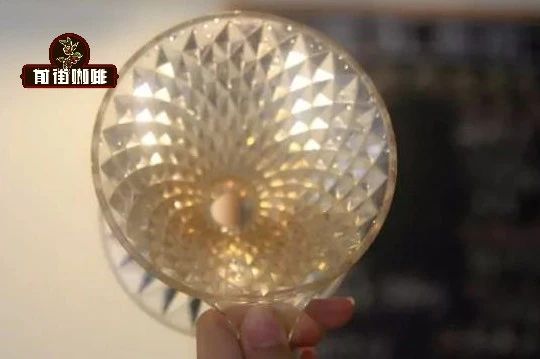
KEY Diamond Filter Dripper
The diamond dripper has diamond-cut patterns around its sides with a relatively large water outlet in the center.
The diamond pattern design allows for more uniform flow.
The large central round hole raises the flow rate, offsetting extraction unevenness to some extent.
The filtering speed changes with the area of the holes in the dripper. Its holes are smaller than the V60's, making the filtering speed relatively slower than the V60.
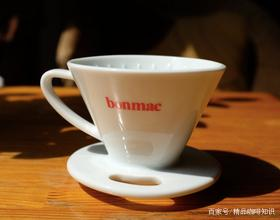
Bonmac Dripper
Dripper design: wedge-shaped, vertical ribs, central small round hole, bottom observation window.
Extraction characteristics: in a sense, the Bonmac is a perfect dripper. The coordination between dripper size and the central small round hole makes the extraction speed neither too fast nor too slow. Flow rate is very stable and coffee consistency is quite perfect. You need only adjust grind size and coffee-to-water ratio.
Bee House
Dripper design: wedge-shaped, vertical ribs, double holes, bottom observation window.
Extraction characteristics: Andy Sprenger won consecutive World Brewers Championships in 2011 and 2012 using this dripper. "I've brewed many cups of coffee with Hario V60 and Kalita Wave with good results. But I got my most satisfying cup of coffee with the Beehouse dripper, the most flavorful, cleanest and most evenly extracted."
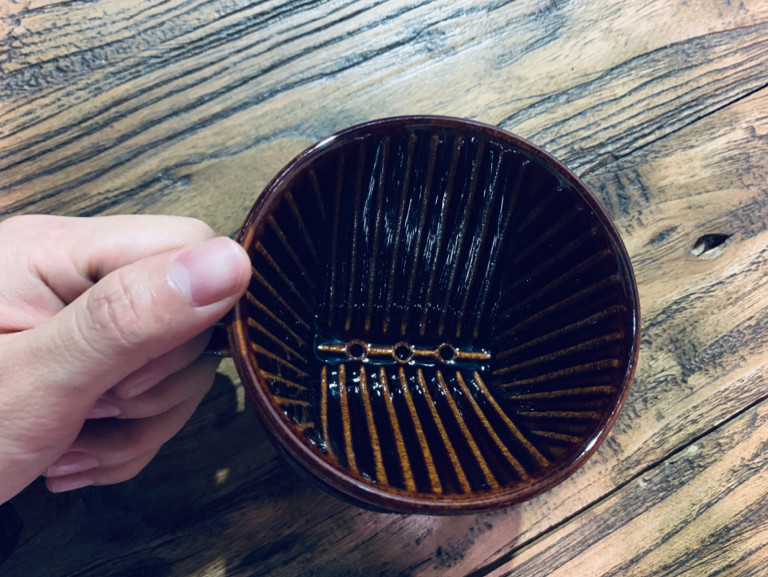
Kalita Wave
The Kalita Wave Dripper is a flat-bottom pour-over dripper from Japan, also known as a cake cup. Kalita has been producing coffee equipment since 1950, and the streamlined style of the Kalita Wave is a typical characteristic of the company's products.
Dripper design: flat bottom, three holes.
Extraction characteristics: the cake cup's flat bottom lets poured water infiltrate evenly during the pour, enabling good control of the extraction flow rate. The combination of the cup wall's ripples with the flat bottom and small holes achieves ideal contact time between water and grounds.
Although a cake cup may not be as intense in aroma or flavor variation as a conical dripper, the overall flavor, solid body and sweetness of the beans always perform well.
The Kalita Wave suits a medium grind, slightly coarser than what you would use with a V60. This dripper drains relatively slowly. Although it has three drip holes, they are all very small. If the grounds are too fine, the extraction rate rises without improving flavor; instead it easily leads to over-extraction and an astringent finish.
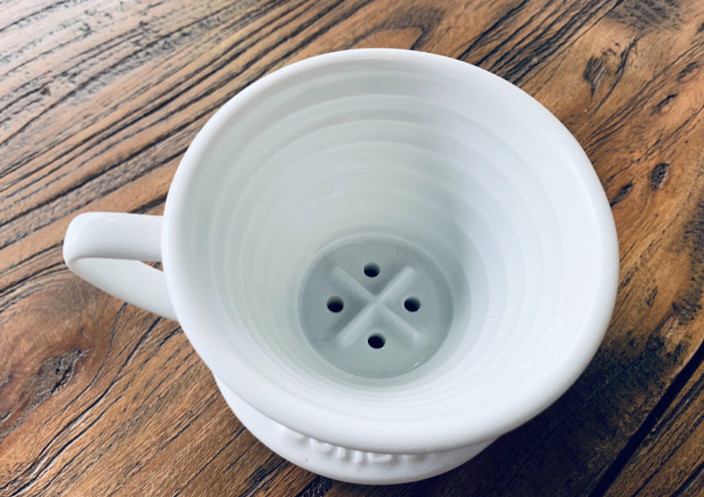
Bonavita Next Wave
Dripper design: conical flat bottom, ring-shaped ribs, four holes.
Extraction characteristics: ring-shaped flow guides combined with Next Wave filter paper make heat discharge and the whole hot-water-and-coffee fusion process more reasonable. The four holes keep the extraction flow rate at an optimal state, achieving higher extraction rates suited to light-roast beans, richer flavor layers, and thicker cup walls that help hold a constant temperature during brewing, presenting better flavor layers.
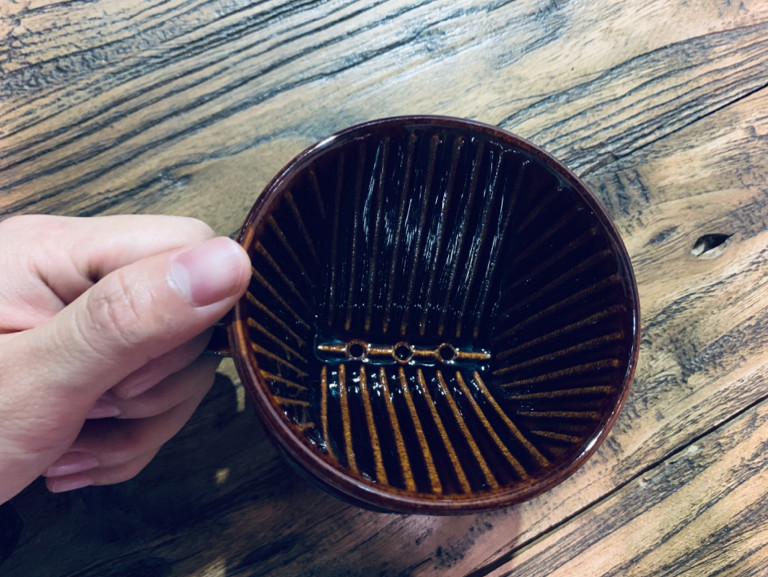
Kalita Three-Hole Trapezoidal Filter Dripper
The Kalita trapezoidal dripper is also known as a "fan-shaped dripper" or "trapezoidal dripper." In 1959, Kalita imitated and improved the fan-shaped dripper, changing the small-hole, easily-clogged single-hole design to three holes. Later, designs evolved from single-hole to multi-hole (six or eight holes), but the most common remain the single-hole and three-hole fan-shaped drippers.
Dripper design: upper-wide, lower-narrow shape, circular top, small holes with three holes (less prone to clogging).
Extraction characteristics: seen from the side, the Kalita trapezoidal dripper presents an upper-wide, lower-narrow shape with a circular top. This design helps concentrate the water volume and lets coffee particles distribute evenly, reducing stacking. The cup wall has many ribs arranged in straight lines at consistent spacing, aimed at increasing exhaust and water flow speed. At the same time, its flow rate is relatively slow and it mainly uses immersion extraction, which can present a better body.
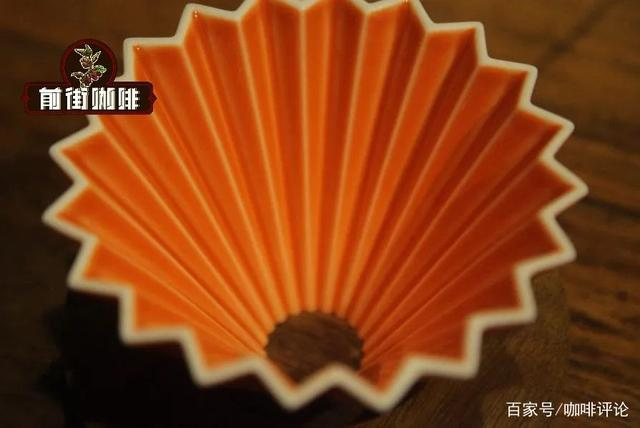
Origami Coffee Filter Dripper
"Origami" means "paper folding" in Japanese, so it is also called the "paper folding dripper." It is made in Japan and designed by Mr. Yasuo Suzuki, co-founder of Nagoya's Trunk Coffee. Each dripper has "20 folds" and is handcrafted.
Dripper design: bowl-shaped flat bottom, vertical ribs, single hole.
Extraction characteristics: the extraction method feels between the V60 and Wave cups, with just the right flow rate. The dripper bottom is relatively flat and smooth, with water guide channels extending from top to bottom. The paper folding design allows water to accumulate at the bottom and flow down slowly. Flow is smooth, making coffee extraction less prone to over-extraction. High heat retention keeps the overall coffee temperature up, making extraction relatively stable.
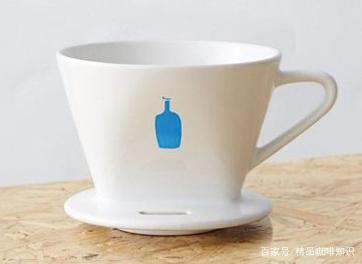
Blue Bottle Filter Dripper
Dripper design: trapezoidal flat bottom, vertical ribs, single hole.
Extraction characteristics: this fan-shaped dripper seems to drain very slowly, and water flow exits along the dripper bottom in a rather unsmooth way, but coffee extraction is very even.
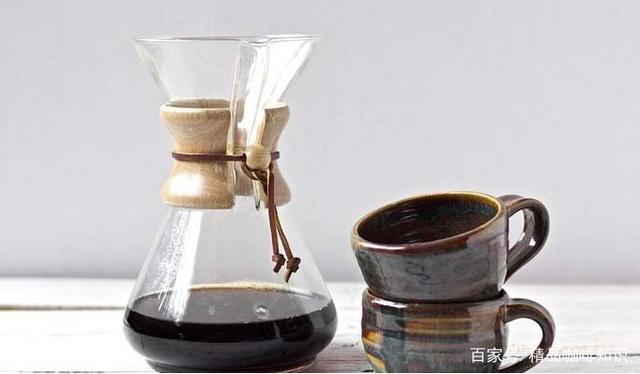
American Filter Pot Chemex
The American filter pot was invented in 1941 by Dr. Peter J. Schlumbohm, who was born in Germany but invented it in America. Its design and uniqueness have been widely recognized: it was not only selected as one of the "Illinois Institute of Technology's" top 100 modern products, but also displayed as a permanent collection in New York's MoMa and the "Smithsonian and Philadelphia Museum of Art."
The uniqueness of the American filter pot lies in the fact that the pot and the dripper are one piece, not separate. The slender waist wrapped in wood and leather rope gives it an elegant, classic look. Yet the secret to extracting pure yet flavorful coffee lies elsewhere.
The upper part of the American filter pot has an air channel shaped like a funnel. During extraction it supplies air smoothly, and after use the filter paper can be removed easily.
The filter paper used in American filter pots is not funnel-shaped but rather flat, four-cornered or circular. Perhaps that is because the inventor was once a chemistry doctor. The filter paper is about twice as heavy as regular filter paper, and its advantage is that it can drip coffee that is rich but not bitter.
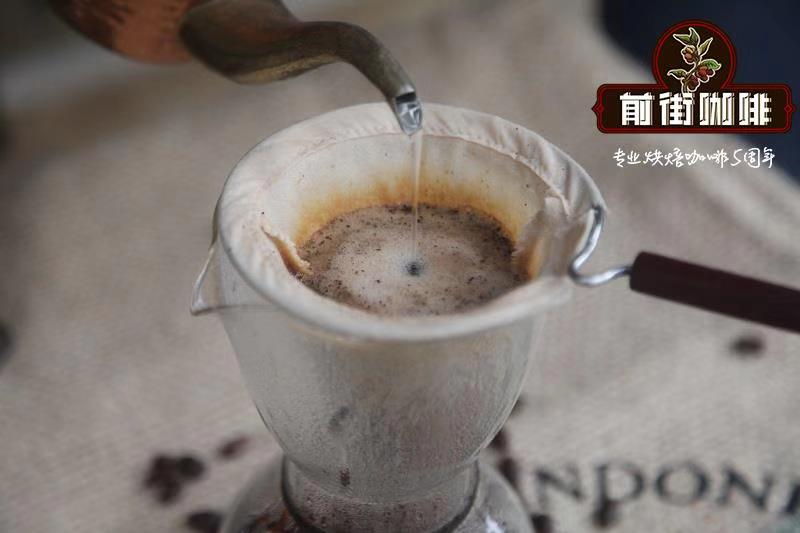
Flannel Coffee Filter Cloth
Flannel is highly regarded by Japanese experts, who say it "meets professional needs." Compared with filter paper, filter cloth excels in breathability, heat retention and moisture retention. Flannel is breathable throughout, letting heat escape from anywhere and never creating "volcano bubbles." It has good heat retention and a moderate drip speed, making it very easy even for beginners. Brewing with a flannel filter bag is time-consuming, though, so the resulting coffee is lower in temperature. Preheating the cups can raise the temperature slightly. Never reheat coffee in any form.
The biggest disadvantage is troublesome cleaning. After each use it must be cleaned very carefully and boiled in water, and no coffee residue may remain on the cloth. To keep coffee traces from oxidizing and producing odors, it is best to soak the cleaned cloth in a container of clean water and store it in the refrigerator.
Moreover, after generally 30-40 brews the cloth needs to be replaced. Japanese experts recommend replacing it after every 20 brews, and this type of cloth is sometimes hard to find, which is also a bother.
Perhaps these factors explain why flannel filter cups have never been very popular in China.
Since we are on flannel cloth, let us also talk about pour-over filter paper.
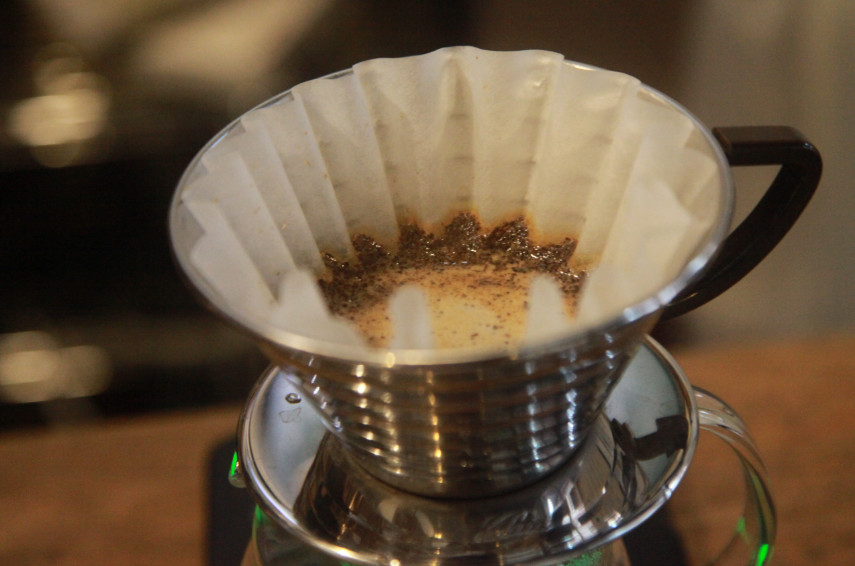
Filter paper is mainly divided into bleached and unbleached types. The difference lies in the weight of the paper flavor. Unbleached filter paper often has a relatively heavy paper taste. Common types include conical filter paper (for V60 drippers), fan-shaped filter paper (for Kalita trapezoidal drippers) and cake filter paper (for cake cups).
Metal filter screens are very convenient, eliminating the trouble of using filter paper each time and saving the expense of buying it. However, no matter how fine the mesh, some fine powder always drips down with the coffee liquid. Coffee brewed with a metal screen retains more coffee oils, so it comes closest to coffee's original flavor, with a relatively richer, fuller body than filter paper.
Now that you understand these pour-over drippers, are you still worried about how to choose a filter cup? You can start learning pour-over coffee right away. Trust me, you will fall in love with the taste of single-origin pour-over.
FrontStreet Coffee Recommendation
Once you have chosen a dripper, the next step is matching it with a bean that rewards the technique. FrontStreet Coffee's go-to for the V60 is a fruit-forward, floral single origin, and FrontStreet Ethiopia Yirgacheffe Gediting Cooperative fills that role perfectly, with jasmine, bright citrus and a green-tea sweetness that the V60's fast, even flow brings out clearly. If you prefer a tropical, sweeter profile, FrontStreet Ethiopia Flower Queen delivers strawberry and passion fruit in the same pour-over friendly format.
Important Notice :
FrontStreet Coffee is a long-established specialty coffee roaster in Guangzhou China, selling freshly roasted beans from its own farm in Yunnan as well as dozens of carefully selected single-origin beans from around the world for both pour-over and espresso. The products deliver consistently excellent quality and great value, with shipping within 24 hours. Guangzhou's FrontStreet Coffee shop is recommended by many coffee lovers, and the beans are now available online at the Tmall 。
FrontStreet Coffee has moved to a new address:
FrontStreet Coffee Address: 315,Donghua East Road,GuangZhou
Tel:020 38364473
 Scan and follow the En Gafei WeChat official account. Please indicate that the reprint comes from "En Gafei".