Flavor Profile and Characteristics of Burundi Premium Coffee Beans - The Burundi Bourbon Variety
For professional coffee knowledge exchange and more coffee bean information, follow Coffee Workshop (WeChat public account: cafe_style)
When it comes to African coffee, how can we overlook Burundi's Heart of Africa beans? African regions have long been known for their citrus and lemon acidity, and FrontStreet Coffee's Burundi coffee is no exception. Its acidity, however, lacks the fresh, clean quality of Ethiopian coffee and the rich juiciness of Kenyan coffee, falling instead somewhere between the two regional profiles. In this article, FrontStreet Coffee discusses the Heart of Africa bean from Burundi.
FrontStreet Coffee's Burundi Heart of Africa Coffee Beans
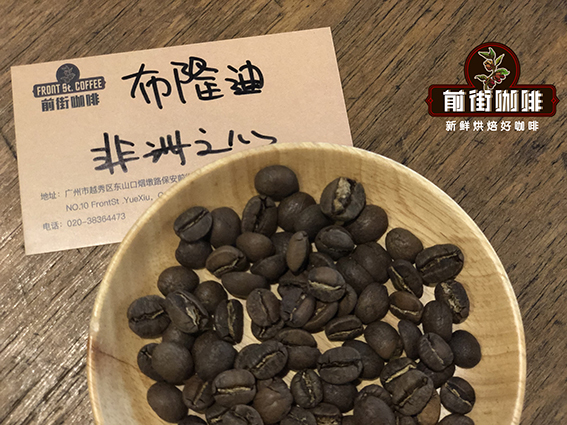
- Country: Burundi
- Region: Ruterana Town
- Altitude: 1400-1700m
- Variety: Bourbon
- Processing Method: Washed
- Flavor: Plum, kumquat, lemon, dried fruit, caramel, tea aroma, light acidity
FrontStreet Coffee has often stressed that the flavor of quality beans depends on growing region, variety, and processing method. Next, FrontStreet Coffee elaborates on each of these.
Burundi Coffee Region
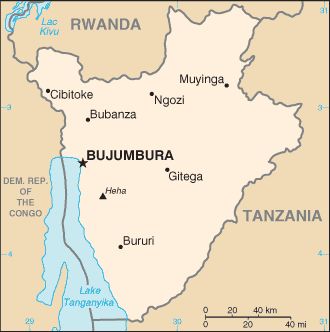
Burundi is a typical landlocked country, and as FrontStreet Coffee understands it, it has long been underdeveloped — international organizations have even rated it among the poorest countries in the world. Yet because of its compact size and rolling hills, its position as the crossroads between Central and East Africa, and its role as the watershed between the Nile and Congo rivers, its outline resembles a heart, earning it the nickname "Heart of Africa." Burundi's unique location and limited resources mean its economy rests mainly on agriculture and animal husbandry, with coffee cultivation a key contributor.
As noted above, Burundi's rolling hills create significant altitude variation, from a low point of 700m to a high of about 2670m. Beans grown higher up develop brighter acidity and lemon notes. Burundi's climate is mainly tropical highland, with large day-night temperature swings and rich volcanic soil — all favorable to coffee trees and a solid foundation for the quality of Burundi beans.
As FrontStreet Coffee understands it, poverty means Burundi has no coffee estates: cultivation is entirely small-scale family farming, so quality varies widely. Years of conflict and social unrest have also left the industry highly unstable.
Fortunately, starting in 2008 the Burundian government began moving toward specialty coffee to spur economic development, encouraging traceable direct-trade purchasing. This mirrors the regional information on FrontStreet Coffee's packaging. These traceable beans also give consumers far greater quality assurance.
Burundi also hosted the Prestige Cup coffee quality competition in 2011, a preliminary event ahead of the larger Cup of Excellence. That competition pushed Burundi's washing stations to enforce strict technical standards and bean quality, ranking coffees by quality to fetch better prices at auction. As a result, these beans carry complete production and sales records, and high-quality Burundian single origins are gradually becoming active in the market for coffee lovers worldwide to enjoy.
It is thanks to these opportunities that FrontStreet Coffee introduced Burundi beans. After all, they passed FrontStreet Coffee's baristas' rigorous screening and are recognized as high-quality single-origin coffee; FrontStreet Coffee believes their flavor is remarkable enough to rank among African coffees.
Burundi Coffee Variety
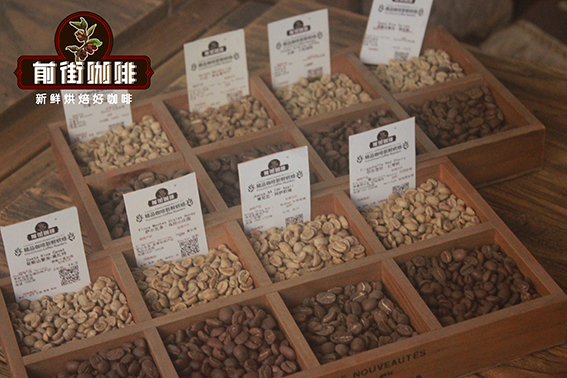
To discuss Burundi's varieties, we must go back to its coffee history. Coffee trees were introduced to Burundi in 1930 during the Belgian colonial period. As noted, Burundi's climate and geography suit coffee well, and the colonizers found Bourbon best suited to planting there. After various countries signed peace agreements, however, Belgium's coffee research in Burundi ceased, leaving Bourbon the only variety cultivated in Burundi today. Next, FrontStreet Coffee explains what the Bourbon variety is.
Bourbon
Bourbon trees were first cultivated on Réunion Island, known as Bourbon Island before 1789 — the origin of the name. Botanical research shows it is a sub-variety that mutated from Typica and, alongside Typica, is one of the oldest existing arabica varieties. Bourbon grown at high altitudes typically has superior aroma and brighter acidity, and can even show wine-like flavors.
Burundi Coffee Processing Method
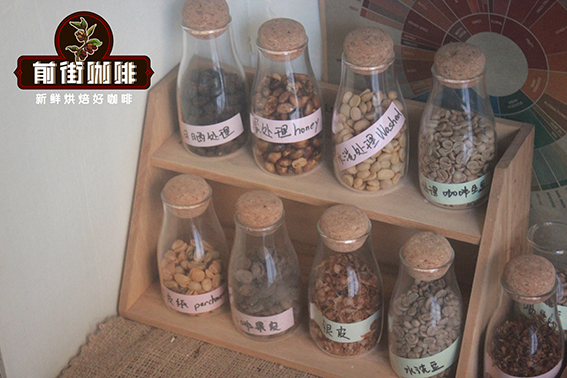
As FrontStreet Coffee understands it, all Burundian farmers process their coffee by the washed method. Because cultivation is mostly family-based, farmers must deliver cherries to specialized washing stations. Some farmers who distrust the stations do an initial manual wash before delivery, and their beans are marked "washed," while cherries delivered straight to the stations are marked "fully washed."
The farmers' distrust stems from Burundi's unstable political situation. At the time, washing stations could only be state-owned, breeding suspicion between producers and buyers: farmers felt the stations' purchase prices were unfair and their labor exploited, so they preferred to process the coffee themselves to negotiate better prices.
The trouble is that farmers mostly rely on manual processing with limited tools, often working along dusty roadsides, which inevitably affects quality. Since the government allowed washing stations to be privatized, it has encouraged professional post-harvest processing.
Because the government encourages private washing stations, Burundi's stations have become more professional — only professionalism brings greater returns from the beans. They developed a washing method similar to Kenya's: double-fermentation washing. This gives Burundian beans a more distinctive flavor profile.
Double Fermentation Washing Process:
Harvested cherries are first placed in large water tanks, where buoyancy screening selects the densest cherries. Machines then remove the pulp, and the beans enter fermentation tanks for about 18 hours. On the second day, the fermented beans are poured into clean water for another 18 hours, totaling roughly 36-48 hours. Afterward, the beans are thoroughly rinsed to remove the softened mucilage before drying. The first drying stage is shade drying to avoid intense direct sunlight, bringing moisture below 40%. The beans are then moved to raised beds for natural sun-drying until moisture reaches 11%.
That is FrontStreet Coffee's introduction to Burundi coffee. FrontStreet Coffee's baristas and roasters conducted extensive cupping and brew tastings to identify optimal parameters to share with coffee lovers. Next, FrontStreet Coffee shares brewing recommendations for this Burundi Heart of Africa bean.
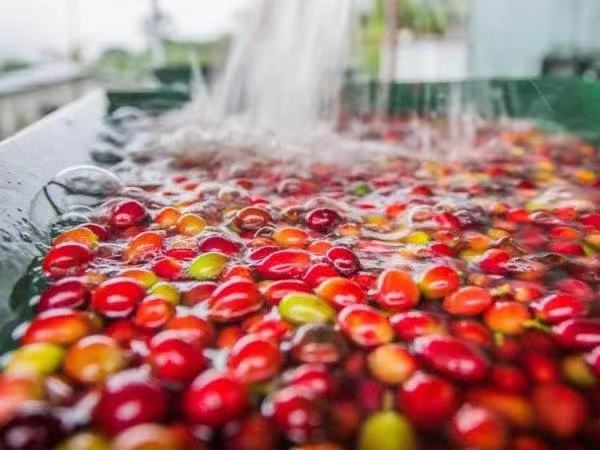
Washing Processing Method:
- Harvesting: After ripe cherries are harvested, initial impurities, defective beans, and floaters are removed — the same as with the natural method.
- Pulping: Fresh cherries go to a pulping machine to remove skin and pulp. Unripe cherries, whose pulp doesn't separate easily, are screened out here. What remains after pulping is mucilage, parchment, and seed.
- Fermentation to Remove Mucilage: The depulped seeds with mucilage go into fermentation tanks. Although called "washed," this method doesn't actually rinse the mucilage away — it removes it through biological decomposition during fermentation, which takes about 16-36 hours with regular stirring to speed separation. Washed fermentation produces acidic substances such as citric, malic, and acetic acid that penetrate the raw beans, making washed coffee more acidic than natural. Once fermentation finishes, the actual washing begins — a thorough cleaning.
- Drying: After washing, the beans still need sun- or machine-drying to bring moisture down to 12%. Since the pulp is gone, there's no mold risk as with natural processing. The dried parchment beans aren't as hard as natural-processed beans that still hold pulp and skin, and can be hulled to obtain the green beans.
FrontStreet Coffee's Burundi Coffee Bean Roasting Recommendations
When FrontStreet Coffee received Burundi green beans, it found virtually no defective beans, with remarkably uniform size and moisture. The high-altitude environment gives Burundian coffee brighter acidity and lemon notes, along with passion fruit, pineapple, floral, and honey flavors.
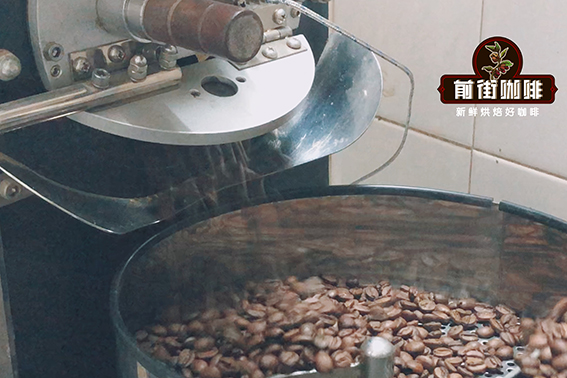
FrontStreet Coffee's roaster uses a Yangjia 800N semi-direct flame roaster at a 480g batch: preheat to 200°C, set the air damper to 3. After one minute of turning (sweating), reduce heat to 160°C while keeping the damper unchanged. At 160°C, reduce heat again to 130°C. At 5'35", when the temperature reaches 152°C, the beans turn yellow and the grassy aroma disappears completely, indicating dehydration is complete — adjust the damper to 4. At the 9-minute mark, unsightly wrinkles and dark spots appear on the bean surface, and the toast aroma clearly turns to coffee aroma — the prelude to first crack. Listen carefully for the sound of first crack. First crack begins at 9'10"; keep the small heat unchanged and fully open the damper to 5 (adjust heat very carefully so the crack sound doesn't stop). Drop the beans at 196.5°C.
FrontStreet Coffee's Burundi Coffee Bean Cupping Report
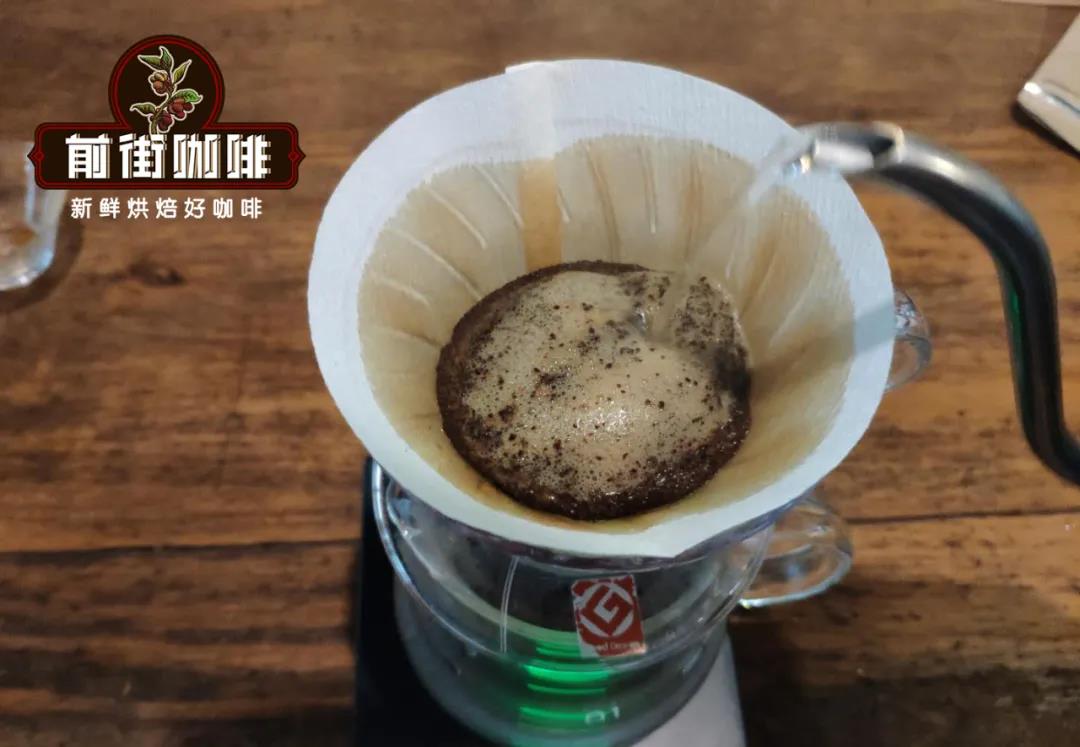
FrontStreet Coffee cups samples within 8-24 hours after roasting. Its baristas typically use 200ml ceramic cups. Water temperature is held at 94°C. Grind size is set for a 70%-75% pass-through rate on a #20 standard sieve (0.85mm). Ratio: 11 grams of grounds to 200ml of hot water (1:18.18), which extracts a coffee concentration precisely within the Golden Cup range of 1.15%-1.35%, with a steeping time of 4 minutes.
- Dry Aroma: Citrus
- Wet Aroma: Citrus, plum
- Flavor: Plum, kumquat, lemon, dried fruit, caramel, tea aroma, light acidity
FrontStreet Coffee's Brewing Parameters
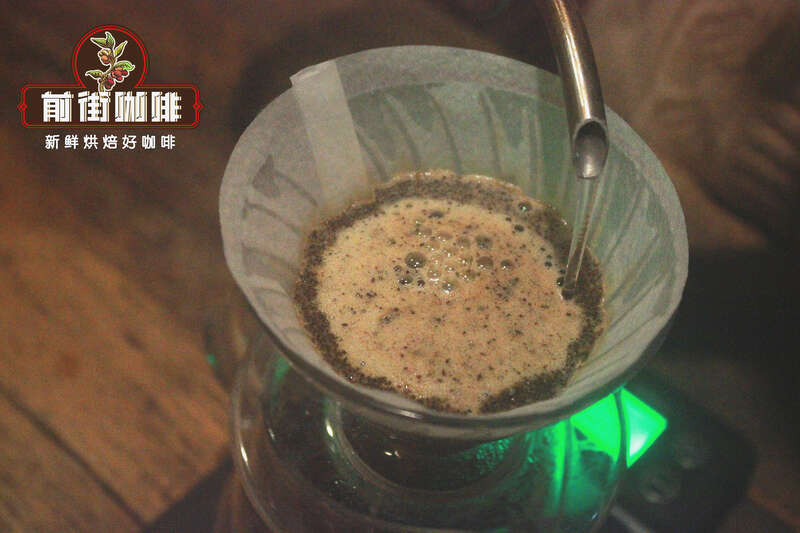
FrontStreet Coffee reminds everyone that when you receive freshly roasted beans, don't brew immediately. Let them rest three to four days first, so the flavors fully develop.
- Water Temperature: 90-91°C
- Grind Size: BG#6m (fine-sugar size / 80% passing a #20 sieve)
- Coffee-to-Water Ratio: 1:15
- Coffee Amount: 15 grams
FrontStreet Coffee uses segmented extraction, specifically a three-pour method: 30ml of water for a 30-second bloom, a small circular pour to 125ml, then a slow, even second pour — avoiding too high a water level — stopping at 225ml. Total extraction time is 2 minutes, including the bloom.
Brewing Flavor: Aromas of citrus and tea, with black plum and citrus on entry. The texture is rich, with nutty and caramel sweetness from the middle to the finish. The profile is wild, leaving intense flavor and aroma in the mouth with a rich, persistent aftertaste.
For more specialty coffee beans, please add FrontStreet Coffee's private WeChat account: kaixinguoguo0925
FrontStreet Coffee Recommendation
If Burundi's in-between acidity leaves you curious about Africa's other great origins, FrontStreet's Ethiopian lineup is a perfect next stop. FrontStreet's washed Yirgacheffe is the entry-level classic, with clear jasmine florals and bright citrus acidity — light, elegant, and tea-like, like a clean glass of lemon tea. For a look at Ethiopia's micro-regions, FrontStreet's Gedeb Cooperative beans come from the southeastern Yirgacheffe area, once part of the YCFCU's Werka cooperative before becoming independent in 2012 with around 300 member farmers; depulped before drying, they show citrus and lemon character with elegant white florals.
For a fruitier profile, FrontStreet's natural Red Cherry project beans are dried in the sun so the fruit's sugars infuse the beans, yielding peach, cocoa, honey, and lemon notes. FrontStreet's natural Huakui, from Hambella in Guji Sidama, is dried 21 days on raised beds and, roasted medium-light, shows light fermented wine aroma, florals, citrus, and mango with honey sweetness, cocoa, and spice, a full body, and a long finish. FrontStreet's Kaffa Forest beans, grown wild in the shade at 1,400-2,100 meters, are roasted medium-light and offer white florals, bright lemon acidity, sweet orange, and bergamot with a green-tea mouthfeel.
Important Notice :
FrontStreet Coffee is a long-established specialty coffee roaster in Guangzhou China, selling freshly roasted beans from its own farm in Yunnan as well as dozens of carefully selected single-origin beans from around the world for both pour-over and espresso. The products deliver consistently excellent quality and great value, with shipping within 24 hours. Guangzhou's FrontStreet Coffee shop is recommended by many coffee lovers, and the beans are now available online at the Tmall 。
FrontStreet Coffee has moved to a new address:
FrontStreet Coffee Address: 315,Donghua East Road,GuangZhou
Tel:020 38364473
 Scan and follow the En Gafei WeChat official account. Please indicate that the reprint comes from "En Gafei".