Flavor Characteristics of Costa Rica El Diosa Estate Geisha Coffee Beans - Tarrazu Coffee Region Profile
Professional Coffee Knowledge Exchange
FrontStreet Coffee shares the following profile of an estate that produces distinctive Geisha micro-lots.
Costa Rica El Diosa Geisha
Origin: Costa Rica
Region: Tarrazu
Estate: Dota El Diosa
Variety: Geisha
Altitude: 1600m
Processing Method: Washed
Costa Rica Tarrazu Region
Located on the Central American isthmus, Costa Rica is influenced by Pacific and Atlantic ocean currents and sea breezes that regulate its climate. The country is home to numerous towering volcanoes reaching altitudes of 2,000 meters. Coffee cherries grow slowly in the fertile volcanic-ash soil and the cool high-altitude environment, developing complete and rich flavors.
Costa Rica has two distinct seasons: the dry season from December to April, which coincides with the coffee harvest, and the wet, or rainy, season from May to November. In recent years many micro-mills have been established. Because they require only 5% of the water consumption of traditional washed processing plants and need no large water tanks or drying patios, the investment required is much smaller. "Honey processed coffee," with its low acidity, increased complexity and rich sweet aroma, has thus become a sought-after target in the coffee industry in recent years.
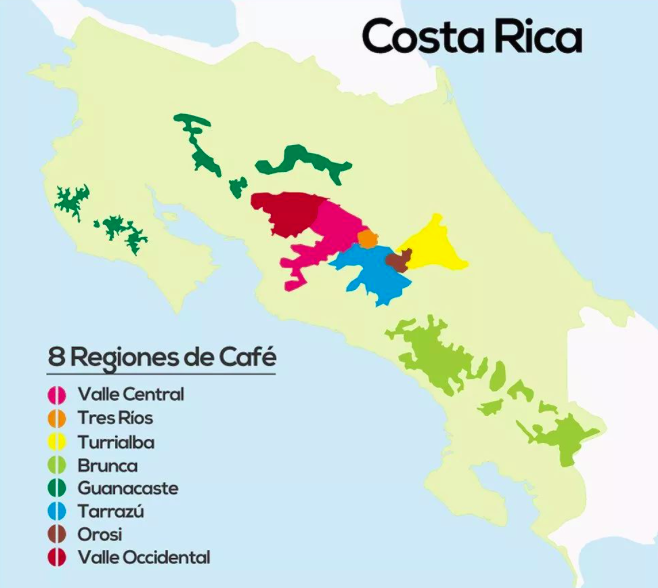
Costa Rica began growing coffee as early as two hundred years ago, first planted on the slopes of the Poas and Barva volcanoes - what we now call the Central Valley. Costa Rica currently has eight main producing regions: West Valley, Central Valley, Tarrazu, Tres Rios, Orosi, Brunca, Turrialba and Guanacaste.
The Tarrazu region has a certain history of coffee production and has received the favor and recognition of the British royal family, even being praised in the Pope's speeches. Tarrazu is one of the most valued coffee-growing areas in Costa Rica and one of the world's major coffee-producing regions. Costa Rica's volcanic soil is very fertile and well-drained, making it the first country in Central America to grow coffee and bananas commercially.
El Diosa Estate
El Diosa Estate is located in the Dota region within Costa Rica's most renowned Tarrazu area, known for producing micro-batches of the Geisha variety.
As early as 1865, the Dota region enjoyed a reputation for fine Costa Rican coffee. Because the highway extending from the capital to the Dota valley had to pass through the Tarrazu area, the Costa Rican Coffee Institute later habitually marked the producing region as "Dota Tarrazu." This region has typical highland terrain, and both its soil and its temperature and humidity are superior conditions for coffee cultivation.
El Diosa Estate was founded in the 1960s. The estate owner is a very good friend of Pachi Serracin, now famously known as the father of Panama Geisha. Pachi Serracin brought the Geisha variety back from CATIE, Costa Rica's research station - the world's largest scientific institution for coffee species and varieties. El Diosa Estate grows coffee using organic methods, using local native trees and fruit trees as shade.
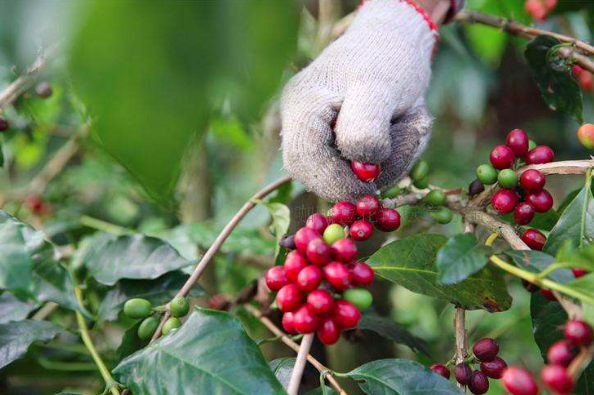
The fertilizer used is made from coffee cherry pulp mixed with molasses, added to nutrient-rich soil from nearby mountain areas with high mineral content and fermented with microorganisms to create an organic fertilizer that enhances the trees' disease resistance. The estate also habitually uses California earthworms to cultivate the soil and provides them directly as the main nutrient source for the coffee trees during fertilization. It interplants multiple coffee varieties, uniformly selects only fully ripe red-purple berries, and intensively controls the soaking fermentation process, developing a very distinctive constant-temperature processing method. A degree of fermentation that is neither too much nor too little allows the coffee's clarity and complexity to reach an excellent balance, making its flavor expression more stable and intoxicating.
Geisha Variety
Geisha is an original variety within the Arabica species, particularly picky about its growing environment: it requires high altitude, cloud and shade, fertile soil, and sufficient accumulated temperature.
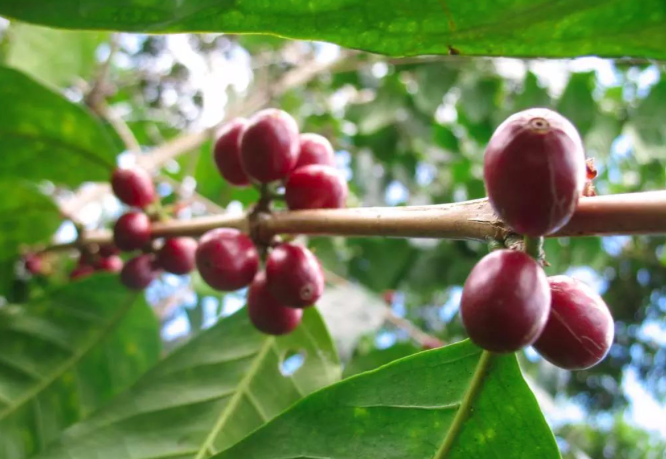
The Geisha variety was discovered in the Geisha forest of Ethiopia in 1931 and later sent to the Coffee Research Institute in Kenya. It was introduced to Uganda and Tanzania in 1936 and to Costa Rica in 1953.
Processing Method (Washed)
Costa Rica El Diosa Geisha uses the washed processing method.
Screening coffee cherries - removing pulp - fermentation - washing - drying - hulling
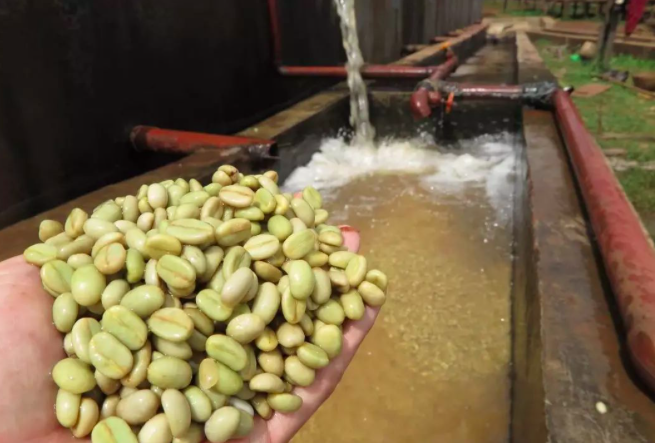
The screened coffee cherries are put into a pulping machine to remove the skin and pulp initially; the beans with remaining pulp and mucilage are placed in water to ferment for about 24 hours; after fermentation, the parchment beans are placed in flowing water channels to wash away the remaining pulp and mucilage; after washing, the beans are air-dried or machine-dried to reduce the moisture content to about 12%. Finally the parchment is removed from the green beans.
Brewing
FrontStreet Coffee's recommended brewing method
Recommended brewing method: Pour-over
Filter cone: V60 or cake cup
Water temperature: 90-92°C
Coffee-to-water ratio: 1:15
Grind size: BG 5R (Chinese standard No. 20 sieve pass rate 58%), i.e., medium-fine grind
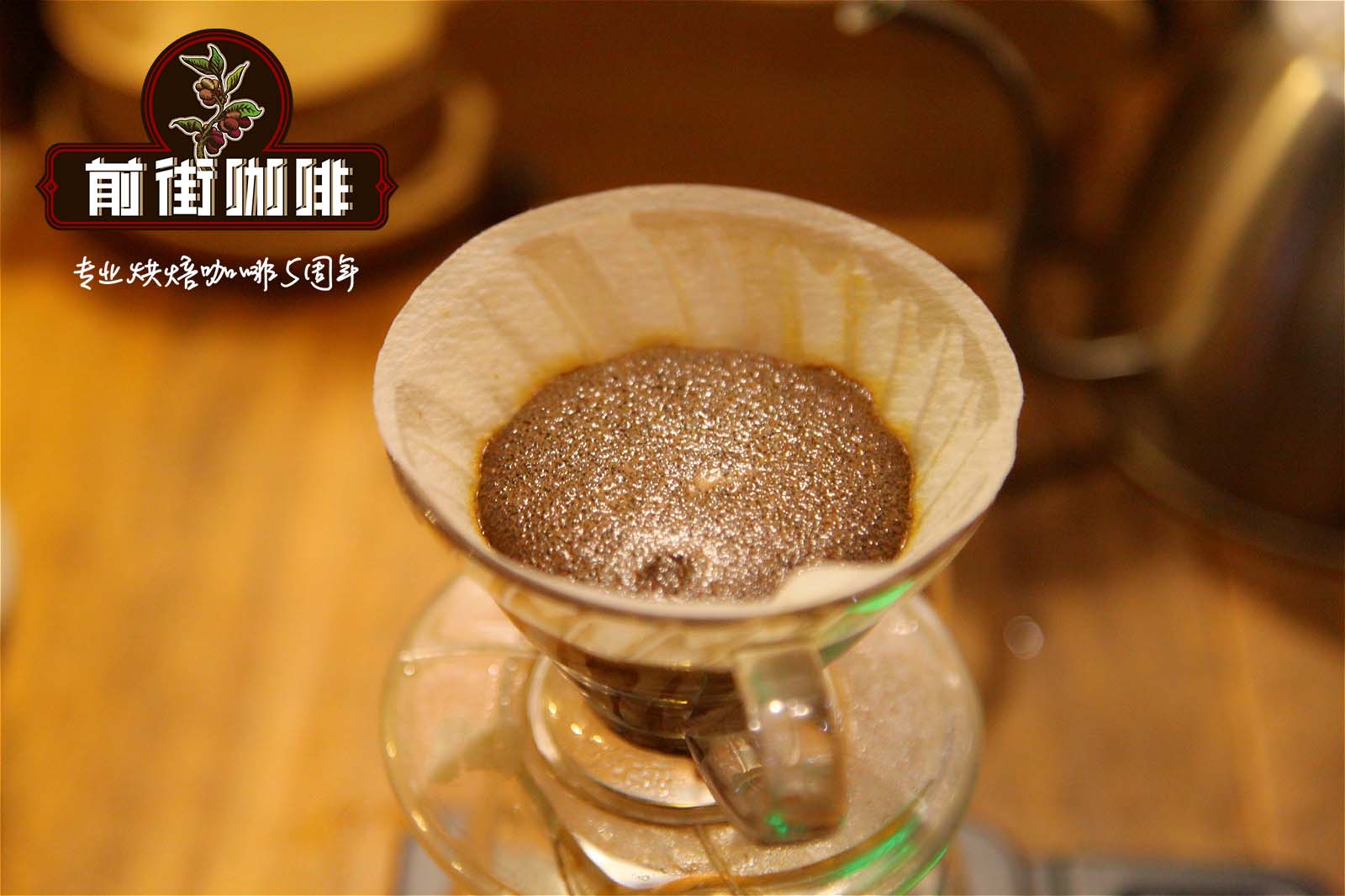
Brewing technique: Segmented extraction. Use 30g of water for a 30-second bloom, then pour with a small stream in circles to 124g to end the segment. When the water level drops and is about to expose the coffee bed, continue pouring to 227g and stop. When the water level drops and is about to expose the coffee bed again, remove the filter cone. (Timing starts from the bloom.) Total extraction time is two minutes.
Flavor profile: Fresh aroma of wild ginger flowers and grapefruit, grapefruit and blackberry notes, a soft and rounded body, refreshing tropical fruit sweetness, persistent grapefruit in the aftertaste, and pleasant acidity.
FrontStreet Coffee Recommendation
Costa Rica's honey processing is one of the country's signatures, and FrontStreet's Strawberry Candy brings that heritage together with Geisha in a single blend. It combines a Costa Rican honey-process coffee with a Panamanian washed Geisha, so it carries both delicate floral notes and sweet fruit - rose, citrus, grape and dried blueberry in the cup, and a strawberry-gummy aroma when paired with milk. It suits pour-over, moka pot, espresso machine and cold brew alike.
For a purer expression of the variety, FrontStreet's Boquete Geisha is an estate-grade Panamanian Geisha grown at 1,600 meters in fertile volcanic-ash soil, showing jasmine, green tea, honey, citrus and orange. Read alongside the El Diosa profile above - and its own 1,600-meter, washed Geisha character - these two offer a rewarding way to compare how Costa Rica and Panama each interpret the same finicky variety.
Important Notice :
FrontStreet Coffee is a long-established specialty coffee roaster in Guangzhou China, selling freshly roasted beans from its own farm in Yunnan as well as dozens of carefully selected single-origin beans from around the world for both pour-over and espresso. The products deliver consistently excellent quality and great value, with shipping within 24 hours. Guangzhou's FrontStreet Coffee shop is recommended by many coffee lovers, and the beans are now available online at the Tmall 。
FrontStreet Coffee has moved to a new address:
FrontStreet Coffee Address: 315,Donghua East Road,GuangZhou
Tel:020 38364473
 Scan and follow the En Gafei WeChat official account. Please indicate that the reprint comes from "En Gafei".