Sumatra Mandheling Coffee: Wet-Hulling Process Guide and Indonesian Coffee Bean Processing Method
Mandheling coffee is rich, smooth, and low in acidity — the first choice for coffee lovers who want nothing to do with sour cups. It comes from the Indonesian island of Sumatra.
Geography and History of Sumatra
Sumatra is the world's sixth-largest island, yet it still rises into serious mountains. The Barisan range runs down its spine, peaking at Mount Kerinci — an active volcano at the midpoint of the range, standing 3,800 meters tall. Most of Sumatra's Arabica grows at higher altitudes than its Robusta, and most growers are smallholder farmers.
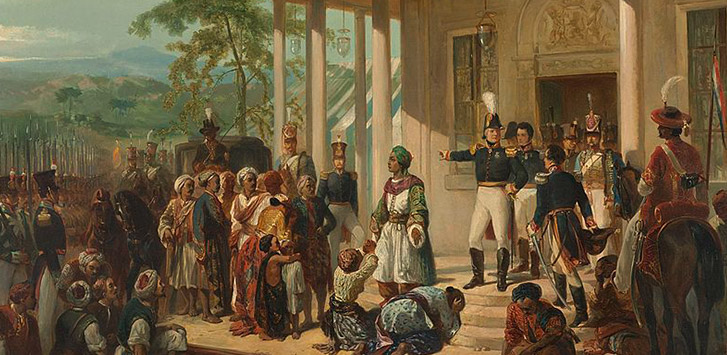
Coffee arrived early here: in 1696 the Dutch shipped seedlings from India's Malabar coast, and by 1699 the trial plantings had taken hold, spreading to the other islands including Sumatra. Exports didn't begin in earnest until the early 19th century, but then they climbed fast — over 12 million pounds by 1840, peaking at 21 million pounds around 1860, just before coffee leaf rust wiped out most of the Arabica. By 1900, rust-resistant Robusta had replaced Arabica in most areas. Today Sumatra is Indonesia's top coffee-producing region.
The Story Behind Mandheling Coffee
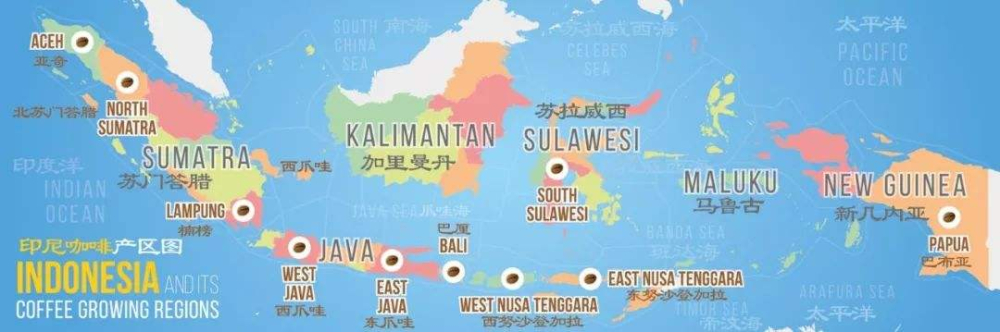
Robusta eventually swallowed nearly all the Arabica on Java, and by the early 20th century Sumatra — still producing some Arabica — had overtaken Java in reputation. That's also when "Mandheling" coffee made its name. Curiously, Mandheling isn't a person; it's the name of an ethnic group.
How a tribe's name became a coffee is a good story. The Japanese adore full-bodied coffee. During World War II, a Japanese soldier stationed in Sumatra drank a cup of wonderfully rich coffee and asked the owner what it was called. The owner misunderstood and named his hometown instead — and since "Mandailing" sounds very close to "Mandheling" in Japanese, that's what stuck. After the war, the soldier, still haunted by that cup, asked a merchant friend in Japan to track the beans down through local Indonesian traders and import them. The coffee really was that full-bodied, it took the Japanese market by storm, and Mandheling's fame spread worldwide.

The Indonesian trader in that story grew into the renowned Pwani company (PWN). PWN registered "Golden Mandheling" as a trademark early on, and the Japanese side answered by registering "Top Golden Mandheling." So strictly speaking, only Golden Mandheling produced by PWN is the true original. Since the two carry different names, brands, and marketing strategies, opinions differ on which cups better.
FrontStreet Coffee's Golden Mandheling
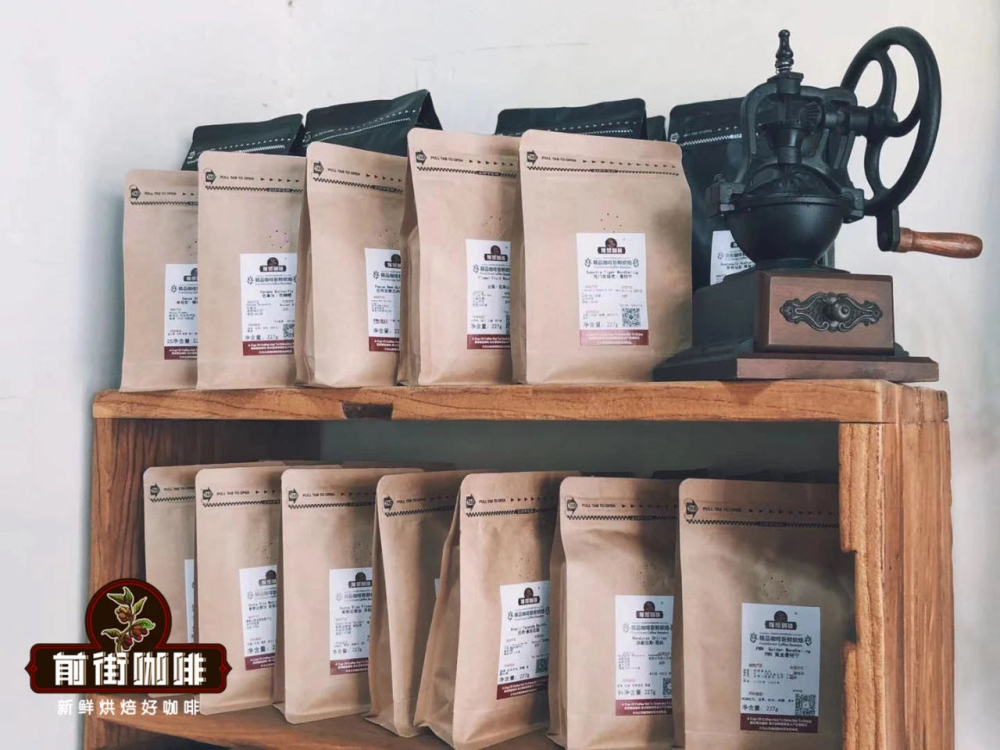
FrontStreet Coffee's menu carries just one Golden Mandheling, sourced from PWN. The green beans are large and uniform, with a defect rate of fewer than 3 beans per 300g sample — the top G1 grade. PWN produces Golden Mandheling to punishing standards: after machine-sorting for large, high-density beans, the lot goes through three rounds of hand-selection to remove every defective bean, which is what gives the cup its exceptional cleanliness and sweetness.

FrontStreet Coffee has cupped many Golden Mandhelings and found that PWN's clean taste and pronounced sweetness are what the imitators can't replicate. How can you be sure your Golden Mandheling really came from PWN? Look for the burlap: bags of PWN Golden Mandheling are printed with the clear PWN logo, and PWN issues factory certificates to its buyers. FrontStreet Coffee's PWN burlap bags and certificates are on display at its physical store.

Coffee Information
FrontStreet Coffee: PWN Golden Mandheling Coffee Beans
Region: Sumatra, Indonesia
Altitude: 1,100-1,600 meters
Variety: Ateng
Processing Method: Wet-Hulled
Unique Processing Method
Mandheling's distinctive flavor flows from an equally distinctive post-harvest process. Indonesia's frequent rainfall makes long sun-drying difficult, and washed processing is too costly for most local producers — so Sumatra developed its own semi-washed method: wet-hulling.
After harvesting the cherries at peak ripeness, farmers run them through depulping machines to strip the skin and fruit, then soak the mucilage-coated parchment beans in tanks to ferment. Once the mucilage is rinsed away, the wet parchment beans dry in the sun until they're only half-dry.

At that stage farmers gather the beans and sell them to local processing stations. The stations first mill off the parchment — the defining step of wet-hulling, which dramatically shortens drying by exposing the naked green beans to the air — then spread them to dry for about 3 to 4 days, until moisture falls to around 13%.
This wet-hulled process is what gives Mandheling its viscous, smooth texture and unmistakable flavor — and Mandheling, in turn, is what made wet-hulling famous. The two have made each other's names.

Brewing Recommendations
FrontStreet Coffee's roasters take PWN's Golden Mandheling to a medium-dark roast to showcase its dense body. For brewing, they suggest a lower water temperature, a coarser grind size, a slow-flow dripper, and a three-pour method.
Brewing Parameters:
Filter Cup: KONO dripper
Water Temperature: 88°C
Coffee Amount: 15g
Coffee-to-Water Ratio: 1:15
Grind Size: 70% pass-through rate on #20 sieve
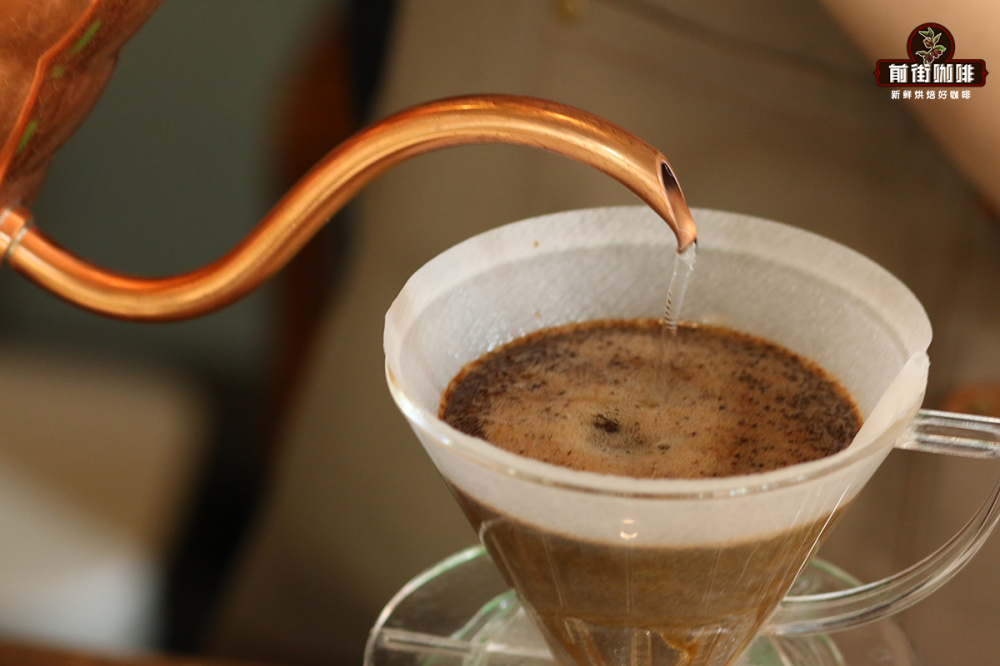
First rinse the KONO dripper with hot water so the filter paper sits snugly, then discard the water and load in 15g of coffee. Bloom with 30g of water for 30 seconds, then pour in small circular streams from the center until you reach 125g, and pause. Once the coffee bed falls to half the dripper's height, make a second identical pour up to 225g. Remove the dripper when dripping stops.
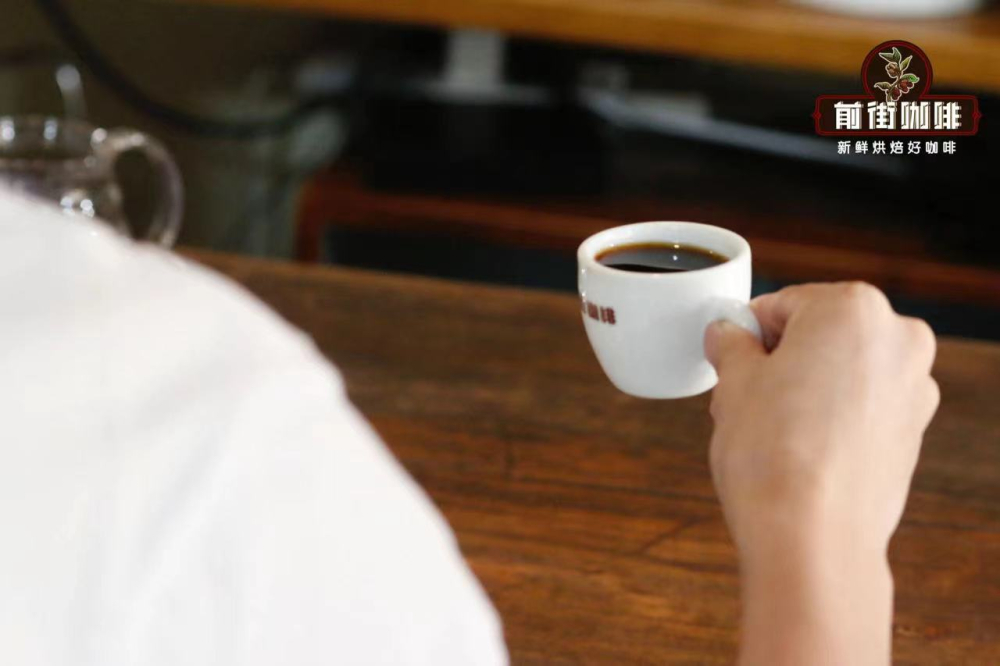
Brewed this way, FrontStreet Coffee's PWN Golden Mandheling shows rich nutty flavors, with herbs and spices emerging as the cup cools, set against a clear caramel sweetness. The taste is clean and silky throughout.
Follow for More Coffee Information
For more coffee bean information, please follow Coffee Workshop (WeChat official account: cafe_style)
For professional coffee knowledge exchange, please add WeChat ID: kaixinguoguo0925
FrontStreet Coffee Recommendation
To taste wet-hulled Sumatra at its most disciplined, FrontStreet Coffee's PWN Golden Mandheling is the benchmark. Sourced from the high-altitude Aceh and North Sumatra growing zones and machine-sorted plus hand-selected to that G1 standard of fewer than 3 defects per 300g, it roasts to a mellow, full cup with a clean mouthfeel, abundant roasted aromas, and the low acidity that Mandheling fans prize — ideal for anyone who loves a heavy cup without the bite.
If you want something even wilder, FrontStreet Coffee's Lintong Mandheling from the traditional Lake Toba growing zone leans into the classic profile: strong and pungent on entry, with clove and woody aromatics, herbal spice, and a minty edge over a thick, long-lasting sweetness — that earthy, elemental Sumatran character that some drinkers simply can't quit.
And when you'd rather let a machine do the work, FrontStreet Coffee's house Classic Blend folds medium-dark Mandheling into Brazilian cream-and-nut sweetness, adding butter, roasted chestnut, and caramel notes plus a touch of Robusta for richer crema — effortless for lattes and Dirty-style layering, and just as satisfying as a straight shot.
Important Notice :
FrontStreet Coffee is a long-established specialty coffee roaster in Guangzhou China, selling freshly roasted beans from its own farm in Yunnan as well as dozens of carefully selected single-origin beans from around the world for both pour-over and espresso. The products deliver consistently excellent quality and great value, with shipping within 24 hours. Guangzhou's FrontStreet Coffee shop is recommended by many coffee lovers, and the beans are now available online at the Tmall 。
FrontStreet Coffee has moved to a new address:
FrontStreet Coffee Address: 315,Donghua East Road,GuangZhou
Tel:020 38364473
 Scan and follow the En Gafei WeChat official account. Please indicate that the reprint comes from "En Gafei".