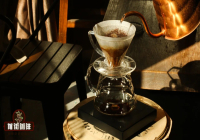
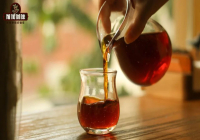
Geisha Origin and Historical Story: Geisha Coffee from Gesha Mountain, Western Ethiopia Coffee Region

The third wave of specialty coffee has pushed a whole roster of refined, elegant coffees into the spotlight, and few of them generate as much discussion as Geisha. It is now grown across many coffee regions of the world and has become the reigning monarch of specialty coffee, with the most striking quality — and prices — coming from South American origins such as Panama, Guatemala, and Colombia. At FrontStreet Coffee, for instance, Panama Esmeralda Red Label Geisha sells for 350 yuan per 100g, while Ethiopia's Gesha Village Red Label goes for 98 yuan per 100g. Part of the reason these beans command such devotion is their performance in the cup: an abundance of floral aromas and tropical fruit, intense sweetness, and a light, tea-like body that feels like sipping the fragrance of a freshly cut bouquet.
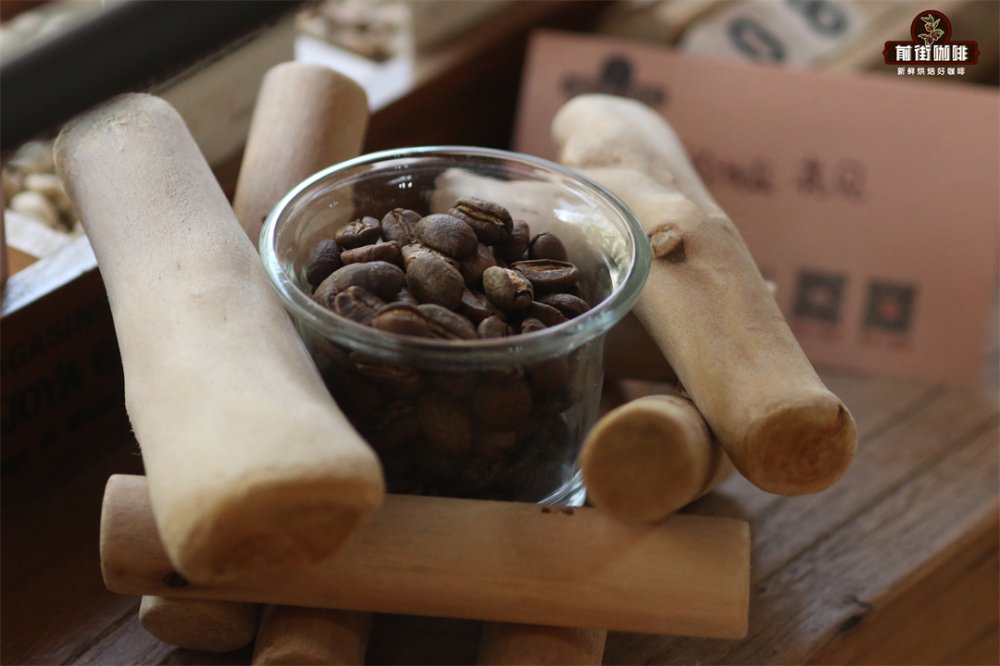
According to FrontStreet Coffee, "Geisha" covers many coffees: Panamanian Geisha, Ethiopian Geisha, Costa Rican Geisha, Jamaican Blue Mountain Geisha, Guatemalan Geisha, and more. With so many versions circulating, where did the variety actually come from? The story begins in Ethiopia, where Geisha is an ancient native landrace. From there it was carried as a botanical sample to Costa Rica's coffee experimental garden and handed out to a handful of small farms for trial plantings. For decades almost nobody paid it any attention — until Panama's Hacienda La Esmeralda separated it out from its other varieties and it went on to win the country's national coffee competition.
Origin of Geisha Coffee
Geisha beans are also spelled "Gesha," after Gesha mountain in southwestern Ethiopia where the variety originated — the name simply happens to echo the Japanese word "geisha," which is why the two spellings are often conflated. The variety's original homeland is that mountain in western Ethiopia, but it later made its way to Panama, where farmers were never especially fond of it: yields were low, and there was little incentive to plant it.
All of that changed in 2004, when Hacienda La Esmeralda entered this bean in Panama's cupping competition and walked away with a stunning result — and Geisha's fame began to travel the world. Scarcity did the rest. Once drinkers started equating the price tag with the quality in the cup, Geisha became a legend almost overnight. At the 2019 Best of Panama (BOP) auction, Panamanian Geisha held its throne as the world's most expensive coffee at a staggering $1,029 per pound!

Gesha Village Coffee Estate on Gesha Mountain
Since Geisha traces back to Gesha mountain in Ethiopia, what Geisha varieties actually grow there today? That question leads straight to Gesha Village Coffee Estate.
In 2007, documentary filmmaker Adam Overton and his wife, photographer Rachel Samuel, were shooting a film about Ethiopian coffee for the Ethiopian government when they came into contact with the Gera coffee forest in the Bench-Maji region. The project did more than reconnect them with Ethiopia's great coffee heritage — it planted the idea of founding a coffee estate and brand of their own.

In 2009 they had the good fortune to meet Willem Boot, the celebrated owner of the "Donkey Estate" and a BOP judge, whose advice gave the couple their roadmap: go back to Ethiopia and find Geisha's birthplace. That search led them to Bench-Maji in southwestern Ethiopia, near the South Sudanese border, where many villages carry the name Gesha — making it the most likely home of the original variety. When they first visited in 2011, there was nothing on the land yet.
Adam followed Willem Boot on expeditions through the forested land around the estate and discovered several wild coffee trees hidden deep in the jungle. The greatest surprise was wild Geisha. They later learned the spot was the Gori Gesha forest — the very place where the variety was first identified. So they gathered seeds from those native trees, screened them, and planted them on their own land, establishing Geisha Village Coffee Estate: a 475-hectare coffee farm sitting roughly 12 miles from the Gori Gesha forest.

Gesha Village is unlike most Ethiopian farms. It is no smallholder plot but a large 475-hectare operation with its own washing station and laboratory, located in the country's southwest near the Sudan border. Its most distinctive feature is that the entire farm grows nothing but Geisha — a sharp contrast with the typical Ethiopian farm, where the exact variety in the ground is often anyone's guess. The estate is divided into 8 zones built around 3 main Geisha varieties, and every seed traces back to the nearby forests rather than to Panama.
Construction began in October 2011, and the first harvest came in 2015. Thanks to the enthusiastic response that followed, and with help from the Panamanian estate owner Willem Boot, the estate offered 21 micro-lots at its first international auction on May 31, 2017 — 19 of them at 120 kilograms each, with a few smaller lots. Bidders from Europe, North America, Asia, and Australia turned up in force, and the final hammer price of $85 per pound shattered every previous record for an African coffee auction.

Within the estate, the western terrain sits noticeably higher, with the SHEWA-JIBABU plot at the greatest altitude; the southern zone carries a heavier shade cover, while the north enjoys the longest hours of sun. Across the eight plots, the estate manager matches each one with the variety best suited to its microclimate — altitude, soil, and shade — so that every major plot develops a clearly distinct character.

Coffee Varieties at Geisha Village
The estate grows three varieties, all named for the expedition that found them: Gesha 1931, Gori Gesha, and Illubabor (the last supplied by the Ethiopian Coffee Research Center).
Gesha 1931 was confirmed through plant morphology, bean shape and size, and its cupping profile — it is the closest relative to the mother plant behind Panamanian Geisha. The Gori Gesha variety was collected by the estate's owners during their own 2011 expedition into the wild Gori Gesha forest, some 20 kilometers from the present-day farm, and no duplicate samples of it have been found anywhere else.

Red Label Geisha Coffee
Gesha Village Estate structures its product line much the way Hacienda La Esmeralda does: RARITIES (Gold Label), GROWERS RESERVE (Red Label), SINGLE-TERROIR (Green Label), and CHAKA. The Gesha Village Red Label Geisha carried by FrontStreet Coffee comes from the estate in Bench Maji, Ethiopia. This particular Red Label batch was harvested on the estate's Shewa-Jibabu plot in the northwest, where the coffee trees grow at altitudes between 1973 and 2069 meters.
Natural Process
FrontStreet Coffee's Gesha Village lot is naturally processed. The cherries are first floated to remove defects, then dried in thin layers on African raised beds covered with plastic sheeting. While they dry, the lots are repeatedly hand-sorted to pick out insect-damaged and underripe green beans. Total drying time runs 18 to 30 days. FrontStreet Coffee finds that natural processing brings pronounced sweetness, gentle acidity, and layered, complex fruit in the cup.

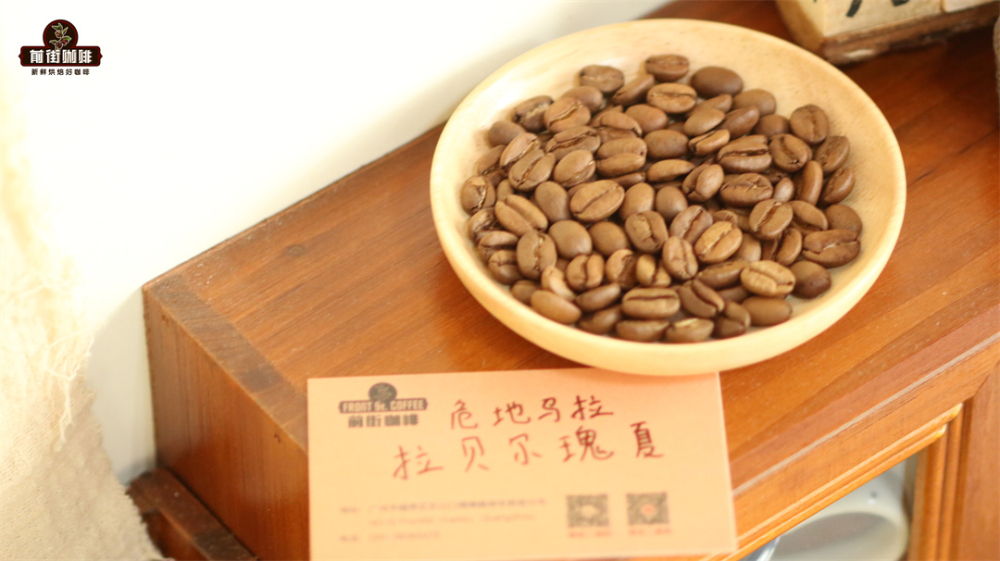
FrontStreet Coffee: Ethiopia Gesha Village Estate Red Label Geisha
Region: Bench Maji, Ethiopia
Estate: Gesha Village Estate
Altitude: 1909-2069 meters
Variety: Gori Gesha
Processing: Natural Process
FrontStreet Coffee Brewing Parameters
Dose: 15 grams
Ratio: 1:15
Grind: Fine pour-over grind (78% pass-through rate on #20 standard sieve)
Temperature: 91°C
Dripper: V60

FrontStreet Coffee Brewing Method
Every bag of FrontStreet Coffee's specialty beans ships with full provenance details and suggested brewing parameters. FrontStreet Coffee's recommendation is to shape the coffee bed into a shallow bowl under the reference parameters so the coffee extracts evenly. If the water level climbs above the coffee bed, some water will simply race down the walls of the dripper; if the level sits too low, part of the grounds never joins the extraction and the cup turns thin.
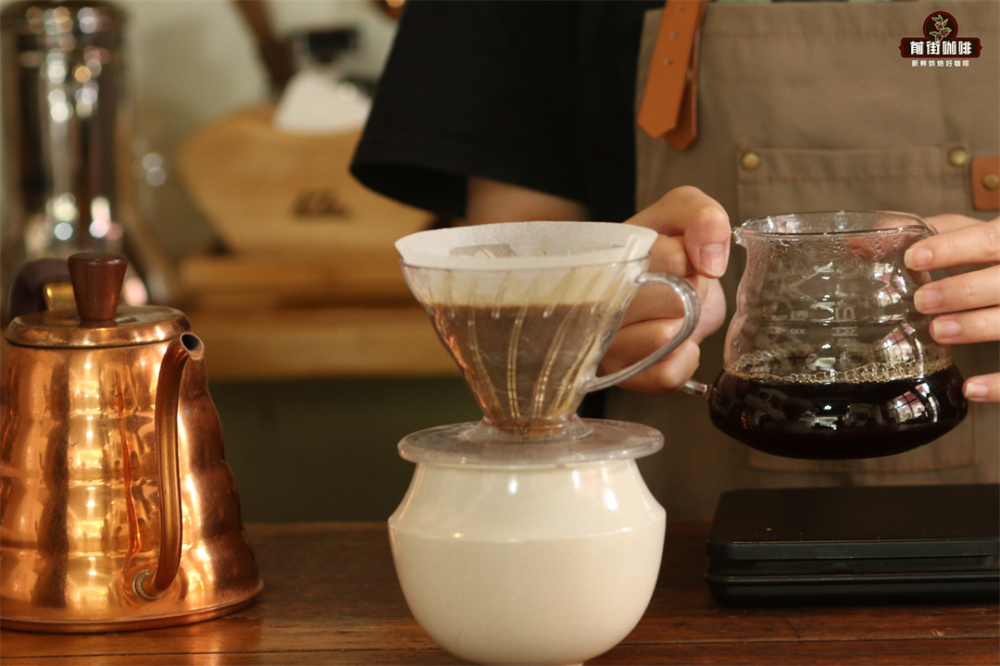
The FrontStreet Coffee method: wet the filter paper first and preheat both the dripper and the server. Start with a 30g bloom for 30 seconds, then pour in small, steady circles up to 125g and pause. Once the water level drops and the coffee bed is about to break the surface, pour in circles again up to 225g and stop. When the bed is about to surface once more, lift off the dripper (timing begins with the bloom). Total extraction time lands at almost exactly 2 minutes.
Brewed this way, the Gesha Village Red Label shows bright citrus acidity at high temperatures without ever losing its body. As the cup cools, the acidity softens and the flavors drift toward yellow stone fruit, creamy sweetness, delicate florals, and a whisper of dark cocoa on the finish. By the time the cup reaches room temperature, maple and berry notes take the stage.
FrontStreet Coffee Recommendation
If you want to taste Geisha at its roots, FrontStreet Coffee suggests starting with the Ethiopia Gesha Village Estate Red Label Geisha at 98 yuan per 100g — a natural-process Gori Gesha from the Shewa-Jibabu plot (1909-2069 meters), bursting with stone fruit, florals, and maple sweetness when brewed at 1:15 with 91°C water on a V60. For the full luxury experience, the Panama Esmeralda Red Label Geisha at 350 yuan per 100g delivers the classic Panamanian expression that made the variety famous.
Important Notice :
FrontStreet Coffee is a long-established specialty coffee roaster in Guangzhou China, selling freshly roasted beans from its own farm in Yunnan as well as dozens of carefully selected single-origin beans from around the world for both pour-over and espresso. The products deliver consistently excellent quality and great value, with shipping within 24 hours. Guangzhou's FrontStreet Coffee shop is recommended by many coffee lovers, and the beans are now available online at the Tmall 。
FrontStreet Coffee has moved to a new address:
FrontStreet Coffee Address: 315,Donghua East Road,GuangZhou
Tel:020 38364473
 Scan and follow the En Gafei WeChat official account. Please indicate that the reprint comes from "En Gafei".