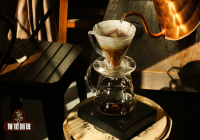
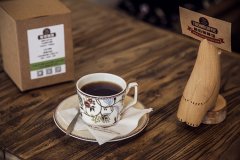
Advantages and Disadvantages of French Press - French Press Brewing Method, Grind Size, and Water Temperature Guide
How Hard is Coffee Brewing?
Not hard at all - you just need hands! How hard is it to brew delicious coffee? In truth, not that hard either, as long as you don't needlessly raise the difficulty for yourself.
Take water control, for example. The stability of your pour has a significant impact on flavor. An unstable stream often brings on problems such as uneven extraction and channeling, leaving you with a cup that doesn't taste very good and noticeable differences from one brew to the next.

There are two ways to solve the difficulty of brewing a stable, delicious cup when your water control is inconsistent. The first is to practice pouring diligently. The second is to reduce the influence of the pour on extraction altogether.
If you simply want to enjoy coffee without the "tedious" process of practicing your pour, the second route is clearly the better choice. When it comes to stability, FrontStreet Coffee holds that immersion extraction is steadier than filter extraction, and less fuss overall.
Filter vs. Immersion Extraction
Filter extraction is when pouring and dripping happen at the same time, with pour-over as the classic example. Immersion extraction is when water and grounds steep together for a period before being filtered, with the French press and Clever dripper as its representatives.
Some people assume that coffee from a French press doesn't taste as good as pour-over. More likely, the parameters were off - just as pour-over will taste bad if you use the wrong parameters! If we must compare the flavor characteristics of the two methods, immersion typically offers a fuller mouthfeel and more sweetness than filter, while filter wins on complexity and clarity. The extraction method, however, does not change the flavor profile of the bean itself.

With a French press or Clever dripper, you only need to master grind size, water temperature, ratio and time to produce coffee with a stable flavor, entirely sidestepping unstable factors like water control. The process is also more carefree than pour-over, requiring just four steps: add grounds, add water, wait, and filter.
As long as the parameters are right, immersion-brewed coffee tastes fully on par with pour-over. Here FrontStreet Coffee would like to share something: when coffee shops taste-test the flavor of a roast, they don't use pour-over form but rather immersion - that is, cupping. So if you want to taste coffee the way roasters do, immersion is the best choice.
James Hoffmann's French Press Method
Below, FrontStreet Coffee shares James Hoffmann's French press method. Its underlying principle is actually drawn from cupping.
Coffee dose: 30g
Water amount: 500ml (1:16.7 ratio)
Grind size: Cupping standard (75% passes through a #20 sieve)
Water temperature: Just-boiled water (94°C for precision)
Process: First add 30g of coffee grounds, then pour in 500ml of hot water, making sure all the grounds are fully saturated. Next, wait 4 minutes for the grounds and water to steep completely. After 4 minutes, gently stir the surface layer with a spoon, then scoop up the golden foam and grounds floating on top. Wait another 1-4 minutes for the grounds to settle naturally at the bottom. Finally, gently press the plunger down to separate the grounds from the liquid, then pour out all the coffee. This immersion approach almost perfectly reproduces the taste roasters experience during cupping.
The advantage of immersion extraction is that it minimizes the unstable flavors caused by human inconsistency. Even novices with shaky hands can brew a stable, delicious cup. At the same time, this method lays the quality of the beans bare - higher-quality beans show off better flavors, and defective beans just as honestly reveal their flaws.

Some people say French press coffee is very murky and spoils the drinking experience. That is because the press uses a metal filter, which separates grounds less effectively than paper. The fix is simple - use circular filter papers made specifically for French presses. Place one over the metal filter and you can filter coffee as clear as pour-over. If you'd rather not buy extra papers, you can also pour the coffee through a pour-over dripper with filter paper for a second filtration; the effect is the same.
Clever Dripper Method
The Clever dripper is almost identical in structure to a pour-over dripper, except that it adds a piston mechanism. When closed, coffee cannot flow down; when opened, it drains normally like any pour-over dripper. With that structure you can perform immersion extraction. The method is similar to the French press, the only difference being that the French press pours coffee from the top while the Clever dripper lets it flow from the bottom. The Clever dripper meets resistance from the bed of grounds, so the immersion parameters differ slightly.
Coffee dose: 20g
Water amount: 330ml (1:16.5 ratio)
Grind size: 75% passes through a #20 sieve
Water temperature: 94°C
Process: Place the filter paper, add 20g of coffee grounds, then pour in 330ml of hot water, ensuring all grounds are fully saturated. Wait 4 minutes, gently stir the surface two or three times with a spoon, then set the Clever dripper on a serving pot and the coffee will flow down on its own.

Alternative Pour-Over Options
Some people feel these immersion methods lack participation and still want the hands-on experience of pour-over. In that case, FrontStreet Coffee suggests drippers with slower flow rates, such as the Kono dripper or a wave (cake) dripper. With these, water control technique has less impact on taste, because when drainage is slower the dripper tends to hold water, letting the grounds and water reach an immersion-like state. That goes some way toward relieving problems like uneven extraction and channeling.

If budget allows, you can also buy Hario's Clever dripper, which is a V60 fitted with a closing mechanism. This dripper lets you switch freely between immersion and filter during brewing. When you want immersion, close the switch so water doesn't flow down. When you want filtration, open it and it becomes a regular V60.

FrontStreet Coffee Recommendation
Immersion brewing rewards you with a generous, full-bodied cup, and it also shapes which beans shine. Because the grounds steep in hot water for so long, a light roast tends to extract high acidity that can mask its floral and fruity top notes, so the French press is better suited to medium or dark roasts that express sweetness and caramel character. FrontStreet's PWN Golden Mandheling is an ideal match: one of Asia's best-known specialty coffees, it goes through three rounds of hand sorting plus one machine sort, and after a medium-dark roast the large, uniform beans deliver a thick body with rich spice, caramel, cedar and dark chocolate aromas.
If instead you prefer a fragrant, fruit-forward cup, reach for FrontStreet's Strawberry Candy, a Geisha blend custom-built from Costa Rican honey-process coffee and Panamanian washed Geisha. Steeped in a French press it releases aromas of rose, citrus, grape and dried blueberry, and takes on a strawberry gummy sweetness when combined with milk. For grind size, FrontStreet recommends a coarse-sugar setting - 10.5 on an EK43s electric grinder or 26 clicks on a hand grinder - closer to small gravel than fine sand. Start with a 1:15 ratio (15g of coffee to 225g of water), water around 90°C, and a 4-minute steep, adjusting from there to taste.
Important Notice :
FrontStreet Coffee is a long-established specialty coffee roaster in Guangzhou China, selling freshly roasted beans from its own farm in Yunnan as well as dozens of carefully selected single-origin beans from around the world for both pour-over and espresso. The products deliver consistently excellent quality and great value, with shipping within 24 hours. Guangzhou's FrontStreet Coffee shop is recommended by many coffee lovers, and the beans are now available online at the Tmall 。
FrontStreet Coffee has moved to a new address:
FrontStreet Coffee Address: 315,Donghua East Road,GuangZhou
Tel:020 38364473
 Scan and follow the En Gafei WeChat official account. Please indicate that the reprint comes from "En Gafei".