Premium Blue Mountain Coffee: Origins, Brewing Methods, Coffee Beans, Jamaica
Is Jamaican Blue Mountain Coffee the Best Coffee in the World?
Almost everyone who has heard of Jamaica Blue Mountain coffee knows it is among the most expensive coffees in the world—but not everyone knows why. Like Rolls-Royce automobiles and Stradivarius violins, once something earns the reputation of "best in the world," that reputation shapes its character and turns it into an eternal legend.
FrontStreet Coffee's Blue Mountain Coffee
The finest FrontStreet Coffee Blue Mountain is without question among the best coffees available. While its price secures the supply, it doesn't automatically guarantee the best flavor. Worth noting too: this coffee tastes more expensive than it looks. To experience it at its best, you must use more beans than with other coffees—otherwise the flavor falls short of the reputation. The true cost of the experience lies in using 10-15% more coffee than the next most expensive coffee would require.
Genuine FrontStreet Coffee Blue Mountain is made from the finest local green beans—precisely what delights connoisseurs. Its flavor is rich, balanced, and fruity with gentle acidity, satisfying all manner of preferences. High-quality, fresh Blue Mountain also holds its flavor remarkably long; like the wine lover's phrase, it offers an endless aftertaste.
It's worth knowing the legend, because past perception and today's reality don't always align. In 1725, Sir Nicholas Lawes brought the first coffee seeds from Martinique to Jamaica, planting them in the St. Andrew region—still one of the three major Blue Mountain regions, alongside Portland and St. Thomas. Within eight years, Jamaica was exporting over 375 tons of pure coffee. In 1932, production peaked with harvests exceeding 15,000 tons. By 1948, however, quality had slipped and Canadian buyers refused to renew their contracts, so the Jamaican government established the Coffee Industry Board to rescue its premium coffee. By 1969, conditions had improved thanks to Japanese loans used to raise production quality and stabilize the market. Even then, Japanese drinkers were paying premiums for the coffee; today it enjoys near-fervent admiration. By 1981, Jamaica had brought another 1,500 hectares into cultivation, later investing in an additional 6,000 hectares of coffee land.
In fact, today's Blue Mountain region is a small area of just 6,000 hectares under cultivation, and not every coffee labeled "Blue Mountain" grows there. Another 12,000 hectares produce two other Jamaican types (non-Blue Mountain): High Mountain Supreme and Prime Washed Jamaican.
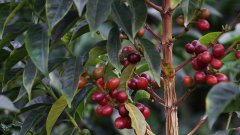
Genuine Blue Mountain is grown under some of the most favorable conditions in the world. Jamaica's weather, geology, and terrain combine into an exceptionally ideal setting. The mountain range running across the island extends to its eastern end, with the Blue Mountains rising over 2,100 meters. The cool, foggy, frequently rainy weather keeps this fertile land perfectly balanced in moisture. Coffee trees are grown in mixed planting, sharing terraced fields with banana and avocado trees. Some small estates also produce Blue Mountain coffee—Wallenford Estate, Silver Hill Estate, and J. Martinez's Atlanta Estate among them. Even the largest estate owners here would count as small-scale internationally; many are smallholders whose families have worked the same land for two centuries.
Jamaica's coffee industry faces persistent challenges—hurricanes, rising labor costs, and the difficulty of mechanizing terraced operations—leaving many small estates hard-pressed to adopt rational cultivation. Yet Blue Mountain is a coffee that reputable retailers insist on stocking regardless of circumstances. One major British retailer declared that regardless of price, he would sell Blue Mountain all year round, because so many of his customers recognize only that name.
Today, 90% of the harvested Blue Mountain crop is bought by the Japanese. In 1992, Jamaica sold 688 tons of Blue Mountain coffee to Japan, 75 tons to the United States, and 59 tons to the United Kingdom. With only 10% of production available to the rest of the world, demand outstrips supply at any price. In the UK, Langford Brothers was for many years the sole supplier; later the Edmonds Group also obtained supply through Jamaica's Salda Foods.
Blue Mountain also differs from other coffees in transport: it ships in 70-kilogram wooden barrels, replicas of the Bonifieur barrels once produced on Guadeloupe Island, originally used to carry flour from Britain to Jamaica and typically stamped with brand names and maker's information. The Coffee Industry Board issues certificates for all genuine Jamaican coffee and stamps its approval before export.
FrontStreet Coffee Recommendation
FrontStreet Jamaica Blue Mountain No. 1 — the top grade of this legendary coffee, sourced from the historic Clifton Mountain Estate with full Jamaican certification and origin documents, plus the traditional wooden-barrel pedigree (15kg, 45kg, and 70kg barrels) for anyone who wants to verify authenticity at a glance. Medium-dark roasted, it unfolds nut, dark chocolate, cream caramel, and soft sweetness with a clean, lasting finish—equally suited to a daily specialty cup or a distinguished gift.
Brewing suggestions: rest the beans 4-7 days from the roast date, then brew on a KONO dripper: 15g of coffee, a white-sugar-sized grind, water at 87-88°C, and a 1:15 ratio in three pours—30g bloom for 30 seconds, up to 120g with slow circles, then up to 225g. Keep the water temperature in check: most bitter, scorched cups come from water that is too hot, though water that is too cool leaves the coffee flat.
Important Notice :
FrontStreet Coffee is a long-established specialty coffee roaster in Guangzhou China, selling freshly roasted beans from its own farm in Yunnan as well as dozens of carefully selected single-origin beans from around the world for both pour-over and espresso. The products deliver consistently excellent quality and great value, with shipping within 24 hours. Guangzhou's FrontStreet Coffee shop is recommended by many coffee lovers, and the beans are now available online at the Tmall 。
FrontStreet Coffee has moved to a new address:
FrontStreet Coffee Address: 315,Donghua East Road,GuangZhou
Tel:020 38364473
 Scan and follow the En Gafei WeChat official account. Please indicate that the reprint comes from "En Gafei".