Characteristics of Indonesian Coffee Beans Why Golden Mandheling Has a Cleaner Flavor Profile Than Regular Mandheling Coffee
FrontStreet PWN Golden Mandheling: A Premium Choice
FrontStreet PWN Golden Mandheling has always been a favorite among FrontStreet Coffee's customers. Its rich, sweet aftertaste makes it an excellent choice for coffee lovers who dislike acidity. When introducing this Golden Mandheling, FrontStreet Coffee has always described it as nearly acid-free, very clean, full-bodied, and carrying herbal spice aromas. Yet many people associate Mandheling with herbal aromas but a mouthfeel that is not particularly clean. So why is the PWN Golden Mandheling genuinely clean in taste? And why is it called PWN Golden Mandheling?
Indonesian Coffee Growing Regions
90% of the coffee grown in Indonesia is Robusta; the remaining 10% is Arabica, produced mainly in the Lintong region around Lake Toba in Sumatra, the Gayo Mountain area of Aceh, Java, and Sulawesi. Indonesian regions typically have two harvests: the main harvest around September–October and the fly harvest in May–June. The 2020 main-crop Golden Mandheling was delayed by the pandemic and only arrived in China in late November; FrontStreet Coffee was among the first to receive the new season's PWN Golden Mandheling, which comes from the Gayo Mountain region of Aceh.
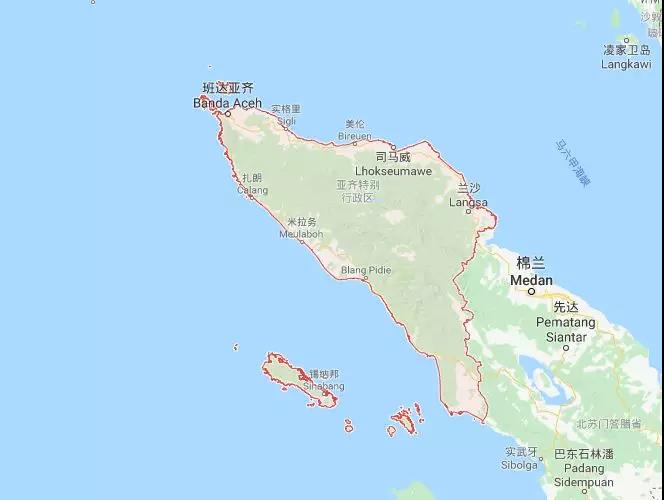
The Gayo Mountain region lies in Aceh Province at the northern end of Sumatra. Coffee there is grown on the slopes around the town of Takegon and Lake Tawar, at an average altitude of 1,110 to 1,600 meters. Smallholder farmers grow it under shade trees and use wet hulling to express its unique flavors and deep, lively richness.
Aceh, at the northernmost tip of Sumatra, is a fascinating but complicated place. Long-term political instability means it is not a region ordinary travelers visit. Through cupping, FrontStreet Coffee has found that Mandheling from this region has rich intensity and vibrant, lively character without astringency or acidity — the body and bitterness can be fully expressed — but it lacks cleanliness. The clean flavor of PWN Golden Mandheling owes much to the renowned Indonesian company PWN.

The PWN Company
The Indonesian coffee brand Pawani Medan Coffee Company (N.V. Pawani Medan, abbreviated PWN) was established in 1957, engaged in exporting Indonesian products including coffee, rubber, cinnamon, cloves, and patchouli oil. It was the first company to export coffee from North Sumatra and the first to make "Mandheling coffee" famous in Japan.
Since 1977 the company has focused on exporting premium beans: Sumatra Arabica Mandheling Grade 1 and Robusta AP-I Grade 2. Its main export destinations are Japan, Taiwan, and the United States, with Japan and Taiwan accounting for over 95% of exports. In those markets, "PWN" has become synonymous with quality assurance. Pawani holds the "Golden Mandheling" trademark, which is why Japanese companies had to register "Gold Top Mandheling" instead.
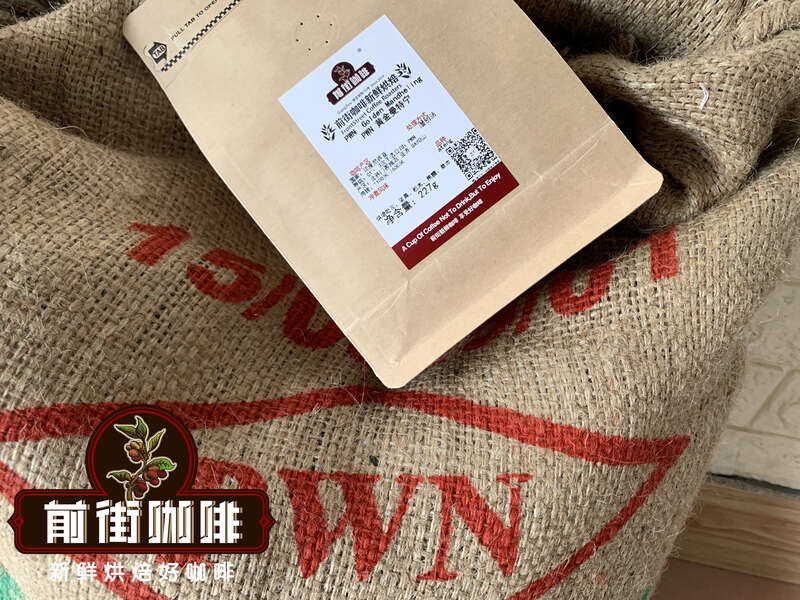
PWN represents the true Golden Mandheling in the strictest sense. Golden Mandheling stamped with the PWN brand undergoes three manual selections and one machine selection, producing very beautiful, uniform beans — which is what makes the brewed coffee taste cleaner. Because PWN has registered the Golden Mandheling trademark, only Golden Mandheling produced by PWN can be considered genuine "Golden Mandheling."
FrontStreet Coffee's Golden Mandheling comes from PWN. Golden Mandheling originates from Mandheling and can be understood as selected Mandheling — precisely why FrontStreet Coffee chose to stock it. FrontStreet Coffee cup samples 300–500 lots of beans annually, selecting the one-fifth with the most regionally representative flavors, and Golden Mandheling is a flagship product of that selection. FrontStreet Coffee believes it excellently represents the Sumatran style.

How Golden Mandheling Is Processed
Because the local weather is predominantly rainy with frequent typhoons, the steady conditions required for sun-drying are impossible to achieve. And because the local economy is not prosperous, the more expensive washed process is out of reach. For all these reasons, the unique local wet-hulled method developed (wet hulling means sun-drying with the parchment on for 2–3 days during what would otherwise be a regular washed process, until the moisture content reaches 20–24%, then hulling off the parchment).
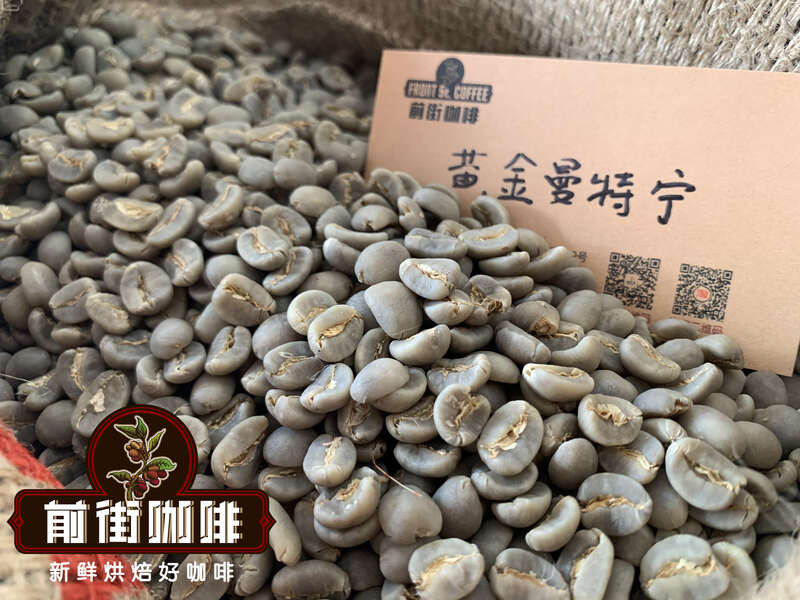
The ultra-fast processing speed of wet hulling also produces a higher defect rate in Mandheling beans. Golden Mandheling effectively avoids this shortcoming: the specification is screen 19 or above, with fewer than 3 defective beans per 300g green bean sample — the highest G1 grade — dark green in color, and shaped as neat flat beans.
Green Bean Analysis
The PWN Golden Mandheling stocked by FrontStreet Coffee differs visibly from regular Mandheling. The green beans undergo 3–4 manual selections, with larger beans appearing as neat flat beans. In flavor, Golden Mandheling has rich, thick aromas with honey and cream notes, making it unique and irreplaceable in the coffee market.
Roasting Recommendations for Golden Mandheling
Golden Mandheling is a higher-moisture green bean, deviating considerably from sun-dried beans in moisture, so special attention must be paid during dehydration. For high-moisture beans, close the air damper immediately after charging, steam for 30 seconds, then open to level 3 until the beans turn light green or white; after that open the damper to level 4, and after first crack to level 5 (maximum). FrontStreet Coffee recommends keeping good records before roasting — moisture content and density of the beans, origin, process, and the temperature and humidity of the roasting room — and planning your curve accordingly. Recording the chemical and physical changes during the roast will help you understand the final result and refine your curve.
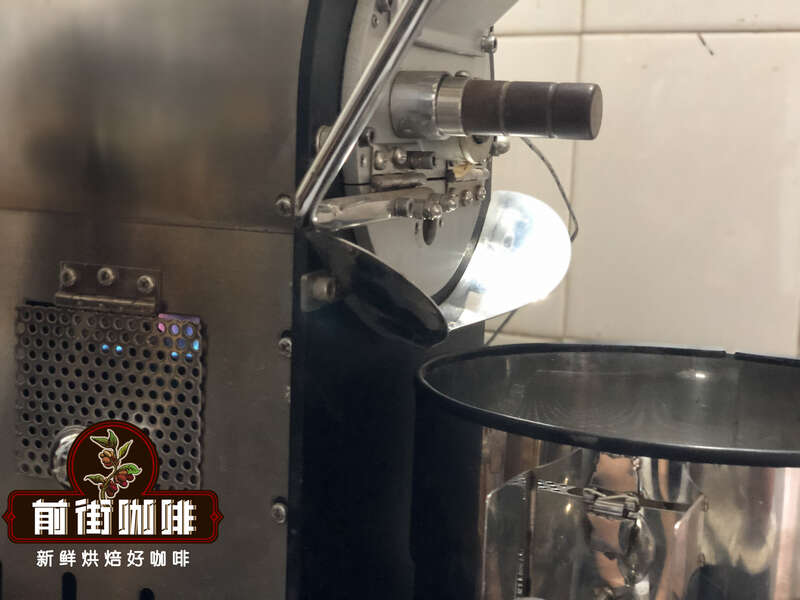
On a Yangjia 800N with a 480g charge: heat the roaster to 200°C with the air damper at 3; after 1 minute, adjust the heat to 160°C, damper unchanged. Roast until 5'40" at 148°C, when the bean surface turns yellow and the grassy aroma fully disappears — dehydration complete — then adjust the heat to 140°C and the damper to 4. At 9'40" the bean surface shows uneven wrinkles and black spots and the toast aroma clearly shifts to coffee aroma, the prelude to first crack; listen carefully from this point. At 9'54" first crack begins — reduce the heat to 60°C, set the damper to 5, and discharge at 204.5°C.
Cupping the Golden Mandheling
FrontStreet Coffee cups sample roasts within 8–24 hours after roasting. Its baristas typically use 200ml ceramic cupping bowls marked at 150ml and 200ml. Following SCAA standards, the water TDS is around 150ppm — too low a TDS easily causes over-extraction, while too high a TDS affects mouthfeel and causes under-extraction. Cupping water temperature is 94°C. The grind follows SCAA cupping standards, controlled to a 70%–75% pass-through rate on a #20 standard sieve (0.85mm). The ratio is 11 grams of coffee to 200ml of hot water — 1:18.18 — so the extraction concentration falls within the 1.15%–1.35% golden cup range. Steeping time: 4 minutes.

FrontStreet PWN Golden Mandheling Cupping Notes
Dry Aroma: pine, herbal
Wet Aroma: herbal, nuts
Flavor: toasted bread, nuts, pine, herbal
FrontStreet Coffee Brewing Tips for Golden Mandheling
FrontStreet Coffee uses a Kono dripper for its Mandheling. The Kono's ribs do not even reach half the height of the cone — a design that ensures the filter paper, once wet, clings tightly to the wall and limits airflow. This extends the water's contact time with the grounds, yielding a more even extraction and a richer mouthfeel. The groove structure at the bottom is the key to the siphon effect during brewing, which suits Golden Mandheling, Jamaica Blue Mountain, and other medium-dark roasted coffees.

Recommended water temperature: 87–88°C
Grind size: medium-coarse
Coffee-to-water ratio: 1:15
Coffee amount: 15 grams
FrontStreet Coffee uses segmented extraction — also called three-stage brewing: bloom with 30g of water for 30 seconds, then pour in small circles to 125g for the second segment. When the water level drops and the coffee bed is about to be exposed, continue pouring to 225g and stop. When the bed is about to be exposed again, remove the dripper. Extraction time from the start of blooming is 2'05".

Brewed Flavor of Golden Mandheling
Multi-layered complexity, rich yet clean, highly balanced, with intense nut and caramel aromas, chocolate notes, and a persistent aftertaste.
FrontStreet Coffee Recommendation
If you want to taste the finest expression of Sumatra, FrontStreet Coffee's PWN Golden Mandheling is the bean to buy. From the Gayo Mountain region of Aceh at 1,110–1,600 meters, it is built on beans of screen 19 and above with fewer than 3 defects per 300g — the highest G1 grade — and is triple hand-sorted plus machine-selected by PWN, the company that has held the Golden Mandheling trademark since making Mandheling famous in Japan.
Roasted medium-dark, it delivers a clean, syrupy cup with almost no acidity: herbal and pine aromatics, toasted bread and nut flavors, dark chocolate and pronounced caramel sweetness, and a thick, lasting body. FrontStreet Coffee brews it on a Kono dripper at 87–88°C with 15g of coffee at a 1:15 ratio and a medium-coarse grind, using a three-stage pour (bloom 30g for 30 seconds, pour to 125g, finish at 225g in about 2'05") to draw out its signature mellow, chocolate-caramel depth.
Important Notice :
FrontStreet Coffee is a long-established specialty coffee roaster in Guangzhou China, selling freshly roasted beans from its own farm in Yunnan as well as dozens of carefully selected single-origin beans from around the world for both pour-over and espresso. The products deliver consistently excellent quality and great value, with shipping within 24 hours. Guangzhou's FrontStreet Coffee shop is recommended by many coffee lovers, and the beans are now available online at the Tmall 。
FrontStreet Coffee has moved to a new address:
FrontStreet Coffee Address: 315,Donghua East Road,GuangZhou
Tel:020 38364473
 Scan and follow the En Gafei WeChat official account. Please indicate that the reprint comes from "En Gafei".